


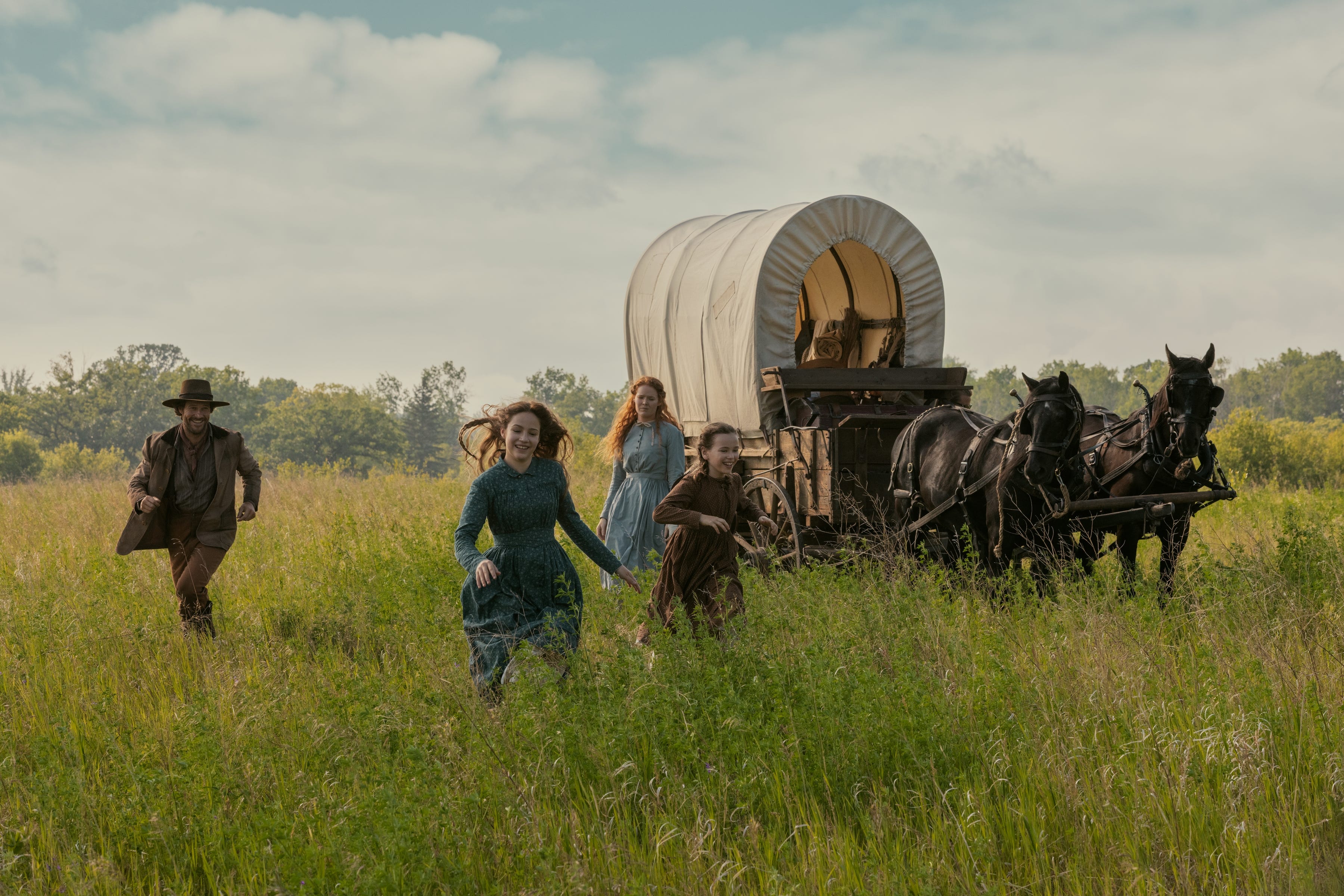
For nearly a century, Laura Ingalls Wilder’s tales of hardship and perseverance on the American frontier have captivated young readers around the world. Beginning with Little House in the Big Woods, published in 1932, the Little House books told the story of Westward expansion from the perspective of the Ingalls family as they zigzagged across the plains in search of opportunity, encountering one calamity after another.
Rich with fascinating detail and vividly drawn characters, the semi-autobiographical books have sold over 73 million copies in 100 countries. They were also adapted into one of the most beloved TV shows of all time, Little House on the Prairie, which aired on NBC from 1974 to 1983 and has been consumed in perpetual reruns ever since. More than fifty years after its debut, the family soap starring Michael Landon and Melissa Gilbert remains one of the most popular legacy shows of the streaming era.
But Wilder’s vast cultural legacy is not without complications. Her fiction, though compelling and immersive, is also marred by racism and dehumanizing portrayals of Native Americans and Black people. On the prairie, “There were no people; only Indians lived there,” Wilder wrote in the original edition of Little House on the Prairie — a passage that was later (tepidly) revised to “there were no settlers. Only Indians lived there.” In 2018, the US Association for Library Services to Children removed Wilder’s name from an award for children’s literature, citing “expressions of stereotypical attitudes” inconsistent with their “values of inclusiveness, integrity and respect, and responsiveness.”
Then there are the subtle political messages woven into a seemingly wholesome tale of adventure and survival. Wilder, a longtime Democrat who soured on FDR and the “communists in Washington”, wrote the Little House books during the height of the Great Depression, with extensive input from her daughter Rose Wilder Lane, one of the “founding mothers” of libertarianism. At a time when millions were enduring hard times — much like what the Ingalls family had gone through decades earlier on the frontier — the books emphasized self-reliance and individual effort, rather than government assistance.
Netflix steps into the fray
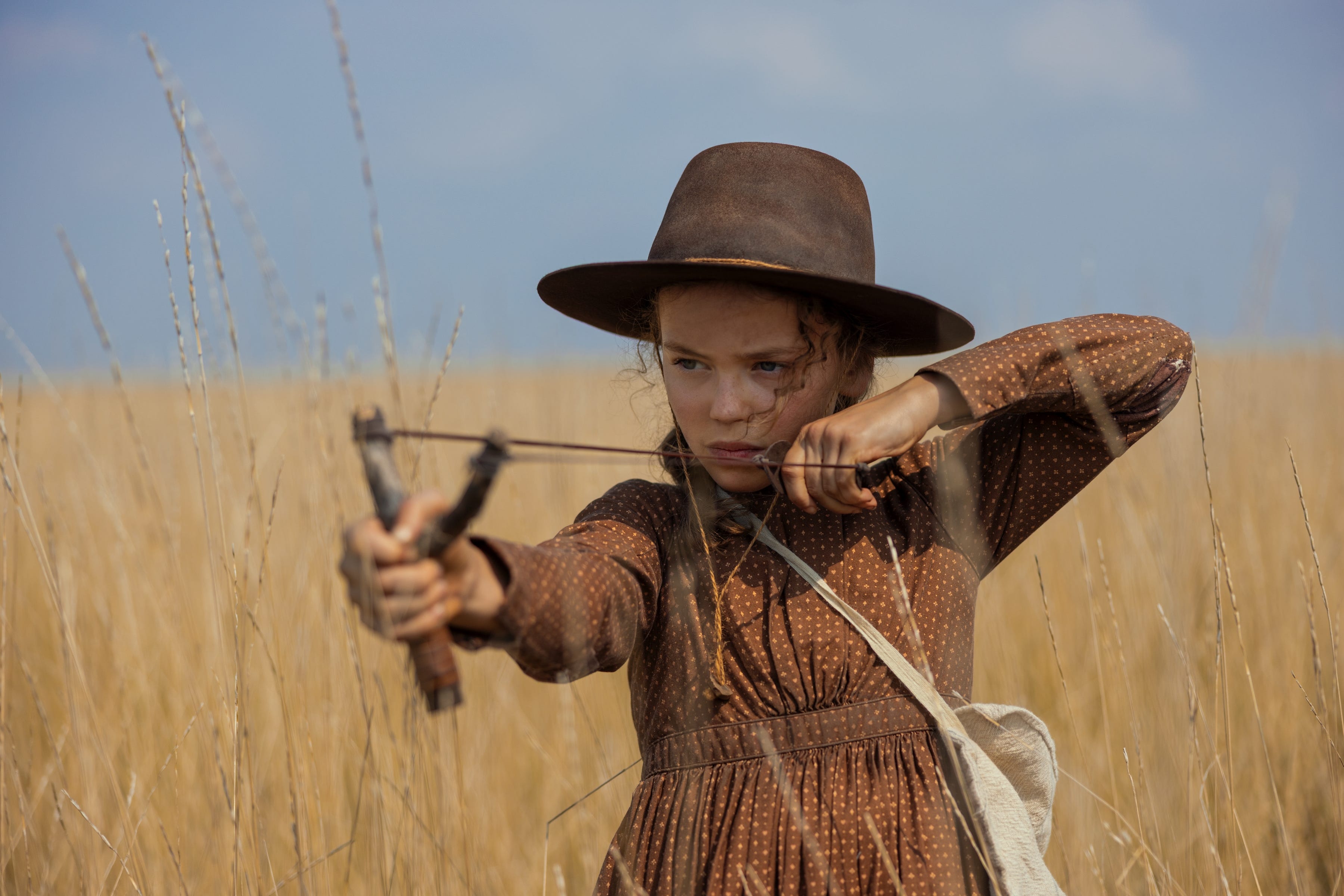
All of which means that Netflix’s adaptation of Little House on the Prairie, which premiered Thursday, was destined to become a culture-war flashpoint. The latest version of the Ingalls family saga was announced last January, mere days after Trump’s second inauguration — timing that invited reflexive skepticism from liberals who assumed the series would be a sanitized slice of Americana aimed at MAGA devotees and aspiring trad wives. But the involvement of Netflix, a company that the right-wing regards as an outlet for trans propaganda, also provoked knee-jerk outrage from conservatives inclined to see any changes to the source material as evidence of wokeism run amok. (See: Megyn Kelly.)
Now that the series is here, it’s evident that showrunner Rebecca Sonnenshine has pulled off a tricky balancing act. This Little House captures many of the things that make Wilder’s books so memorable — Laura’s plucky spirit, the Ingalls’ deep love for one another and inspiring resourcefulness — while expanding the narrative to include the much-needed perspectives of Native Americans and Black settlers.
The eight-episode season tracks many of the key events in Little House on the Prairie, the third volume in the Little House series, following the Ingalls family — Ma/Caroline (Crosby Fitzgerald), Pa/Charles (Luke Bracey), Mary (Skywalker Hughes; yes, that’s her real name), Laura, a.k.a. Half Pint (Alice Halsey), and their trusty dog Jack — as they relocate via covered wagon from the Big Woods of Wisconsin to a prairie near Independence, Kansas. “There was nothing but grass and waves of light and shadow and a giant sky,” narrates Laura in a voiceover.
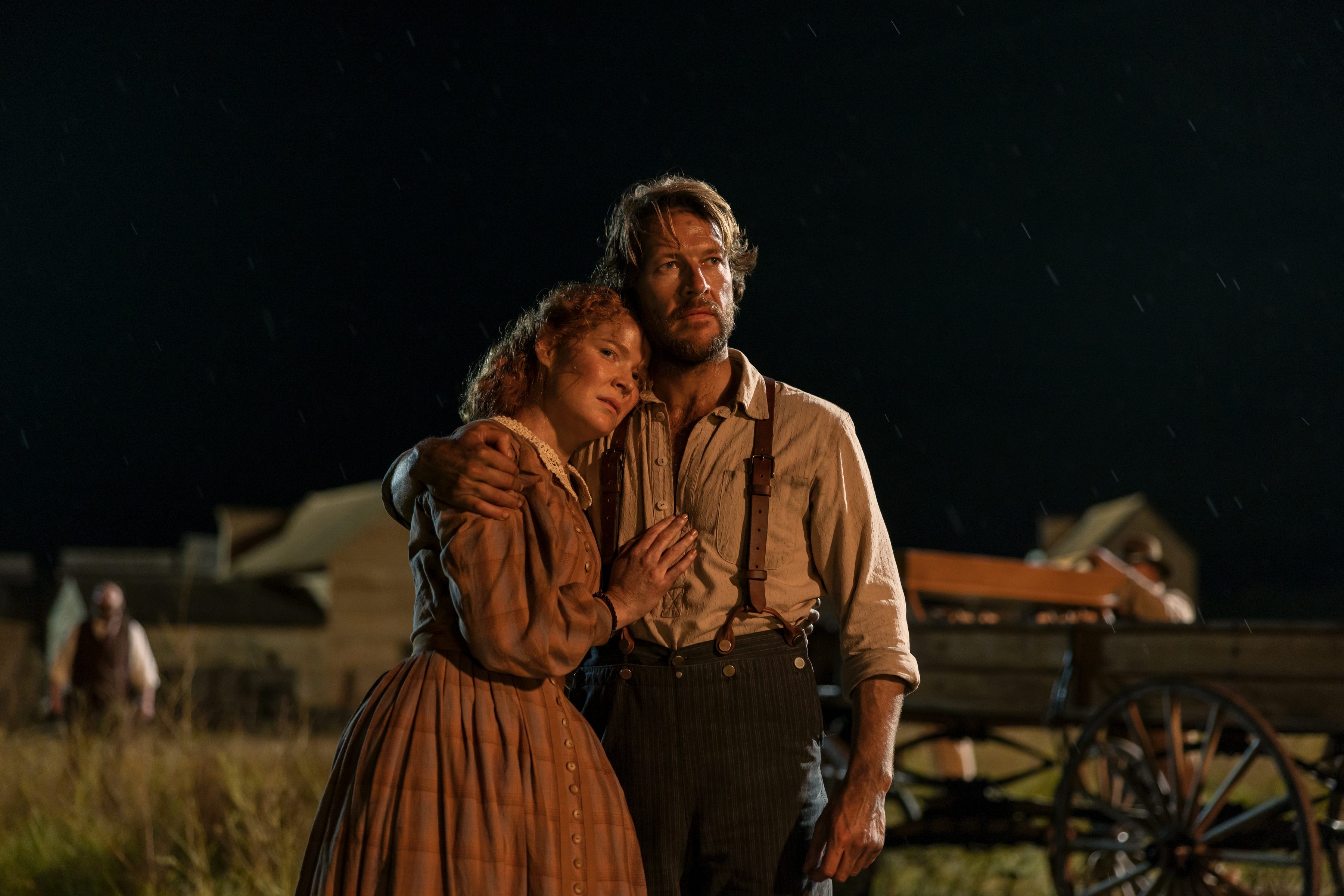
Pa finds a plot of land that is supposedly available for settlement, where he builds a single-room log cabin with help from Mr. Edwards (Warren Christie), a kindhearted neighbor with a shady past. Ma discovers she is pregnant, which makes the need for a stable home and ready sustenance even more urgent.
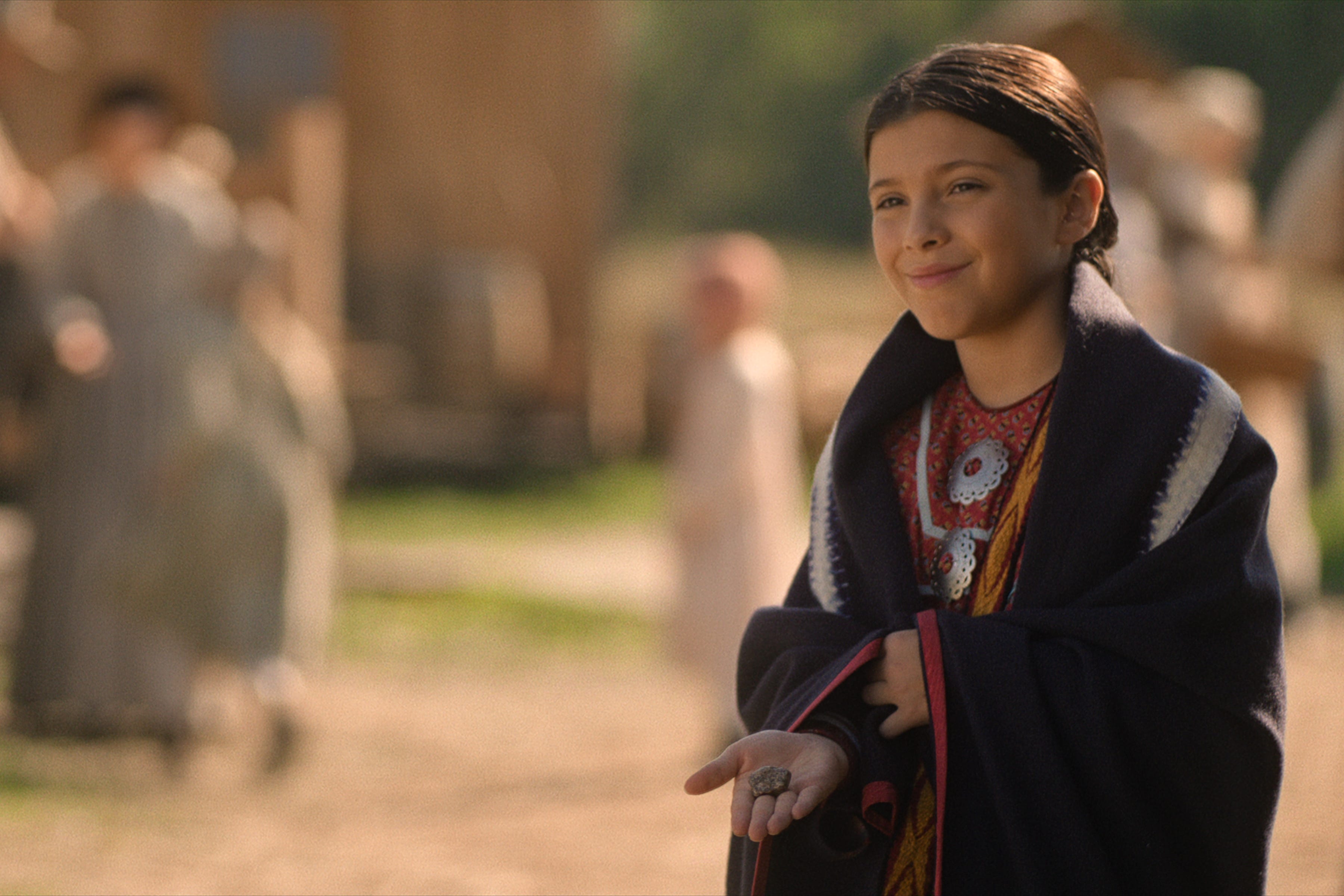
But challenges abound. The family faces many dangers, including treacherous rivers, errant logs, wolves, fire, poisonous wells, and malaria. There’s tension with the Osage people, whose land they are squatting on. Inquisitive Laura befriends Good Eagle (Wren Zhawenim Gotts), an Osage girl, while Pa forms a bond with her father, a mixed-race Osage man named William Mitchell (Meegwun Fairbrother). But Good Eagle’s mother, White Sun (Alyssa Wapanatâhk), is understandably wary of making friends with the white settlers encroaching on her land.
Ma, too, is reticent. “We don’t need to know them. We don’t need to go looking for trouble,” she says. If not overtly racist to Native Americans, Ma is apprehensive in a way that suggests stubborn prejudice. Sonnenshine wisely didn’t gloss over the racism in the books, but she balanced it by rendering the Osage characters as fully-rounded people instead of nameless exoticized others.
To ensure the show’s cultural authenticity, the producers also employed Osage consultants Julie O’Keefe, Robert Warrior, and Talee Redcorn, who advised on everything from costumes to language. (One aspect of this definitive all-American story that’s less than authentic: it was made in Canada.) If there’s a straightforward villain in this Little House, it’s neither the government nor the Osage people; it’s Eli James (Michael Hough), the unscrupulous land speculator who dupes Pa into settling on tribal land.
The series also significantly beefs up the role of Dr. George Tann (Jocko Sims), a Black physician who offers assistance to the Ingalls family during an outbreak of “intermittent fever.” Dr. Tann appears in the book — and was based on a real person — but in this take, he also gets a tangled backstory and develops a love interest: general store proprietor Emily Henderson (Barrett Doss).
Reckoning with racism
Does acknowledging the basic humanity of Black and Indigenous people — which, if we are honest, should be the bare minimum for a contemporary storyteller — make this a “woke” Little House? Alas, in a climate as badly skewed as ours, when the White House is actively trying to erase the history of non-white Americans, it probably does.
But the show’s most pointed political commentary comes from a surprising source: Half Pint herself. In the season finale, Laura gives an impromptu speech during the town’s Founders Day celebration, describing an ideal community founded on tolerance and mutual support.
“Independence is actually a funny name for a town like this,” she says.
The prairie is so big, and we’re so small. The truth is, none of us can make it alone here. We need help from each other when we need a place to live, and when we get sick, and when we get lonely. Independence isn’t about self-reliance, or liberty or freedom, or any of those things. It’s a place to come together, a place to find out who you really are. Independence means getting to know people who have been here a long time or people who have just arrived, people who are different from anyone you’ve known before, or people who feel like family. Independence isn’t really a place, it’s an idea. It’s the people you carry around in your heart.
The monologue is an elegant rebuke of the bootstraps mentality that Wilder and her daughter espoused, and that many conservatives have embraced in her writing. Little Laura’s manifesto could even be interpreted as an argument for progressive governance. Who’s going to help you when you’re sick or need a place to live if your neighbors can’t — or won’t?
Interpretations that reflect turbulent times
The relationship between past and present is always tricky in a work of historical drama. But it’s even more layered in this version of Little House on the Prairie, Netflix’s interpretation of a fictionalized memoir written during a very specific context in the 1930s about events that took place many decades earlier. Then there’s the added complication of the Landon series, which continues to loom large in the public imagination.
Adaptations of canonical texts always reflect the time in which they were made. NBC’s Little House on the Prairie was so undeniably wholesome that it was reportedly Ronald Reagan’s favorite TV show. But, like the 2026 version, it was made during a period of social and political unrest, when the nation’s anniversary had everyone thinking about our past. Landon, who was an executive producer and guiding creative force on the show for most of its run, often used 19th-century Walnut Grove, Minnesota, as an avenue for exploring contemporary ills. The standout episode, “Soldier’s Return,” which aired in the spring of 1976, featured a Civil War veteran who was addicted to morphine — a character who resonated at a time when many young men who had served in Vietnam were struggling with heroin dependency.
Netflix’s Little House clearly explores what it means to be an American in 2026, through characters who were grappling with similar questions 150 years ago. The Ingallses are essentially economic migrants — not much different from the people who still come to the United States, with little in their pockets, desperate for a better life.
Written by a woman, this version of Little House reveals the limitations of traditional gender roles. Caroline Ingalls might be the ultimate trad wife, able to split logs while pregnant and whip up mouth-watering cornbread over an open fire. But she also serves as a feminist cautionary tale — an educated woman who gave up her teaching career to marry and, along with her children, becomes subject to the perilous whims of her hunky, hard-working, woefully naive husband. (With his neatly trimmed beard and perfectly broken-in flannels, Bracey, the Australian who plays Pa, comes off as an L.L. Bean model who accidentally fell into a wormhole that transported him to the 1870s.)
In interviews, Sonnenshine has stressed that she was focused on Wilder’s book as source material, rather than trying to remake the Landon series. Yet she also incorporated some of the most cherished TV lore into her version of Little House — like the fact that Mr. Edwards is an alcoholic widower — as if not to challenge viewers attached to certain notions about these characters. (Alison Angrim, who played problematic fave Nellie Oleson in the original series, even has a cameo.)
Netflix has already renewed the series for a second season that is poised to follow the events in On the Banks of Plum Creek. But this incarnation of Little House on the Prairie is unlikely to match the 1970s series in terms of public adoration or cultural influence. Not because it’s bad, or because it sorely lacks an earworm theme song, or because it’s impossible for any mortal to replace Landon as America’s Dad. But a show that drops eight episodes at once into an algorithmic abyss cannot captivate viewers the way that a network show, beamed into millions of living rooms at the same time every week for years on end, once did. Still, Wilder is destined to find new fans via Netflix — technology that the girl raised in that little house on the prairie could never have imagined.
Meredith Blake is the culture columnist for The Contrarian
I loved those books, but I remember my mom telling me as we read them together that Ma wasn't very thrilled with all the moves they had to make (Pa was ruling the roost) and that she hated taking charity (Xmas eve gifts at church). They almost starved in the Long Winter (and weren't exactly "independent"), and they also relied on the Native Americans to give them aid and assistance. The truth about Laura and the Ingalls was very complicated, but the stories were enthralling, especially as I was the brown haired 2nd daughter Laura to the beautiful blond first child, Mary.
I loved those books when I was a kid.