

They pile up, one incomprehensible decision after another. Indeed, on occasion, a decision ascribed to President Trump leaves an aging observer (me) utterly speechless. But only for a brief moment.
Such a decision, which originated in the cluttered mind of Pete Hegseth—once a Fox News anchorman and now (though it continues to belie belief) the Secretary of Defense—is worthy of our attention. It reveals so much about how the president’s decisions are damaging the country he constitutionally pledged to defend. Hegseth, claiming he is only upholding Trump’s “values,” left undefined, has barred anyone associated with the Pentagon from attending “think tank” deliberations about America’s public policy. A think tank, either Republican or Democratic, analyzes, researches, and recommends policy for government consideration. Historically, they have proven to be quite helpful.
Hegseth’s order has raised many eyebrows, not because attending a think tank discussion is of vital importance to the nation’s security or survival but rather because it shows how this administration acquires information and how it deliberately shutters itself off from ideas and opinions that could help it make better, more informed decisions.
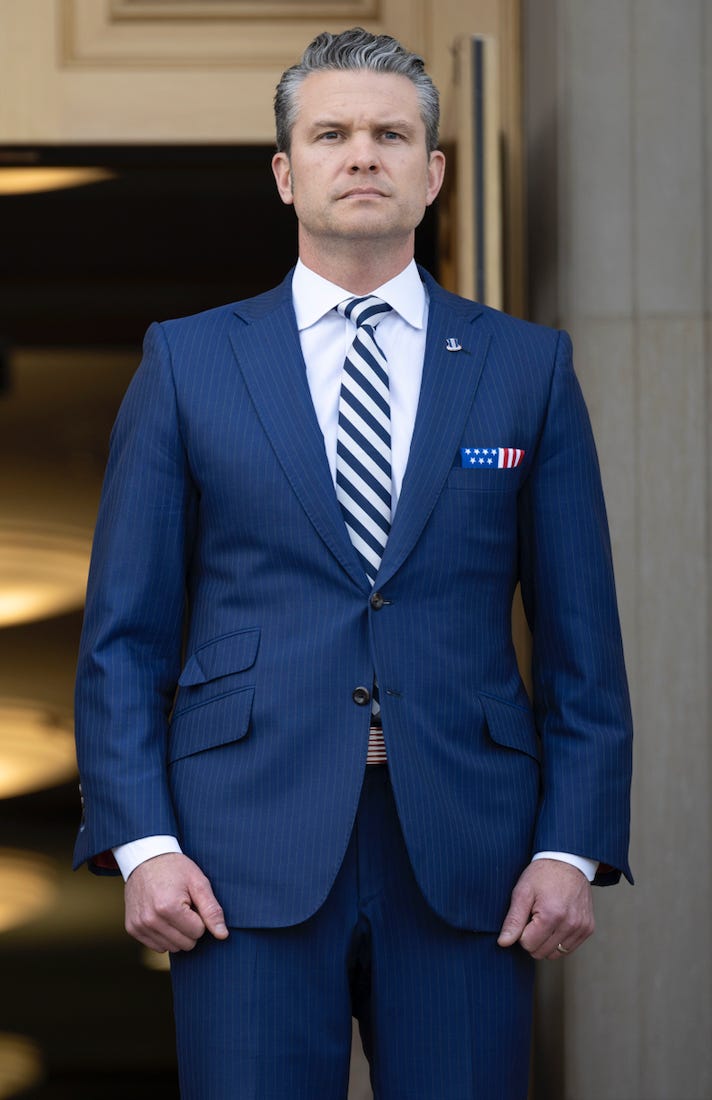
It must be noted that, in this particular case, Hegseth likely made his “think tank” decision for purely political reasons: underscoring his personal loyalty to Trump’s “values,” while proving he is running the Pentagon the way he believes Trump would want it run.
Unfortunately, this unhealthy pattern seems to be the new standard for decision-making throughout the administration, whether the issue under consideration is of burning national interest, for example war or peace, or whether it lives in the every day world of policy options, like attending a Council on Foreign Relations conference on Russian policy in war-torn Ukraine. It seems senior officials will now prioritize how a policy decision might affect their personal relationship with Trump before they consider the impact of their decision on the nation’s wellbeing.
The question that drove Hegseth’s decision on think tanks concerned an invitation earlier this summer to several top Pentagon officials from the Aspen Security Forum, a highly respected annual gathering of the nation’s top security experts. Former Secretaries of Defense Robert Gates and Mark Esper had also been invited; they accepted. But Hegseth abruptly determined to break a long-standing tradition of cooperation with Aspen. He refused to allow his experts to participate in the Aspen discussion. This struck many observers as not only strange but also counter-productive and potentially harmful to the national interest.
The Pentagon explained, with a straight face, that it considers the Aspen Security Forum to be hostile, propagating “the evil of globalization, a disdain for our great country and a hatred for the president of the United States.” Spokesman Sean Parnell took the Pentagon’s explanation one cockeyed step further, arguing that participation in such “think tanks” does not advance Hegseth’s efforts “to increase the lethality of our fighters, revitalize the warrior ethos and project peace through strength on the world stage.” No, it wouldn’t.
Why a serious, academic discussion of major policy issues would impair the “lethality” or “warrior ethos” of America’s military machine was not explained. Perhaps because there is no explanation. The Hegseth argument makes no sense. Think tanks traditionally help governments; they don’t hurt them. They are assets, providing a steady stream of research and recommendations on policy issues that routinely come before any administration. Because most administrations are busy, absorbed with distracting political pressures, the think tank product can be exceptionally helpful.
In addition, think tanks such as the Brookings Institution and the American Enterprise Institute, often acting like alternate mini-governments ready for hire, serve another purpose. They are fertile fields of academic labor, sort of waiting rooms for public policy craftsmen eager to work in an incoming administration, waiting for elections to come and go. Additionally, they have institutionally resembled welcoming watering holes for officials who have just finished an assignment for an outgoing administration.
Up until Trump’s thunderous return to Washington, think tanks might have cultivated liberal or conservative viewpoints, and were not afraid to express their opinions. Now a number exist in fear they’ll be considered hostile to Trump and, like some universities, lose their essential government (as well as private) funding.
Finally, a think tank is a comfortable place for any senior official, even a Hegseth, to deliver a speech justifying or explaining a major policy decision or to share ideas and opinions at off-the-record lunches and dinners, all of which might be helpful in conceiving and formulating a policy.
The Trump administration, which is successfully corralling universities to conform to its rules, has apparently opened an offensive against think tanks, thus cutting itself off from fresh and essential research. How foolish! How counterproductive, from the standpoint of what’s best for America! But, as many universities have recently struck deals with the administration, select think tanks will likely do the same. Is there no better way?
Marvin Kalb, Murrow professor emeritus at Harvard, former network correspondent and author of 18 books, most recently “A DIFFERENT RUSSIA: Khrushchev and Kennedy on a Collision Course.”
What can one expect from a drunk womanizer who kisses his mob boss's ass?
Using think and Hegseth in the same sentence is an oxymoron. The man is indeed a tattooed, hyped up ball of testosterone who thinks that being a "lethal warrior" somehow makes him more manly. Hence the giant black tattoo on his chest and "god wills it." What have we come ti?