


In the winter of 2022, people across continents watched with a mix of trepidation and wonder as artificial intelligence aced graduate school entry exams, planned elaborate family vacations, and generated uncannily lifelike images and videos. By the end of January 2023, a few months after my stupid friend hit the consumer market, the application had reached 100 million active users and rewired our collective understanding of the kinds of tasks computers are capable of performing.
I experienced this arc from a unique perch: 1600 Pennsylvania Avenue, where I was among the tech policy staff in the Biden White House. I helped write the AI Bill of Rights laying out basic guardrails for these tools, took part in negotiating the first international agreement on AI, and worked with colleagues to develop President Biden’s sweeping executive order on the technology.
Our efforts were mooted with the arrival of the second Trump Administration, which quickly dismantled AI governance efforts in favor of deference to mutual enrichment with Silicon Valley. But even before the presidential election, I sensed that something was missing from our approach. The more hours I spent in Washington’s wood-paneled drafting rooms, the clearer it became that my colleagues and I were participating in a policy project while failing to cohere around a political one.
One major reason for this disconnect: The average American just didn’t yet know enough about AI, or how it was already shaping daily life. As policymakers, we were trying to solve the technical and social problems posed by this emergent class of technology, but doing so without a real mandate from the public to do so.
Those days are gone. In the span of a few years, AI has erupted as a political issue, and one on which people will increasingly cast their votes. Mere mentions of the technology set off thunderous boos at recent college graduations across the country. Impassioned citizens in Michigan, Georgia, Pennsylvania, New Jersey, and elsewhere are mobilizing to block costly and energy-consuming data centers from going up in their neighborhoods. Many of us now associate tech companies and their leaders with brute power plays into our lives. And the popular frustration extends well beyond data centers, from social media firms concealing what they know about their products’ harms to once-useful online platforms extracting more from users while offering us less — a phenomenon writer Cory Doctorow has dubbed “enshittification.”
The tide has turned and the anti-Big Tech mandate is here. What, then, will Democrats do with it?
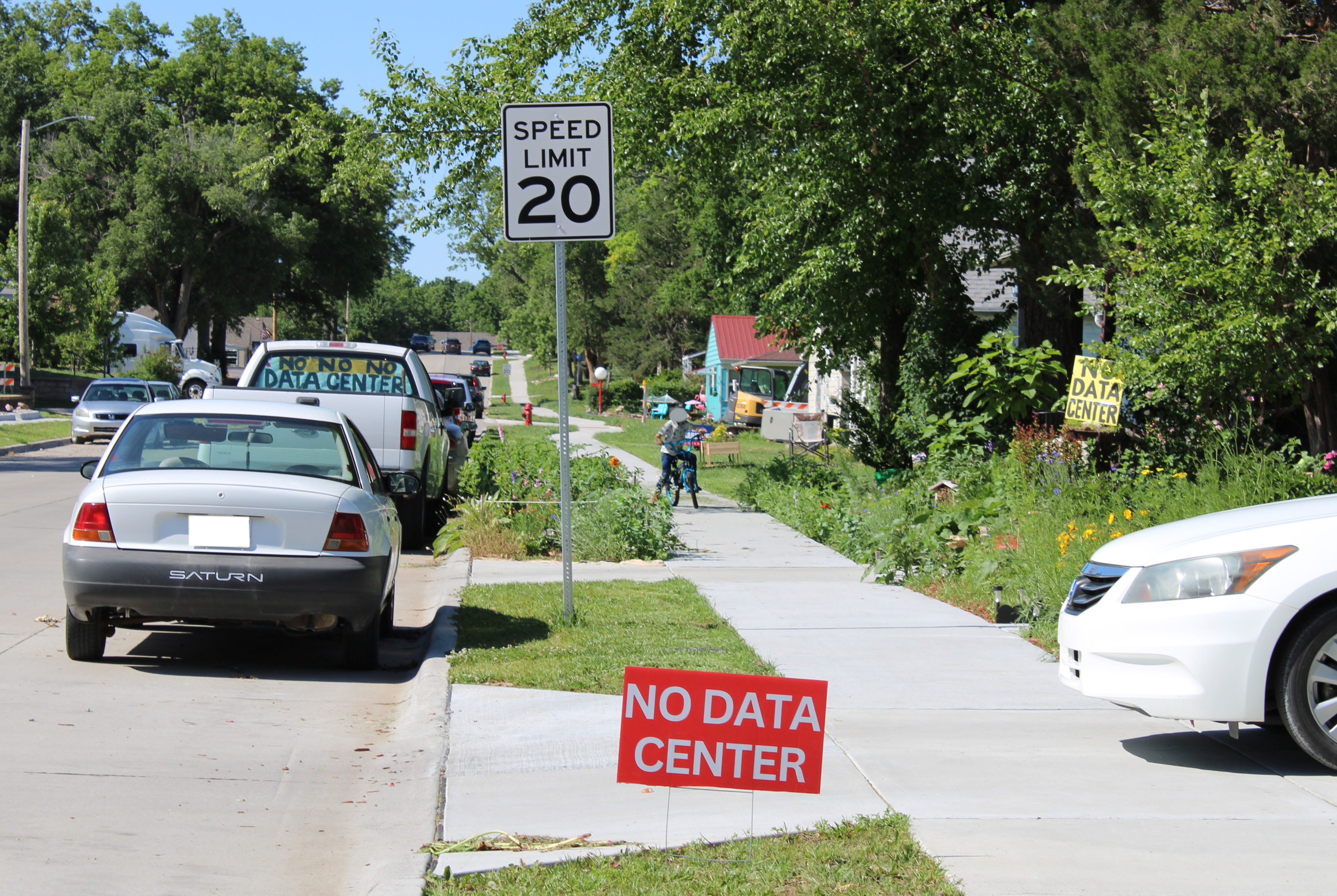
Though many Democratic officials and candidates remain beholden to the deep-pocketed interests behind data center development, a growing number have seen an opportunity in the outrage — and made the fight against these hulking structures part of their pitch to voters. In Texas, James Talarico has proposed ending state tax breaks for data centers and giving local communities the power to decide whether they can be built in their towns. Sherrod Brown has run ads branding his Republican senatorial opponent as the “face of data centers in Ohio.” Abdul El-Sayed, the progressive Democratic Senate nominee from Michigan, supports a moratorium on new data centers until protections are put in place at the federal level.
Data center siting is largely a state and local matter, but without meaningful federal standards, communities across America have been left to negotiate with some of the world’s most powerful companies on their own. Perhaps the most significant effort to change that has come from Congressman Ro Khanna, whose northern California district includes significant portions of Silicon Valley. This week Khanna introduced a “Data Center Bill of Rights” that would give communities the authority to reject new centers and establish federal guidelines, including limits on electricity prices and clean energy requirements.
These proposals are a good start, but limiting the focus of Democratic tech reform efforts to data centers would be a generational missed opportunity. Moments when the public suddenly sees and feels the consequences of unchecked corporate power are rare. Democrats squandered such an opening after the financial crisis, focusing on providing immediate relief to devastated families and businesses but failing to turn public fury at Wall Street into a broader reckoning with its unchecked power and abuses. We must not make the same mistake with Big Tech today.
Reform advocates have struggled for decades to make highly consequential tech issues like privacy, surveillance, and concentration of power concrete enough for the average person to care about. But today, Americans increasingly understand the control that a small handful of tech barons hold over our work, wallets, information, and ever more provinces of our daily lives.
AI surveillance enables companies to track workers’ every move, often at the expense of their safety. Landlords and supermarket chains are using AI-driven pricing systems to squeeze consumers on rent and groceries. Social media platforms surveil young people, selling their data and feeding them harmful content. Crypto tools, sometimes marketed as helping marginalized communities build wealth, are plagued by operational delays and hidden fees. Data centers are the physical manifestation of years of creeping disempowerment. And the architects of these practices have become richer than anyone in the history of the world, even as Americans struggle to keep up with the cost of daily life.
Despite these and other documented harms, the U.S. has failed time and again to establish any meaningful governance of the technology industry.
Herein lies the unique opportunity for Democrats. With more Americans than ever connecting the dots, a party wrestling with how to convince a skeptical public to trust them with political power once again has a new entry point to become the standard-bearer of progress on a winning issue.
Ahead of the coming midterm and general elections, progressive activist groups and Democratic elected officials must cohere around an ambitious tech reform platform. But it matters how these ideas are framed. Public interest policy proposals often come in wonky terms difficult for the average person to map onto issues they care about: repeal Section 230; net neutrality; federal investment in semiconductor manufacturing; comprehensive data privacy; fight algorithmic discrimination. These ideas require explanation and have difficulty competing in a crowded marketplace of political priorities.
Instead, the North Star of such an agenda should be legibility and ambition — bold, clear policy ideas a president could announce in a State of the Union Address as a major breakthrough for working people. Think cancel student debt, ban non-compete agreements, universal healthcare. Each is a case study in how policy framed with pith and poise can change the national discourse and ease the path for progress. For the substance of reform, there is no shortage of ideas: look to, among others, the Roosevelt Institute, the AI Now Institute, the Center on Democracy and Technology, California’s TechEquity organization, all of whom have laid out politically imaginative agendas. Against strong antidemocratic headwinds, anything less ambitious will fail; in this political environment, only bold ideas can survive, compete, and inspire action.
The coming elections will be many things, not least a verdict on the fate of our democratic institutions. It will also be the biggest opening in modern American history to limit the unchecked power of the tech elite. Seizing on the wellspring of opposition to AI, now is the time for Democrats to turn popular anger into a political mandate with the force and momentum of what Victor Hugo called “an idea whose time has come.”
Ami Fields-Meyer is a political strategist, former White House senior policy advisor, and New York Times bestselling author of ON COURAGE.


It's almost too late already for these discussions to begin. Laws should have been written already and need to be presented NLT January 2027. The protests against data centers are a good start, though.
I was hoping for suggestions about what that framing could be.