


In a 2024 interview, Dr. Clarence Jones reflected on working with the Rev. Dr. Martin Luther King Jr. and said he told Dr. King, “I hear your voice in my head. I hear your voice in perfect pitch. So when I write, I can write words that accurately reflect the way you actually speak.”
King laughed.
“Man, you are scary. It’s like you’re right in my head.”
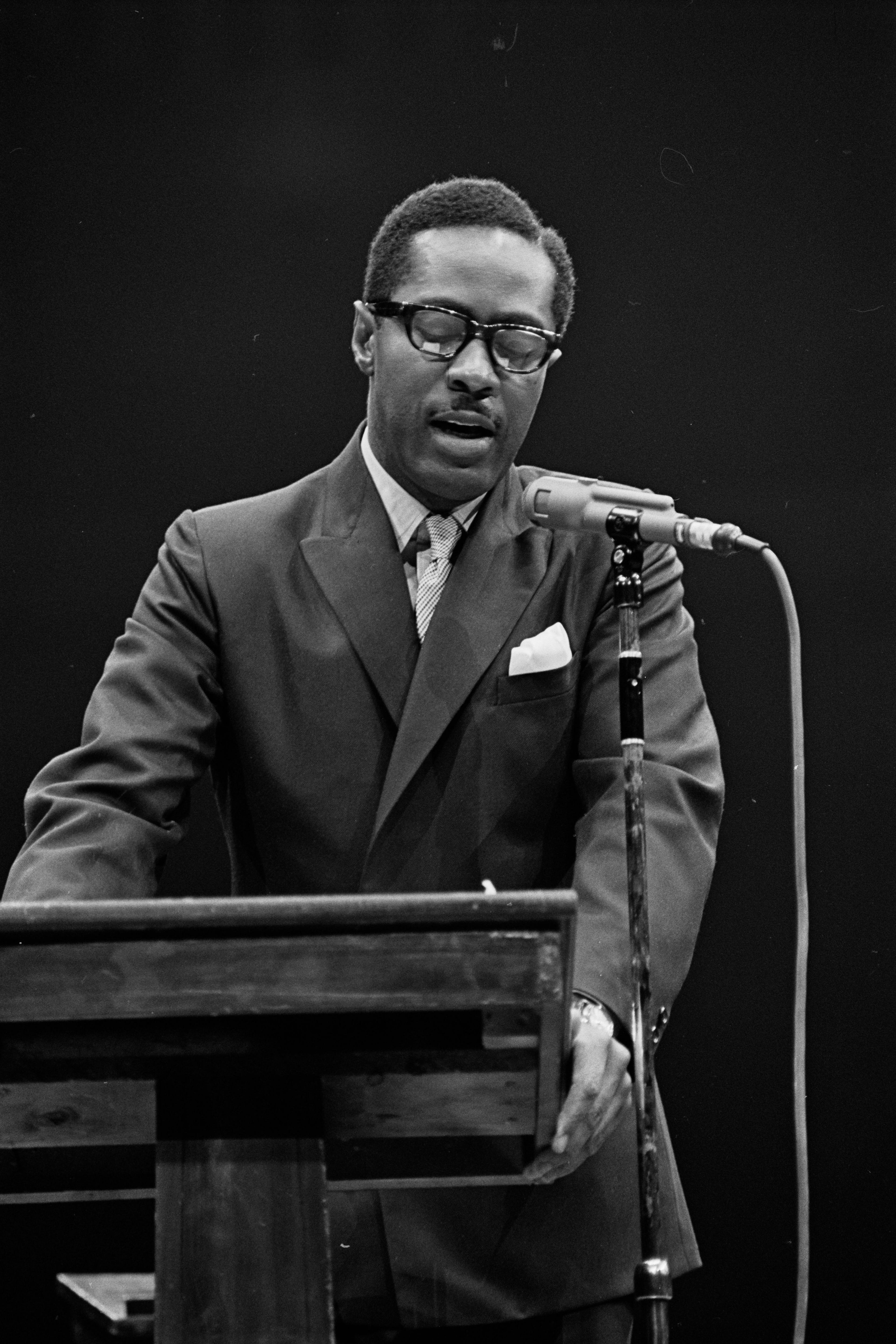
For many people, Dr. Jones will rightly be remembered for his role helping shape Dr. King’s “I Have a Dream” speech and for preserving and helping bring the “Letter From Birmingham Jail” into the world. But his legacy was far larger than any single speech.
The same movement that needed speeches also needed newspapers. It needed radio stations. It needed lawyers. It needed organizers. It needed strategists. It needed people capable of helping communities understand themselves and capable of helping the nation understand what it preferred not to see.
The Black press records history.
Speechwriters help create the language history remembers.
Clarence Jones spent his life doing both.
In the days following his death in May, I asked Black speechwriters across generations to reflect on what Dr. Jones meant to them and what his legacy says about the profession.
For Brandon Velez, a founding member of Speechwriters of Color, Jones represented the strategic role speechwriters play:
“People think that our job is just to ‘make this sound nice’ or ‘find a way to tie this all together’ and the job is much deeper than that. This job is about refining and amplifying our principals worldview and ensuring that worldview is consistent but also malleable in light of new information and circumstances. We’re often the conscience of the comms shop and help leaders think through the moral, ethical, and reputational dimensions of issues — something that is increasingly valuable in a moment where everything is being reduced to efficiency.”
Brandon’s reflection speaks to a reality Jones embodied throughout his life: Speechwriters are often far more than writers.
Brenda Jones, longtime speechwriter and communications director for Rep. John Lewis and senior presidential speechwriter for President Joe Biden, reflected on another dimension of the craft: trust.
“History is often attributed to the most charismatic or famous, but history is truly made by a congregation of men and women. The speechwriter is a key member of that assembly, often required to labor alone under great pressure to rise to historic occasions. Clarence Jones, like any great speechwriter, was a bulwark buttressing the mission of Dr. King. It must have been terrifying at times to be asked to approximate the voice of such a great orator, theologian and philosopher, when he did not have the time to contemplate and work out a speech himself. It is a testament to the power and depth of Clarence Jones in his own right that King relied on his assistance. It would require a deep comprehension of King’s own aspirations, profound perception of King’s calling as a moral leader, and a strategic approach to each speech in order to ensure Dr. King was fully prepared.
“Great speechwriting also requires humility, especially when the principal is such a great orator in his own right. The speechwriter must recognize a good speech can be conveyed verbatim, but more than anything it should serve as a launch pad for a great orator that ignites him to soar into his own atmosphere and deliver the message meant for that moment sent from the divine.
“Speechwriters who work intimately with their principals know when they have finally captured the essence of the speaker. They can channel their thoughts and hear them voicing what they have written when the words fully match the moment. When it is done well, speechwriting is an intimate act that entrusts the writer with the speaker’s heart and soul. It requires talent, ability, and a profound comprehension of the man, the moment, and the strategic message that must be delivered at that time. Such a relationship is not automatic. It must be cultivated, but when that summit is reached — as it was between Kennedy and Sorenson, Reagan and Noonan, King and Jones — then those words may become symbols that define the hopes and dreams of an entire generation.”
Jones’s story about hearing King’s voice “in perfect pitch” feels especially resonant alongside Brenda’s description of speechwriting as “an intimate act.”
For Terry Edmonds, the first Black chief speechwriter to a president of the United States, Jones represented a lineage stretching from the civil rights movement to the White House:
“My entry into the world of speechwriting was largely inspired by the humanistic vision and eloquent speeches of Dr. Martin Luther King, Jr. Long before my first speechwriting gig, I assumed that all of the world’s great speeches were entirely self-written. My respect and near reverence for Dr. King, especially, did not allow me to imagine that he had a speechwriter. I did not learn until years later that Clarence Jones had assisted in the crafting of a number of Dr. King’s speeches, including his famous ‘I Have a Dream’ speech.
“One of my biggest regrets is that I never got to meet Clarence Jones, who, like Kennedy speechwriter Ted Sorenson, reminded us that the best speechwriters are not merely ‘wordsmiths.’ When given the opportunity, they can play an invaluable role as counselors and strategists who bring unique insights and eloquence to the speeches they craft for the leaders who rely on them.
“I am especially moved by the fact that, as a Black speechwriter and civil rights warrior, Clarence Jones’ words and insights were instrumental in establishing Dr. King as an international civil rights and human rights icon. Dr. King’s vision, shaped with the help of Clarence Jones and a cadre of courageous men and women civil rights foot soldiers, continues to inspire new generations of freedom loving people of all races around the world.
“I am proud to have stood on his shoulders as the first African American chief speechwriter for a United States President, Bill Clinton. Like Dr. King’s reliance on Clarence Jones, President Clinton gave me the opportunity to both craft speeches and participate in major policy deliberations, most notably as a strategic partner in his historic efforts to foster racial reconciliation and build One America.
“At a time when many of the civil rights gains that Dr. King, Clarence Jones and so many others fought and died for, are on life-support, the values and voices of Black speechwriters are needed more than ever.
“A final thought: I am anxious to see the new Clarence Jones documentary directed by Stephen Curry: The Baddest Speechwriter of All.”
Terry Edmonds’s reflection reminds us that Dr. Jones’s legacy extends far beyond the civil rights era.
If Terry speaks to lineage, Gevin Reynolds, former speechwriter to Vice President Kamala Harris, speaks to inheritance.
“Clarence Jones helped make America a better country. His legacy lives on in the words he wrote, the justice he delivered, and the doors he opened for people like me. As a speechwriter and a lawyer, I hope to keep his memory alive.”
Taken together, these reflections reveal why Clarence Jones’s life cannot be reduced to a single speech.
He was a lawyer, strategist, publisher, civil rights leader, steward of the Black press, and one of the great speechwriters of his generation. He understood that newspapers, radio stations, legal arguments, organizing campaigns, and speeches were all part of the same project: shaping how people understood themselves and the world around them.
May his memory be a blessing.
Michael Franklin is the founder and chief thought leadership officer of Words Normalize Behavior, a speechwriting, executive communications, and coalition-building agency. He is also the co-founder and executive director of Speechwriters of Color.

A masterful essay. Thank you for educating your readers on this important aspect of the power of speech to support a movement.