


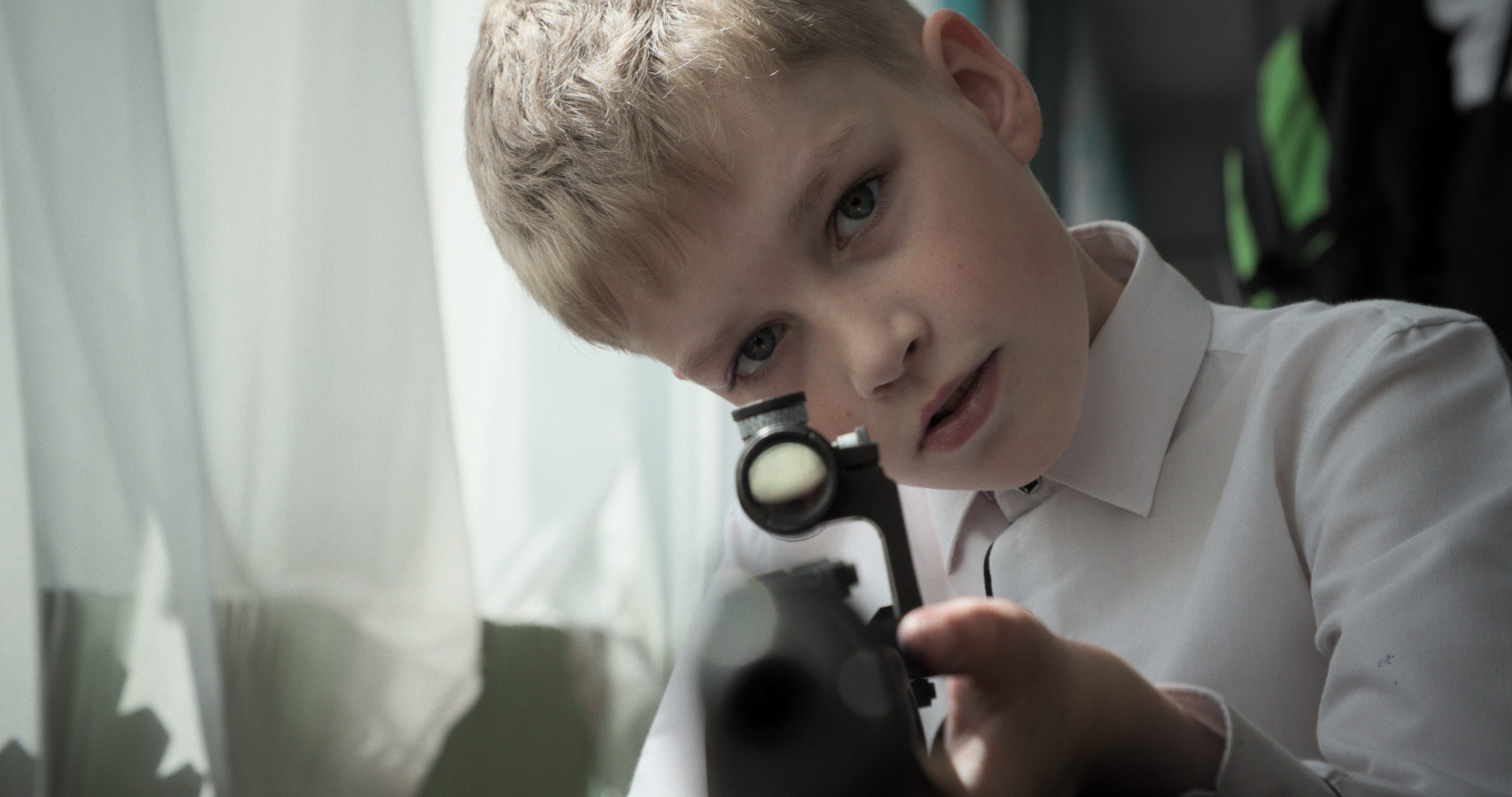
“Love for your country is not about putting up a flag,” says Pavel “Pasha” Talankin in Mr. Nobody Against Putin. “It is not about singing the anthem, either. It’s not about exploitation and propaganda. Love for your country means saying ‘We have a problem.’”
Talankin is a teacher at a primary school in Karabash, a small town in Russia’s industrial heartland known for its copper-smelting plant — and not much else). He’s also the subject of Mr. Nobody Against Putin, which was filmed over a two-year period beginning in 2022. The documentary offers a chilling glimpse at life inside Russia following the invasion of Ukraine, as the country undergoes a swift and sweeping process of militarization.
Talankin loves his hometown and its gray Soviet buildings, and he is equally beloved by his students, who see his classroom as a safe space for expressing themselves. But things begin to change after the outbreak of war, when Talankin is assigned to film daily activities at the school and upload the footage to a government portal. The process is supposed to ensure that the school is complying with a mandated curriculum of pro-war propaganda.
Instead, the material has been used to create one of the most unsettling, darkly absurd documentaries in recent memory. Directed by Talankin and David Borenstein, Mr. Nobody Against Putin looks at how Russian schools are becoming places for ideological indoctrination rather than education, in accordance with Vladimir Putin’s adage that “commanders don’t win wars, teachers win wars.”
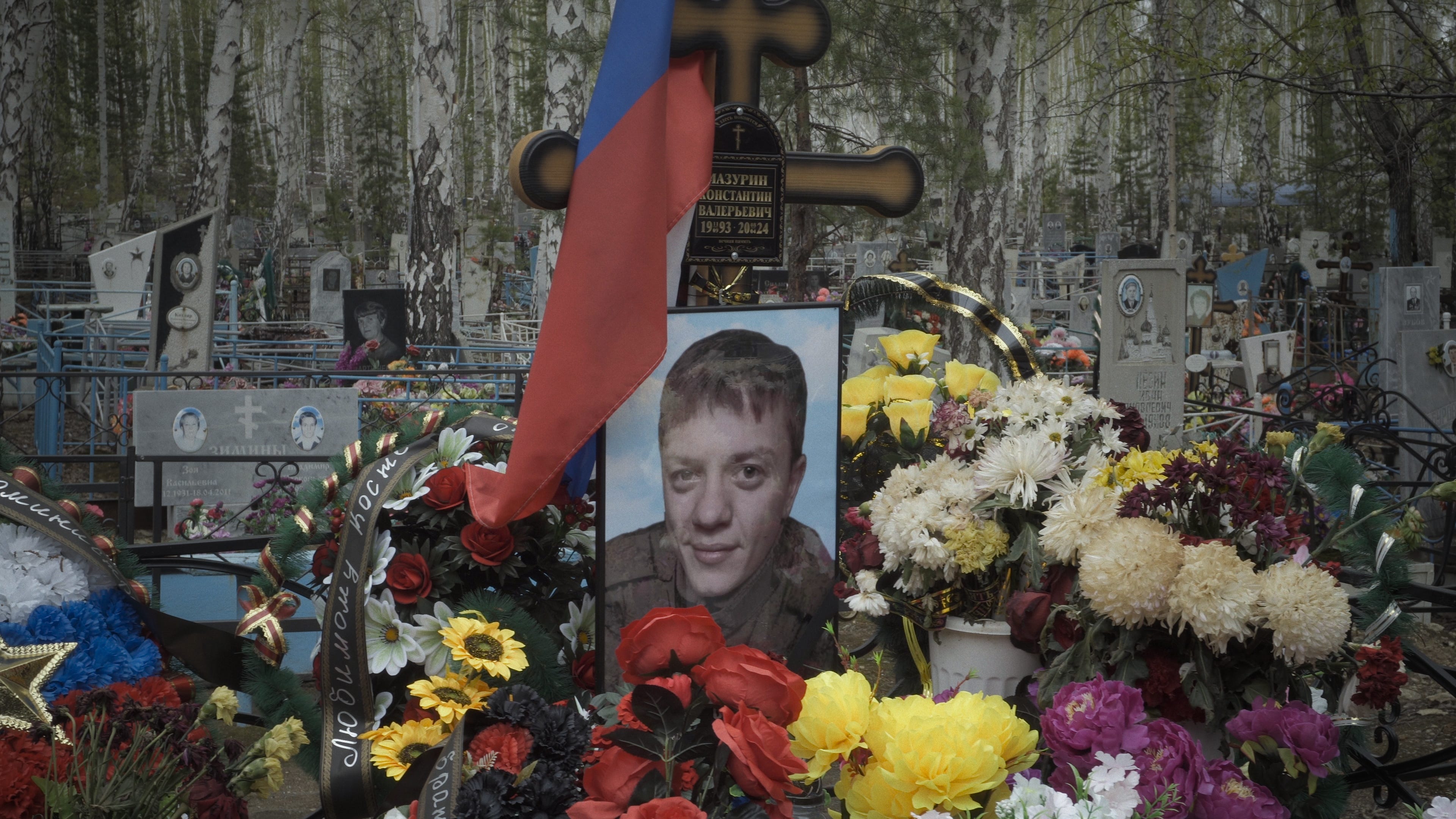
Through Talankin’s eyes, we watch as an ordinary community is transformed by the regime’s propaganda. We see students goose-stepping through the corridors and listening obediently to teachers who command them to “love your motherland out of obligation, like you love your mother.” Self-sacrifice is glorified above all else, and there are few opportunities other than the military: young people fresh out of school are conscripted into the war, enticed by the promise that — should they die — they will have flowers on their tombstones for centuries.
Talankin grows increasingly troubled by what is happening in his community, and eventually decides to flee the country. Mr. Nobody Against Putin won the Oscar for best documentary feature last month, a testament to how its themes resonate well beyond Russia’s borders.
The project dates back to 2022, shortly after the outbreak of the war, when Talankin was introduced to Borenstein, an American filmmaker living in Denmark. “He was depressed. He felt so trapped in the system,” Borenstein recalled in a recent interview.
They began speaking regularly via encrypted communication channels, and Talankin would share footage from inside Karabash, with the idea of making a film that captured the reality of life for ordinary Russians at a pivotal moment in history.
The material Talankin sent was so compelling that, after a few months, Borenstein asked him to sign on as the film’s co-director, as well as its subject. The footage reminded Borenstein of How to With John Wilson, the sublimely weird HBO docu-comedy filmed (largely) on the streets of New York with a small camera. “It was just him walking around town, on a really cheap camera,” he said. “I found what he was doing was actually really inspiring me.”
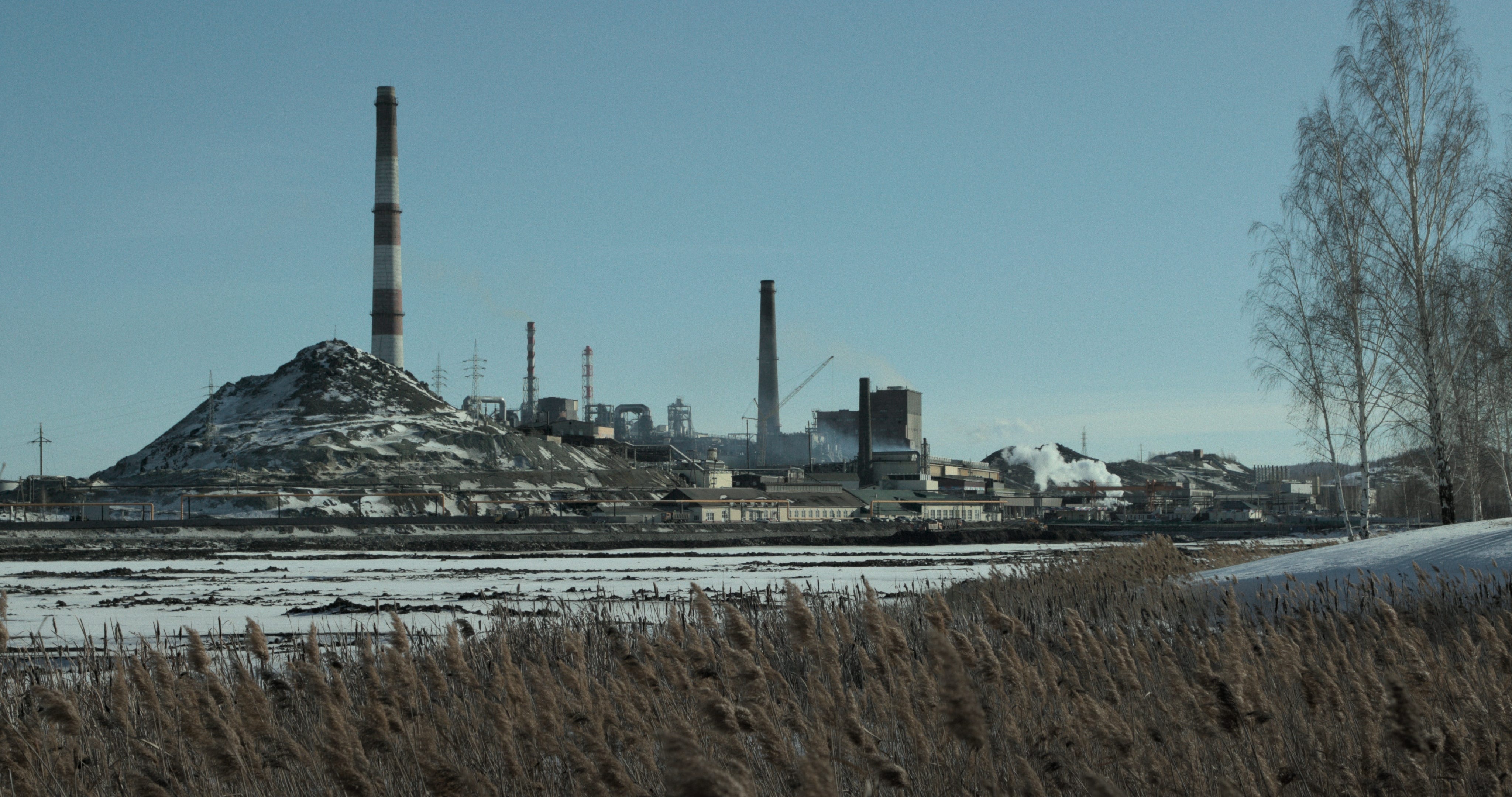
Extensive measures were undertaken to ensure the safety of everyone involved in the project (including an unnamed cinematographer working in Karabash). An early chunk of the money from the BBC went to security consulting. “We developed a protocol for filming and transferring data safely through encrypted servers,” said Borenstein.
They also made editorial decisions that were, at least initially, motivated by security —like telling the story from the perspective of a single person rather than multiple characters. “The idea of centering it around Pasha was the best decision for the film. But in the beginning, it also was a security measure,” Borenstein explained. “We can’t evacuate everybody from Russia, so this film really has to focus on one character who is willing and able to make that sacrifice. And that was Pasha.”
The film consciously subverts the cliches of the “inspirational teacher” movie, with Talankin as the beloved instructor who eventually becomes estranged from his own students, rather than inspiring them to greatness. “Internally, we’ve been calling it Navalny meets Mr. Holland’s Opus,” Borenstein said.
The filmmaking process gave Borenstein an unfiltered look at life inside Russia as the war was raging. Borenstein recalls a “history lesson” taught by a representative of the local ruling party, Pavel Abdulmanov, that was filmed just a few weeks after the invasion. “He says, ‘If you don’t love your country, just get out. You’re a parasite’ to these 10-year-old kids in his class,” Borenstein recalled. “This was really early on, so the whole world was talking about Ukraine, and here I was looking at this really privileged footage from within Russia that provided so much insight into this insane, full-scale invasion that the whole world was trying to wrap their head around.” (Abdulmanov, who also expresses admiration for Stalin’s inner circle and their “interesting jobs,” is later named teacher of the year and wins a luxury apartment.)
Every day or so, Talankin would share new footage, and every day or so, “I saw how this school was shifting and changing,” Borenstein said. “I started to feel like I was this weird alien observer, in this small school that was on the other side of the world.”
Throughout the filming process, Borenstein encouraged Talankin to open up on camera. The film is dotted with confessional-style interviews in which the teacher shares his perspective on the political situation at home. Increasingly disturbed by what’s going on at home, Talankin begins to lash out — at one point playing Lady Gaga’s rendition of “The Star-Spangled Banner” during a patriotic ceremony. “My goal was bringing him out as a character, and then figuring out a way to universalize his takes on Russia,” Borenstein said.
The goal was “to have this not just be a film about Russia, but have it be a universal film about democratic backsliding, about how we lose our country, about how complicity and apathy result in terrible situations,” Borenstein said. “I was really interested in finding any way to bring those themes out in the story.”
At the Academy Awards last month, Borenstein made one of the night’s most memorable speeches. On a night when few other winners directly addressed the political climate in the United States, Borenstein minced no words:
Mr. Nobody Against Putin is about how you lose your country. And what we saw when working with this footage, it’s that you lose it through countless small little acts of complicity. When we act complicit when a government murders people on the streets of our major cities. When we don’t say anything when oligarchs take over the media and control how we can produce it and consume it. We all face a moral choice. But luckily, even a nobody is more powerful than you think.
Borenstein had prepared some remarks ahead of time, but mostly spoke off the cuff onstage at the Dolby Theatre. “I knew I wanted to say something that drew a parallel between Russia and the United States,” he said. Throughout the making of the film, the creative team regularly discussed the similarities between what was going on in the United States and what had already happened in Russia, particularly in the early years of Putin’s reign.
Borenstein’s Russian colleagues rejected comparisons between the U.S. and Russia, “because the United States right now is transforming at a quicker pace than Russia did in the first years of Putin’s rule,” he recalled them saying. “That just underlines the importance of pointing this out, because there’s a point where it gets so far that it becomes much more difficult to resist.”
Watch at Kino Film Collection, or in select theaters.
Meredith Blake is the culture columnist for The Contrarian
I only have to copy this line from the article: "...a universal film about democratic backsliding, about how we lose our country, about how complicity and apathy result in terrible situations." Nothing I can say is more eloquent that this.