

By Terry Edmonds
On Tuesday night, Donald Trump will deliver the first State of the Union of his second term. Despite historically low poll numbers and persistent questions about ethics, illegality, and competence within his administration, we can expect that he will give himself an “A” in every aspect of governance — economic, social and foreign policy. We can also expect to see the usual up-and-down partisan applause from opposite sides of the aisle, with Republicans springing to their feet on cue, and Democrats, at least those who choose not to boycott the event, remaining firmly glued to their seats. Perhaps they should all be required to wear seat belts.
What was once a time-honored ceremonial occasion — a chance for the nation’s chief executive to present a unifying national agenda — has morphed, in the Trump years, into a predictably partisan recitation of “accomplishments” and grievances.
As the chief speechwriter for Bill Clinton, I looked forward to the State of the Union with both anticipation and reverence. The White House speechwriting team viewed it as the annual “Super Bowl” of speeches. Months before a word was written, we took direction from the White House policy group and from Cabinet secretaries, outside advisers, prominent thought leaders, and, of course, the president himself. The drafting was exacting, exhaustive, and excruciatingly collaborative.
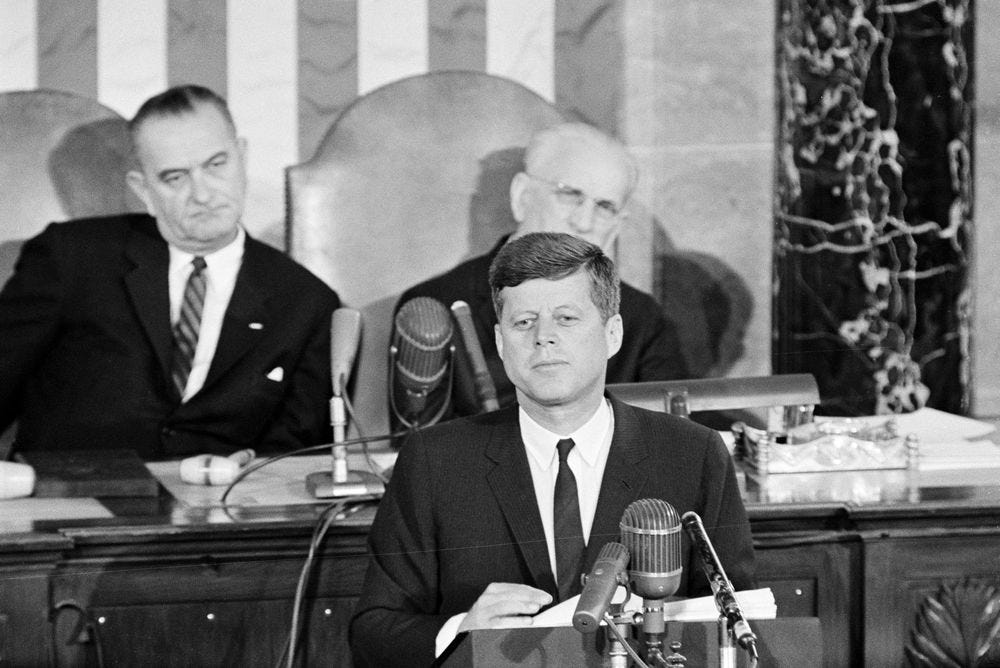
In addition to making sure we got the facts right, we understood that speechwriters were part of a long and venerated American tradition: Abraham Lincoln’s 1865 plea to “bind up the nation’s wounds.” Franklin D. Roosevelt’s 1941 articulation of the “Four Freedoms.” John F. Kenndy’s 1961 call to land a man on the moon. These were speeches with big ideas and rhetorical resonance that have stood the test of time.
My own journey from the projects of Baltimore to the White House shaped how I approached my work as a presidential speechwriter. I came of age at the height of the civil rights movement and was inspired by the powerful eloquence and courageous sacrifices of people like the Rev. Dr. Martin Luther King Jr., Rosa Parks, and Jesse Jackson. I vividly recall the night of April 4, 1968, talking on the phone with my best friend, Larry, as riots erupted in Baltimore and our mothers made sure we did not go outside. The iconic photo of Jackson and the others who witnessed King’s assassination, pointing out the bullet’s path on the balcony of the Lorraine Hotel, is etched in my memory.
In large part because of the tireless efforts of these and countless other civil rights foot soldiers, upon graduation from Morgan State University in 1973, I joined a new cadre of college-educated African Americans who began breaking systemic corporate and government workplace barriers.
Serving in President Clinton’s White House felt to me like a continuation of that unfinished work. Clinton has also credited the civil rights movement for his commitment to public service and the pursuit of a multiracial democracy. In his final State of the Union in 2000, he spoke about the creation of the White House office on One America and reminded the nation that “the most important fact of life is our common humanity.” Today, as harsh immigration enforcement and dehumanizing rhetoric spews from this White House on an almost daily basis, we are sadly moving away from that vision.
But, as Jackson implored, I and millions of Americans are keeping hope alive. The voices of the people all across this nation are rising. They are demanding that we stop sowing division and begin to reclaim our nation’s highest ideals. My great wish for Tuesday’s State of the Union is that we will see some sign that the president and Congress are listening.
Terry Edmonds is former chief speechwriter for President Bill Clinton. He was a 2021 Harvard Advanced Leadership Initiative (ALI) fellow and serves as a senior editor of the ALI Social Impact Review.
When you say "some sign that the president and Congress are listening." You mean Republicans in Congress, right? While some Dems have often been disappointing at times, tone deaf at times, downright servile at times, they overall ARE listening. Don't lump them I with intentionally and aggressively divisive Republicans. And I mean almost all Republicans. If you support Trump even a little you support divisiveness. When it comes to Trump, as the old, crude saying goes, "you can't be a ;its;e bit pregnant."
If there are the signs you mention I will have to read about them tomorrow. I can't remember the last Trump SOTU address I watched. It's a monumental waste of time, especially now. Even his one dependable happy place, the stock market, is letting him down so EVERYTHING he says tonight will basically be fantasy. I got a text survey the other day asking if the SOTU should be live fact checked...(Y) (N)? Seriously? Does it actually need to be? It would be the easiest fact-checking of all time. The minute he starts talking put up a big all-caps "Lie" and just leave it there the whole time.
Is there any The Contrarian reader who can't do a pretty reasonable imitation of what he's going to say tonight?
I hope to be able to sleep tonight, ergo no SOTU festival of fabrications for me tonight. Barring his attacking Iran with nuclear weapons during his speech, which would immediately escalate world wide, I doubt Don the Con has anything useful or productive to say this evening. Tomorrow will be time enough to assess this exercise in royal crassness and enjoy the factual rebuttals.