

By Frederic J. Frommer
Today, we’re used to seeing young athletes excel, but few will be able to match Bob Feller’s iconic 1936 performance, when the 17-year-old Cleveland Indians rookie pitcher tied the Major League Baseball record with 17 strikeouts in a victory over the Philadelphia Athletics.
Feller’s achievement came on September 13 of that year — 90 years ago Sunday. The next month, he returned to Iowa for his senior year of high school.
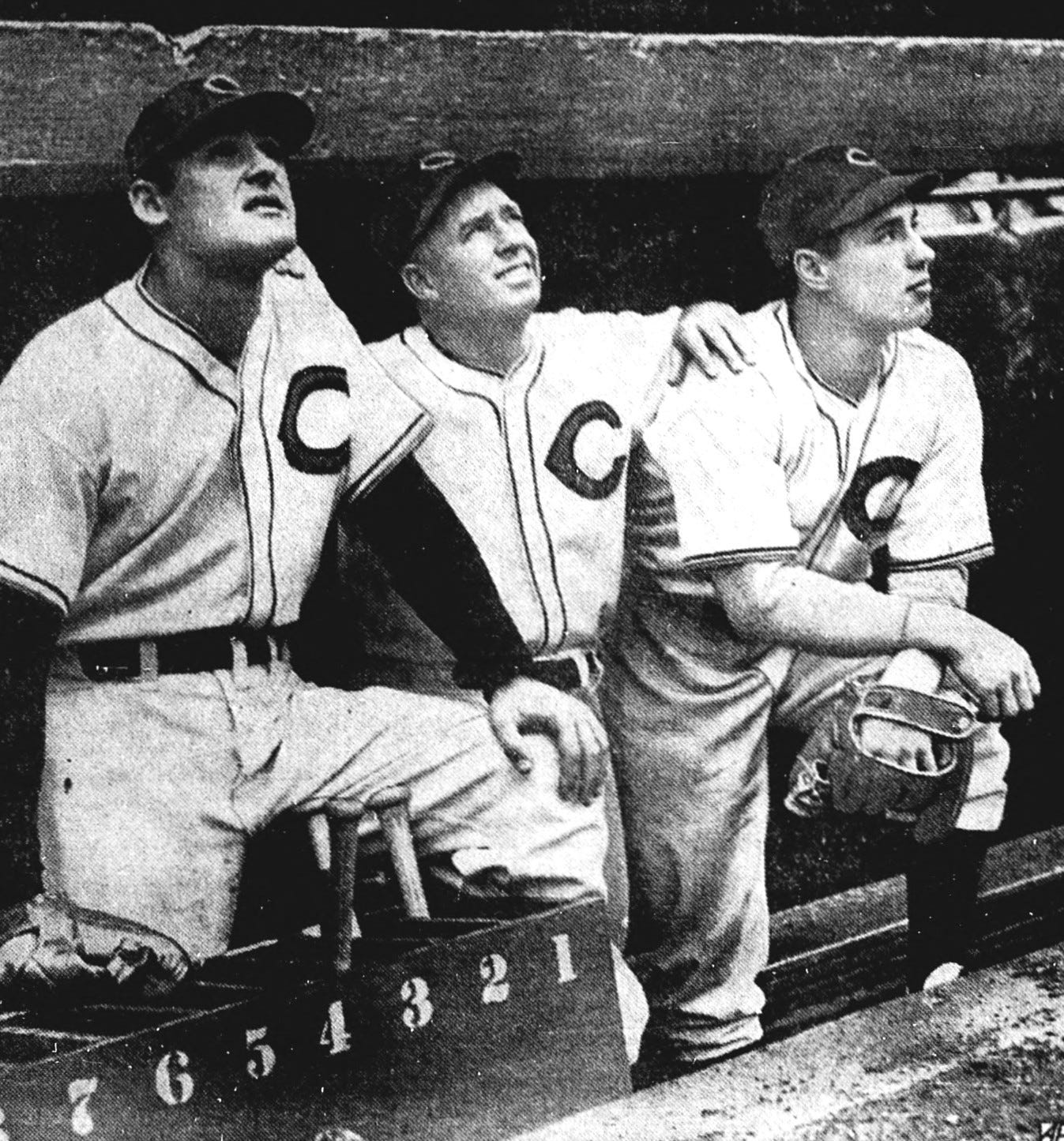
He was already a star, capturing Americans’ imagination amid the Great Depression.
“By the end of his brief rookie season, Feller was the best-known young person in America, with the possible exception of Shirley Temple,” the New York Times observed in its 2010 Feller obituary.
Since 1965, MLB has had a draft for players coming out of high school or college in the United States and Canada. But there was no baseball draft back in the 1930s, so the Indians swooped in on Feller in 1935 and signed him to a contract following his sophomore year, while keeping it a secret. That allowed him to keep playing baseball and basketball in high school.
Then on July 6, 1936, without a single inning of seasoning in the minor leagues, Feller made his pro debut in an exhibition game against the St. Louis Cardinals and its famed Gashouse Gang. He struck out eight of 12 batters.
“That kid’s a natural. He’s got everything. He can’t miss,” marveled Cardinals pitching great Dizzy Dean a day before throwing three shutout innings to win the All-Star Game for the National League.
Two weeks later, Feller pitched in his first official game, out of the bullpen. He wound up struggling in his first few appearances, all in relief — giving up seven earned runs in eight innings. But everything changed when Cleveland wisely gave him a shot in the rotation. In his first start, August 23, he fanned 15 batters in a complete-game victory over the St. Louis Browns.
Less than a month later came his 17-strikeout performance, tying the record set by one of his biggest admirers, Dizzy Dean. Feller’s pitching line in Cleveland’s 5-2 victory reflected his still unrefined talent: nine innings, two hits, two runs, and a whopping nine walks along with all those strikeouts.
In its story that afternoon, the Associated Press reported:
“Bob Feller, 17-year-old high school rookie from Adel, Iowa, wound up under a dark sky at League Park today and blazed his fast ones past the Philadelphia Athletics to strike out seventeen batters and allow only two hits, as the Cleveland Indians won both games of a double-header.”
“In one sense, I was as good that day as I ever could be,” Feller wrote in his autobiography, Strikeout Story. “I threw my fast ball past them and I had them pulling away from the plate frantically when I broke off the curve. In another, however, I must have been a pathetic sight for those people who paid their money to see a professionally smooth performance. I was rearing back like a frightened horse with every pitch, trying for the utmost in speed and break. The result was a box score which must be among the most weird pitching records ever made.”
“I was lightning fast, all right, and my curve was big,” he added, “but I was wild as a comet.”
In The Sporting News, Cleveland Press sports editor Ed Bang wrote, “The new strike-out king of the American League is Bob Feller, a 17-year-old … with a dimple in his chin and a 12-inch shell in his right arm.”
Feller improved to 3-2 with the victory and finished his rookie season 5-3 with a 3.34 ERA and 76 strikeouts in 62 innings.
After returning to his family farm in Iowa, Feller could no longer compete on the high school baseball team because of his pro debut. At the beginning of the ’37 season, he was on the cover of Time magazine, and his high school graduation that June was broadcast nationally on NBC radio.
“Feller became baseball’s biggest draw since Babe Ruth, throwing pitches that batters could barely see — fastballs approaching 100 miles an hour and curveballs and sinkers that fooled the sharpest eyes,” the Times observed.
There was no radar gun back then to measure pitching speeds, but in a famous 1946 demonstration in Washington, a photoelectric device calculated that his fastball averaged 98.6 mph. That was real heat back then, decades before fastball inflation led to an explosion of triple-digit hurlers.
In his third season, 1938, when Feller was still just 19, he struck out 18 batters to set the MLB record (since broken). He struck out 240 batters that year, the first of four straight seasons when he led the league in that category.
In an 18-year Hall of Fame career that was cut short by three full seasons and most of a fourth serving in World War II, Feller tossed three no-hitters and a dozen one-hitters. His best season was probably 1946, when he went 26-15 with a 2.18 ERA and 348 strikeouts. The Bob Feller Act of Valor Awards, which launched in 2013, is a tribute to Feller, who was the first professional athlete to enlist in the U.S. armed forces during World War II.
On the field, his 17-strikeout performance at age 17 remains one of Feller’s most signature feats. As Frank Deford observed in an essay about 20 years ago:
“Many athletes are great. Bob Feller was seminal. In the long-ago time, unlike nowadays, it was unheard of for teenagers to succeed in the big top of athletics. Children politely waited their turn in the sunshine. Feller dressed in the uniform of the major league Cleveland Indians, striking out — fanning! — American demigods ... in the only professional team sport that mattered then in the United States.”
Frederic J. Frommer, a sports and politics historian who has written for the Washington Post, the New York Times, the Atlantic and other national publications, is working on a book on ‘70s baseball.