


“What is the use of a house if you haven’t got a tolerable planet to put it on?”
― Henry David Thoreau
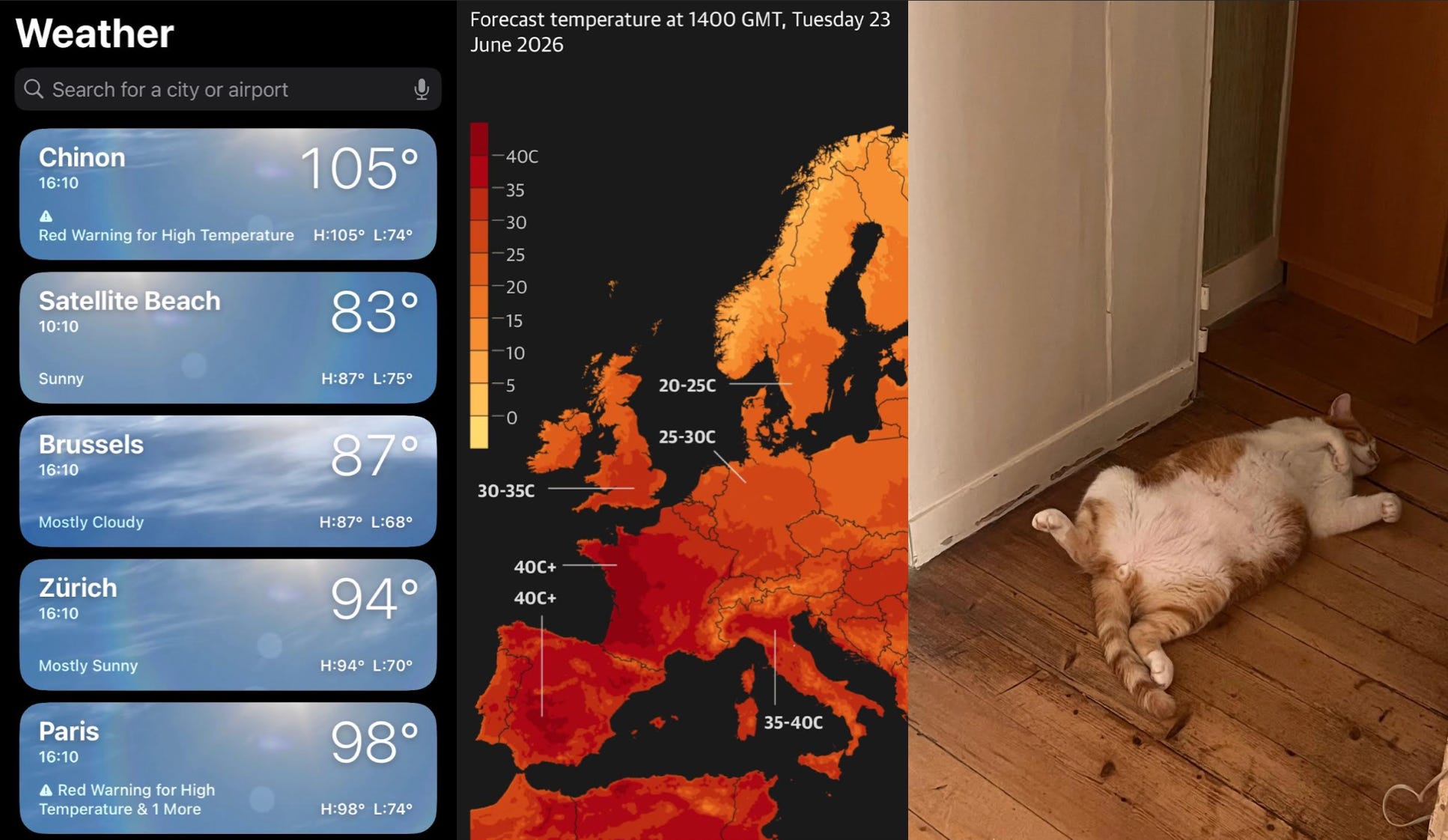
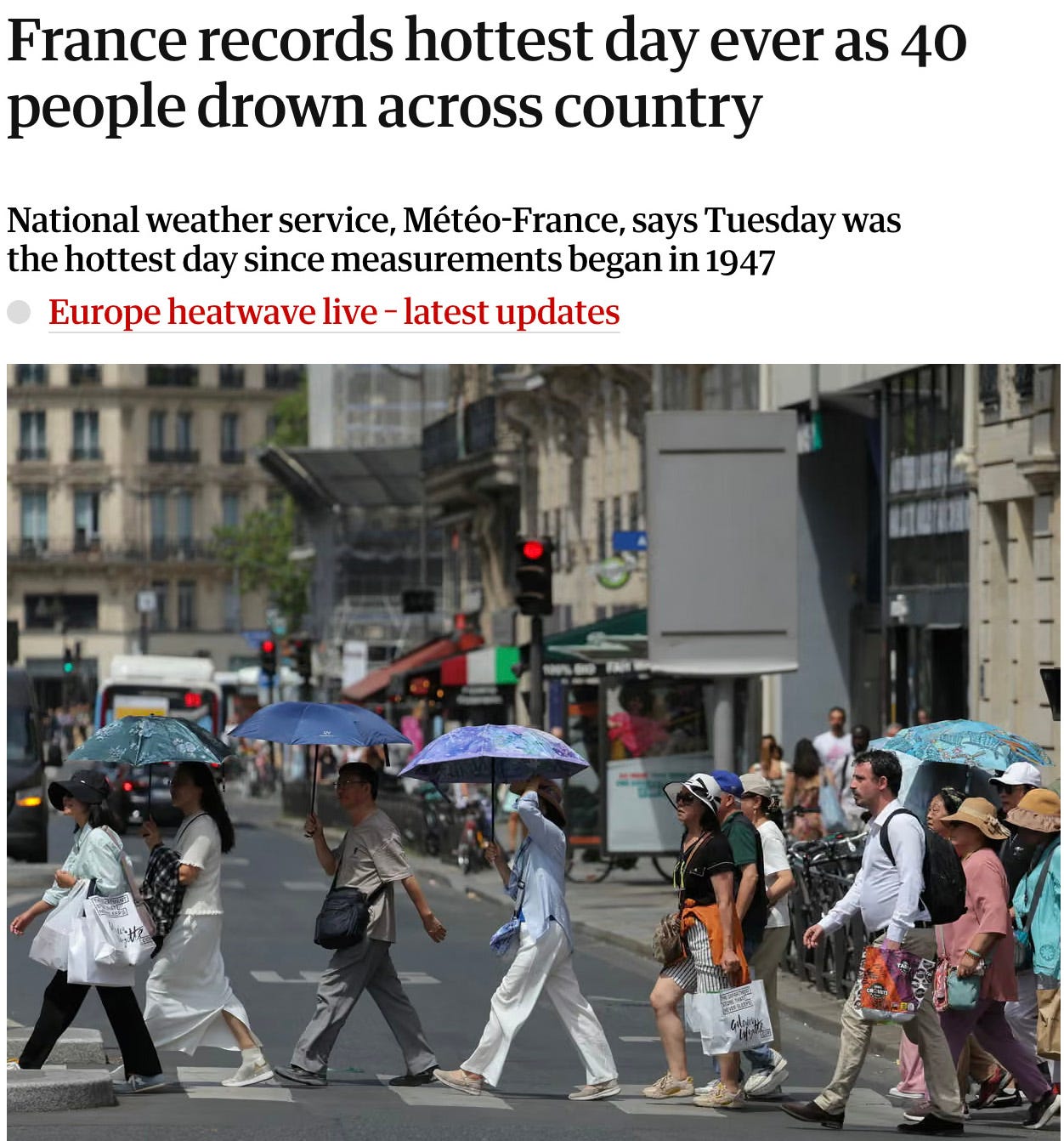
It’s only mid-June, and I am at the epicenter of a heatwave. “It’s hotter in France this week than almost anywhere on Earth” and “La France à vécu ce mardi sa journée la plus chaud jamais enregistrée” (On Tuesday, France experienced its hottest day on record ever) scream the headlines on both sides of the Atlantic.
I’m shuttered in my apartment, fan on, and the cats lying on the cool parquet floor on their backs, legs splayed like spatchcocked chickens, allowing for the maximum cooling surface. I won’t move from this position for the next several days other than to grab a quick meal in the kitchen — if I sit at the table for more than 10 minutes, I begin to feel faint in the stifling heat — or to try to get a couple of hours sleep stretched out in my bed in front of the tepid air pushed out from the other fan. It’s 105 degrees during the day (in the shade), dropping to about 102 in the evening, maybe 98 at night. I know it’s been getting hotter each of the 10 years we’ve lived in the Loire Valley, the heat more intense, the heatwaves coming more often and lasting longer. And everyone in France is looking for the right words to describe the indescribably hellish flames emanating from the earth.
My cats would call this the dog days of summer.
I was in Paris recently, standing in a crowded train station packed with travelers waiting for trains that were hours late or trains that would never come. The heat was unbearable, the sunlight pouring through the glass skylights, beating down on us unrelentingly. The heat was static; there was no air coming or going to push it around, no breeze to give us even a brief respite, no shade offered in a space designed to allow maximum brightness. And — this being la belle France — none of the food stands or newspaper shops were air conditioned, so there was nowhere to find relief. Even the tables where one could sit and drink something icy were in direct light, slammed by the blazing sun.
La canicule, the heatwave, had wreaked havoc on the French rail network: trains had been cancelled, others severely delayed, each disruption creating a domino effect of ever-later trains and an ever-increasing crowd of overheated waiting passengers frantically fanning themselves to little avail, eyes glued to the big board overhead announcing departure times that never materialized.
And then it struck me. The French train system, regarded by some as one of the best in the world, couldn’t keep up with the intensity of the heatwave. We — humanity — have been destroying the planet faster than we’ve been able to come up with solutions to the damage we’ve caused. We simply have not managed to adapt to the consequences of our own technological inventions and scientific advances.
Since I began writing this piece, la canicule has abated and normal summer weather has allowed us a bit of a reprieve. But as we buckle up and prepare for the next — it has already been announced, and the French government is already trying to prepare us — something has shifted in the French psyche. This recent heatwave had sparked a fierce debate in France about air conditioning. There has long been a deeply rooted ambivalence in my adopted country — and across Europe, I imagine — toward air conditioning, with its proponents citing the ever-increasing urgency and its critics lamenting the environmental cost. Until now, its critics overwhelmingly outnumbered its proponents. Even during the hottest summers, it was rare to hear anyone talking about air conditioning, even as some restaurants began installing cooling systems to attract more clients. (I have always found it mind boggling that no matter how insufferably hot it is outside, so many people insist on dining on restaurant terraces as if their summer vacation couldn’t possibly be complete if one ate inside.) Yet more and more tourists are abandoning the quaint hotels and local family-owned bistros for chain establishments and trendy eateries in pursuit of cold air.
Americans have been making fun of the French and their lack of air conditioning — and the French are mocking themselves à l’américain as they see themselves the butt of jokes. But the need is real, especially as we realize that most hospitals, residential care facilities, and schools are as unequipped for this extreme heat as are the rest of us.
But how do you solve a crisis when the most obvious solution only threatens to make that very crisis worse? More and more people on the continent will begin installing air conditioning, which, as we all know, will trigger — like in that train station — a chain reaction of ever-worsening climate change. It’s a Catch-22.
Meanwhile, here in what for 10 days was the hottest spot in France (and, therefore, the world), we’ve been waging our best battle against the heat, even as we hotly debate the necessity of installing the dreaded air conditioning in the hotel for our guests: We’re lucky to live in a 15th-century building whose thick, ancient limestone walls keep the warmth in during winter and hold the coolness through the long summer days. And, as they say, when in Rome do as the Romans do — or rather, when in France do as the French do: as soon as the sun rises and the temperature climbs with it, we join the rest of the population in closing shutters, windows, and curtains, keeping the cool in and the heat out, though it means sitting in the dark. And by escaping to the grocery store, making an afternoon outing of it; retreating to our local Italian restaurant for its blasts of air conditioning and chilled bottles of Lambrusco Amabile; chugging bottles of water and eating an almost embarrassing quantity of ice cream.
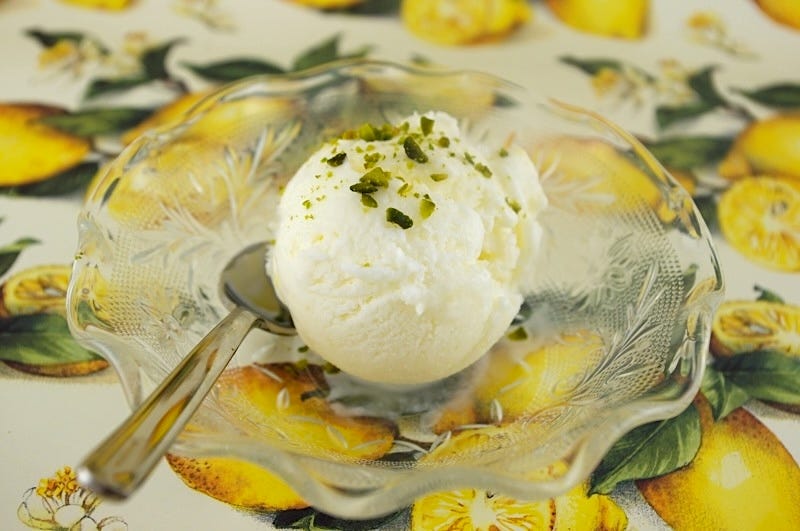
I made jam every day this past week, taking advantage of the lull between two heatwaves to clear out last year’s fruit from my freezer to make room for pints of ice cream. It’s becoming harder and harder to find real ice cream these days — ice cream made from real ingredients rather than all the artificial gunk: real ingredients like cream, milk, sugar, and natural flavorings. So, I made my own. And because I don’t own an ice cream machine — the French aren’t inclined to own too many kitchen appliances, for lack of space in our tiny French kitchens, and long content to leave it to the local glacier — I am delighted that this recipe doesn’t require one.

Jamie Schler is an American food and culture writer living in France where she owns a hotel and writes the Substack Life’s a Feast.

Looks amazing and probably has a velvety mouth feel!
Sounds delicious. Many years ago, when we got our first refrigerator (yes, I am that old), my mother made lemon ice cream for dessert every Sunday. This went on for probably an entire year, until no one in the family would eat the ice cream anymore, except mother, of course.
In the intervening years, I hadn't eaten lemon ice cream until about five years ago and discovered I really liked it! So now I get a small container about once per year, although it is hard to find.