


Now comes the hard part. The damage Trump and his cronies, including those in Congress, have done to the country, its people, its institutions, its policies, and its values is staggering. It will not be corrected overnight, or even in the next two years. No doubt, Trump’s allies — including billionaires like Elon Musk, Peter Thiel, Bill Ackman, and Larry Ellison — will pour unconscionable amounts of money into campaigns that will blame everything that goes wrong on the Democratic majority, who now share governing responsibility with Trump. There will be confrontations over investigations, subpoenas, and funding of programs that could lead to government shutdowns, along with vetoes of initiatives passed by both the House and Senate.
There will be a slew of substantive, strategic, and political ambitions Democrats in Congress will face when they assume power. But before any of those are addressed, the top priority has to be a serious reconsideration and reconfiguration of how Congress does its business, how it communicates with the American people about its efforts, and why. The challenge of determining where to begin will be immense. Voters are expecting real change, whether it is alleviating the affordability crisis, taking on rank corruption, confronting the shattered domestic and foreign policies and processes followed by Trump and his administration, or reforming our broken governing institutions.
Business as usual won’t cut it. So, what to do? Democrats, soon to be running the House and Senate, have to completely restructure the way they operate and communicate. There is a throughline to lay out: corruption, billionaire and corporate privilege, big money flooding politics, blowing up essential government services, safety nets and protections, senseless tariffs, and a reckless war have all created a toxic mix that has benefited bigwigs and caused average Americans to struggle to keep their heads above water. Congress will need to highlight who the miscreants are, in and out of government, and make clear what will be done to deal with them.
Democrats need to tell powerful stories, lay out relevant facts, put forth a road map to improve people’s lives and hold the villains accountable — not retribution against perceived enemies, but real justice.
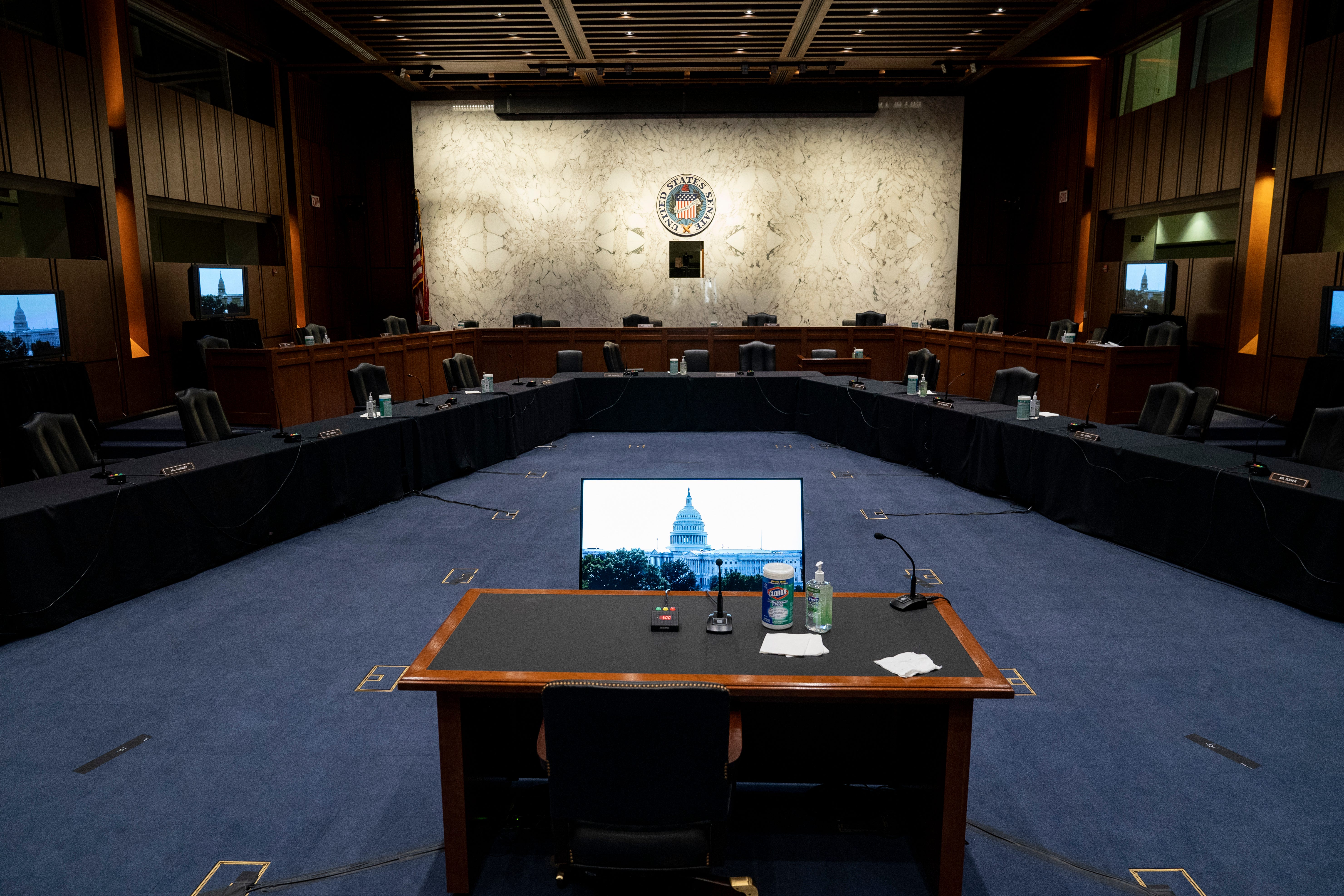
It starts with reforming the hearing process in every committee. For decades and more, committees have followed the practice of having five-minute segments for each committee member, alternating for the parties, often starting with rambling opening statements by chairs and ranking members. The process generates far more heat than light. If the witness is a hostile one — which will be the case with every hearing involving a Trump appointee — that means five minutes of him or her stonewalling, followed by five minutes of respite granted from a partisan ally likely to waste time either lambasting colleagues across the aisle or extolling the witness. And, as a general matter, majority members don’t coordinate their questions. The result is a lot of disjointed yelling, with an occasional insight or meaningful confrontation to make a sound bite.
There is a better model, one we saw demonstrated by the January 6 committee under Chairman Bennie Thompson. Start with a thirty-minute overview done by a professional staffer to lay out the premise of the hearing, followed by thirty-minute segments for each member. Make sure all the majority members are on the same coordinated page, prepared to deliver relentless follow-ups if witnesses evade, dissemble, or dance around their answers. Each hearing should have a goal — if it is a policy issue, include the panoply of those related to affordability. Inform people what the issue is, why it is important, and why Trump et al. are responsible for failures. Then articulate clearly what to do about it.
If it is about a lawless or corrupt act or set of acts, establish coherently why it was wrong, illegal, and unacceptable; who was responsible; what damage was done to the populace; and why it should result in those responsible being fired or impeached. It must become less about sound bites and dealing with Republican stonewalling, and more about what the witness did, how they did it, and what should follow.
The number of outrages and issues to cover is nearly endless, from corruption scandals — like pay-for-play pardons, crypto schemes, insider trading, and bribes from foreign governments — to tariffs, to slashing medical research while eviscerating Medicaid and health insurance protections, to cutting disaster relief, to undermining national defense and food safety. More broadly, there is the abuse of the Justice Department, the FCC, the CDC, the IRS, and the Postal Service — among other crucial institutions.
The Trump Administration has indeed flooded the zone with scandals and outrages. But the way for a Democratic Congress to combat this gross abundance is not to play Whack-a-Mole with a dozen or more misdeeds at a time; it is to have focus and discipline. One key focal point each week, starting with a press conference to lay out that week’s issue, with the relevant committees poised to take it on from their respective areas of expertise. Members should utilize every venue — the House and Senate floors, social and other media, podcasts, town halls, and prime-time debates — to communicate the key issues. That is the way to get through to a populace that is otherwise focused on their daily lives and a media that too often puts a thin veneer on most of these issues and scandals. That is also the way (if the result is not new policies forced by Trump’s vetoes or Senate filibusters) to highlight why the failure to act falls on Trump and Republicans, and what Democrats will do if they add the White House in 2028 to their majorities in Congress.
None of this is natural to members of Congress or their leaders. It is hard to change the way you have done things for decades, and hard to adapt if you are new to Congress. There will be powerful voices saying, “Hey, business as usual is what gave us these huge gains!” But no matter the inclination to revert to tried and true methods of deliberation, it is imperative to revise such practices. Otherwise, they will be perceived as just another group of politicians stuck in a system that most Americans now view with disdain and distrust. Unless our 120th Congress show an ability to bring palpable change to stalled, tired systems, their tenure in the majority will be short-lived.
Norman Ornstein is a renowned political scientist, co-host of the podcast “Words Matter,” and author of several books, including “It’s Even Worse Than It Looks: How the American Constitutional System Collided With the New Politics of Extremism.”

Thank you for articulating this alternative approach. I get so tired of watching the current "alternating 5-minute turns" approach with dissembling witnesses. The J6 committee approach was vastly superior.