


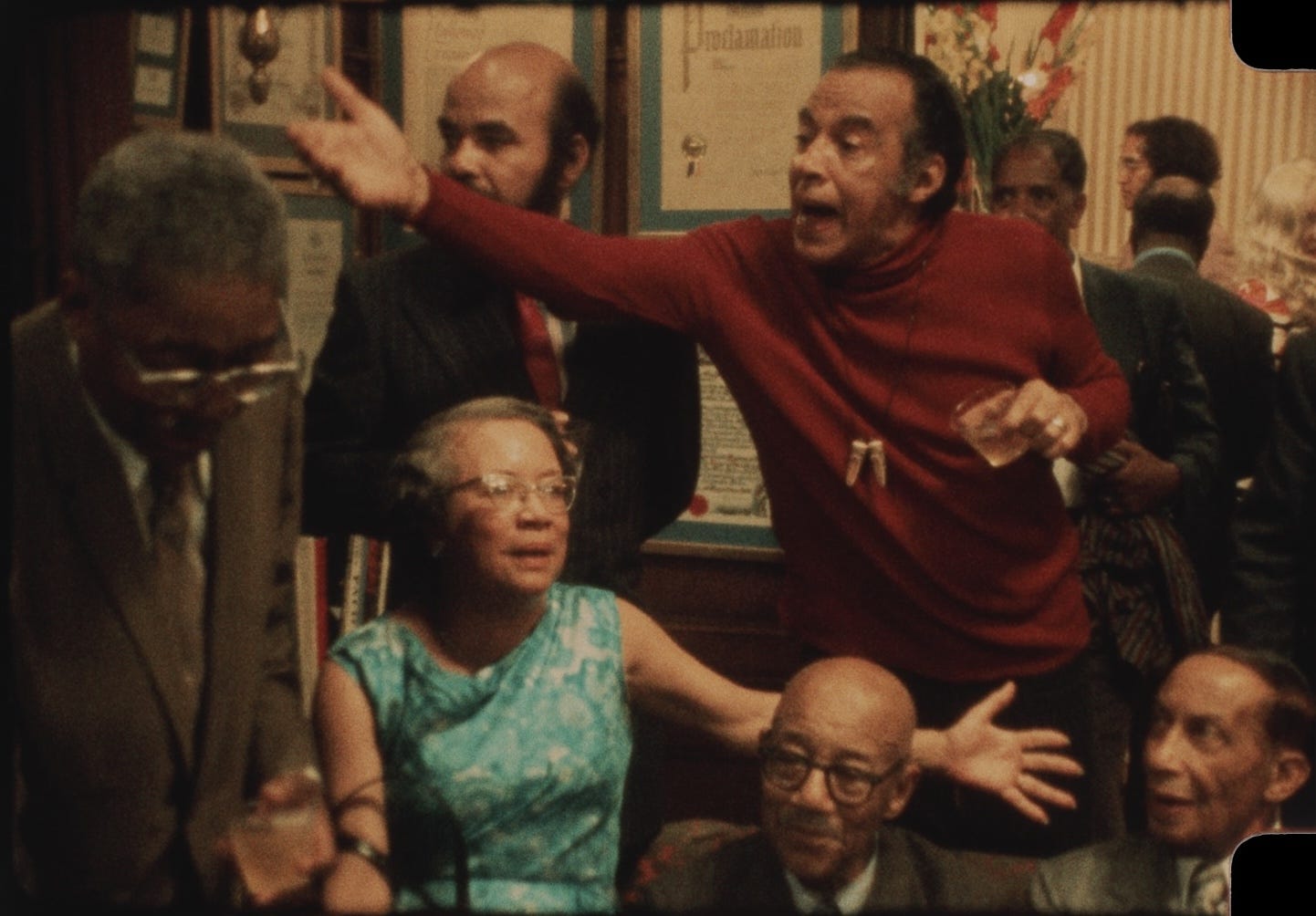
On August 6, 1972, pioneering filmmaker William Greaves gathered a group of writers, artists, activists, and community leaders at Duke Ellington’s townhouse in Harlem. Over cocktails, they reflected on the cultural and intellectual movement they had been a part of roughly a half-century earlier: the Harlem Renaissance.
Among the two dozen luminaries who gathered in Ellington’s parlor were painter Aaron Douglas, whose bold murals defined the aesthetic of the period; actor Leigh Whipper, a founder of the Negro Actors Guild and star of stage and screen who appeared in classic Hollywood films including Of Mice and Men; Gerri Major, a journalist who chronicled Black society; Regina Andrews, a librarian who hosted literary salons at her 135th Street apartment; and jazz musician Eubie Blake, who co-wrote the landmark Broadway musical Shuffle Along. (Ellington was sick and unable to attend.)
Using four cameras, Greaves and his crew spent the next four hours or so documenting his guests as they shared recollections and engaged in lively — sometimes heated — debates about the legacy of the movement. The following day, many of the subjects returned to sit for additional interviews.
Born in Harlem at the height of the Renaissance, Greaves was powerfully shaped by the movement and was an accomplished, remarkably versatile filmmaker. He co-hosted and executive produced the influential public affairs program Black Journal and directed Symbiopsychotaxiplasm, an experimental, category-defying meta-documentary that was decades ahead of its time.
In April 1972, he wrote to Jean Blackwell Hutson of the Schomburg Center for Research in Black Culture, asking for help reaching out to surviving figures from the Harlem Renaissance.
He wanted to capture the history before it was gone forever.
“It was really his gift for the future,” says his son, David Greaves. “He didn’t want these people in this time to be forgotten. And they haven’t been, because he recorded this footage.”
The elder Greaves initially thought he could use the footage in a documentary about the Harlem Renaissance called From These Roots. He continued to work on the film, which went through many titles over the years, putting it aside to make other documentaries, often about the Black experience, like Ida B. Wells: A Passion for Justice. Sadly, he died in 2014, before he could complete the project.
“He’d always considered it to be the most important thing that he’d ever put on film,” says Liani Greaves, William’s granddaughter (and David’s daughter).
Fifty-four years after that historic gathering at Ellington’s house, Greaves’s passion project has finally come to fruition, thanks to the efforts of his descendents. The documentary Once Upon a Time in Harlem, now in select theaters, takes audiences on a multilayered journey through time, transporting viewers to 1970s New York City to observe elders of the Harlem Renaissance as they also look back on the past. The film, which is already generating Oscar buzz and recently screened to rapturous reception at the New York Film Festival, is a joyful, defiant feat of historic and cinematic preservation.
Directed by David Greaves and produced by Liani Greaves, Once Upon a Time in Harlem immerses viewers within the party as guests arrive, grab drinks, and mingle in the parlor. Their conversations are impassioned, covering an array of subjects: the importance of culture versus politics, the influence of late artists like Zora Neale Hurston and Langston Hughes, the need for intergenerational understanding, and the debate over the use of terms like “Black” and “Afro-American.” Not everyone agrees, and their arguments occasionally get heated, but the mutual respect is apparent. It’s a reminder that no movement is a monolith — nor should it aim to be.
Without ever feeling dry or expository, the film is accessible to contemporary viewers regardless of their prior knowledge about the Harlem Renaissance. Captions, displayed in split screen, identify the players and provide essential context for their conversations without taking the audience out of the room. Because, as David observes wryly, “We do not want to leave the party.” Vintage photos and archival film footage, used judiciously, provides a visual reference for the art and artists being discussed.
Several particularly colorful characters stand out. Ida Mae Cullen, widow of poet Countee Cullen, is a passionate advocate for her late husband’s literary legacy. Whipper, still sharp as a tack in his nineties, recites a lengthy monologue from Mission to Moscow, the 1943 film in which he played Ethiopian emperor Haile Selassie. Richard Bruce Nugent, the queer poet and painter, is a charismatic raconteur who gravitates to the camera. (Then there are the bold ‘70s fashions, which — frankly — deserve a documentary of their own.)
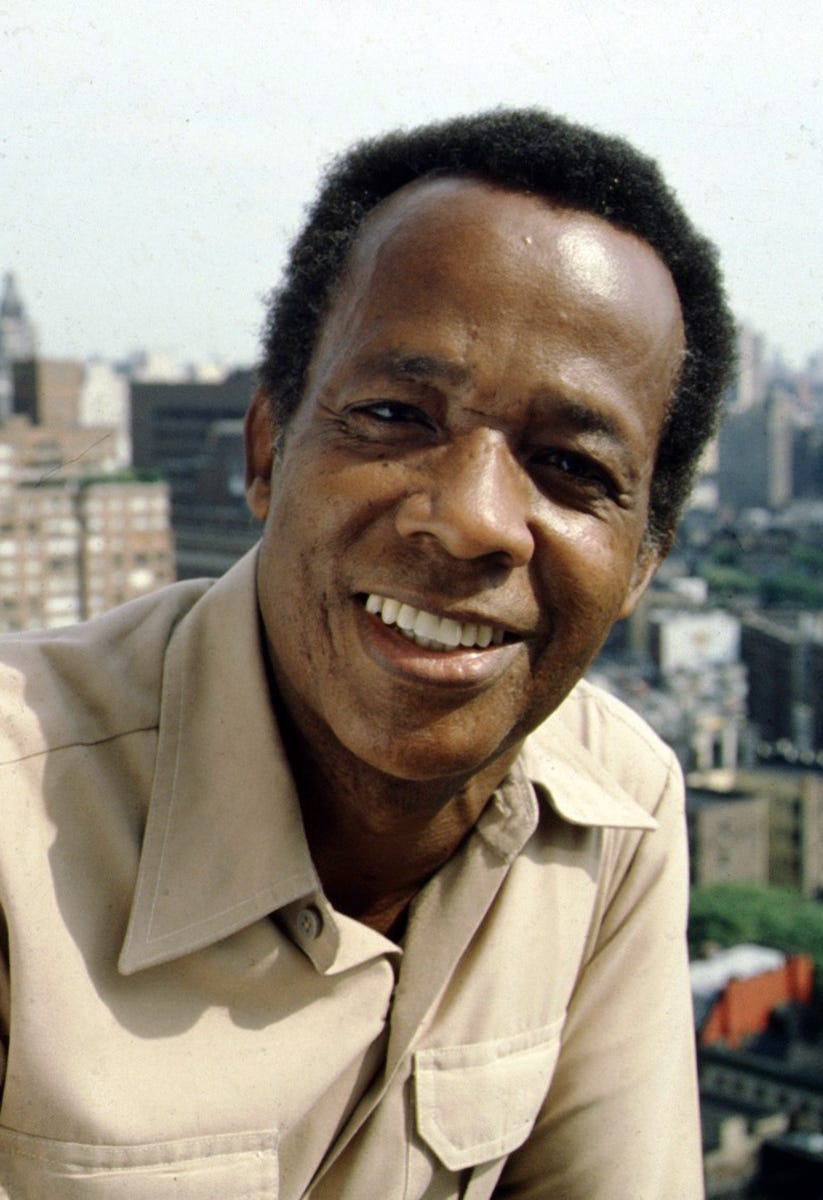
David, then twenty-six, worked as a cameraman at the party, and says he was mostly too busy thinking about the lighting to “take in the excitement of the event.” But revisiting the footage in more recent years, he found himself particularly drawn to Richard B. Moore, the socialist founder of the Frederick Douglass Book Center on 125th Street.
“He was a revelation, really,” David says. “In one of the takes while Dad is doing the interview, you can hear him say, ‘Give me another magazine [of film]! Mr. Moore, you’re costing me a lot of money here because we have to keep changing the magazines.’ The man was so fascinating, and such a font of information about Harlem and the times.”
Similarly, Liani Greaves recalls seeing some of the footage as a teenager, and while she recognized it was historically significant, she didn’t initially connect to it on a personal level.
“What surprised me most about rewatching all of it and spending so much time with the footage, is how it’s about me,” she says. “I didn’t realize that it would feel that important to me as it does.”
The film raises important questions about “how to be bold and be in community with others,” she says. She was also struck by Nugent, who says in the film that you’re not necessarily aware of the movement, or what it all means, while you’re living through it.
“You’re just doing it,” she says. “It reminds me to pay attention to my peers, to the moments that I’m in right now, instead of kind of wondering, ‘When is the next artistic movement happening?’” She also appreciated Regina Andrews and Jean Blackwell Hutson, because of how they “created space for artists and brought people together.”
After Williams Greaves died in 2014, his widow Louise Archambault Greaves devoted herself to reviving the project that became Once Upon a Time in Harlem. With the footage safely kept in cold storage, she applied for and received vital funding from the Ford Foundation. She died in 2023, and David and Liani took over the film, along with producer Anna de Mare.
They had about 60,000 feet of film that needed to be cut down to a feature-length documentary, making for some difficult decisions in the editing room. “Dad always calls this film a trailer for the archive,” says Liani. “But it’s important to note that nothing will ever be on the floor.”
There are plans to share this history beyond the film, including an immersive museum exhibition and a digital audiovisual archive of the Harlem 1972 footage that will be accessible to the public.
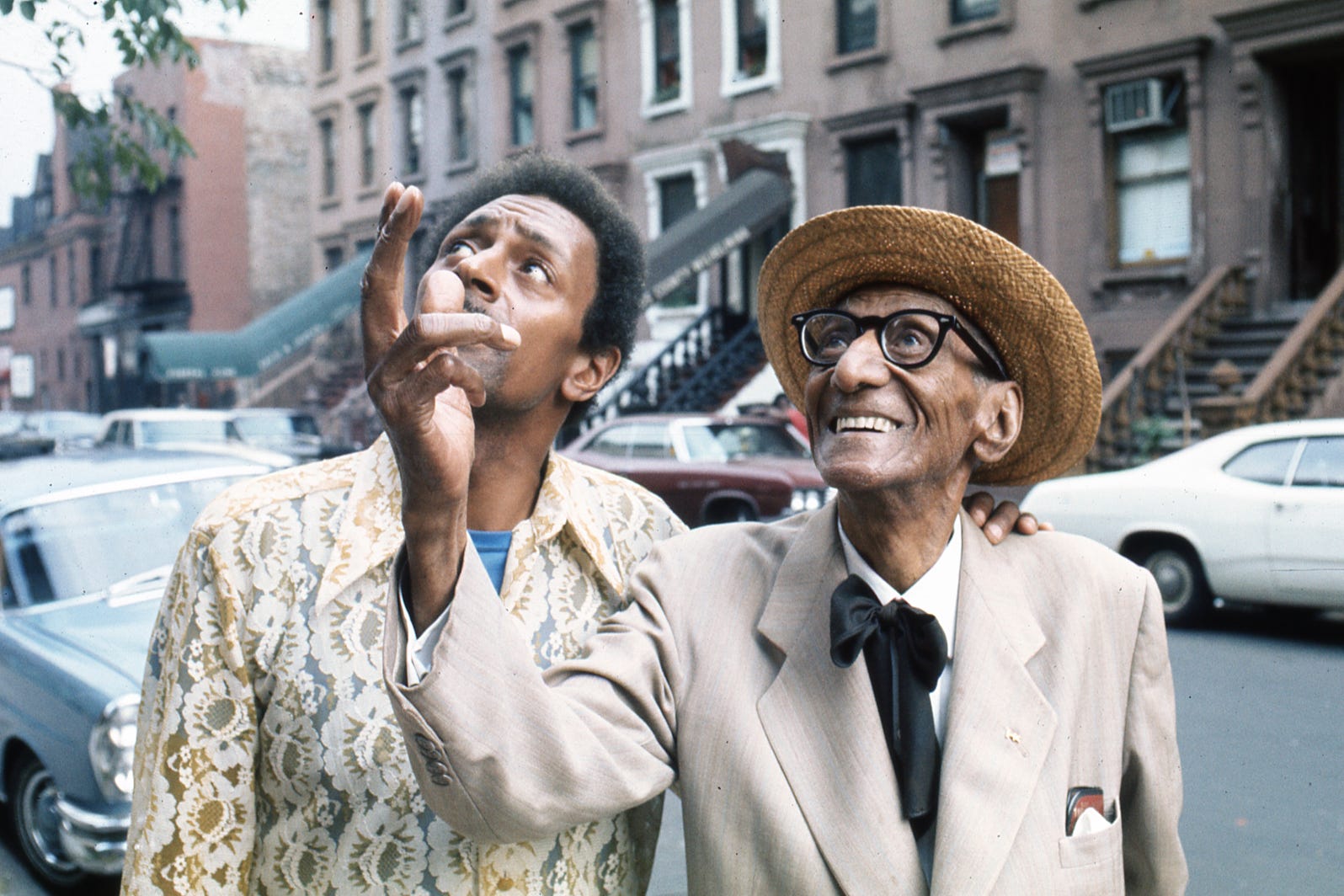
The film succeeds as a tribute to William Greaves, introducing his work to a new generation.
It also helps memorialize a vital chapter of our nation’s history at a moment when the administration is actively trying to erase the contributions of Black Americans.
Making the film “feels like service to the nation, to be quite honest,” says Liani. “[Historian] David Levering Lewis sent us an email very early on, along with a check, to say that this was priceless footage. So we handled it with that in mind, and are submitting it as an offering to the nation with that in mind.”
“The film itself has become an act of resistance,” David adds. “To be able to look at real people discussing the Black experience freely, without fear, without worrying about what folks uptown might think, as they say in the film — it’s important that it’s coming out now.”
Meredith Blake is the culture columnist for The Contrarian