

By Frederic J. Frommer
When last year’s All-Star Game was tied after nine innings, MLB turned to a home run derby as a tiebreaker. In 1970, Pete Rose took another approach.
With the score tied at 4 in the bottom of the 12th inning, Rose, the Reds star known for his hair-on-fire playing style, barreled into Cleveland Indians catcher Ray Fosse to score the winning run for the National League in front of his hometown Cincinnati fans. It’s still considered one of the most controversial plays in All-Star Game history.
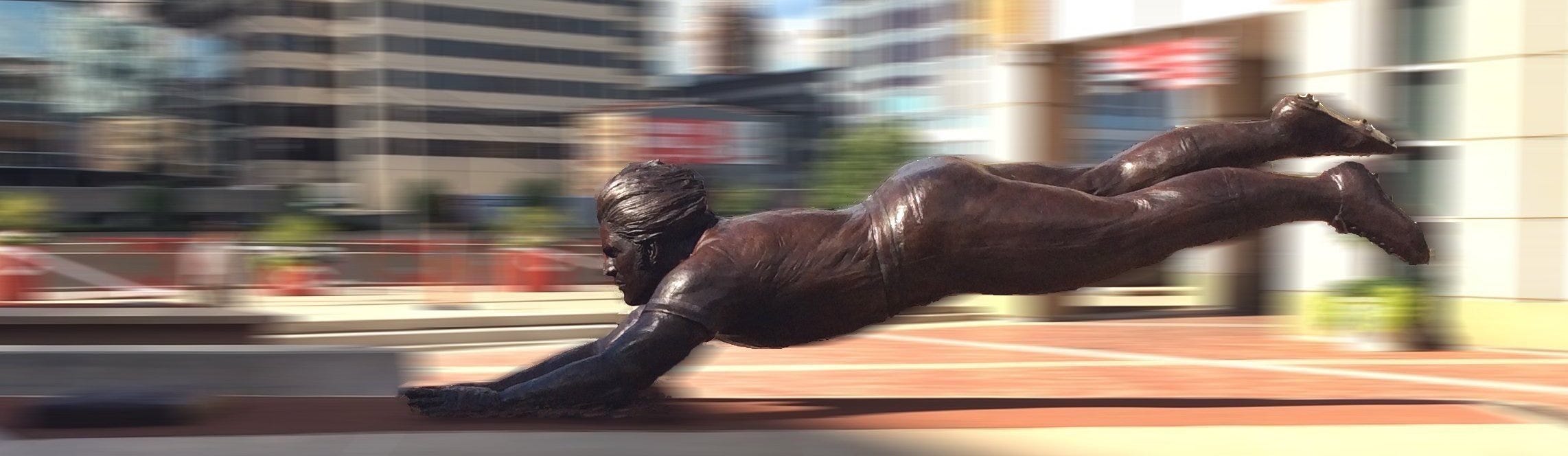
There was quite a bit of buzz leading up to that 1970 Midsummer Classic. It marked the first time MLB let fans vote in the starters in 13 years, following a 1957 ballot-stuffing campaign in Cincinnati that rigged the vote for multiple Reds starters.
“I was determined to give the voting back to the fans in 1970,” Commissioner Bowie Kuhn wrote in his autobiography. “There would be some howls, but fan voting made too much marketing sense to ignore.”
“As I saw it,” he added, “this was still a game for the fans. We should not tell them whether or not to select players with hot starts that season, big years the previous years, or great careers. It was their game and each fan could decide what the criteria should be.”
Fittingly, perhaps, the ’70 ASG was played in Cincinnati, a showcase for the Reds’ brand-new Riverfront Stadium, which had debuted just two weeks earlier, with many marveling about the ballpark’s gleaming artificial turf surface.
“I think baseball will come to this,” said Reds rookie manager Sparky Anderson. “In 10 years there won’t be any dirt. People will see you don’t get any bad bounces on this, and they’ll adopt it all over.”
There were other interesting storylines. Atlanta’s Rico Carty, who flirted with .400 for much of the first half, became the first player to win a vote as a write-in candidate after he had been left off the printed ballots. He wound up winning the batting title that year with a .366 average.
“What might have been Bowie’s Boo-Boo has turned into Bowie’s Baby after all,” The Sporting News wrote in a story at the time, referring to the prospect of one of the game’s best hitters not starting the All-Star Game.
That night, Richard Nixon threw out the first pitch, becoming the first president at an All-Star Game since Franklin D. Roosevelt attended the 1937 Midsummer Classic in Washington. Nixon was such a huge fan that he once penned an AP story naming his all-time list of baseball greats, and he had planned to throw out the first pitch at the ’69 All-Star Game at D.C.’s RFK Stadium. But rain postponed the game to the following day, and he had to leave for a trip, so Vice President Spiro Agnew filled in.
The president, wearing a baseball glove, arrived a few minutes late for the ’70 All-Star Game, causing the game to be delayed for several minutes. But he quickly won over the Cincinnati fans.
“The crowd seemed to be getting restless but Mr. Nixon charmed everyone by throwing two perfect strikes to the starting catchers — Johnny Bench of the National League, and Bill Freehan of the American League,” the Washington Post reported. “Then the President brought a roar by throwing three baseballs to the crowd behind them.” Impressively, the 57-year-old heaved two balls into the second section of the new ballpark.
When Rose entered the game in the bottom of the fifth inning as a replacement for Atlanta Braves slugger Hank Aaron, the score was 0-0.
The AL then rallied for four runs against Bob Gibson and Gaylord Perry and took a 4-1 lead into the bottom of the ninth. After seven straight losses, the AL appeared to be finally on their way to a victory. But the NL spoiled those plans with a three-run rally in the bottom of the ninth. That sent the game into extra innings — the third time that happened in the past five All-Star Games.
Unlike most presidents, who typically leave after a few innings, Nixon was still there as the teams played on.
“It was so damn hot and sticky and we wanted to go home by the end of the ninth, if not earlier,” Stephen Bull, who was Nixon’s staff assistant at the time, told me. “As staff members, we’re all just looking at our watches and trying to figure out, ‘Are we going? What’s next, what’s the boss doing?’ He wasn’t moving. He was going to stay. He was going to stay until the end.”
With two outs in the bottom of the 12th, Rose singled off Clyde Wright, and moved to second base on a single by Billy Grabarkewitz. After Jim Hickman singled to center field, Rose raced around third, and as he approached home plate, saw Fosse blocking the plate, a few feet up the line as the throw came in from center fielder Amos Otis, Rose started to bend over, as if to start one of his signature head-first slides, before changing course and barreling over Fosse and jarring the ball loose. That gave the NL a 5-4 victory.
It was a violent collision. “I could hear that sound in the outfield. It was scary,” said AL left fielder Willie Horton of the Detroit Tigers in an MLB Network documentary years later. “Pete was like a wild man,” he added. “There ain’t no stop sign for Pete.”
Some hailed Rose for going all-out to win, as he always did; others condemned him for what they viewed as an unsportsmanlike play in what was just an exhibition game.
“If I would have slid I would have been out,” Rose said after the game. “The only thing I could do was run over him. That’s the only way I know how to play. I play to win.” Fosse suffered a separated shoulder and was never the same player after that. Playing in his first full season, Fosse had 16 home runs at the 1970 All-Star break. But he hit just two more homers that season, and would never hit more than 12 in a year, although he was an all-star again in 1971.
Two decades later, at a Nixon Library lunch in Yorba Linda, Calif., the former president updated his presidential list of all-time greats to include Rose.
“Of course Pete Rose had to be on Richard Nixon’s All-Star team,” the AP reported. “The only U.S. president to resign his office picked the banned Cincinnati Reds player and manager for one of his squads.”
Bull, Nixon’s White House staff assistant, said his former boss and baseball’s all-time hit leader had a lot in common.
“He viewed himself, I think, as a fighter,” Bull observed. “And that sure as heck is what Pete Rose was.”
Frederic J. Frommer, a sports and politics historian who has written for the Washington Post, the New York Times, the Atlantic and other national publications, is working on a book on ‘70s baseball, from which this story is adapted.
As a Cleveland fan I was irate. He ruined Fosse's career to win a stupid exhibition game. "Play to win" when it matters for sure. Not when it's meaningless. What would people have said if Ray Fosse upchucked him in his face as he ran through, and caused a serious injury?
It's too bad Pete couldn't keep his betting addiction in check. Without that, he would be among the top five on most every one's list of all time greats. It was always exciting to watch him, because one never knew what he would pull next.