

By Susan Sheu and Sylvia Ghazarian
In the fight for reproductive justice, we are not just defending rights, we are also defending humanity. When the U.S. government continues to roll back critical protections for bodily autonomy, the need to speak with moral clarity and radical empathy has never been more urgent.
Reproductive justice is not simply about the right to abortion or access to contraception; it is about the right to have a child, to not have a child, and to raise families in safe and sustainable communities. This framework, created by Black women in the 1990s, recognizes that race, class, gender, and immigration status all intersect with reproductive health and freedom. At its core, reproductive justice is about dignity and self-determination.
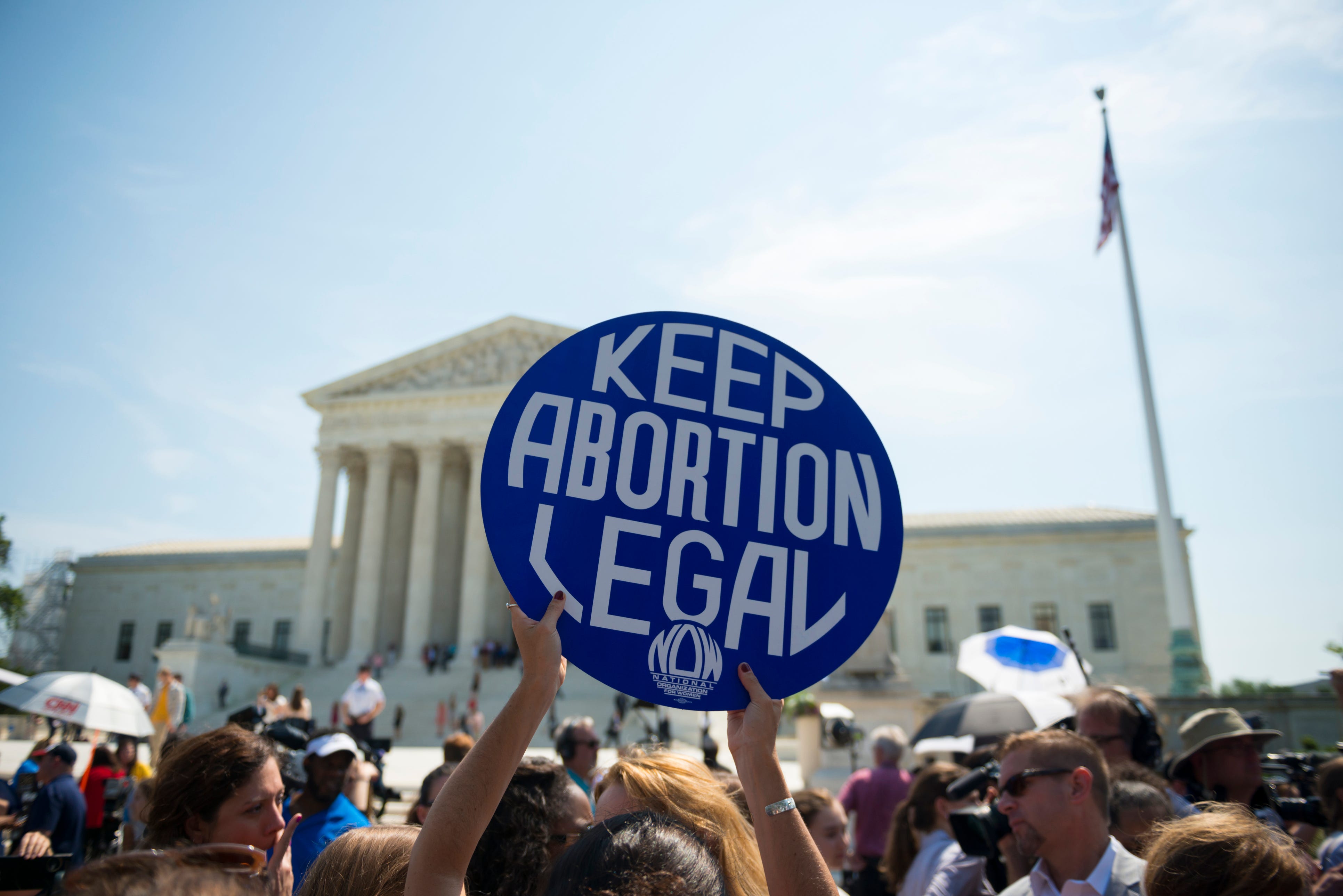
Yet our government continues to deny both. This was made unmistakably clear during the recent GOP-led Senate Committee on Health, Education, Labor, and Pensions (HELP) hearing on mifepristone, commonly known as the abortion pill. Disguised as oversight, the hearing was driven by politics, not science or patient safety, and laid bare an effort to set the stage for a nationwide abortion ban. Medical experts were sidelined, decades of evidence were ignored, and ideology was elevated over the lived realities of pregnant people.
Even before the fall of Roe v. Wade, anti-abortion politicians have seized the opportunity to impose sweeping bans, criminalize providers, and intimidate patients. Across more than a dozen states, people cannot access abortion care within their own communities. For many, this means traveling hundreds of miles, risking job loss or missing school, and threatening child custody or their safety. Others are simply forced to carry pregnancies against their will.
It’s tempting to meet this cruelty with equal rage. But as Loretta Ross reminds us in her book Calling In: How To Start Change With Those You’d Rather Cancel, “calling out is an expression of our hurt, our pain, our trauma. But calling in is an invitation to grow together.” Reproductive justice requires not just confrontation but transformation. It requires that we build coalitions, not burn bridges.
This message came through powerfully when Loretta Ross joined the Women’s Reproductive Rights Assistance Project (WRRAP) as the keynote speaker at our Stand Up, Speak Out event. Her inspiring and activating speech to a packed room reminded us that outrage alone is not a strategy. We must be strategic, compassionate, and brave enough to invite people into the movement, even when we disagree. She challenged us to resist purity politics and instead commit to building long-term power grounded in shared values and humanity.
We must call out systems of oppression. We must call out elected officials who use the law to control our bodies and futures. But we must also call in those who are silent, those who are uncertain, and those who are still learning. Not everyone understands the full weight of these attacks. Not everyone sees how racism, poverty, and patriarchy are connected to abortion bans. That is where our movement’s compassion must meet its courage.
This is not about moderating our message. It’s about amplifying it in ways that reach people where they are. It’s about helping a young person in a conservative home understand that their freedom to plan their life is a human right. It’s about showing a voter in a swing state that abortion bans are government overreach and economic violence. It’s about connecting the dots between forced pregnancy and the erosion of democracy itself.
What we are witnessing now is not just a rollback of rights; it is a reshaping of the nation into one where bodily autonomy is a privilege, not a right. The same lawmakers who criminalize abortion also block maternal health funding, strip transgender people of healthcare access, and underfund public education. They are not pro-life. They are pro-control.
To push back, we must be pro-community. That means funding abortion and supporting people who need care, especially those most marginalized by race, income, and geography. It means defending providers who risk their safety to serve patients. And it means voting at every level, from school boards to Congress and the president, for leaders who believe in true reproductive freedom.
We have an opportunity. We must hold our elected officials accountable, not just with rallies but with building and nurturing relationships. Not just with protest signs but with policies. We must ask: What are you doing to protect abortion access? What are you doing for survivors of sexual violence, for undocumented pregnant people, for incarcerated parents?
The people we serve and fight for are not political talking points. They are our neighbors, our loved ones, our communities. They are people who deserve compassion, privacy, and justice.
Let us call in, where we can, those around us to join the work. Let us call on our government to honor its duty to protect and not control our bodies because true justice cannot wait.
Susan Sheu, a director on WRRAP’s Board, is a political organizer and writer whose work focuses on feminism, public health, democracy, and equal justice under the law. Sylvia Ghazarian is executive director of the Women’s Reproductive Rights Assistance Project (WRRAP), a nonprofit abortion fund that provides urgently needed financial assistance on a national level to those seeking abortion or emergency contraception. She is an active Council member on the California Future of Abortion Council and past Chair of The Commission on the Status of Women.
Where fascists seek to impose laws on women's bodies that extend to the right to plan their own lives, it is all about money. Rich women or those knocked up by rich men will always be able to access abortion and start over. The rest will face the real possibility of lives of dissatisfaction, unfulfillment, and poverty. I know because I had an abortion that allowed me to spend the next 45 years of my life as I pleased, within my means. I honestly did not and do not care about seeking wealth when I can instead seek balance and contentment as an independent woman.
I love this message (below), which applies to more than reproductive rights. Next time you seek to publish a piece like this, please lead with these ideas. You led from a more abstract place in this essay. This message challenges all of us to let go of our certainty and righteousness so we can connect with the silent, the uncertain, those who are still learning. The certainty of others can make me feel as if I am missing something, but I also understand they NEED their certainty, that without it they feel something uncomfortable. Shifting toward compassion may be the way forward. I will try to remember this, and the potential to connect around “shared values and humanity”, the next to I stake out a position of certainty. I’ll be open to where this takes me.
“…outrage alone is not a strategy. We must be strategic, compassionate, and brave enough to invite people into the movement, even when we disagree. She challenged us to resist purity politics and instead commit to building long-term power grounded in shared values and humanity.
We must call out systems of oppression. We must call out elected officials who use the law to control our bodies and futures. But we must also call in those who are silent, those who are uncertain, and those who are still learning. Not everyone understands the full weight of these attacks. Not everyone sees how racism, poverty, and patriarchy are connected to abortion bans. That is where our movement’s compassion must meet its courage.”