


At a recent Republican National Committee event, senior Trump advisers told top donors that a Supreme Court ruling in Louisiana v. Callais, a redistricting case targeting the Voting Rights Act, could “transform” Republican power in 2026 and “upend the political map” for years to come, as reported by Axios.
It was the kind of candid assessment that shows how courts and maps can matter more than voters if the system bends too far.
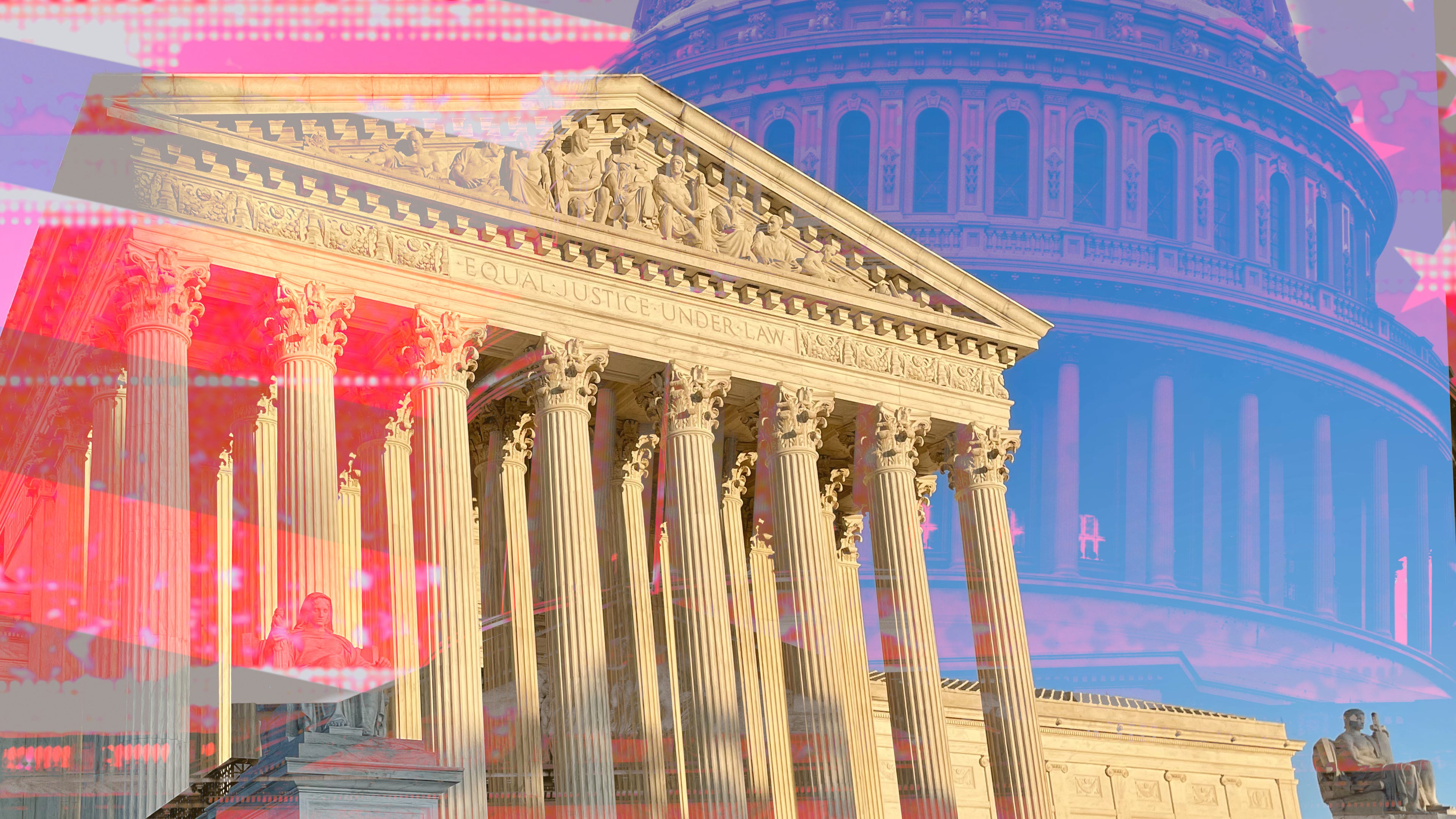
America was founded in rebellion against unaccountable power. Colonists refused to live under—and pay taxes to—a government they couldn’t meaningfully influence.
“No taxation without representation” became the rallying cry of the American Revolution, and fair representation a founding principle of the government it birthed. Now, Republican politicians and political operatives are working to dismantle that core American principle.
Under the GOP’s preferred governing system, Americans would still pay taxes, follow the law, and cast ballots—but the power of votes would be weakened so thoroughly that we could no longer reliably choose or change who governs us.
This would be a reversion to the time before the Voting Rights Act (VRA), which helped America finally begin to realize the promise of fair representation for all.
The VRA, passed with bipartisan support 60 years ago, exists for a simple reason: For generations, states used their power to weaken Black political representation. Nowhere was that more entrenched than in the South, where lawmakers redrew political maps to split Black communities or pack them into as few districts as possible—ensuring voters could not elect candidates of their choice.
In Louisiana v. Callais, the Supreme Court is again considering whether states may consider race to fix proven racial discrimination in political maps. For decades, the answer has been yes. That authority comes from Section 2 of the VRA, the central safeguard against racially discriminatory redistricting.
After a federal court found Louisiana’s congressional map likely violated the VRA, the state was ordered to draw a second majority-Black district. Lawmakers complied—and were sued again, this time by self-described “non-African American” voters arguing that considering race to remedy discrimination is itself discriminatory.
That argument asks the court to adopt a radical position: that race can never be taken into account, even to fix proven racial discrimination. In effect, it would mean enforcing the VRA violates the Constitution’s guarantee of equal protection and representation.
If the court accepts that logic, Section 2 collapses. Redistricting becomes open season nationwide at all levels—from Congress to state legislature to school boards. It could empower Republican legislators to draw discriminatory maps, weakening fair representation to a degree that essentially ends any power of our votes.
Over the past decade, the court has shifted from referee to enabler—through a deliberate campaign of ideological capture.
Investigative reporting has documented how far-right billionaires cultivated close relationships with sitting justices—paying for luxury vacations, assisting family members, and extending favorable financial arrangements—while the justices ruled on cases affecting those donors’ interests. The court, which polices itself, has imposed no consequences. At the center of this ecosystem sits Leonard Leo, the architect of the court’s far-right majority and connective tissue between donors, justices, and political strategy.
In Shelby County v. Holder, the court dismantled the VRA’s preclearance protection – a safeguard Congress repeatedly reauthorized with bipartisan support. In Brnovich v. Democratic National Committee, the court raised the bar for proving discrimination under Section 2.
This pattern fits into Republicans’ three-vector plan to lock in power without winning more votes. On Steve Bannon’s War Room podcast, GOP operatives outlined the strategy: enact partisan gerrymandering, gut the VRA, and conduct an unprecedented mid-decade census.
If the court’s far-right majority guts Section 2 in Callais, Republicans wouldn’t need to win more votes to gain more power.
New analysis from Fair Fight Action and Black Voters Matter Fund shows Republicans could redraw maps to lock in 19 new, safe GOP Congressional seats and erase 191 state legislative seats overwhelmingly held by Black Democratic lawmakers in the South. This result would block progress on healthcare, civil rights, public school funding, reproductive freedom, criminal justice reform, and other key policy areas for generations to come.
Flint, Mich., shows what happens when representation is stripped away.
In 2011, Michigan Republicans expanded the governor’s power to appoint emergency managers, allowing unelected officials to override local governments. As a result, 50% of Black Michiganders—compared with just 2% of white residents—were stripped of representation by officials they elected.
That same year, Michigan Republicans rigged the legislative map in a move a federal court later called “a gerrymander of historical proportions.”
The result was immediate: In 2012, Republicans won 54 percent of legislative seats with 45 percent of the vote. On the same ballot, voters repealed the emergency manager law, only for the GOP legislature to reinstate a new version weeks later and shield it from repeal. Shortly after, Flint’s state-appointed emergency manager ordered a switch to the polluted Flint River—triggering one of the worst public health disasters in modern American history.
Flint shows how democracy breaks down when representation is stripped away. Hungary shows what happens when that process is nationalized.
Viktor Orbán consolidated power in Hungary by strengthening executive power, tightening control over the courts, and rewriting election rules and district boundaries to benefit his party—preserving the appearance of democracy while emptying it of accountability.
After meeting with Orbán in 2024, Trump and his allies are following the Orbán playbook, pursuing similar efforts to reshape our democratic system. Far-right strategists like Steve Bannon and the architects of Project 2025 understand that this is how democracy is hollowed out—not by banning voting but by making it ineffective. Louisiana v. Callais is a core part of that project.
Those who lived through Hungary’s democratic collapse warn there is a window to act—before systems harden and accountability disappears.
Indiana shows resistance works: Voters pushed back against rigged maps, and Republican lawmakers recently shot down Trump’s map-rigging demands. Ballot measures like Proposition 50 in California show voters want tools to fight back and support fair maps.
You can help. Call your state legislators and members of Congress. Demand they defend fair representation and raise the alarm. Support groups fighting back in court and organizing in your community—because if the 2026 elections are fair, democracy still has a fighting chance.
Max Flugrath is the communications director at Fair Fight and a political strategist who has worked on statewide campaigns in Georgia and Florida, including a successful statewide race.

"This is how democracy is hollowed out—not by banning voting but by making it ineffective."
And our one hope in the past 10 years has been that by simply showing up, we'll insist that our votes be effective. However, the recent post mortem showed that Dems who stayed home on election day caused Kamala Harris's loss. So, what are we to pin our hopes on now?
I have a few red lines in my life. One is that I won't support a racist or rapist or anyone who supports them. Another is that voting is a requirement of living in a democracy: adults do not have an option not to vote. I have ended friendships over this. If there is one power we still have, it is the vote. Today's maga Congress has done its best to negate our voices through their lack of representation. They must be voted out, and we must vote.
It's the six Christian Nationalists on the Supreme Court and GOP Congressional members who have given the Felon the authority to make the United States an authoritarian theocracy, with the Felon as leader and the American oligarchs running the Country.
Gerrymandering is unconstitutional. Gerrymandering is minority rule and as the article says is taxation without representation. The six Christian Nationalists say racial gerrymandering is unconstitutional; but allowed it when Texas did it last year. So I guess racial gerrymandering is illegal except when Republicans do it.
This Supreme Court is illegitimate:
there's no such thing as Presidential immunity in the Constitution;
as Kavanaugh said, Roe was precedence on precedence;
Congress makes the laws, the President signs the laws and when the Felon fired the heads/chairs/members of independent agencies he violated the law. This Court has violated the separation of powers when it allowed the Felon to fire the heads/chairs/members of independent agencies and the six Christian Nationalists should be impeached.