


“Less than your best is a sin.”
That was one of the first things Dr. Joe Leonard Jr. said when I asked him about the Rev. Jesse Jackson.
Leonard would know. He served as Washington Bureau Chief for the Rainbow/PUSH Coalition from 1999 to 2004, traveling with Jackson, drafting his weekly columns, sitting in the rooms where change happened. Years later, he would carry those lessons into government as assistant secretary for civil rights at the U.S. Department of Agriculture, becoming the longest-serving person to hold that post. There, he helped lead more than $2.5 billion in settlements and debt forgiveness for farmers who had endured decades of discrimination.
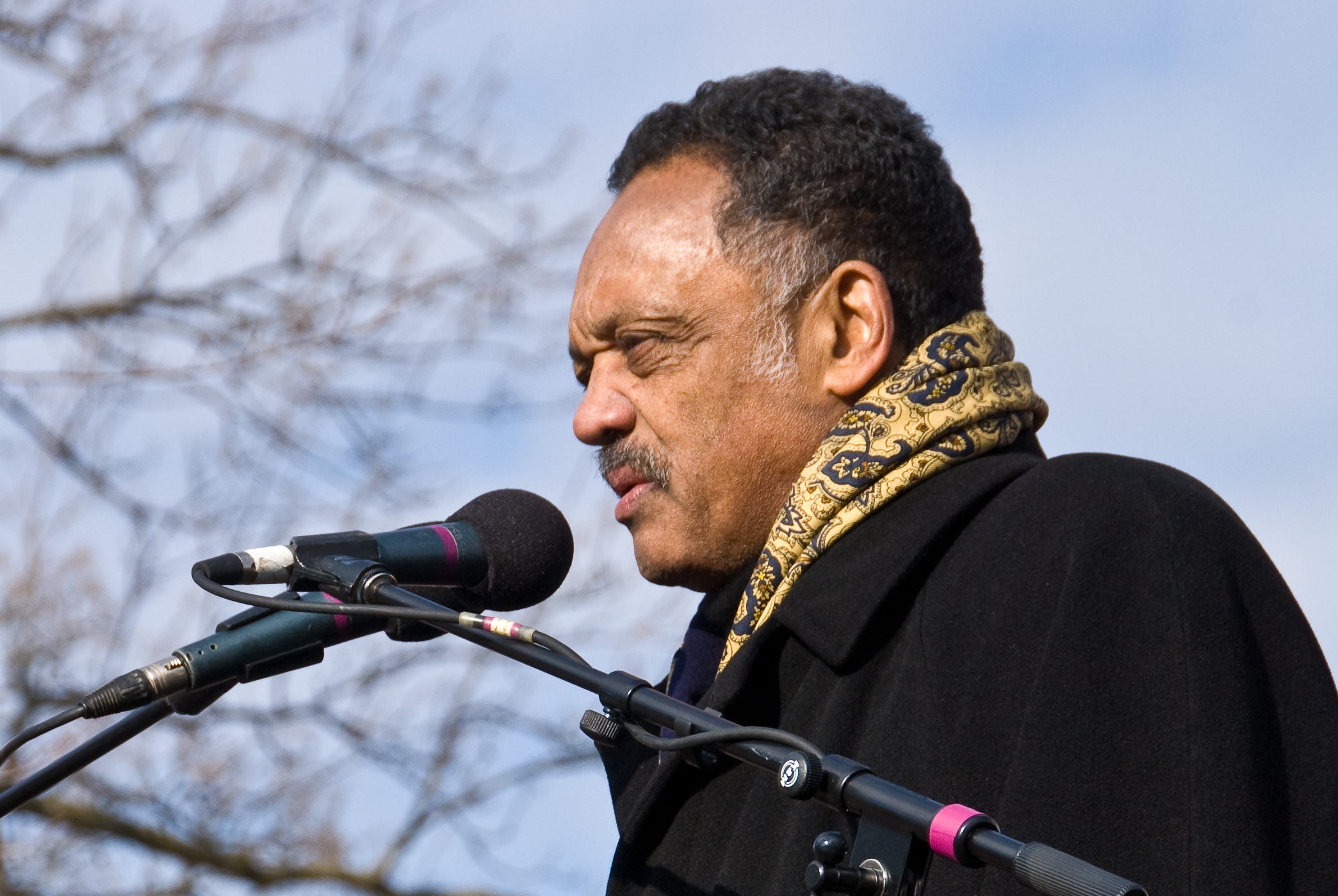
But before the titles and confirmations, he was a young undergraduate in Texas in 1988, volunteering on Jackson’s presidential campaign, distributing pamphlets for a man who did not yet know his name.
“I never thought I would truly work for him,” Leonard told me.
He eventually did — and not from a distance. As someone who writes for a living, one detail struck me immediately: Leonard’s job included working with Dr. Ronald Walters to help develop Jackson’s weekly column for the National Newspaper Publishers Association, the consortium and trade association of Black-owned newspapers. Draft by Wednesday. Submit so it would run Friday or Saturday. Every week.
“That’s why I traveled with him everywhere,” Leonard said. “The first year or two were tough. Then you get into rhythm.”
The quotes that frame this piece — “Less than your best is a sin.” “You should teach and preach because you can’t help it.” “He comforts the disturbed and disturbs the comfortable.” — were lines Leonard often elevated in those columns because they were the guiding principles of working in movement.
We are living in a moment thick with generational tension. Younger political professionals are told to respect history. Older leaders are accused of refusing to let us create our own. Every remembrance risks becoming another evening of reminiscing as the world burns in new and unfamiliar ways.
So, when I began thinking about what Jackson’s legacy means — not to those who marched with him in the 1980s, but to someone like me, a younger member of the political class shaped by the architecture he helped build — I knew I didn’t want to simply write my own reflections. I needed to speak with someone who had lived it firsthand.
When I asked Leonard about Jackson’s legacy, he began with a clear statement.
“Rev. bristled when people pigeonholed him as just a Black leader,” Leonard said.
History often compresses him into that frame. But Leonard reminded me that Jackson was the first Democratic presidential candidate to include LGBTQ rights as a platform issue -- not because it was safe but because it was right. Jackson marched with the National Organization for Women alongside leaders like Kim Gandy and Pat Ireland and joined the campaign to pressure Augusta National during The Masters over the exclusion of women members. Jackson’s leadership wasn’t performative.
“The cameras would come for labor sometimes,” Leonard said. “They always came when we were protesting Black issues. But he was more than that.”
Jackson wanted to be president of the United States. That required expertise on a range of issues to be the best president for all Americans.
When Leonard shared this, I couldn’t help but think that Black leaders are often the most nuanced on every issue because every issue eventually lands in Black communities with compounded force. Gender equity is different when you account for Black women. LGBTQ rights are existential for Black queer people facing layered attacks on our humanity. Economic justice is not abstract in communities where exclusion has been structural for generations. Every issue becomes a Black issue when its impact multiplies on the margins.
“He comforts the disturbed and disturbs the comfortable.”
That line, often quoted, can sound poetic. Leonard described it as strategic and a core tenet of Jackson.
Working for Jackson was “the ultimate field trip,” he said. He traveled to fifteen countries. Jackson sat across from Nelson Mandela, Fidel Castro, Tony Blair — and moved in rooms most American politicians never enter. His negotiating the freedom of hostages in Syria, Iraq, Cuba, and Serbia meant something.
“He would sit there as an equal,” Leonard said. “Heads of state treated him as a world leader.”
Britain asked Jackson to stop their citizens from being used as human shields in Libya. And he did.
Jackson wasn’t treated internationally as a symbolic activist. He was treated as a geopolitical actor.
To me, there is something very telling about that. Fighting for civil rights — which are, at their core, human rights — often garners clearer respect on the international stage than it does at home. Abroad, the struggle reads plainly: dignity, freedom, self-determination. Domestically, it is filtered through enduring biases about race, power, and who is presumed entitled to shape the American story. Even though he operated at the highest levels of diplomacy, Jackson was not insulated from the persistent diminishment Black leaders face in America. The fight for freedom does not guarantee respect — even when you are sitting across from heads of state as an equal.
In many ways, disturbing the comfortable landed differently overseas. Challenging entrenched power structures in America often provoked defensiveness; abroad, that same moral clarity often registered as principled leadership. The very audacity that unsettled some at home commanded credibility elsewhere.
That is why what Leonard said next matters.
“Rev. always had his research,” Leonard said. “He wasn’t doing it just to do it. Once he had his research, he wanted to go to the table — because he believed he always had a chance if he could negotiate.”
Preparedness and bold action.
Leonard said it plainly, but the distinction matters. “Preparedness and bold action were the two things that served me throughout my career. It has informed everything for the past 25 years.”
Plenty of people are bold without being prepared. Plenty of people are prepared but never act. Jackson married the two. He studied. He researched. He understood the terrain. And then he moved.
That is a very different model of leadership than the caricature of protest politics that often gets assigned to him.
Leonard made something else clear: Jackson did not prepare simply to make a point. He prepared to win leverage. “Once he had his research, he wanted to go to the table,” Leonard said. “Because he believed he always had a chance if he could negotiate.”
And his negotiation was heightened by the ability to season with his skill set of being a Southern Baptist minister. “You know how you can cook the food and add in some Tony’s to season it? That’s how Rev. Jackson wielded research with his minister background,” Leonard said.
“You should teach and preach because you can’t help it.”
Jackson’s leadership was not seasonal. It was weekly columns drafted by Wednesday. It was flights across continents and oceans. It was marches with no cameras. It was late-night negotiations. It was showing up in rooms where he was underestimated — and refusing to shrink.
When I asked Leonard what young people should take from all of this — especially in a moment when generational friction runs high — he turned inward.
“I always think, what did he see in me?” he said, remembering himself as a young man brought into Jackson’s orbit.
Then he shared something Jackson would often say: Surprisingly, there weren’t a lot of people lined up to work for Dr. King. The standard was too high. The work too demanding. The expectation that less than your best is a sin is not attractive to everyone. That pattern existed for Jackson, too. Not many were jumping to work for him because of how demanding the work was.
And, for me, that is the part of legacy we don’t romanticize. The question is not whether older leaders will keep telling stories. They will. The question is whether younger leaders will treat those stories as nostalgia — or as instruction.
High standards separate admirers from builders.
Leonard offered this to young leaders navigating today’s landscape: Shape the world for yourselves and your children. Don’t just join something — create something. Creation strengthens movements. It doesn’t dilute them.
Preparedness. Bold action. Moral range. Discipline when no one is watching.
Disturbing the comfortable — even when it costs you.
Less than your best is still a sin.
“And ultimately where I go, I could continue to work and be part of the people united to serve humanity,” Leonard said. That may be the clearest measure of legacy — not the stories we tell about greatness but the standard we choose to carry forward in service of something larger than ourselves.
Michael Franklin is the Founder and Chief Thought Leadership Officer of Words Normalize Behavior, a speechwriting, executive communications, and coalition-building agency.

RIP, Jessie Jackson.
You were definitely one of those on the "right" path.
The Reverend Jesse Jackson was revered for really seeing and hearing people and then acting with dignity on behalf of our humanity. Thank you for this illuminating piece on his life, his light.