

By Carron J. Phillips
Apologies don’t erase the damage they cause. But, when genuine, they restore the vitality in accepting blame.
This feels like one of those moments.
Recently, Toronto Tempo head coach Sandy Brondello was suspended by the WNBA for one game without pay for an “inappropriate comment” she made about Angel Reese of the Atlanta Dream. Brondello, a white woman from Australia, referred to a Black woman from Baltimore as a “protected species.”
(sigh)
This is what Malcolm X meant when he said, “The most disrespected person in America is the Black woman. The most unprotected person in America is the Black woman. The most neglected person in America is the Black woman.”
And this is the part where I remind you that in 1787, enslaved Black people were deemed as three-fifths human in the Three-fifths Compromise, and we were viewed as narrowly being above chattel.
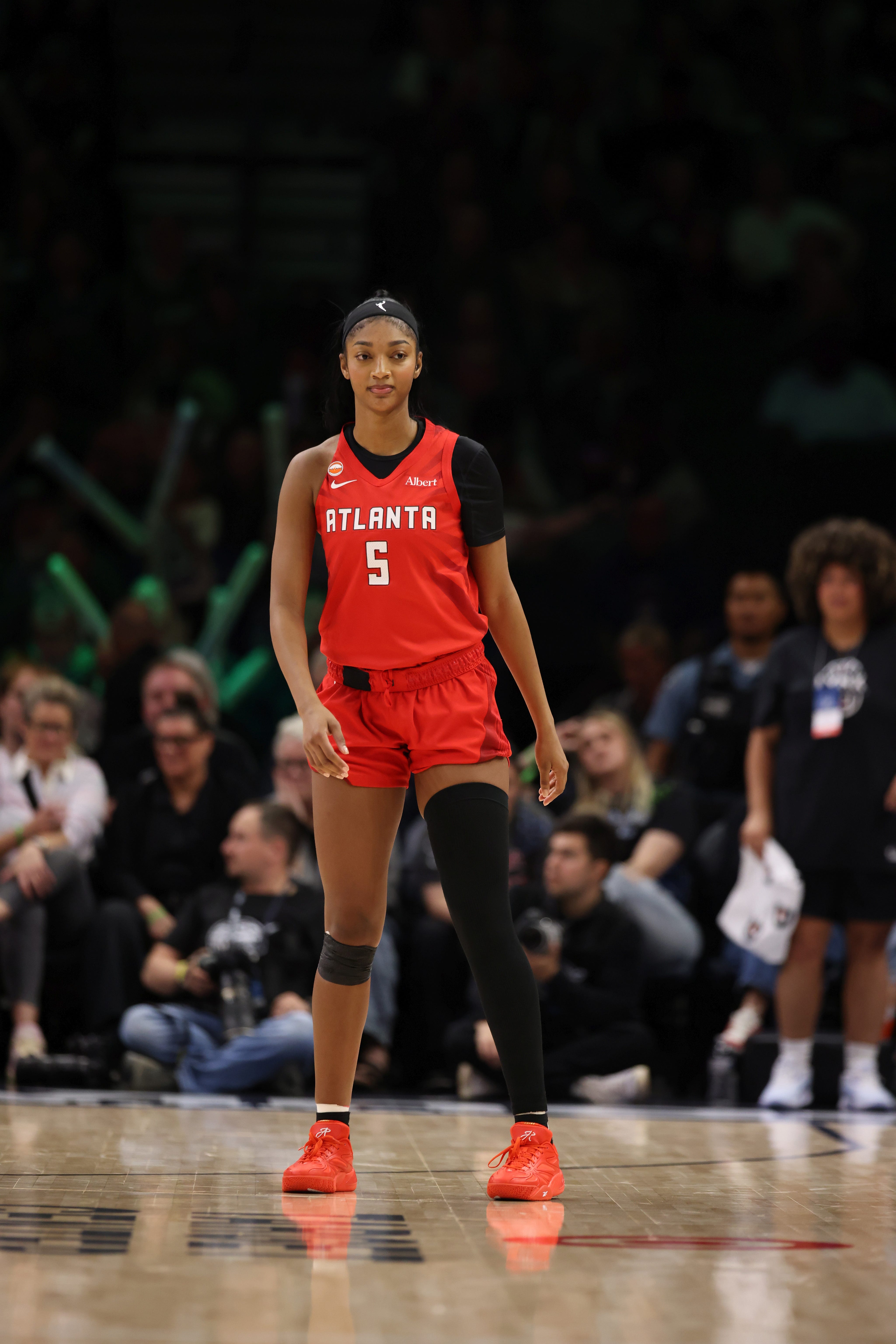
Brondello’s penalty was a laughable slap on the wrist from a league that’s repeatedly failed when it comes to handling race relations. Given that Reese has been a consistent target at both the collegiate and professional levels, the lack of care concerning one of the sport’s biggest stars has been disappointingly expected.
However, Brondello’s demeanor, word choice, and sincerity in her not one but two apologies to Reese have been a reminder of what sincerity looks and sounds like when it feels as if the powers that be have created an atmosphere resistant to conceding fault.
“I also understand that my words carried an impact beyond what I intended, particularly for Black women in our league, and I’m deeply sorry for that,” Brondello wrote in her initial mea culpa via social media. “I’ve spent my career competing with, coaching and learning from incredible Black women. I regret that my words caused hurt to a community I respect so deeply.”
Later, Brondello added context about how the term “protected species” has a different meaning in Australia yet is unacceptable here. “Unfortunately, I should have took a breath and realized where I am in America because I know racism is such a big issue here,” she explained. I’ve been in this league for 27 years and, obviously, I never had any issues like this because these are all my teammates and I’ve learnt so much from the Black players that I’ve coached and that I’ve had on staff.”
Reese found herself in a situation that has become all too familiar. She took the high road and accepted the public apology, adhering to the societal expectation that it is the “right thing to do,” allowing the aggrieved party little option to decline. “There is no place for discrimination or hate in this league from anyone -- from fans to coaches to players. And I’m just grateful that we are able to move on from the situation and just play winning basketball,” said Reese. “The WNBA is supposed to be positive, and we are going in a great light right now, so I just want to continue that and move forward.”
In the same way that the term “fake news” was weaponized by the leader of our current administration to delegitimize facts he did not like or agree with — as if they were debatable — we have witnessed, over the past decade, how he and his regime have avoided remorse and accountability. This has led to a deterioration in how apologies are offered, on the rare occasions they are granted.
From calling COVID-19 the “China Virus,” which increased harassment against Chinese people — despite that the Trump administration’s scaling back of global health surveillance programs hindered early detection and response readiness — to questioning President Barack Obama’s legitimacy as an American citizen through the “birther movement,” we have seen the physical and psychological harm that results when sincere acknowledgments of wrongdoing are absent after cruel behavior.
When you incite an insurrection and question the legitimacy of an election you lost, it is unacceptable to pretend those transgressions didn’t occur. The elimination of diversity, equity, and inclusion initiatives and the creation of departments like DOGE, which have done nothing but lead to increased deaths and suffering worldwide, and increase unemployment without actually saving taxpayers money, cannot avoid responsibility. Likewise, when tariffs are imposed and an economy is crippled, those actions should not escape culpability. And when you start a war for no apparent reason and then blame others for following your directives, it is not a display of power; it is an example of weakness and an indication that you are unfit to govern at the highest level.
Recently, a basketball coach said an awful thing about a basketball player. For some, it was a simple “sports story.” To others, it reflected a larger issue. Because though Sandy Brondello’s comment should never be forgotten, with all that’s going on in the world, her apology served as a reminder of a past time — when people recognized that they had done something wrong and meant it when they said “I’m sorry.”
Carron J. Phillips is an award-winning journalist who writes on race, culture, social issues, politics, and sports. He hails from Saginaw, Michigan, and is a graduate of Morehouse College and Syracuse University. Follow his personal Substack to keep up with more of his work.