


Surely by now you have watched the viral “Sister” skit on last weekend’s Saturday Night Live — a faux infomercial for 24-7 in-home elder care in which John Mulaney delivered the mic-drop opener. “My dad means the world to me. So, when I noticed him start to slow down, I knew I needed to get him the best care possible. I didn’t want to put him in a nursing home, but a private health aide could cost thousands a week. I didn’t know where to turn. That’s when I heard about ... Sister. Sister is a live-in, 24/7 elder care provider that is completely free. And also — your sister.”
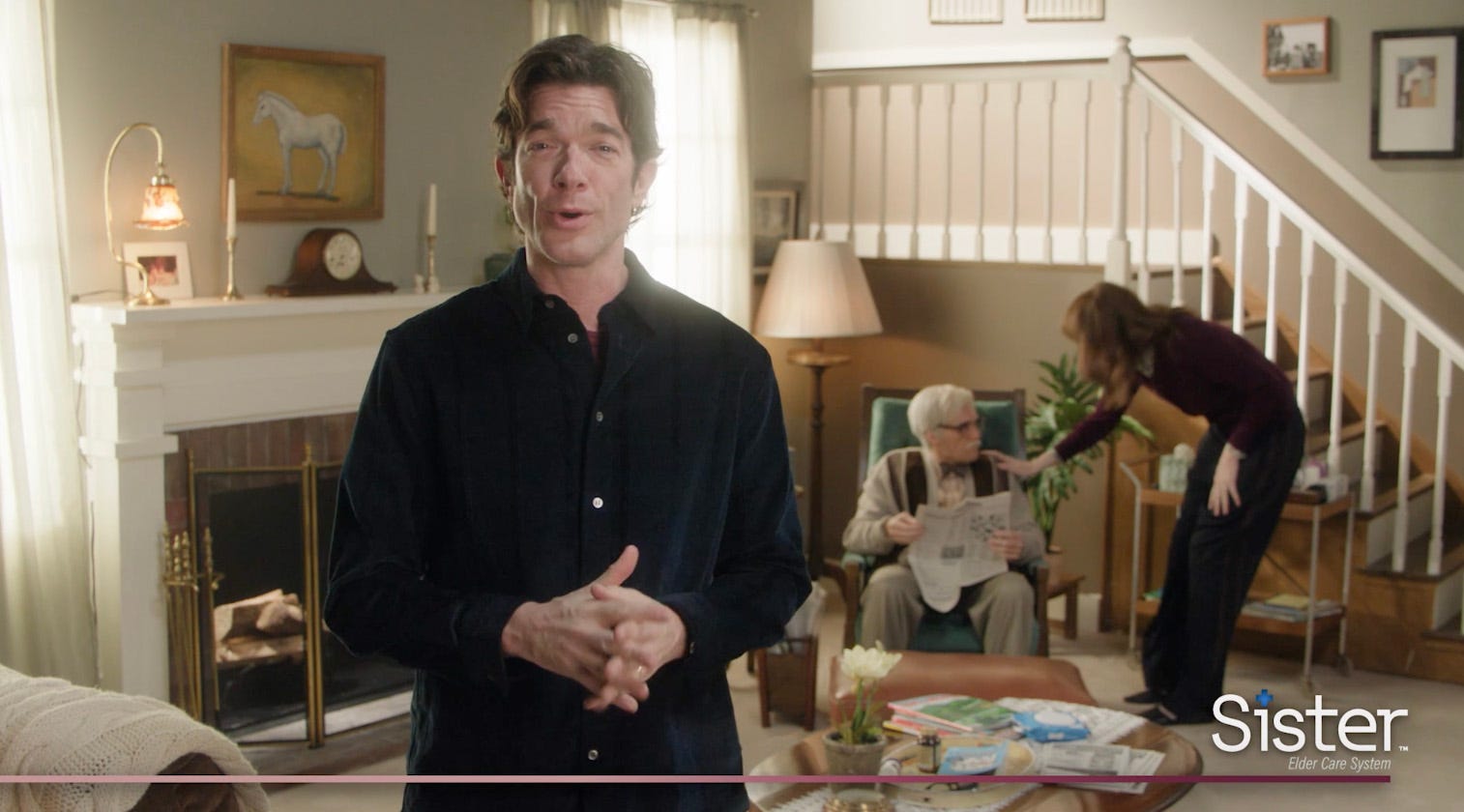
SNL’s whip-smart short is matched by a real-life ad for a home healthcare company, also out last week. It features Jennifer Grey, Cindy Pickett, and Charlie Sheen reprising roles from the 1986 John Hughes classic “Ferris Bueller’s Day Off.” Forty years later, this “Sister” is Jeanie Bueller, frazzled and snarky as ever at age 58 — and rightfully so as she manages her parents’ chaotic demands and medical needs. Charmed brother energy? Such still is the life of Ferris.
Ever since, texts and group chats have blown up, online comments stretch for miles, and Gen X women, eldest sisters especially, are declaring vindication all across social media. (Much of which will make for some mighty interesting Thanksgiving family dinners, I suspect.)
Both scenes capture the rage and desperation that drove voters of all political stripes to the polls — not just around affordability, buzzword that it is, but also the drain of invisible labor, the pain of nonexistent safety nets, and the disdain with which society holds women. Elected officials should take SNL’s cue and build a legislative agenda accordingly. Care is an economic issue, a gender-equity issue, and a democracy issue, too. It belongs front and center in 2027.
The United States remains, shamefully, one of the only countries in the world without federal paid family and medical leave. For millions, caregiving is indeed their biggest economic challenge. Around 63 million Americans provide care for an adult family member, neighbor or friend, according to a recent report from AARP. Childcare costs continue to climb and average more than $13,000 per child annually. People with disabilities are likely to face lengthy waiting lists for Medicaid home and community-based services.
The vacuum in care primarily affects women — a phenomenon that plays out on both sides of the equation. For those who assume the role of caregiver, the perennial “Sister,” family lives, careers, retirement plans, and overall financial stability are often torpedoed. On the flip side, the workers who provide essential care for others’ children, as well as older adults and people with disabilities, are among the lowest paid in the economy and are most likely to be women, disproportionately women of color.
The new state legislative landscape, 22 of which will be led by a Democratic trifecta, are well-positioned to take up these issues. Many already name childcare among their top priorities: New Mexico Gov.-elect Deb Haaland ran on expanding the state’s first-of-its-kind universal childcare program; in Georgia, Gov.-elect Keisha Lance Bottoms campaigned on universal pre-K. According to NPR, three-quarters of gubernatorial candidates in both parties offered policy proposals or took positions on childcare during the midterms. “[It] is no longer seen as a personal problem that women have to fix, but an economic one that the nation needs to solve. Childcare is the linchpin of affordability,” said Reshma Saujani, the founder and CEO of Moms First, an organization pushing for affordable care and other family policies. “It’s also not an issue that’s on page 15 of a candidate’s platform. It’s the issue they’re getting elected on.”
Childcare, along with paid family leave and Medicaid reform, must be a priority in the new Congress, as well. Check out this podcast interview with Sen. Andy Kim (D-NJ), who is a primary caregiver for his own father with Alzheimer’s disease, on the path he sees for bipartisan buy-in. Among Kim’s stated priorities will be advancing the Medicare at Home Act, introduced last August, which would provide up to 20 hours a week of at-home care services through Medicare, not just Medicaid; and reversing disastrous Medicaid cuts enacted in the One Big Beautiful Bill Act. The 19th reports that six of the at least eight Democrats who flipped Senate seats had childcare plans in their campaign platforms: Maine’s Troy Jackson, Ohio’s Sherrod Brown, South Carolina’s Annie Andrews, Texas’ James Talarico, Iowa’s Josh Turek, and North Carolina’s Roy Cooper (Alaska’s race has not been called, but Mary Peltola has childcare in her platform, too); in the House, Rep. Hakeem Jeffries (D-NY), likely the next speaker, acknowledged healthcare, childcare and elder care as key issues ahead.
No other SNL skit this election season has quite tapped the national mood like the dynamics of Sister care. As the millions of commentators make clear, women only have time to laugh for a nanosecond before getting back to business. Lawmakers need to make the most of this moment to act — and fast.
*****
This week, the Trump administration withdrew the nomination of Heidi Overton to lead the Food and Drug Administration after even Republicans grew concerned with her limited experience and her extreme views on abortion and vaccines. The Contrarian had covered her nomination since tbe summer, flagging all the warning signs. Though this is a victory, we must keep watch on whoever the next nominee is.
