

By Danny Miller and Steve Silverman
Every time someone draws a parallel between what is happening in America today and what happened in Germany in the 1930s and 40s, a familiar objection rises: The comparison is offensive, hyperbolic, unfair. Our leaders are not Nazis. This is not the same.
They are right. But the objection misses something important. Any serious comparison isn’t about Hitler or Himmler or Goebbels. And it’s not comparing our leaders to those figures. The comparison is about everyone else.
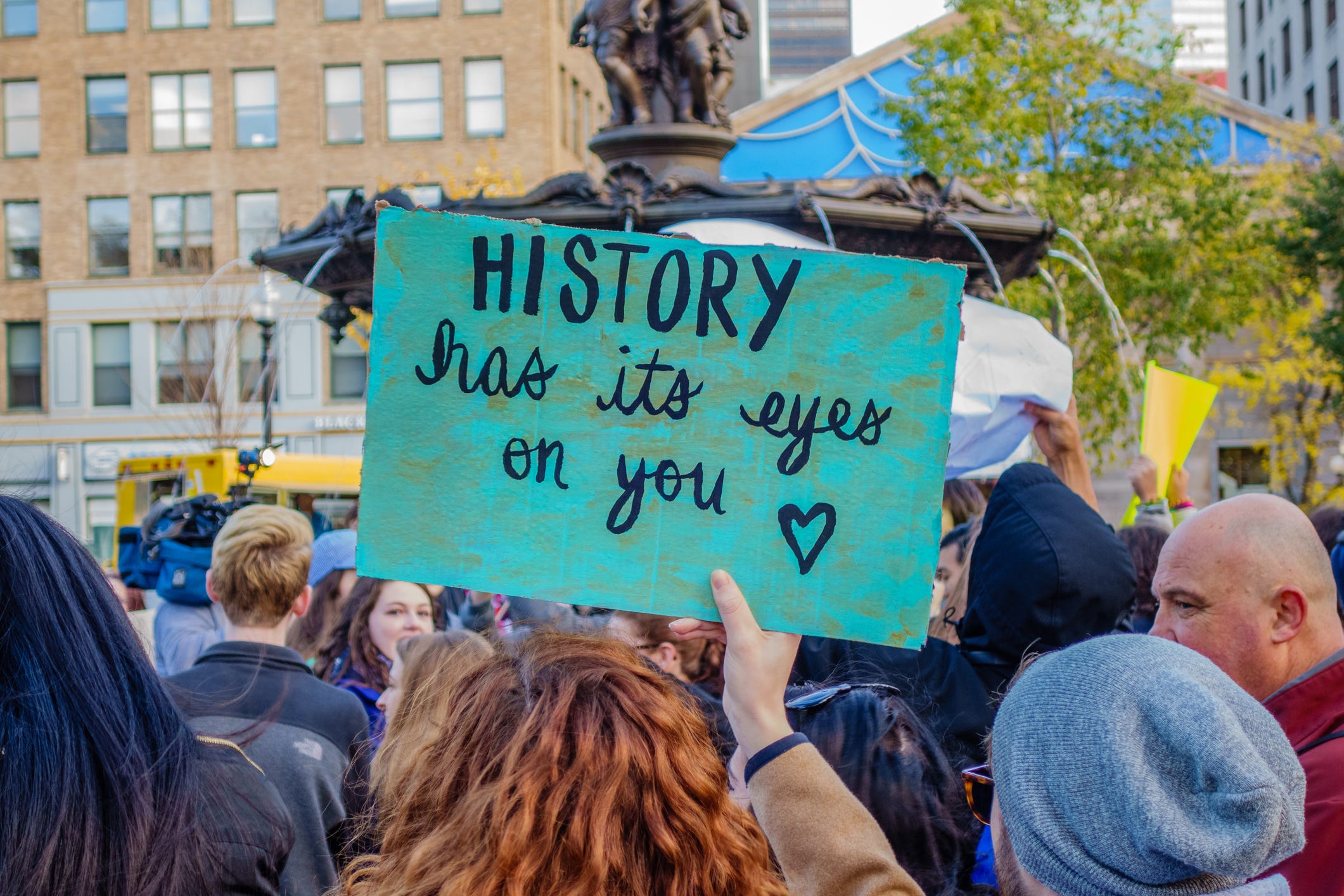
The comforting myth of Nazi Germany is that it happened only because of unprecedented evil men and women. This myth is dangerous because it lets the rest of their society and frankly, the rest of us off the hook. The Holocaust was not carried out only by the truly evil and those who ran the death camps. It was carried out by lawyers who drafted the legal justifications, businessmen who used slave labor, bureaucrats who processed the paperwork, and neighbors who looked away. Hannah Arendt called it the banality of evil because what she witnessed wasn’t exceptional. It was ordinary compliance at a mass scale.
We are watching that compliance now. Some of America’s most powerful law firms cut deals rather than stand up for the rule of law. The technology industry has increasingly restructured itself around proximity to power. Corporate America has quietly dismantled commitments it made in more confident times.
But the historical record also offers something else. Ordinary people, in conditions far more dangerous than ours, chose differently.
In 1931, lawyer Hans Litten subpoenaed Adolf Hitler and subjected him to a three-hour cross-examination in a Berlin courtroom. Hitler was rattled, evasive, exposed. Litten knew the risk. He took it anyway. After Hitler came to power, Litten was arrested, and subjected to five years of torture and imprisonment across multiple concentration camps. He died at Dachau in 1938. But for those three hours, an ordinary lawyer stood up to Hitler.
In 1943, when the Nazis rounded up the Jewish spouses of non-Jewish Germans in Berlin, their families gathered in the street outside and protested for seven days despite incredible danger. Ultimately, the Gestapo released most of the detainees, almost 2,000 people. In Nazi Germany, in 1943, ordinary citizens stood in the street, and their loved ones came home.
And then there was Sophie Scholl, a 21-year-old student who distributed leaflets as part of the White Rose resistance group calling on Germans to resist. Guillotined four days after her arrest, she told the court: “Somebody, after all, had to make a start.”
These were not superhuman people. They were ordinary people who decided that the cost of acting was lower than the cost of looking away. Some paid with their lives. We are being asked to risk a client, a contract, an uncomfortable conversation.
Some Americans have already made that calculus.
Danielle Sassoon, the acting U.S. attorney for the Southern District of New York — a conservative, a Federalist Society member, a Scalia clerk — resigned rather than drop a corruption case.
Rachel Cohen was a third-year Skadden associate who helped organize a letter signed by nearly 2,000 fellow associates calling on their firms to resist. When it became clear Skadden would not, she resigned, testified before Congress, and went on to help organize large-scale resistance efforts across the country.
Thomas Sipp, Sam Wong, and Brenna Frey Trout made the same choice — lawyers who looked at what their firms had done and decided they could not stay.
Judges across the country, facing threats unlike anything in modern American history, have continued to stand up for the rule of law.
And in Minneapolis, ordinary citizens have put their bodies and lives on the line to stand up for justice and their neighbors.
These are not heroes from another era. They are ordinary people deciding right now that conscience matters more than comfort.
But we need more. Much more.
And here is what we are not asking. We are not asking you to quit your job tomorrow. We are not asking you to chain yourself to a courthouse or throw away your career. Sophie Scholl is an inspiration, not a job description. Nobody becomes a hero overnight, and that is not the point.
The point is to take one step.
If you work in tech, at one of the companies empowering anti-democratic actions, we are not asking you to blow the whistle tomorrow. But please don’t pretend what is happening is fine. Sign something. Say something internally. Refuse the next ask that crosses a line. One step.
If you are in business and your company went quiet, rolled back its commitments, decided silence was the safer bet, we are not asking you to put the business on the line. But silence has a cost, too, and you know it. Join the businesses in Minneapolis and across the country who stood up. Add your name.
If you are a lawyer, we are not asking you to resign like Sassoon or Cohen. But take the pro bono case. Show up to the bar association meeting. Sign the open letter.
One step. Then another. That is how ordinary people have always found their courage — not in a single dramatic moment, but in the accumulation of small decisions not to look away.
What you are doing right now may feel normal. It may even be normal. But normal, in the wrong moment, is how the worst things in history got started. And it is also how they got stopped — by people who decided that normal wasn’t good enough.
Get off the couch. Take one step. You may surprise yourself.
Danny Miller and Steve Silverman are attorneys and the co-founders and co-directors of Democracy Rising Collaborative, an organization that mobilizes lawyers, retired judges, and civic leaders across the country. They are the authors of the www.theruleoflawyers.org, an action toolkit for lawyers.
As a retired lawyer, I have always argued that lawyers and the rule of law are truly the backbone of our country. I still do. But the people, as put forth in this piece, are also the backbone. Together we will prevail. And no "sky is falling" thinking!-- it just makes things feel worse.
Thank you contrarians Your voices are encouraging daily