


“Cuisine is not just about satisfying hunger; it is about experiencing pleasure.” — Auguste Escoffier
Political campaigning still rages in France. I haven’t experienced the relentless bombardment of campaign ads, talking heads, and political rhetoric from morning to night, 24/7, in the United States since 1984, and I’m thankful for that. I don’t miss the brutality, and I don’t miss the noise, even if I miss the uplifting voices that sometimes surge, every now and then, like a beacon of light, out of the fog of partisan mudslinging.
Political campaigning still rages in France, and it’s so much different than in the states. The official period of presidential campaigning begins just six months before the first day of the month in which the election is held, so though this politician or that who foresees a future candidacy in the cards shows up more often on television and podcasts to talk about what’s wrong with the country and how only they can fix it, the French are spared a two-year never-ending, unavoidable marathon of political campaign drama.
In France, (paid) political advertising on TV, radio, and in the press is completely illegal during the six months leading up to an election (basically the whole legal campaign period). That’s just so … civilized. And blissfully peaceful. And (hold onto your hats) donations from legal and public entities (corporations, associations, foreign states) are prohibited, with the sole exception of recognized French political parties and groups. And instead of buying ad slots, candidates get free, state-produced segments on each of the public television stations, where each and every candidate gets the exact same amount of time to pitch a platform directly to the camera, directly to the voter, without any flashy Hollywood production tricks, special effects, or theatrics.
And while candidates freely attack their opponents — where’s the fun of an election season without those attacks? — they are bound by strict laws, meaning defamation, public insult, hate speech and incitement, and deliberate misinformation are strictly forbidden and punished. So, attacks are limited to an opponents’ policies, statements, associations, competence, and conduct, but with greater limits on what can be said. Though we hear a lot of yelling and a lot of accusations it is, I guess one could call it, more humane. More adult. The French view American-style smear campaigns as, well, gauche. And counterproductive, hurting the one slinging the mud more than the one ducking.
And just maybe, French culture has a hand in it, too. Even an insult is expected to come with a well-constructed argument and at least a modicum of proof. Yes, I remember my sons’ high school assignments well.
Election campaign posters may be displayed only on the official noticeboards provided by the local authorities (much easier to find if you’re in the mood to Sharpie a moustache or horns on a candidate). Campaigning is forbidden inside places of worship, schools, and public administrative buildings to preserve their neutrality. Total campaign expenditures are capped based on the population size of the electoral district. And did you know that France caps total presidential campaign spending by law, to a measly €16.851 million for each candidate who runs in the first round and €22.509 million for each of the two candidates who qualify for the second round? Civilized, indeed.
It’s all so very French. And while my husband and I listen to political radio shows, podcasts, and televised debate programs and election coverage more so during a presidential campaign season than at other times, and we spend a lot of that time rolling our eyes and yelling back at the screen, it’s such a different experience than that in the United States, less of a spectacle, somehow slightly more intellectual, more Nouvelle Vague than Hollywood blockbuster, more Jean-Paul Sartre than Saturday Night Live. Well, maybe with a little Coluche thrown in.
I’ve spent years and years so much more focused on American politics and American elections (where I vote) than French, but this year I’m trying to pay more attention over here. In a lot of ways, I find it just as frustrating. And this year, I find it just as worrying. Scary. History seems to have a way of moving in cycles, round and round, and it feels like we are back on a downward trajectory. It’s impossible to avoid, even though I have tried. Close my eyes, ignore the news, write about food. My cousin’s husband just reminded me, though, that a few countries that elected far-right extremist governments have found their way back from the brink of hell, thanks to determined citizens. That gives me hope. These French elections, with the threat of a runoff between the far left and the far right, have me shaking in my boots and looking across the border for safe haven, but I’m always open to that glimmer of light, that flicker of hope.
“There may be more beautiful times, but this one is ours.” ― Jean-Paul Sartre
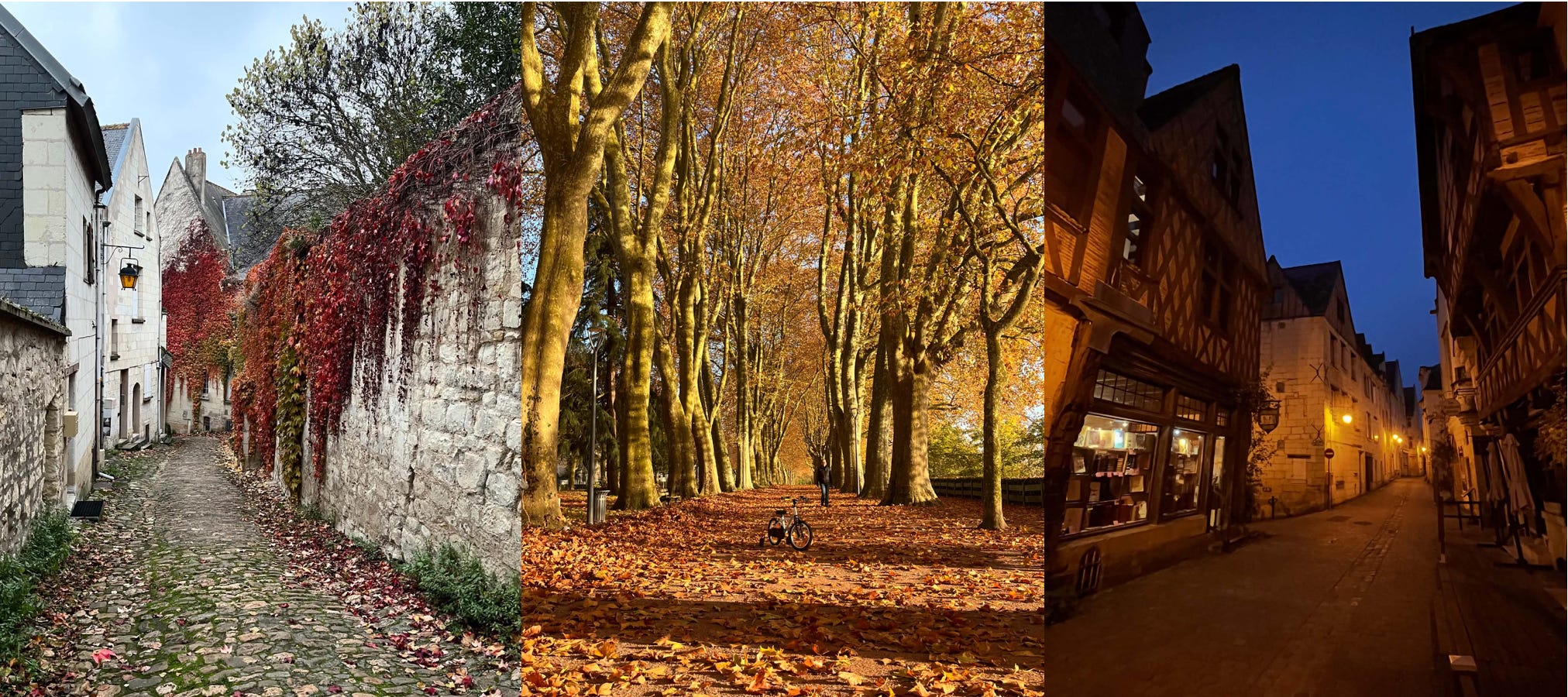
Turn off the news programs, take a walk in the crisp autumn chill, kick up some of the golden red leaves on the sidewalk, and make the season’s first stews and soups and homemade bread. Nothing bad lasts forever, does it?
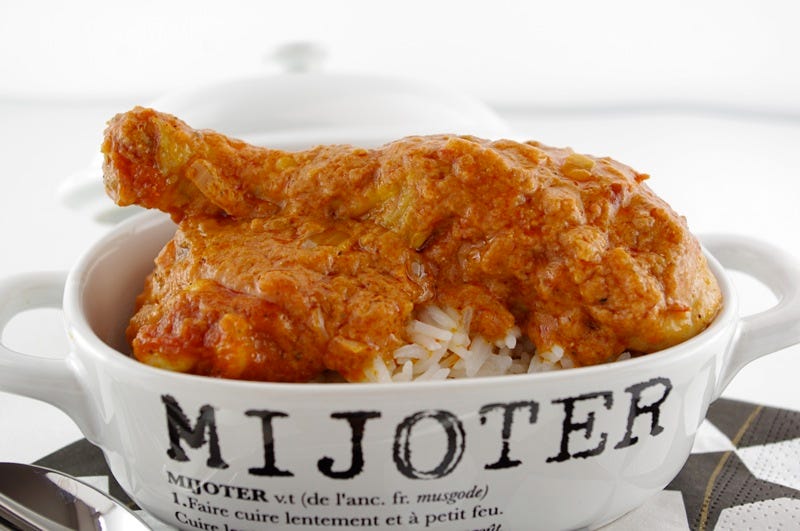
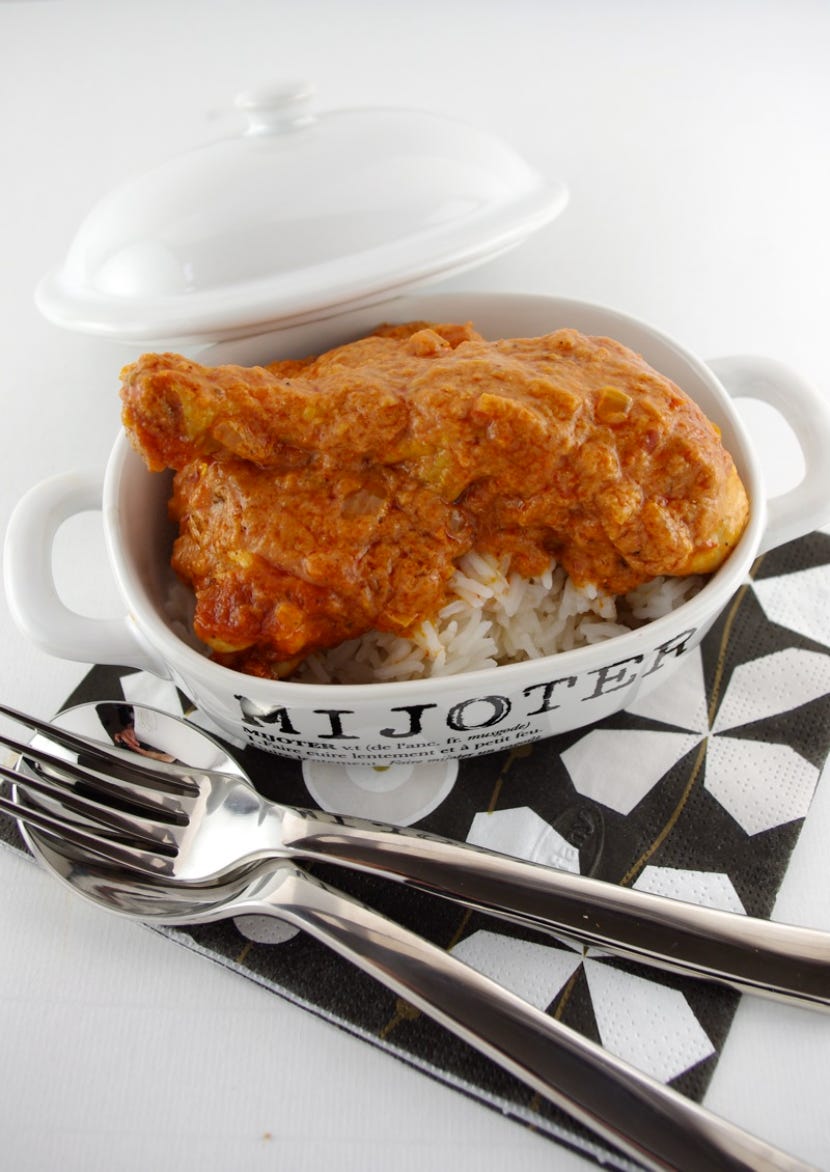
When the weather turns cold (especially after such a brutally hot summer), I love nothing better than a tagine, a stew, or something like this rich curry with just the right kick of spice. An Indian friend gave me this recipe years ago, and I find it as flavorful and as comforting as it is easy to prepare.
Spicy Chicken Curry
Serves 4 to 6 with rice or pilaf
Chicken pieces for 4 to 6 (I used 4 leg/thigh pieces, separated)
2 tablespoons neutral vegetable oil
1 medium yellow onion, chopped
2 cloves garlic, chopped
2 jars or cans (about 14 oz/400 grams each) tomato pulp or chopped tomatoes
Salt and freshly ground black pepper
2 teaspoons garam masala or to 1 teaspoon each ground coriander and cumin
1 teaspoon turmeric or to taste
¼ to ½ teaspoon cayenne pepper or chili powder/flakes to taste
Several tablespoons Greek yogurt, plain yogurt, or sour cream to taste
Juice of about half a lemon
In a large skillet or Dutch oven, heat the vegetable oil and then lightly brown the chicken pieces on all sides. Remove the browned chicken to a plate.
Add the chopped onion to the hot oil in the pan and sauté, stirring often, until tender and golden brown. Add the chopped garlic and, stirring, continue to cook for another minute or two until the garlic is tender. Stir in the tomato pulp, add the spices and the salt and pepper, stir until blended and then return the chicken to the sauce. Push the chicken down into the tomato sauce to cover. If you need to, top it up with a small amount of water.
Allow to simmer on low heat for about 45 minutes or until the chicken is cooked through and starting to pull away or fall off the bone. Remove the chicken to a plate and stir 2 or 3 heaping tablespoons of the yogurt into the sauce, depending on whether you want the sauce more tomato-y or creamier. Taste and adjust the seasonings, adding more salt and pepper, cayenne, or garam masala as desired to heighten the flavor. Squeeze in enough lemon juice to taste. One or two squeezes should do it!
Return the chicken to the pot, turn off the heat and cover. Allow to sit so the flavors meld while you make basmati rice or pilaf. Before serving, gently reheat the Chicken Curry. If you like, you can add a handful of chopped fresh coriander/cilantro.
Jamie Schler is an American food and culture writer — immersed in French culinary history — living in France where she owns a hotel, makes jam, and writes the Substack Life’s a Feast.

Curry chicken 🍗 recipe looks and sounds good, very delicious. However, every body has their own recipe I have my own recipe with the original ingredients and touch 😂😋🤤 of India!👍🏿☝🏿☝🏿☝🏿☝🏿😂