


Americans have witnessed this before: the selling of a war. A president, either sitting at the Resolute Desk in the Oval Office or standing behind a podium in the East Room, reads solemnly. He summons patriotic dedication of his fellow Americans and sparks spirituality by asking for God’s protection.
In 2003, President George W. Bush looked directly into the camera during a live address and declared the invasion of Iraq: “My fellow citizens, at this hour, American and coalition forces are in the early stages of military operations to disarm Iraq, to free its people and to defend the world from grave danger.”
In 1812, President James Madison urged Americans to join him “in supporting and invigorating all the measures which may be adopted by the constituted authorities for obtaining a speedy, a just, and an honorable peace” for the war of 1812.
In 1917, President Woodrow Wilson more fully articulated his moral qualms by sharing with Congress: “It is a distressing and oppressive duty, Gentlemen of the Congress, which I have performed in thus addressing you. …[I]t may be many months of fiery trial and sacrifice ahead of us. It is a fearful thing to lead this great peaceful people into war, into the most terrible and disastrous of all wars, civilization itself seeming to be in the balance.”
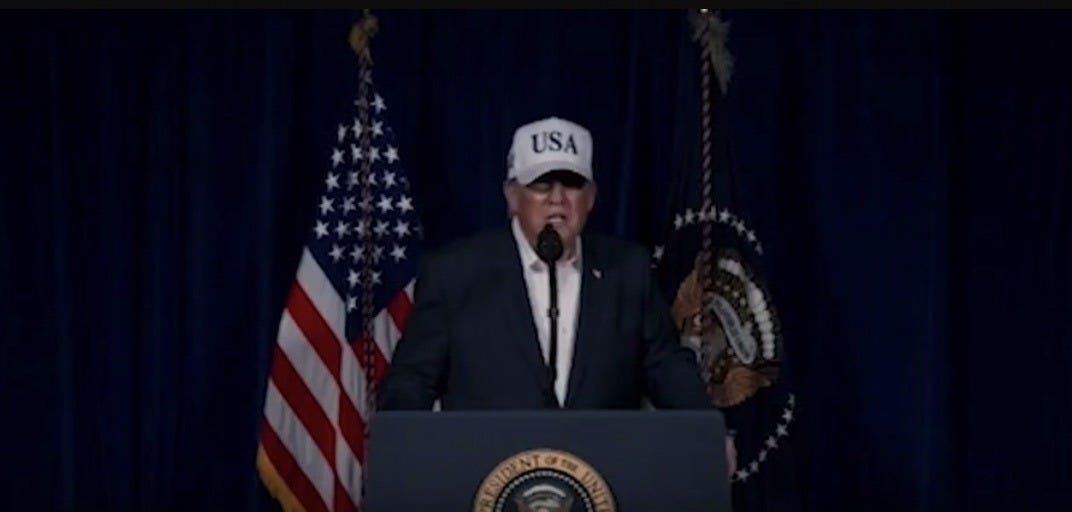
And on Feb. 28, 2026, President Donald Trump, characteristically abandoning gravitas, posted an eight-minute recorded video on Truth Social. In the video, Trump stands behind a podium, wearing a white “USA” baseball cap that casts a shadow over his eyes, and announces the “U.S. military began major combat operations in Iran.”.
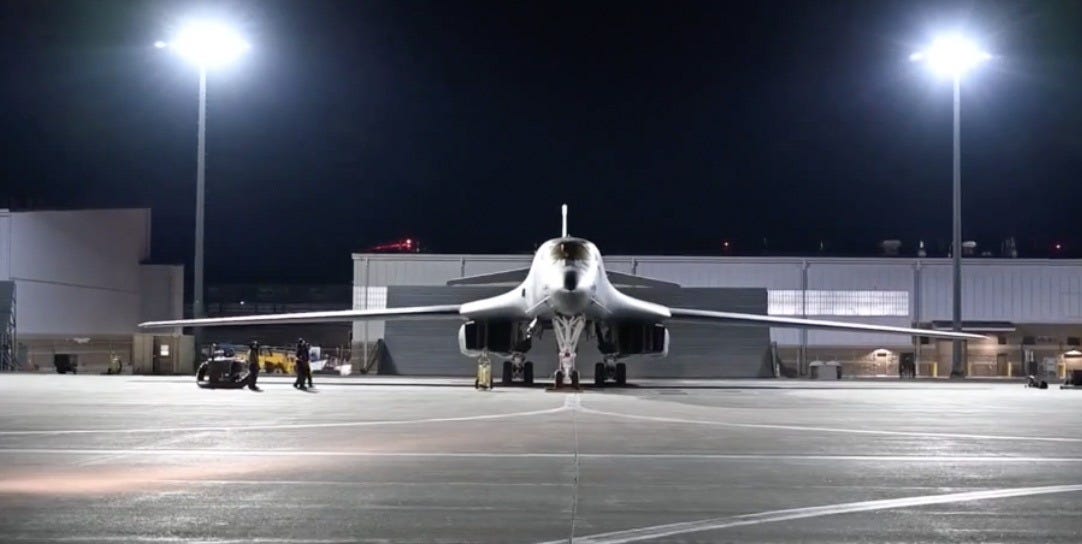
Centcom soon thereafter posts online a video of U.S. bombers taking off in the dark of the night. The clear message: The “America first” Trump administration doesn’t take war seriously. It is a game.
But the selling of the war comes after the announcement. It comes after the flurry of news coverage of what the president said. It comes in the days and weeks following, and it comes visually. The selling of this war isn’t just done by the president, military leaders, and propagandistic pro-war news outlets. Even Trump’s critics seemingly have no choice but to amplify the way in which this administration tells the story of this war.
The images of war shape our feelings about who earns our sympathy, who earns our rage, and, most of all, who earns our trust.
The coverage of Trump’s war with Iran includes two photographic tropes that I’ll analyze: the aerial or wide angles of strikes and smoke; and the close-up, human scale. Let’s look at this first category: aerial and wide-angle. These images draw your eye to the smoke by framing it in the center. It’s the main character of the visual narrative. In these images, the smoke is far enough away to see it within the context of infrastructure. Shot from a low angle (necessarily, because the smoke floats upward), you as a viewer see how the photographer experiences the plume: tall, larger-than-life, intimidating.
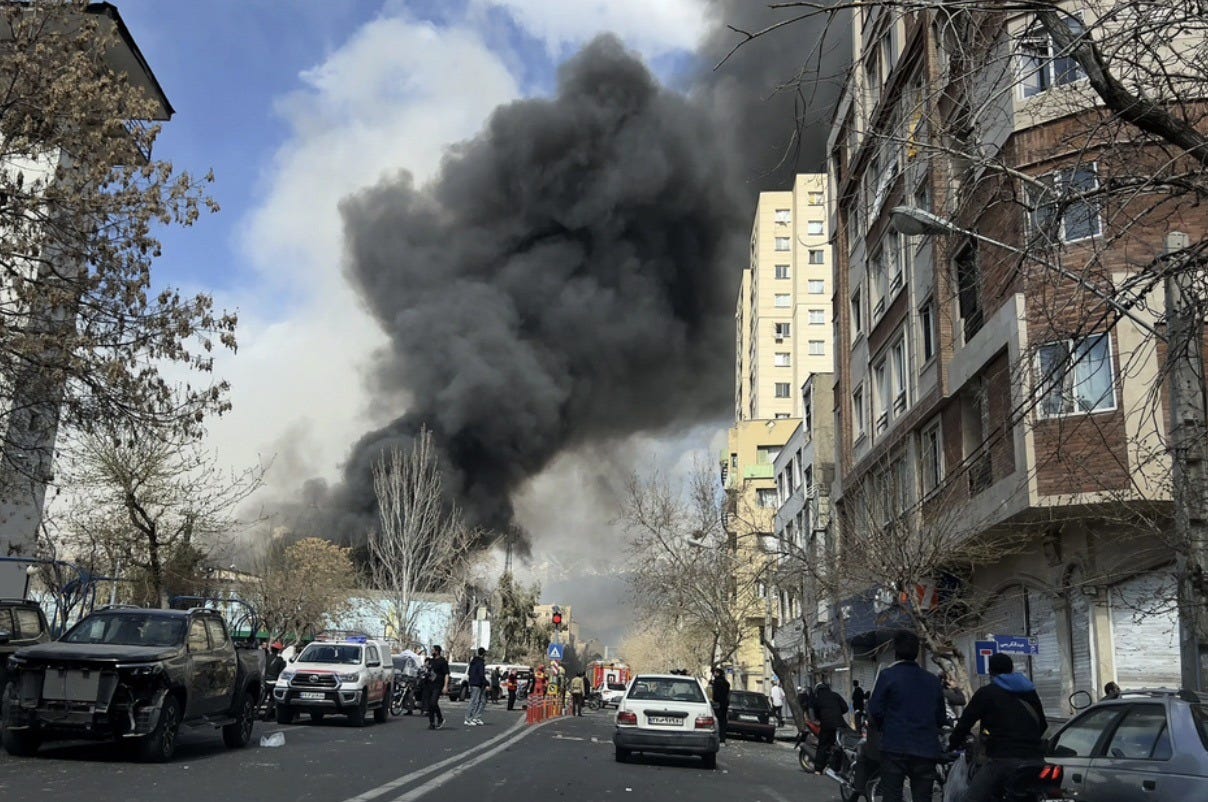
The plume of smoke is a visual cue for war; it is at odds with the buildings, representing civilian life. In the daytime, the grey smoke emerges against a blue sky; at night, the glints of fire take on a hellish hue.
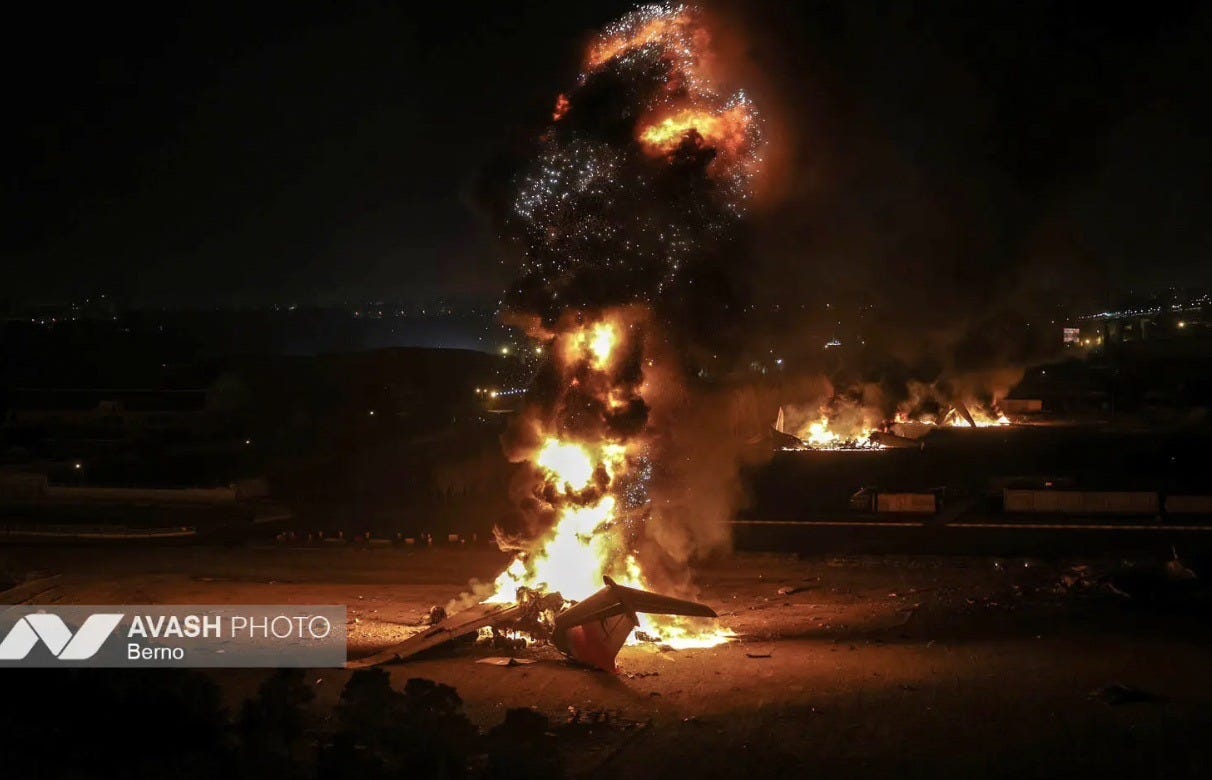
These images, though scary and depicting devastating consequences, show us damage from afar. These images are likely the result of both safety and timing. While such images are important, they are also a trope, and just one part of the story. When news organizations prioritize these images, they distance us from the human scale of suffering as a result of these strikes.
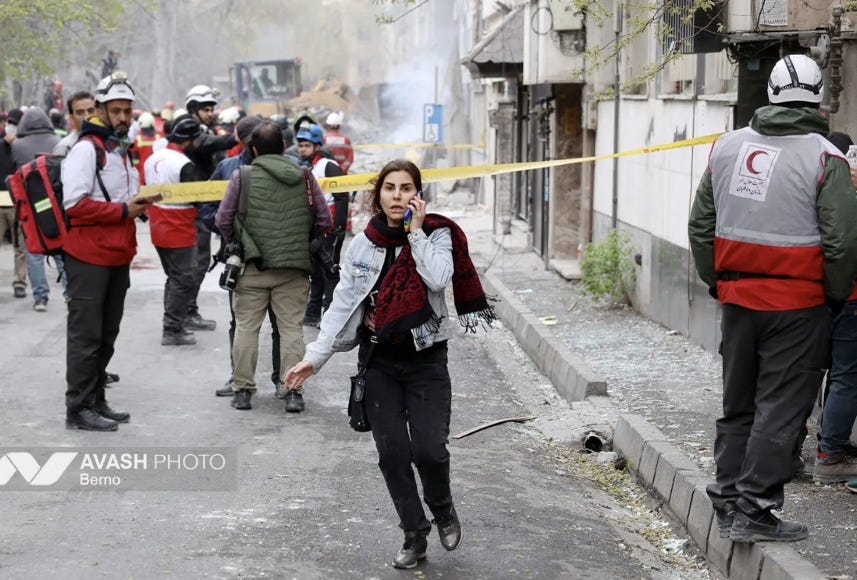
The next category is close-ups. The camera is close enough to capture the faces of the wounded and the shocked bystanders: their confusion, pain, and grief. These are more likely to evoke sympathy and empathy. They visually illustrate the human toll exacted on civilians. But in an age of digital overwhelm, I fear that we scroll past, the waves of terrifying images having washed over us now for decades.
Susan Sontag, in her seminal work Regarding the Pain of Others, reflected on images of the Vietnam War and the Holocaust, arguing, “Being a spectator of calamities taking place in another country is a quintessential modern experience.” She wrote of the bizarre experience — before social media, mind you — of seeing images of starved bodies from concentration camps or Vietnam. She investigated the (now seemingly quaint 2003 version of) the 24-hour news cycle, arguing: “‘If it bleeds, it leads’ runs the venerable guideline of tabloids and twenty-four hour headline news shows — to which the response is compassion or indignation, or titillation, or approval, as every misery heaves into view.”
The brave photographers and journalists — professional, civilian, and military — share images from the front lines at great personal risk. Whether it’s smoke curling into the sky, a mother holding her child, or the skeleton of a building after a strike, these images are a piece of the story. As a cameraperson, I’m not sure the best way to portray what’s happening in Iran. In our rushed news cycle, editors and producers are just trying to use what they’ve got to get the story out. I get it.
But war is the most awful part of our human story, so we must think critically about how images make us feel acutely aware of or desensitized from devastation. The aerial shots can distance us from the human cost while signaling a clear visual viewers can easily comprehend. Close-ups can pull at our essential humanity and get clicks.
These images of war might evoke sympathy for the injured; rage against the American, Israeli, and Iranian war machines; excitement at killing those bad guys; white-savior pride at the sight of pro-war gatherings; bewilderment at yet another forever war; or hope for the Iranian people. Many have the urge is to click away to a different story, relegating suffering to a different browser tab.
Some may feel pure apathy. You can’t keep feeling your feelings with every image you see on the internet, so you numb yourself to whatever pixelated suffering is tossed your way by an algorithm designed to addict, entrap, and overwhelm you.
Whatever you feel, we still should recognize the power these images have over us. Over the narrative we’re being sold in the selling of this war. The president wants to sell an American hero story, the U.S. military wants to sell its usage of your taxpayer dollars, and the mainstream media wants to sell clicks.
When the declaration of war is no longer a solemn press conference but a social media post and the selling of war comes not just from a few television channels but also from citizen journalists, bots, and bad actors, we must, as readers and viewers, commit to understanding that these images tell just one part of the story — and work to ensure we understand and see beyond the four walls of the frame.
Azza Cohen (she/her) is an award-winning documentary filmmaker who served as Vice President Kamala Harris’s official videographer in the White House. She recently founded a production company with her wife, Kathleen, and is writing a book about visual sexism from a cinematographer’s perspective. Uncover and address visual sexism alongside Azza every other week here on The Contrarian and on Instagram and Bluesky. The New Yorker distributed her film “FLOAT!” in 2023. Research assistance by Frances Brogan.

"The president wants to sell an American hero story, the U.S. military wants to sell its usage of your taxpayer dollars, and the mainstream media wants to sell clicks."
This was a very thoughtful and painful account, and I admit, I wanted to scroll past it too. So, I made myself think about it--the imagery, the motives, the modern take on armchair quarterbacking death. Wow.
Now here's a conundrum for image-centric analysis. What happens when we get NO visual from an undeclared war? Here, I am talking about my father's home country of Cuba, the target of slow starvation by the Trump regime via a fuel blockade. Yes, there are some sad and shocking photos drifting in. Myself, I do look away, after a lifetime of hope for better relations between the U.S. and Cuba has been dashed. The feds notably post no pictures of this tremendous show of strength by a wealthy and well-armed country against a poor and vulnerable neighbor. But it's not just an island; it's not just a couple of Castros and their successors. It is an island of millions who are in misery by our hand. Where is the damning image of that? Because that one is in my head, and I can't get it out of there.
Bottom line, innocent folx are bein murdered. AND for what!? No one seems to know or wanna say.