


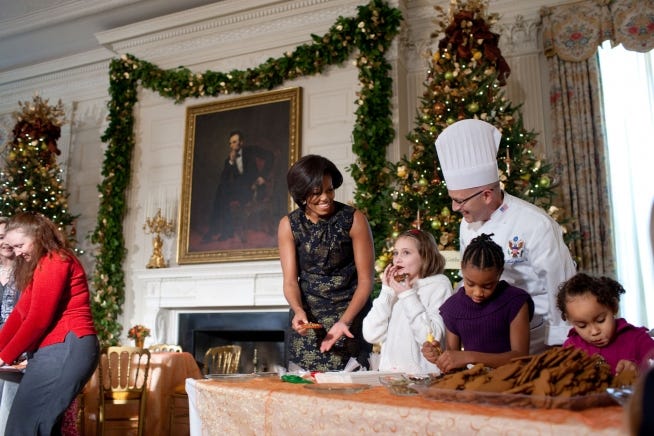
When Michelle Obama stepped onto the national stage as a potential first lady in 2008, she brought an unprecedented combination of credentials: degrees from Princeton and Harvard Law, a successful legal career, and executive experience at the University of Chicago Medical Center. Yet, from the moment she appeared in campaign coverage, visual media consistently framed her through the lens of racial and gender stereotypes rather than her remarkable qualifications.
As the first Black first lady, Obama faced a unique form of visual sexism—one that combined traditional gender bias with racial stereotyping to create what scholars call a "double bind" of discrimination. The patterns in visual coverage of her reveal how media outlets used camera angles, image selection, and editorial choices to diminish her authority while reinforcing harmful stereotypes about Black women in positions of power.
The Angry Black Woman Frame
Perhaps no visual trope was more persistent in Obama's coverage than the selective use of facial expressions and body language to reinforce the "angry Black woman" stereotype. Media outlets consistently chose photographs that captured her mid-gesture or mid-expression, creating an impression of aggression or confrontation that didn't match the content of her speeches or appearances.
The 2008 campaign provided stark examples. During her Democratic National Convention speech—a moment of triumph for the Obama campaign—many outlets chose photographs that emphasized her animated gestures rather than her message of unity and hope. The visual framing transformed moments of passionate advocacy into images that could be read as threatening or angry. The New York Post ran an entire front page with the headline: “Mad as Hell Michelle” in January 2012. Or this entire Daily Mail article dedicated to photos of “Grumpy Michelle” attending a dinner; her crime, of course, was not smiling the entire time.
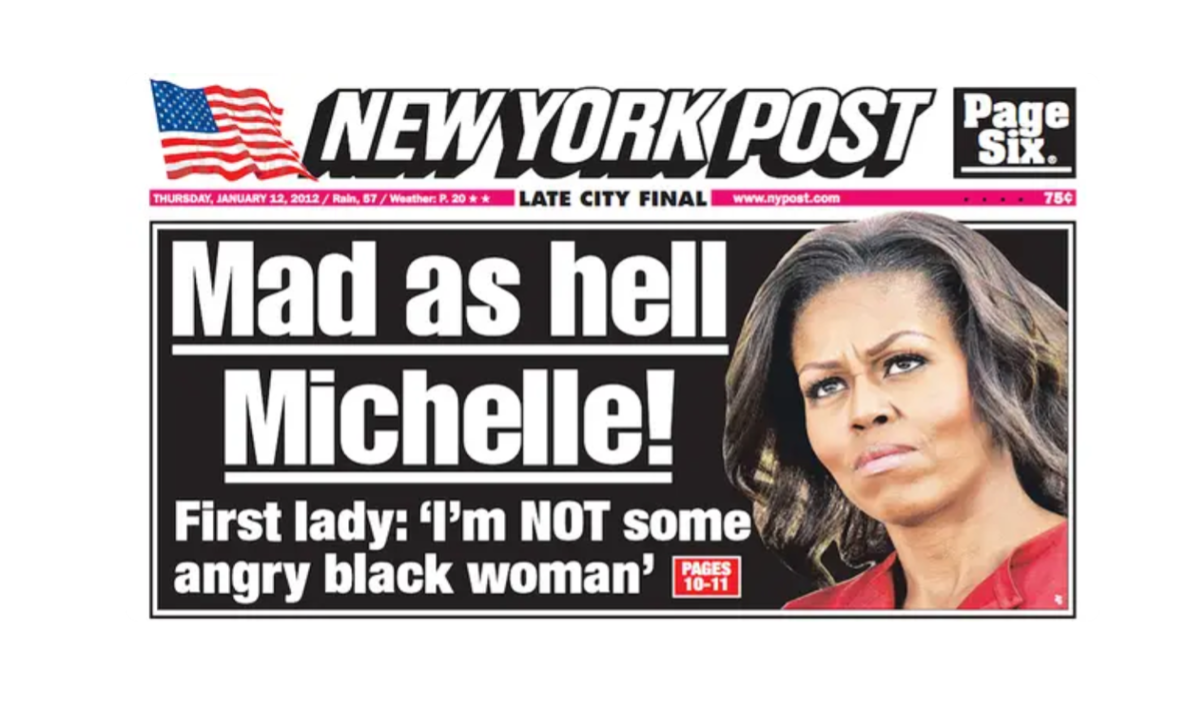
Black women’s emotional expressions are frequently misinterpreted through the lens of racist and sexist stereotypes, including the “angry Black woman,” leading their gestures and facial expressions to be more often perceived as aggressive or inappropriate—even when comparable with those of white women. This bias played out repeatedly with Obama's visual coverage, where normal political passion was reframed as excessive emotion.
In an analysis of media bias against Michelle Obama in 2013, Roxane Gay wrote, “the response to these latest images of Michelle Obama speaks volumes about the expectations placed on black women in the public eye and how a black women’s default emotional state is perceived as angry…. She never gets to simply be.”
Fashion as Weapon
First ladies throughout history have all been criticized for their fashion choices. With the 24-hour news cycle, Michelle Obama's clothing became a battleground for visual politics in unprecedented ways. Her outfit choices were scrutinized, photographed in extreme close-up, and analyzed for deeper meaning.
A sleeveless dress controversy revealed how arbitrary these standards were—and how little progress America had made in a century. After marrying President Grover Cleveland in 1886, Frances Cleveland became an instant fashion icon. She wore dresses that revealed her shoulders, prompting the Women's Christian Temperance Union to petition her to cover up. By the 21st century, the American public had barely moved forward when it came to first ladies and their shoulders—at least Black first ladies.
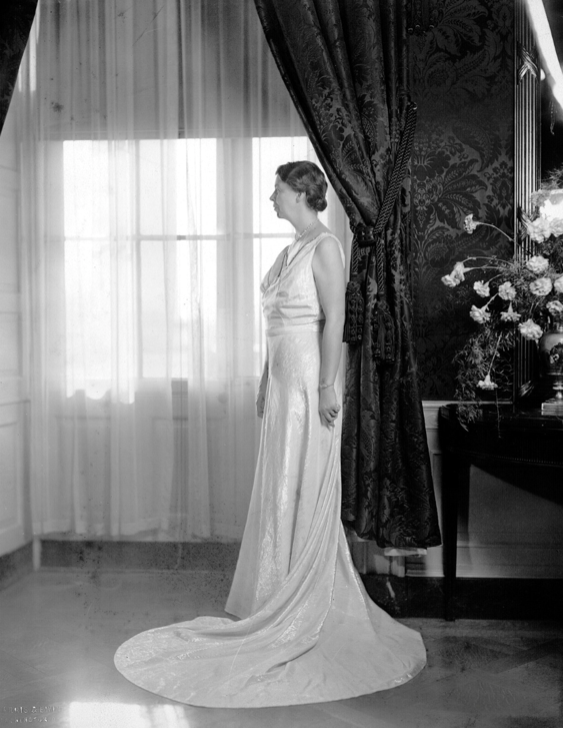
When Obama wore sleeveless dresses to official events, visual coverage focused obsessively on her exposed arms, with close-up photography that emphasized her physical body rather than her presence at policy events. Nancy Reagan wore a one-shoulder gown in 1981 for the inaugural ball, and Washington Post critic Robin Givhan called it “decidedly glamorous." Eleanor Roosevelt wore a sleeveless crepe gown to the inaugural ball in 1937. Most tellingly, incoming Melania Trump wore a sleeveless dress to meet with Obama during the 2016 transition without generating any comparable controversy.
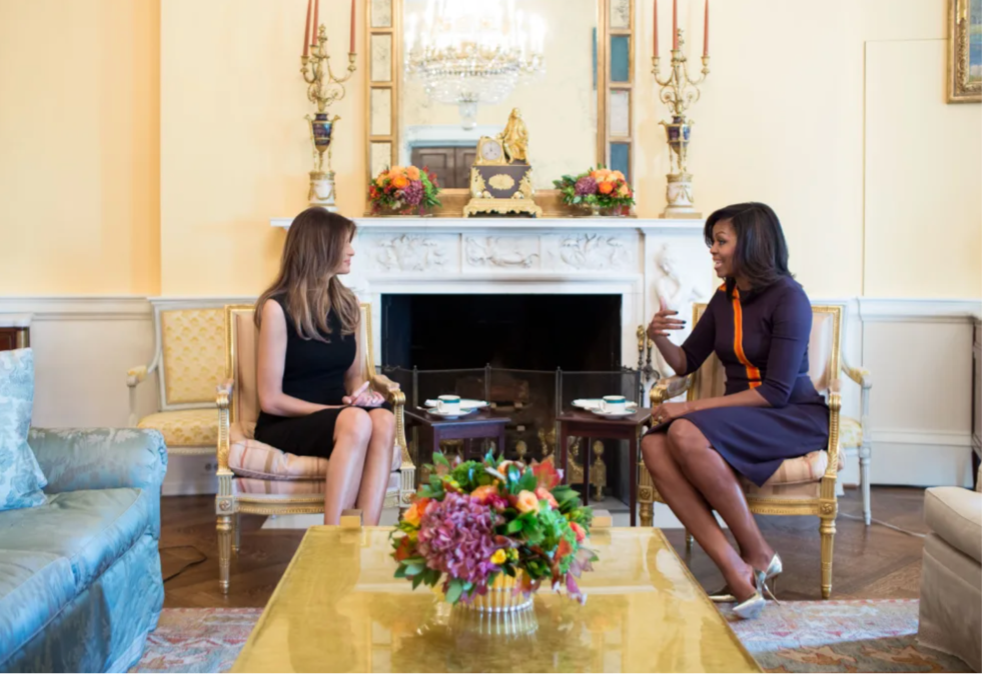
The differential treatment reveals how identical fashion choices were interpreted through different racial and political lenses. What was considered glamorous for white first ladies was deemed controversial for Obama, demonstrating how visual criticism can mask deeper biases about who belongs in positions of power and under what conditions.
The visual framing of her fashion choices often removed policy context entirely. When she appeared at events promoting childhood nutrition or education initiatives, photography focused on her clothing rather than her work. This visual emphasis reduced a Harvard-educated policy advocate to a fashion figure, reinforcing stereotypes about women's priorities and capabilities.
Her decision to wear clothing by both high-end designers and accessible brands sparked another layer of visual scrutiny. When she wore expensive pieces, she was photographed in ways that emphasized luxury and excess. When she wore affordable clothing, the visual treatment suggested she was trying too hard to appear relatable. The double bind was impossible to escape.
Satire, Weaponized
Magazine covers provide particularly clear examples of unfair coverage. The most egregious example came from The New Yorker's July 21, 2008 cover, which depicted Michelle Obama as an armed radical with an afro and military attire. Though intended as satire of conservative attacks, the visual reinforced racist stereotypes about Black women as threatening and militant.
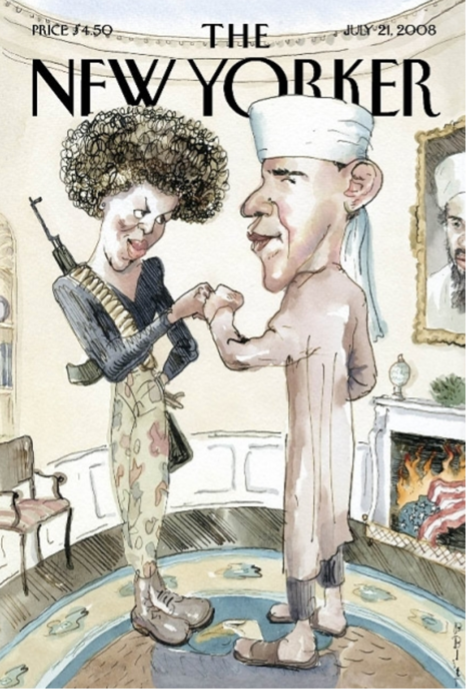
The cover's defense ignored how visual imagery operates independently of editorial intent. This image might have unwittingly reinforced the fears, bigotry, and prejudice that it intended to critique.
The Intersectional Impact
Obama didn't simply face sexism or racism; she also confronted a distinctive form of bias that targeted her specifically as a Black woman in a position of unprecedented power. The visual framing reinforced stereotypes that made it harder for audiences to accept her authority and expertise.
The long-term impact extends beyond Obama herself. When the first Black first lady is not framed in her full dignity and authority, it creates a visual template for the Black women in politics who come after her.
Despite these constraints, Obama found ways to counter negative visual framing through strategic image-making. Her official White House portraits, social media presence, and carefully planned public appearances provided alternative visual narratives that emphasized her intelligence, warmth, and policy expertise. Crucially, her White House photographer, Lawrence Jackson, a Black man who understood the visual politics she faced, took great care to frame her with the dignity and authority she deserved. Jackson's official photographs created a visual record that countered the diminishing imagery often seen in media coverage. They portrayed her with dignity, authenticity, and warmth.
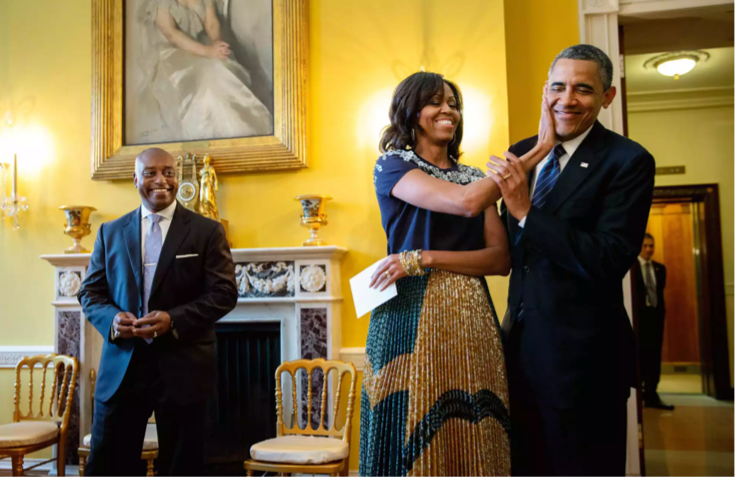
The contrast between controlled and uncontrolled imagery became particularly apparent during her post-White House career. Book tours, speaking engagements, and media appearances where she controlled the visual context consistently presented her as the accomplished professional woman that campaign coverage had obscured.
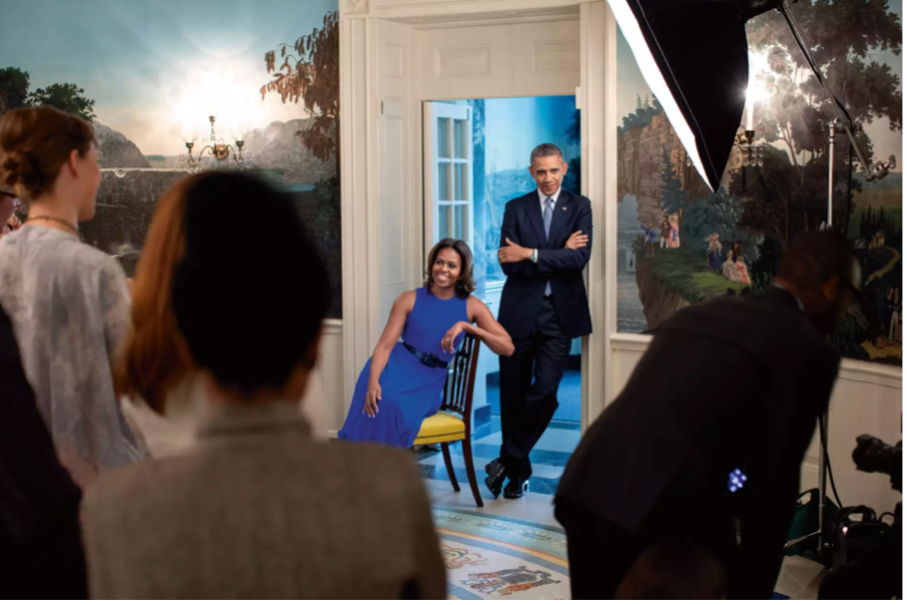
The Obama Standard
Michelle Obama's visual treatment established patterns that continue to affect women of color in political leadership. The techniques used to diminish her authority—selecting images that do not show her full authority, emphasis on appearance over accomplishment, reinforcement of racial stereotypes—represent a playbook that media outlets continue to use.
Understanding these patterns requires visual literacy that goes beyond individual images to examine systematic bias in how political figures are represented. The cumulative effect of thousands of photographs, magazine covers, and editorial choices shapes public perception in ways that can't be countered by individual speeches or policy initiatives.
As we continue to see women of color seek political leadership, the visual coverage of Michelle Obama serves as both warning and guide. The patterns of diminishment she faced reveal the work still needed to ensure that visual representation matches political reality.
Until next time, keep your eyes sharp and your lenses sharper.
Send examples of visual politics you've noticed to submit@contrariannews.org with the subject line SPLIT SCREEN.
Azza Cohen (she/her) is an award-winning documentary filmmaker who served as Vice President Kamala Harris's official videographer in the White House. She recently founded a production company with her wife, Kathleen, and is writing a book about visual sexism from a cinematographer's perspective. Uncover and address visual sexism alongside Azza every other week here on The Contrarian and on Instagram and Bluesky. Azza is, in fact, a big fan of The New Yorker, which bought and distributed her film “FLOAT!” in 2023.

The more things change, the more they stay the same. Black women are always fighting racist and sexist stereotypes. Kamala Harris is also unfairly portrayed in the MSM. American women politicians, regardless of ethnicity or political party, are subjected to double standards.
Michelle Obama was the best First Lady in my lifetime. I’m 80. History will sing her praises forever. She is a National Treasure.