


This was newly minted Vice President JD Vance's opening line to American troops during a recent visit to a military base in Greenland. The crude language raised eyebrows, but, as a cinematographer, I'm more interested in what we're seeing than what we're hearing. The visual framing of how American leaders interact with our military reveals volumes about their actual respect for service members.
When analyzing the optics of presidential-military relations, I look for three key elements: framing, color treatment, and symbolic visuals. These subtle visual choices shape our perception of leadership and respect more powerfully than the words in any official press release.
Looking Right, Looking Forward
Remember our discussion of how subjects facing left can trigger subconscious associations with moving backward? As visual theorist Sylvie Chokron notes in her research on directional bias, "The direction of movement in visual composition significantly affects viewers' emotional responses and evaluations of images." President Donald Trump's team has mastered the art of rightward framing in official White House photographs with military leaders. These carefully composed images frequently position Trump facing right, toward the future.
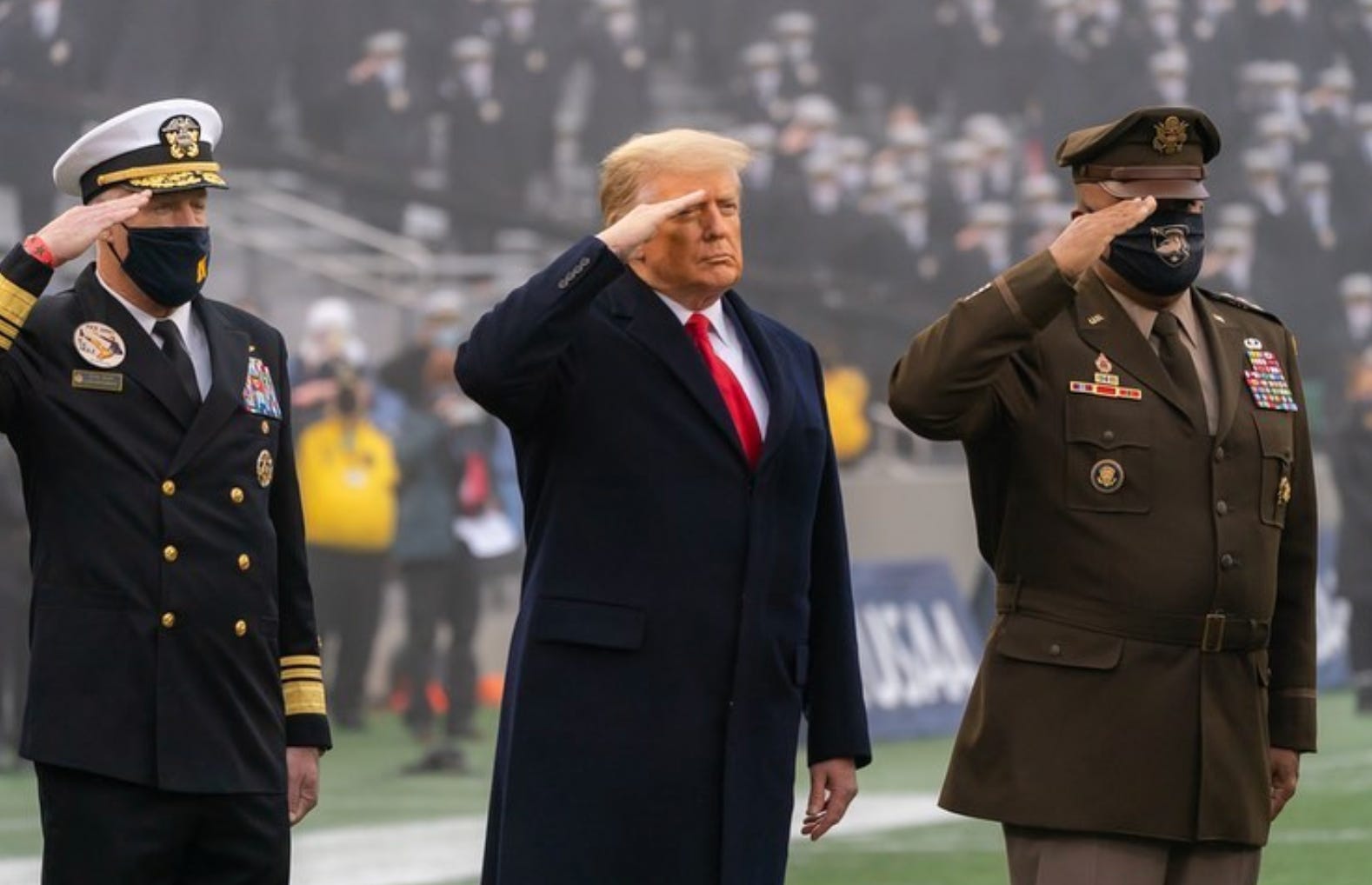
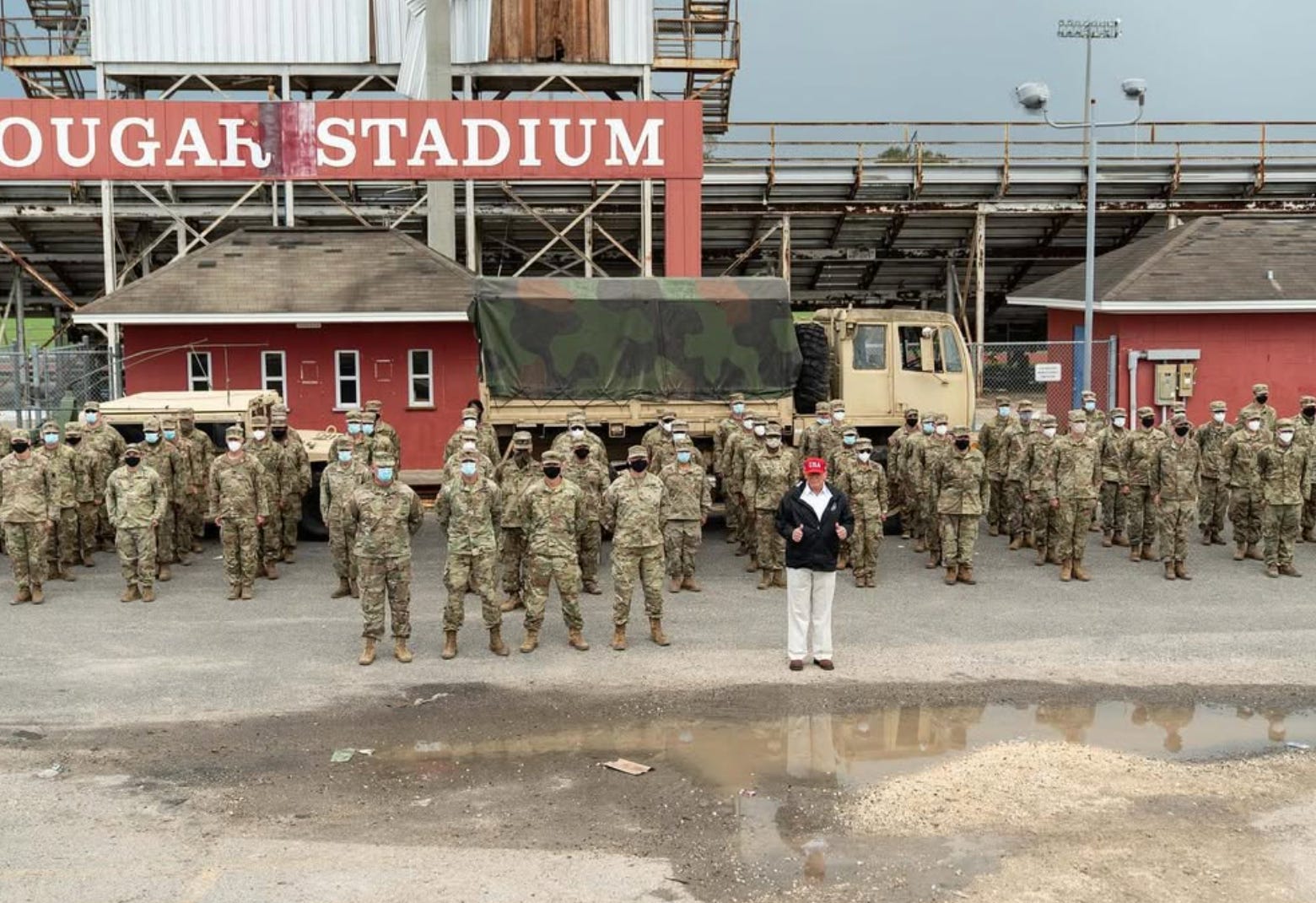
The visual composition screams authority, not partnership. Trump is regularly photographed physically elevated above military personnel on platforms or stages, creating a literal hierarchy in the frame. Although many presidents speak on stages, his team seems to prioritize images where Trump is physically higher than the people to which he is speaking. His signature "thumbs up" gesture in military contexts—a jarringly casual visual in these formal settings—further reinforces who the visual story was really about. It sticks out like…a sore thumb.
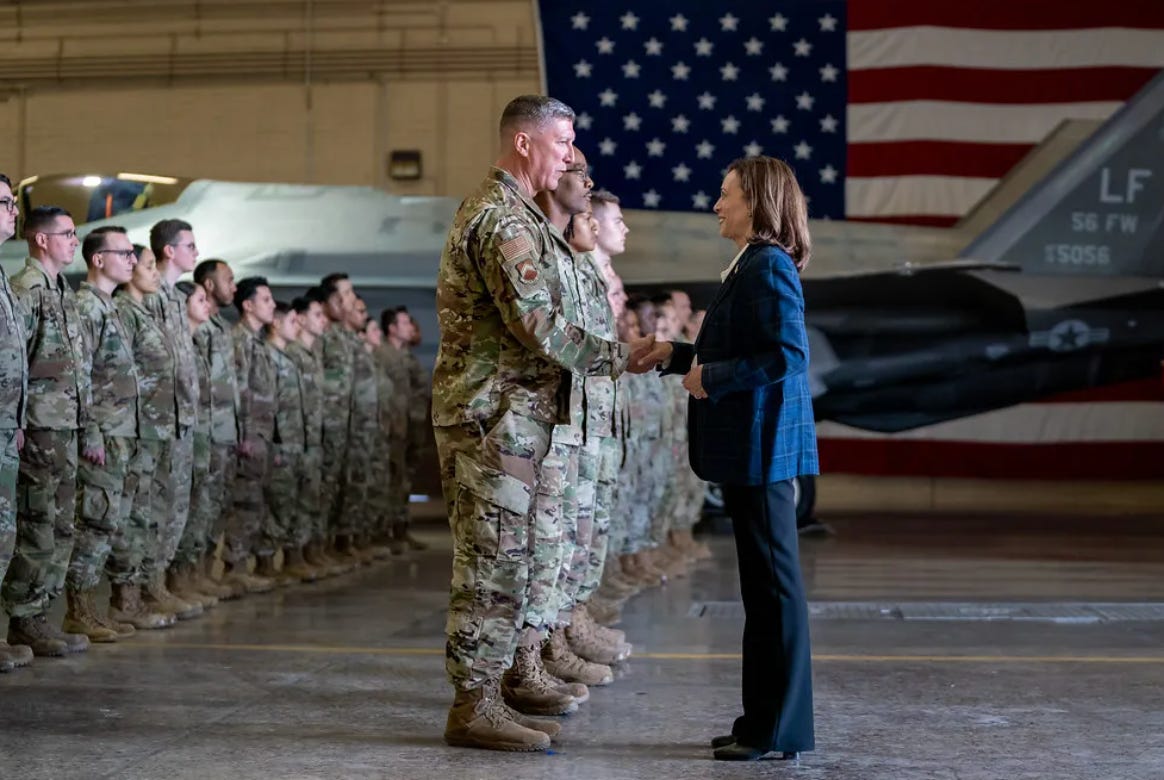
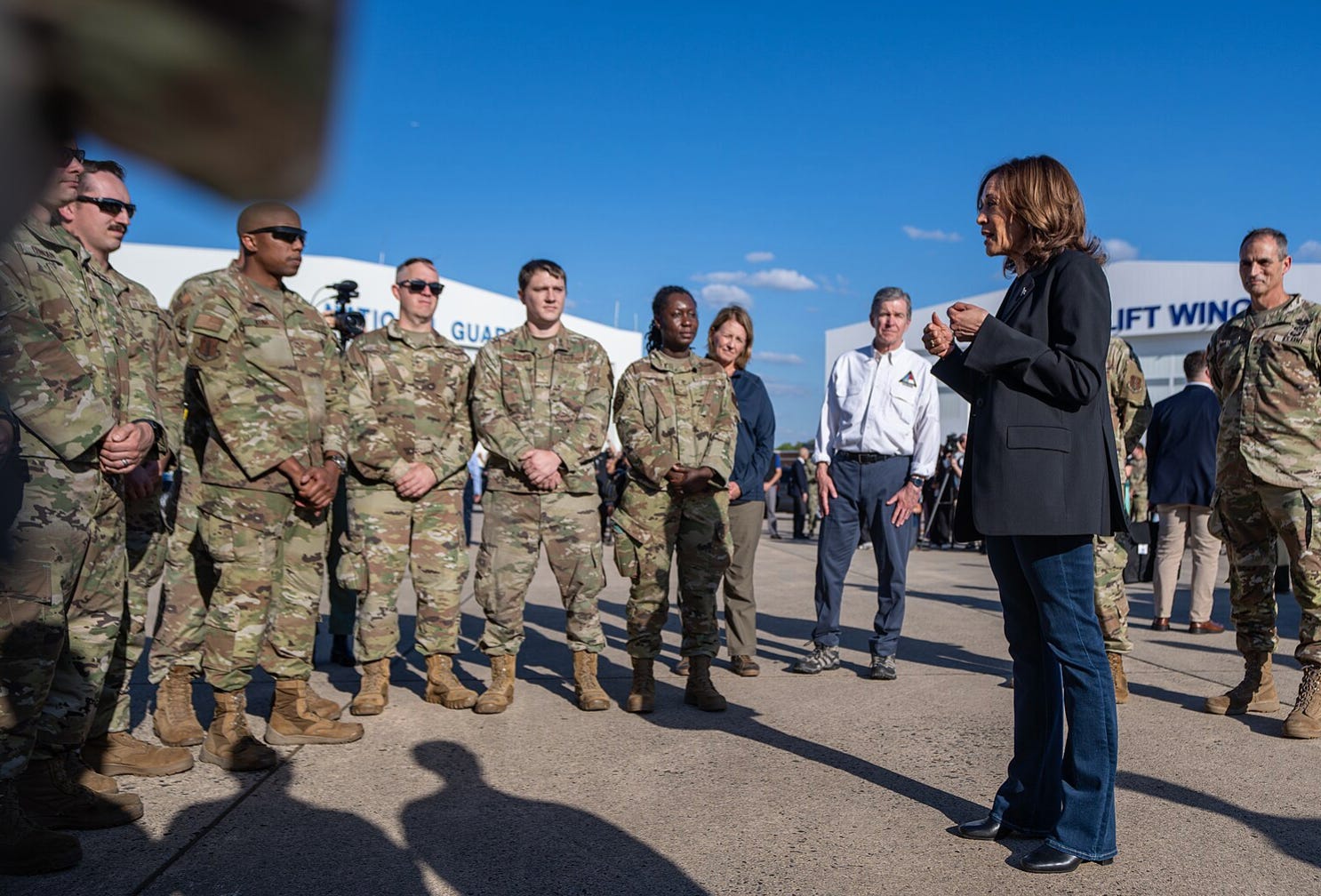
Contrast this with the Biden-Harris administration's approach. When I served as Vice President Kamala Harris’s official videographer, I intentionally framed interactions with troops at eye-level, visually demonstrating her care and curiosity in the experiences of service members. Our national security and advance teams often made sure she would have the chance to speak to a semicircle of military personnel, evoking how much she wanted to see and treat them as equals, to be able to shake hands with each person. Both President Joe Biden and Vice President Kamala Harris were regularly framed in listening positions rather than speaking or commanding—a subtle but significant shift in visual power dynamics. Because President Biden’s late son, Beau, served in the Delaware Army National Guard in the Iraq War, Biden, of course, had a deeply personal respect for service members.
The messaging is clear through composition alone: "I am listening" versus "Listen to what I’m saying."
Color Politics Beyond the Red, White, and Blue
Color grading reveals another layer of visual politics in these military interactions. Official Trump White House photos often feature heightened saturation and warmer tones that emphasize Trump's skin color, saturating the red and blue of the flag, and creating high-contrast settings that visually separate him from military personnel in the background. The saturation and the warmer tones often make the skin tones of people of color in the room look strange.
The Biden-Harris approach employed more naturalistic color grading in official photos, with less dramatic lighting contrasts, creating visual integration rather than separation. My team and I endeavored to make sure that Harris in particular was photographed with realistic color treatment that accurately represented her skin tone. Of course, in a military context, Harris was often not the only person of color in the room, which made it even more important to make sure that everyone was treated with neutral, flattering daylight. Looking back to the photos of Presidents Biden, George W. Bush, and George H.W. Bush, they also followed a similar naturalistic color approach, as well as framing.
These color decisions aren't merely aesthetic—they're political. Natural color grading suggests authenticity and connection; heightened artificial color creates distance and theatricality. As Lorna Roth argues in her analysis of visual technologies, the very calibration of photography has historically centered whiteness, making accurate representation of diverse skin tones a political choice, not a neutral technical matter (Roth, 2009).
The Symbolic Visual Language of Command
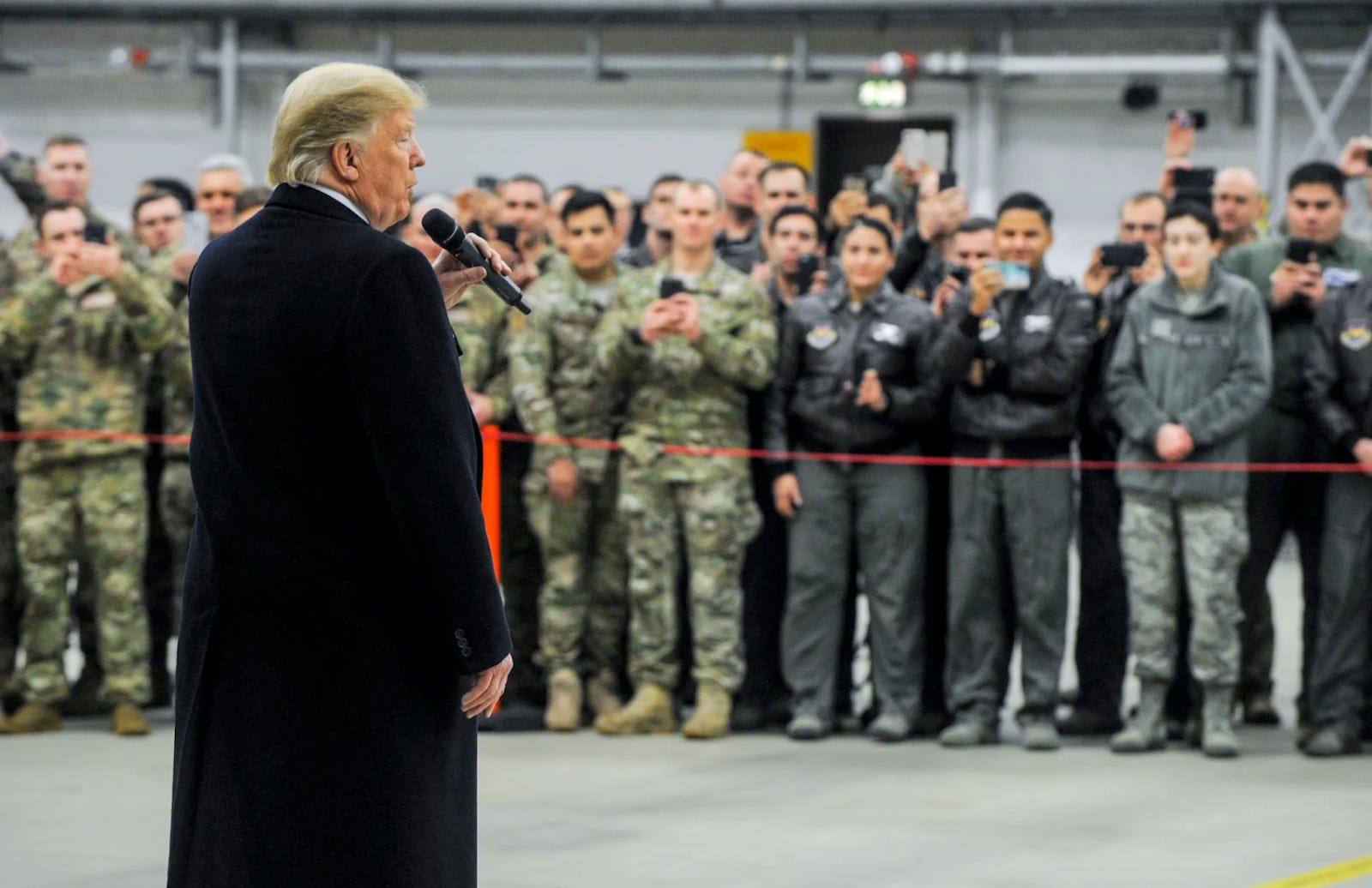
Perhaps most telling are the symbolic elements chosen for these military interactions. Trump's administration shows a distinct preference for positioning him in front of military equipment (helicopters, aircraft) that create power associations.
But what’s most revealing is what isn’t shown. Think about the visual absence of Trump with wounded veterans or at military funerals. This visual avoidance aligns disturbingly well with reports that Trump "did not want to be seen in the presence of military amputees because 'it doesn't look good for me'" and his description of fallen service members as "losers."
The Biden-Harris administration made notably different visual choices, frequently incorporating imagery showing physical proximity with service members. Biden's visits to Walter Reed, his interactions with wounded veterans, and the powerful images of both Biden and Harris bowing their heads at Dover Air Force Base during dignified transfers communicated visual respect through presence rather than absence.
What We Don't See Matters
Sometimes the most powerful visual statement is absence itself. Trump's decision to skip an outing to a French cemetery filled with graves of U.S. soldiers who served in World War I and not visiting Arlington National Cemetery for Veterans Day create a "missing visual" that speaks volumes.
What does it mean when a commander in chief doesn't want to be photographed in places of military sacrifice? The visual void becomes its own statement about priorities and respect. Keith Erickson's research on presidential visibility describes these absences as "strategic invisibility," where what isn't shown becomes as politically significant as what is.
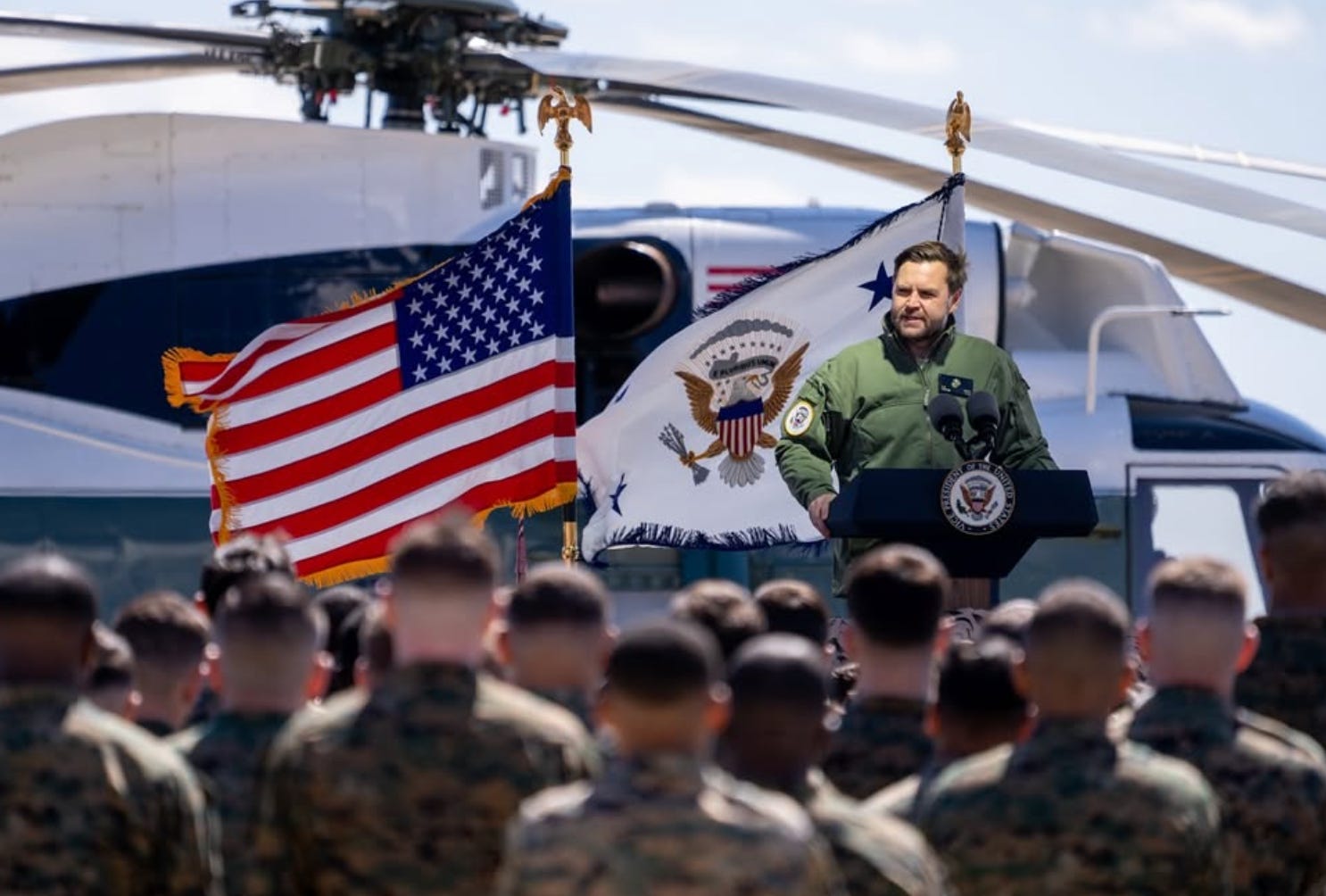
Notably, Vance's crude language is consistently paired with equally casual visual presentation. His frequent choice to wear jeans and casual attire when meeting with military personnel—rather than the traditional suit expected of the office—has drawn criticism across social media. While previous vice presidents occasionally dressed down in certain contexts, the frequency and consistency of Vance's casual clothing choices when interacting with service members signals a visual disregard that mirrors his verbal casualness. The visual informality undermines the ceremonial respect typically accorded to military interactions by the second-highest office in the land.
Historical Visual Context
This isn't just about the current or previous administration. Visual framing of presidents with military personnel has evolved significantly. Both Bush presidencies—George H.W. Bush and George W. Bush—demonstrated striking visual respect in their military interactions. Unlike the elevated, distanced framing we often see today, photographs of the Bushes with troops consistently show them at eye level, engaged in direct handshakes, and demonstrating physical warmth. George H.W. Bush, as a decorated naval combat veteran of World War II, visually communicated a peer relationship rather than a hierarchical one. George W. Bush was frequently photographed in emotional embraces with wounded veterans, his body language communicating genuine connection rather than ceremonial performance.
The Bush-Cheney years did lean heavily on flight suits, aircraft carriers, and military equipment as backdrops—emphasizing the commander-in-chief role with strong rightward directional framing, particularly post-9/11. Yet even amidst this symbolism, the human connection remained visually centered.
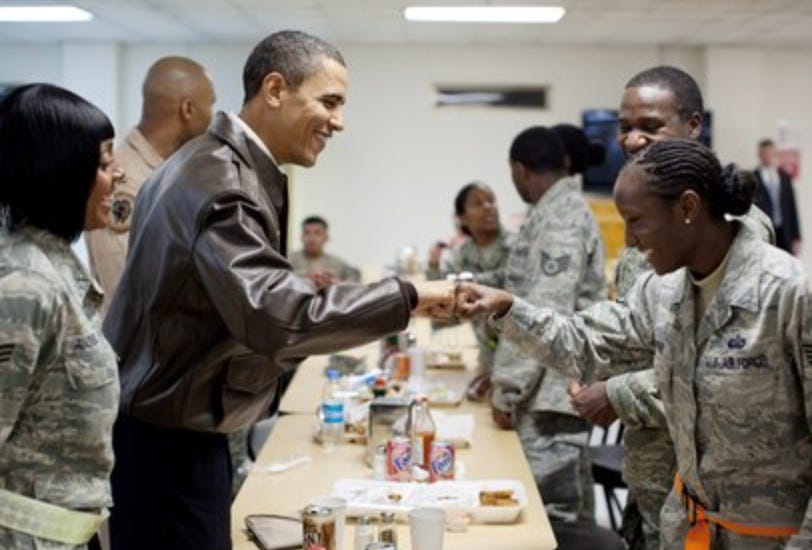
The Obama-Biden approach shifted to more subdued visual presentation, with the men often photographed in circular arrangements with military leadership and regular visual inclusion of military families and the broader military community.
A Historic Final Flight
Perhaps no visual statement speaks more powerfully to the Biden-Harris administration's approach to military respect than Harris's final journey as vice president. For her last flight on Air Force Two in January 2025, Harris made the historic choice to be supported by an all-women U.S. Air Force crew—the first time an all-women crew had operated a Boeing C-32.
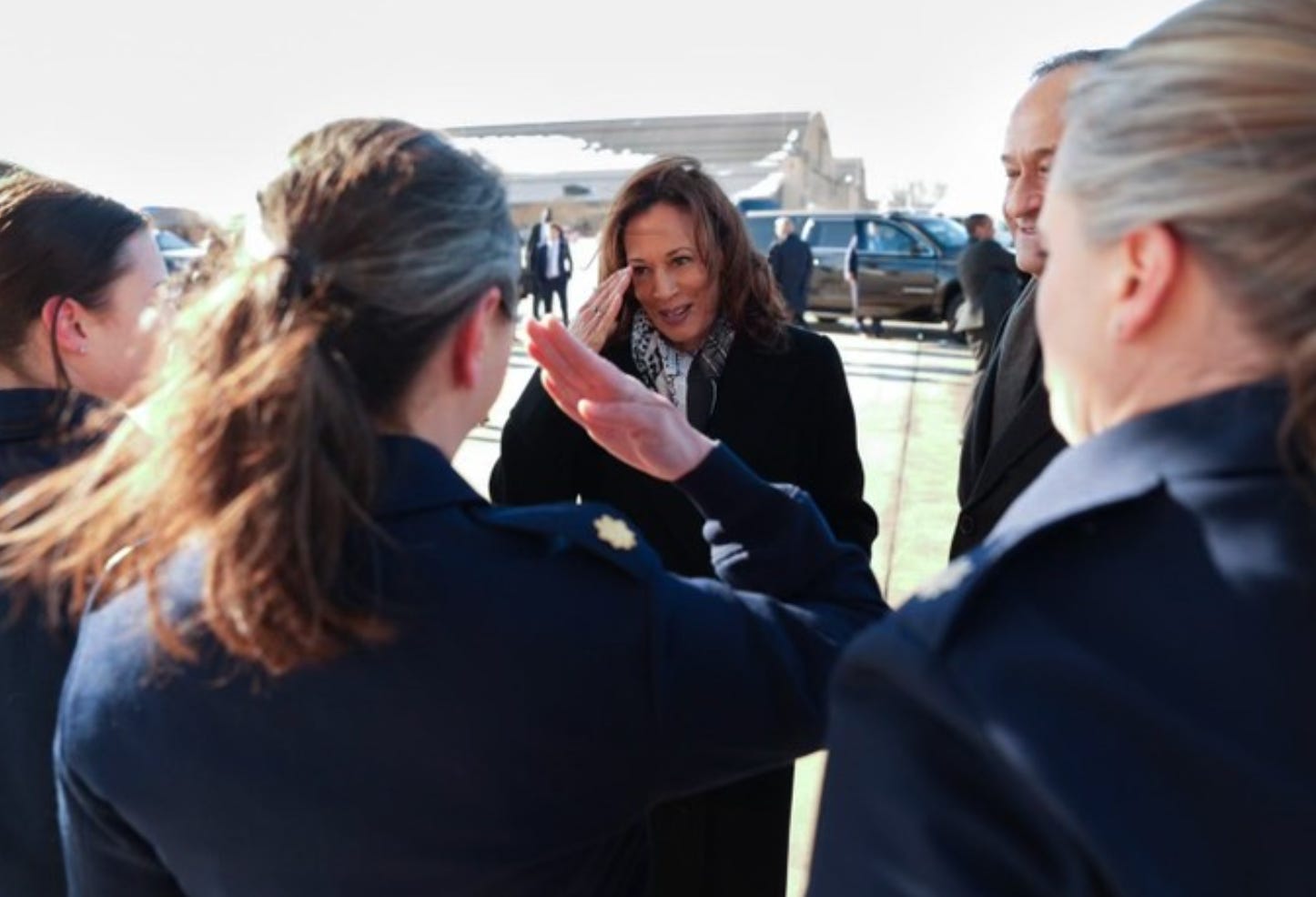
The visual symbolism was unmistakable: As she completed her historic tenure as the first woman vice president, Harris used her platform to elevate other women breaking barriers in the military. The photographs from Joint Base Andrews captured this moment of women's empowerment within military service, with Harris presenting each crew member with commemorative coins to thank them for their service.
This visual celebration of women in military roles stands in stark contrast to the male-dominated military imagery preferred by the Trump-Vance administration. That Harris chose this as her final act as vice president—followed by visiting California firefighters and joining World Central Kitchen to provide meals to those affected by wildfires—visually communicated service above self, community over authority.
Beyond the Photo Op
Visual choices reveal values. When Vance dismissively referred to allied forces as "troops from some random country that hasn't fought a war in 30 or 40 years," the verbal disrespect aligned with a broader pattern of visual politics that positions the American military might as a prop rather than a community of individuals worthy of genuine respect.
These aren't just bad photo ops or good ones. These visual patterns reveal how administrations truly see our service members—as equal citizens deserving dignity or as background elements in a performance of power.
The camera doesn't lie, even when the words might.
Until next time, keep your eyes sharp and your lenses sharper.
Send examples of visual politics in military contexts you've noticed to submit@contrariannews.org with the subject line SPLIT SCREEN.

What a most informative article. I will be looking at all these photos in a very different way from now on.
I’m impressed with this excellent interpretation of how we are encouraged to view our leaders. Thank you!