

By Carron J. Phillips
Using your voice is easy when everyone else is doing it. It gets harder when you find yourself standing alone. Speaking truth to power is not a team sport.
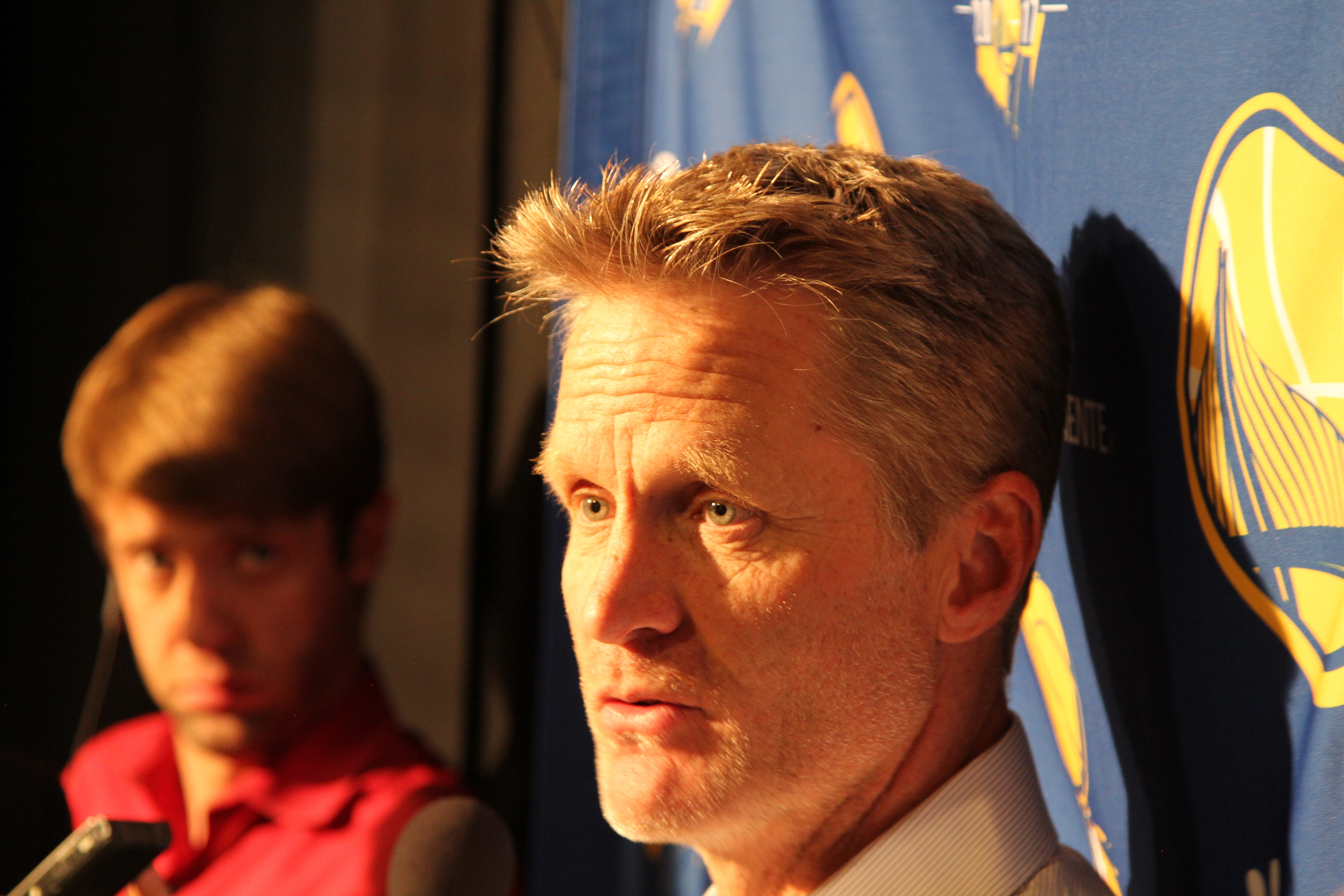
As athletes have largely agreed to “shut up and dribble,” Golden State Warriors Head Coach Steve Kerr’s possible retirement highlights a disappointing reality. The sports world, which in the past decade propelled a wave of activism, has regrettably relinquished its role of enhancing society for the better.
“One of the most definitive characteristics of [the] pursuit of social justice, particularly by athletes today, is the idea of sacrifice,” former NBA player and current senior lecturer in sports management at Columbia University Len Elmore told the Associated Press last year. “They have to be willing to sacrifice because the broad society for a period of time — as it did to those past heroes — is going to penalize you.”
In a recent interview with The New Yorker, Kerr discussed various topics, including his life experiences, his journey as an NBA player and coach, his future, and his commitment to using his platform unapologetically. Kerr, the son of a man assassinated at American University in Beirut 1984 and a player who won multiple championships with Michael Jordan and Tim Duncan, has always offered thoughtful perspectives.
“Growing up, we would host people from all walks of life, backyard dinner parties, in the Palisades or in Cairo,” he recalled. “I was a really shy kid. I really never said anything. So I just observed a lot…. And it always struck me just how humble and quiet he [his father, Malcolm] was. He was so smart, but he knew when to speak. And I think I learned a lot observing his patience and his dignity.”
For years, Kerr has used his platform to address race, politics, gun violence, and social issues. After George Floyd’s murder, he was a vocal advocate of the way athletes took stands against injustices and police brutality. Following the tragic school shooting in Uvalde, Texas, that took the lives of 19 children and two teachers, Kerr refused to discuss basketball at a press conference during the NBA playoffs. He asked instead, “When are we going to do something?” And this year, the Beerman Foundation named him the recipient of the 2025 award for Social Justice in Action.
On many levels, the situation in America is worse now than it was in 2020. Back then, athletes fervently initiated dialogues, enacted change, and held those in power accountable.
But that was then; this is now.
Of all the things that have transpired in the second term of this regime, we have yet to see any significant pushback from athletes. They don’t even post black squares to social media or tweet in defiance anymore. It wasn’t that long ago that LeBron James called the president of the United States a “bum.”
With our country mired in an unnecessary war and alarming news breaking daily, one might expect at least one athlete from a group that once changed a senatorial race in Georgia and boycotted playoff games to say something. A decade ago, someone would have kneeled during the national anthem to bring awareness to these issues, but that peaceful gesture went out of style faster than now-former Attorney General Pam Bondi’s “effort” to protect women.
Less than two years ago, an overqualified Black woman ran for the highest office in the land, and players in the WNBA — an overwhelmingly Black league — basically sat on their hands during her campaign. Ten years later, after Eric Reid and Colin Kaepernick sacrificed their careers, we’ve observed the NFL revert to its old ways, as its superficial claims of equality and diversity have been undermined by its actions. Last fall, the league required certain teams to hold pregame moments of silence tributes for Charlie Kirk. It was announced recently that a program created to help Black and minority candidates secure jobs in the league will be expanded to help white men.
Did Black lives stop mattering?
Have police brutality and racism magically ended and no one told us?
Have school shootings, sexism, and misogyny been eradicated?
Kerr can’t fight these battles alone.
According to a February report from the University of Southern California’s Race and Equity Center, 94% of pro athletes support the right to engage in activism, despite what their inaction has proved. “Our study makes painstakingly clear that pro athletes want to speak publicly about injustice, yet too many feel unsafe doing so,” said the center’s founder and chief research scientist, Shaun Harper.
But it feels like no one wants to bite the hands that feed them.
“I think that’s not lost on athletes today who are making an awful lot of money, gain a great deal of celebrity and adulation,” Elmore explained. “Who really wants to lose that? Who wants to put that in jeopardy?”
Ironically, reports indicate that Kerr’s decision to return to the Warriors for a 13th season will require some level of tolerance. His views on social, racial, and political issues have caused “internal frustration” within the organization.
This is a world in which a future Hall of Famer’s reasonable and thoughtful opinions are not always welcomed. Even white privilege can have limits. Because if they demand that Steve Kerr just “shut up and coach,” the silence will be even louder than it already is.
Carron J. Phillips is an award-winning journalist who writes on race, culture, social issues, politics, and sports. He hails from Saginaw, Michigan, and is a graduate of Morehouse College and Syracuse University. Follow his personal Substack to keep up with more of his work.
Great article. Thank you. I couldn't agree with you more. Colin and Eric's sacrifices are probably being laughed at by today's athletes, who do nothing but worship on the altar of the almighty dollar. That puts them in the same low class as their owners.
To me. Colin and Eric are the real heroes and I hope Steve Kerr will never allow anyone to shut him up.
I doubt someone who has the integrity of Steve Kerr will ever shut up and just coach.