


"There's no point in running; you have to set off at the right time.”—Jean de La Fontaine
No matter how many decades I’ve lived here, it still drives me crazy that France unapologetically shuts down for the entire months of July and August.
Bureaucracy grinds to a halt, political talk shows vanish from the airwaves, and cities empty as the French migrate seaside or to family homes in the middle of nowhere, fleeing the heat and their harried lives in one graceful, unified sigh of relief.
Business emails go unanswered, meetings are delayed, decisions postponed. You might find local doctors’ offices, specialists, and pharmacies shuttered, leaving only a sun-faded, handwritten list taped to the door with the name of whoever is on call, usually in a neighboring town. Forget calling your lawyer or accountant or needing a notary, don’t expect your package to be delivered on time, and good luck finding a plumber, a handyman, or an artisan. Everyone is on vacation.
The sheer audacity of it! To think that the entire country can screech to a halt, and we are just expected to be patient and wait for September. I guess they think we are all on vacation.
It frustrates me to no end—but sometimes I wonder if they don’t have a point.
The world is crazy. We’re utterly exhausted, worn down by events here and abroad, deafened by the blaring headlines day in and day out. Disheartened, disgruntled, disillusioned, and discombobulated.
Wouldn’t it be great to disconnect, disengage, and disentangle? Turn off our phones, log out of social media, close our laptops, kick off our shoes, and just breathe deeply? I’m seriously tempted. Doomscrolling, obsessively tuning into political podcasts, devouring Substacks—it’s all so addictive, isn’t it? Sometimes I worry the world will crumble if I look away for even a single day.
But it’s becoming necessary. We’d lose our minds if we didn’t take a break, if we didn’t step away from the political and social mayhem, the urgency, the daily demands and the constant everything. Maybe the French have it right.
The Italians have a beautiful phrase for it—il dolce far niente, the sweetness of doing nothing—and the French have embraced it as their own summer mantra. The French have truly mastered the art of farniente, as they love to call it. It’s an enticing philosophy.
I work in the hotel business. It doesn’t shut down in the summer. It doesn’t even slow; au contraire, it speeds up to a frenzy. Summer is high season, and though most French are driving to the beach, we are accelerating into overdrive. The kitchen is my safe haven, safe from the chaos and noise of breakfast service and reception, the constant flow of vacationers. But during the summer months, I am, more often than not, prepping or making jam with summer’s cornucopia: peaches and nectarines; plums of every shape, size, and color; strawberries, raspberries, blueberries, all the berries; cherries and rhubarb.
Anyway, I’ve never really been very good at farniente. I’ve never been able to do nothing. I get bored silly. I grew up in Florida, a mere 5-minute walk from the beach. Sitting on the hot sand, getting a tan—it bored me. Picnics, long walks, I get itchy to be creating, producing, or learning something. But, for my own well-being, I really should learn to adopt a little of the French mindset, co-opt their farniente in a way that suits me.
My own perfect version of farniente is cooking and baking. It’s not about doing nothing, and yet, it is. I turn off the news and social media, tune out the noise and tumult of the world, pretend that my endless to-do lists don’t exist. I concentrate on something deliberate and ordered; I focus on simple tasks of weighing, chopping, stirring, whisking. I allow myself to get swept up in the textures, aromas, and the magic of cakes, breads, stews as they transform and take shape. What I make doesn’t have to be perfect, it just has to be. It might only be a morning or an afternoon rather than a six-week vacation, but it is a gentle escape.
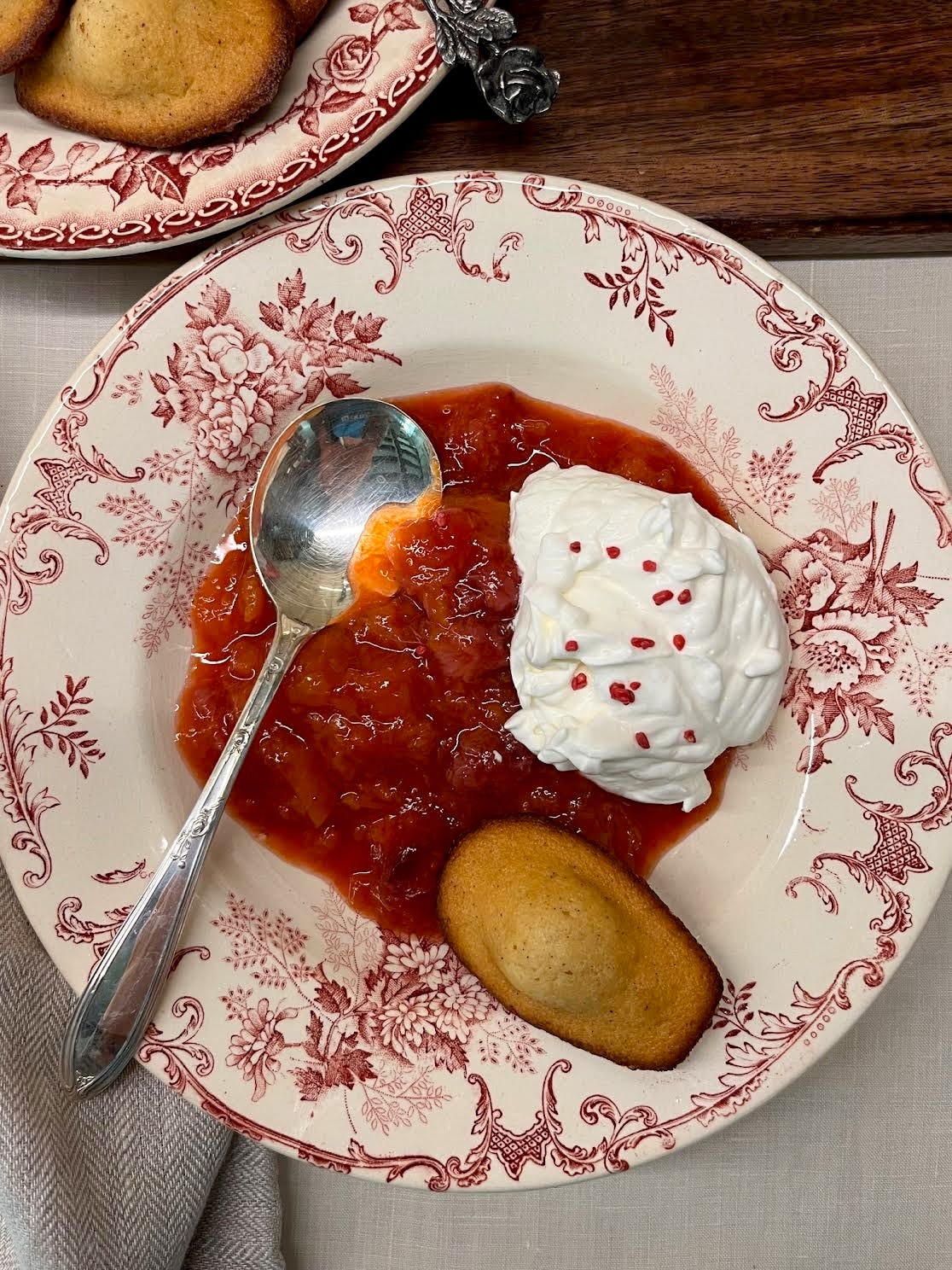
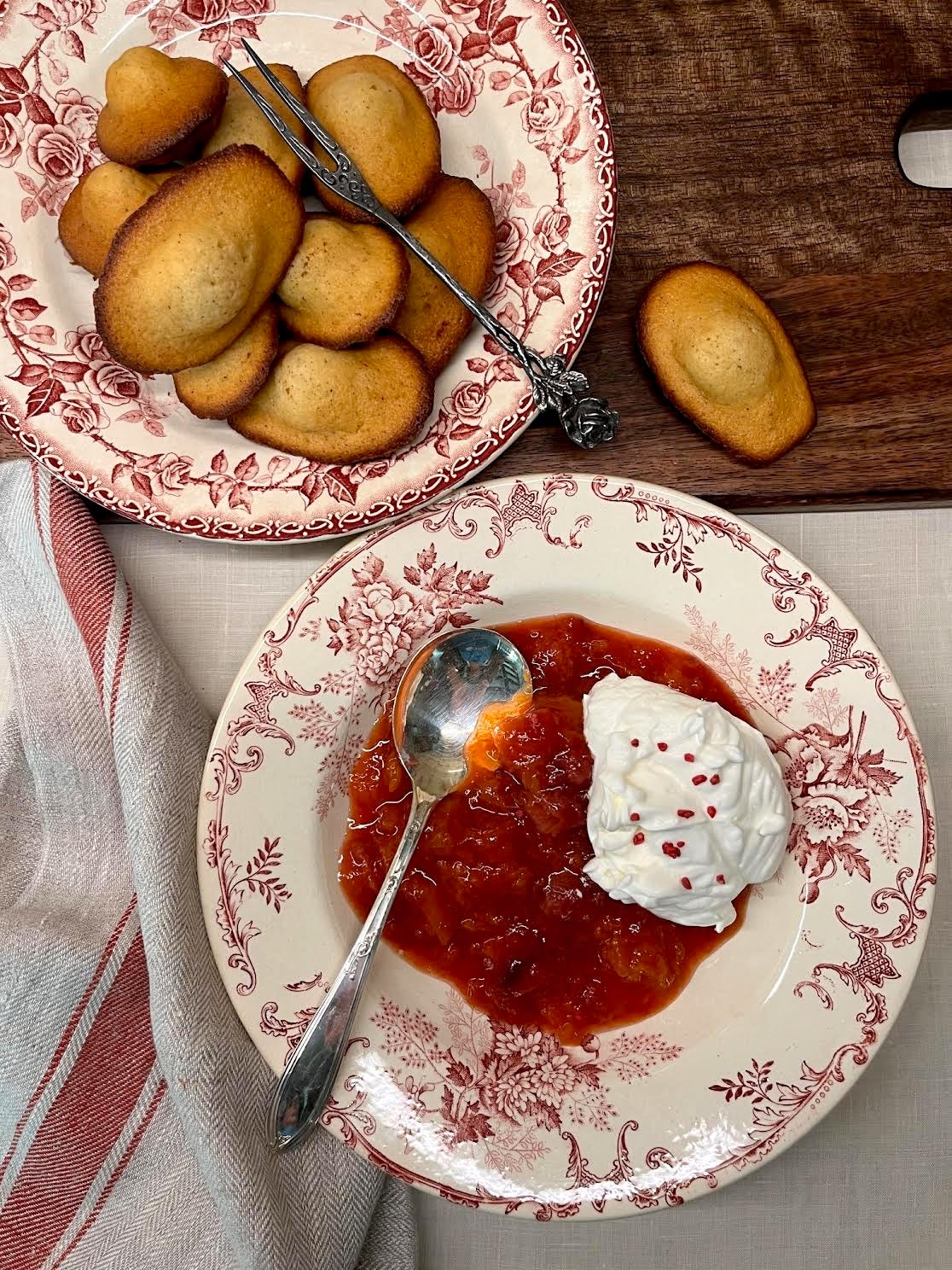
Compote de fruits d’été et madeleines au miel et à la vanille
This is a wonderfully typical French summer treat when stone fruits are in season and at their best. Ladle or spoon some of the compote into serving dishes, top with lightly sweetened whipped cream or ice cream, and pass around the madeleines.
Stone Fruit Compote
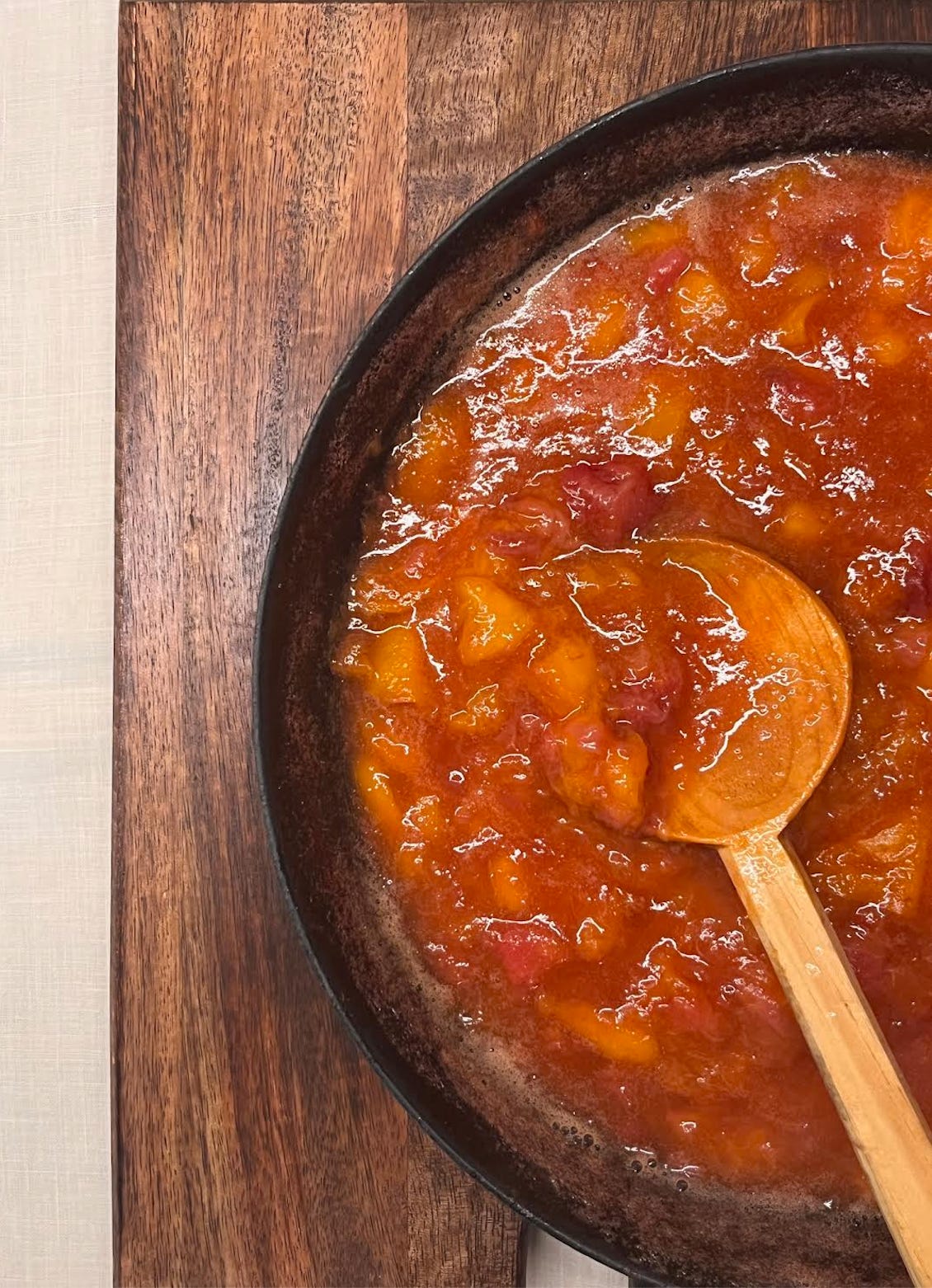
About 3.3 pounds (approximately 1.5 kilos) ripe stone fruits—a mix of yellow and/or white fleshed peaches and nectarines, apricots, and plums. I included 2 purple-red pêches de vigne or vineyard peaches
2 tablespoons water
2 tablespoons brown sugar (I use granulated golden sugar), more to taste
Vanilla extract
Peel the peaches and nectarines by plunging them in boiling water until just submerged; lift them out to a bowl or plate using a slotted spoon—ripe fruit should only need 1 minute or so in the water. When cool enough to handle, peel off the skin using a paring knife and discard. Cut each in half, remove the pit, and chunk the fruit coarsely.
Remove the pits from the apricots and plums and chunk the fruit coarsely.
Place 2 tablespoons water in a large pot, sauté pan, or large, deep skillet, and place over medium-high heat. Add all the fruit, cover the pot or pan, and allow to cook for 5 minutes; remove the lid and carefully stir in 2 tablespoons brown sugar and a drizzle or two of vanilla extract. Continue to cook, stirring the fruit and scraping the bottom to keep from the fruit and juices burning. Lower the heat under the pot during the course of cooking, if necessary. Cooking time will vary depending on the size of the pot or pan, the heat level under the pot or pan, and how well you want your fruit cooked; the fruit will be meltingly soft, practically a purée, and the juices will be bubbling thickly when the compote is done.
Taste and add a bit more sugar, if you like.
Allow to cool completely before serving. The compote will thicken, and the tartness will abate slightly as it cools.
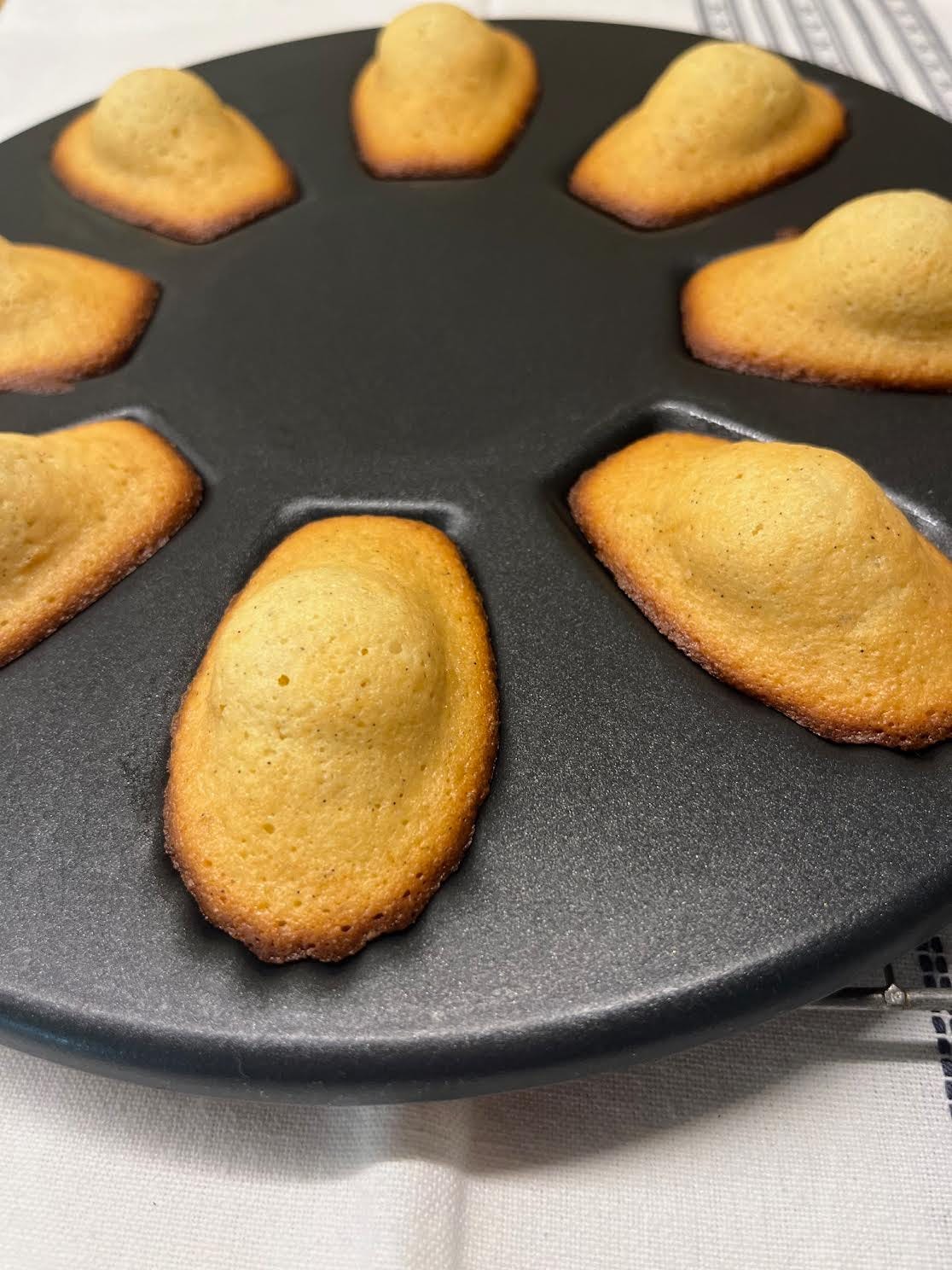
Honey Vanilla Madeleines
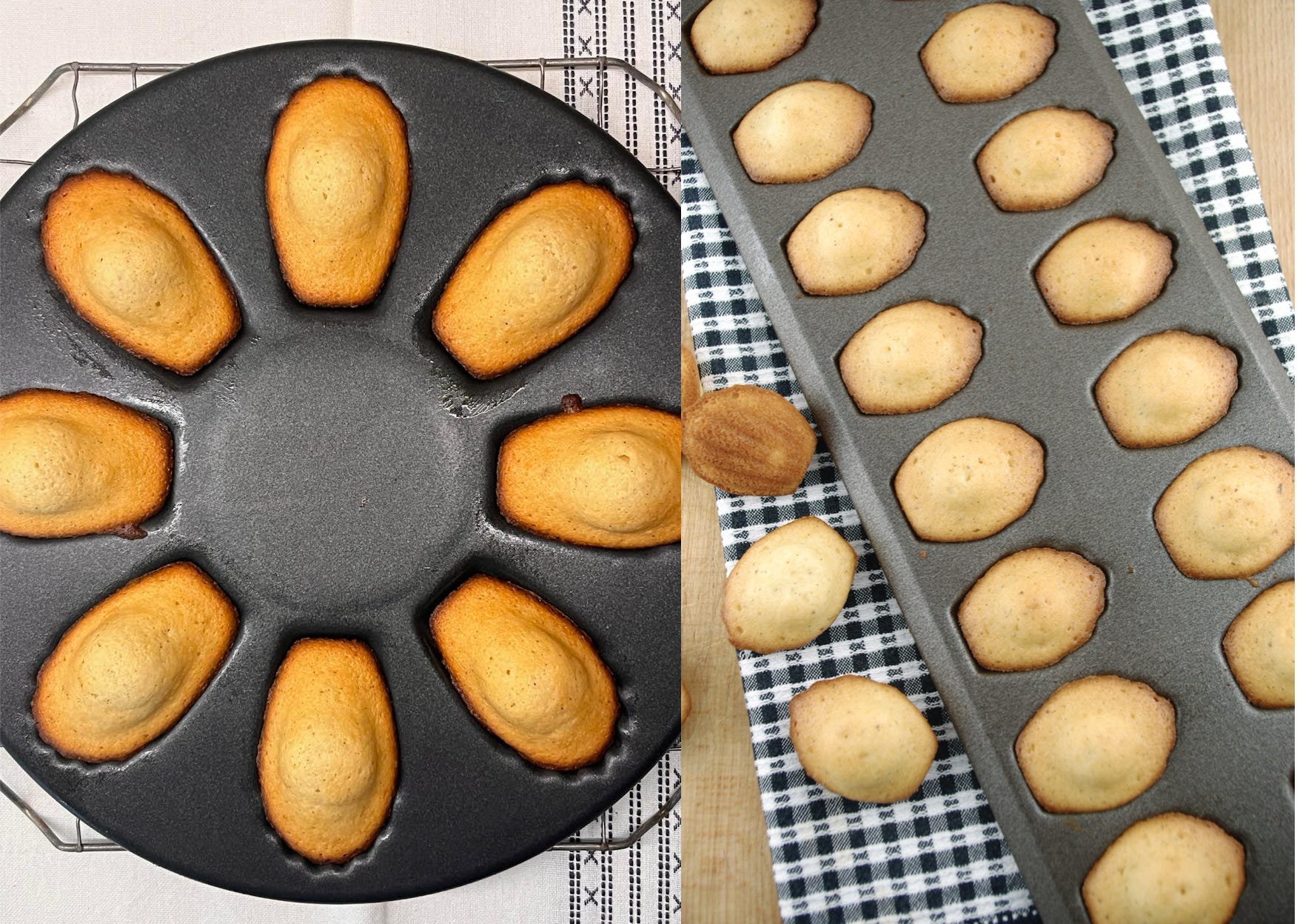
This recipe makes about 24 large 3-inch (7 ½ cm) madeleines or about 60 mini-madeleines (1 ¾ - inch / 4 ½ cm at their longest point).
9 tablespoons (135 grams) unsalted butter
2 large eggs
Scant ½ cup (½ cup – 1 ½ teaspoons / 90 grams) granulated sugar
1 tablespoon (30 grams) liquid honey
Scant ¼ cup (40 ml) milk
1 cup (135 grams) self-rising cake flour * see note
1 vanilla pod or vanilla extract
Pinch ground cardamom (optional)
note : 1 cup of self-rising flour = 1 cup of all-purpose flour + ¼ teaspoon salt + 1 ¼ teaspoons baking powder. In grams: 100 grams of self-rising flour = 100 grams of all-purpose flour + ¼ teaspoon salt + 1 ¼ teaspoons baking powder.
Prepare the madeleine batter several hours or the night before baking:
Melt the butter in a small saucepan over low heat. Continue heating until the butter turns a dark hazelnut brown color and smells nutty. Remove from the heat and allow to cool to room temperature.
In a large mixing bowl, whisk together the eggs, sugar, honey, and milk until well blended.
Using a small, thin-bladed, sharp knife, split the vanilla bean down the center and scrape out all the seeds. Add the seeds to the batter. If you don’t have a vanilla bean, simply add about a teaspoon of liquid vanilla extract.
Sift the flour (self-rising or all-purpose with the addition of the salt and baking powder) onto the batter and whisk to blend. Whisk in the melted brown butter: try not to add the dark dregs that have settled to the bottom of the pan—I pour the butter little by little into the batter through a small sieve that catches the impurities.
When the batter is well-blended and smooth, cover the bowl and refrigerate for several hours or overnight.
Bake the madeleines:
Preheat the oven to 410°F (210°C). Lightly butter the shell-shaped cavities of a madeleine mold (the easiest way to do this is using a pastry brush or paper towel and softened butter).
The batter right out of the refrigerate will be very thick and easy to work with: simply place about half to one tablespoon (for larger shapes) or half to one teaspoon for tiny madeleine shapes, filling each shell no more than three-quarters full.
Place the madeleine pan directly on the oven rack and bake for about 8 to 10 minutes. Do not overbake the madeleines or they will be dry: take them out when puffed up and the center forms a large bump, the edges are golden but the center is still pale.
Once out of the oven, very gently lift the madeleines from the molds using a knife and place on a rack to cool.
Jamie Schler is an American living in France. She owns a hotel and writes the Substack Life’s a Feast.

Thank you for a pleasant article to escape with for a few minutes! I haven't been able to do much cooking or baking for a few years. But I should be able to start soon. I look forward to being totally absorbed in creating something very good out of little bits of "this and that." And I look forward to being able to share my creations with my friends and family. I'm already smiling at the prospect.
And how perfect is that phrase.. The sweetness of doing nothing. When I lived in Prague in the early 90s, I was stunned the first summer when my neighbor Lida said "Bye! See you next month".. And she explained she was going into the country, to their very small farm (then I noticed the rest of Prague was empty!). She explained she grows vegetables to can and store for the winter months when fresh vegetables are empty from the stores (post communism seclusion didn't change imports right away), mends and sews new clothes, dries beans.. And reads books and sits in her garden. The Czech people are masters at making, fixing, growing. And the summer is their busiest making time. Truly refreshing. Thanks for this lovely post, and the memories it sparked. We all need to slow down.