

By John F. Terzano
On my last tour in Vietnam in 1972, aboard a U.S. Navy destroyer, I began questioning what we were doing there, and why. More than half a century later — with the nation mired in another war I deem wrong, unjust, and immoral — I still return to those questions whenever someone says, “Thank you for your service.”
People mean well. But few know anything about my service, or what it entailed. They do not know what I was asked to do or what I came to understand about the war our government sent us to fight. This Veterans Day, I have a question about that gratitude:
If you’re willing to thank me for my service, what are you willing to ask of those who continue sending us to war?
In March 2026, Army reservist Nicole Amor was days away from returning to her husband and two children in Minnesota when a drone strike killed her and five other American service members in Kuwait. “She was almost home,” her husband, Joey, told the Associated Press. Instead, she was killed one day after the U.S. and Israel began their war against Iran.
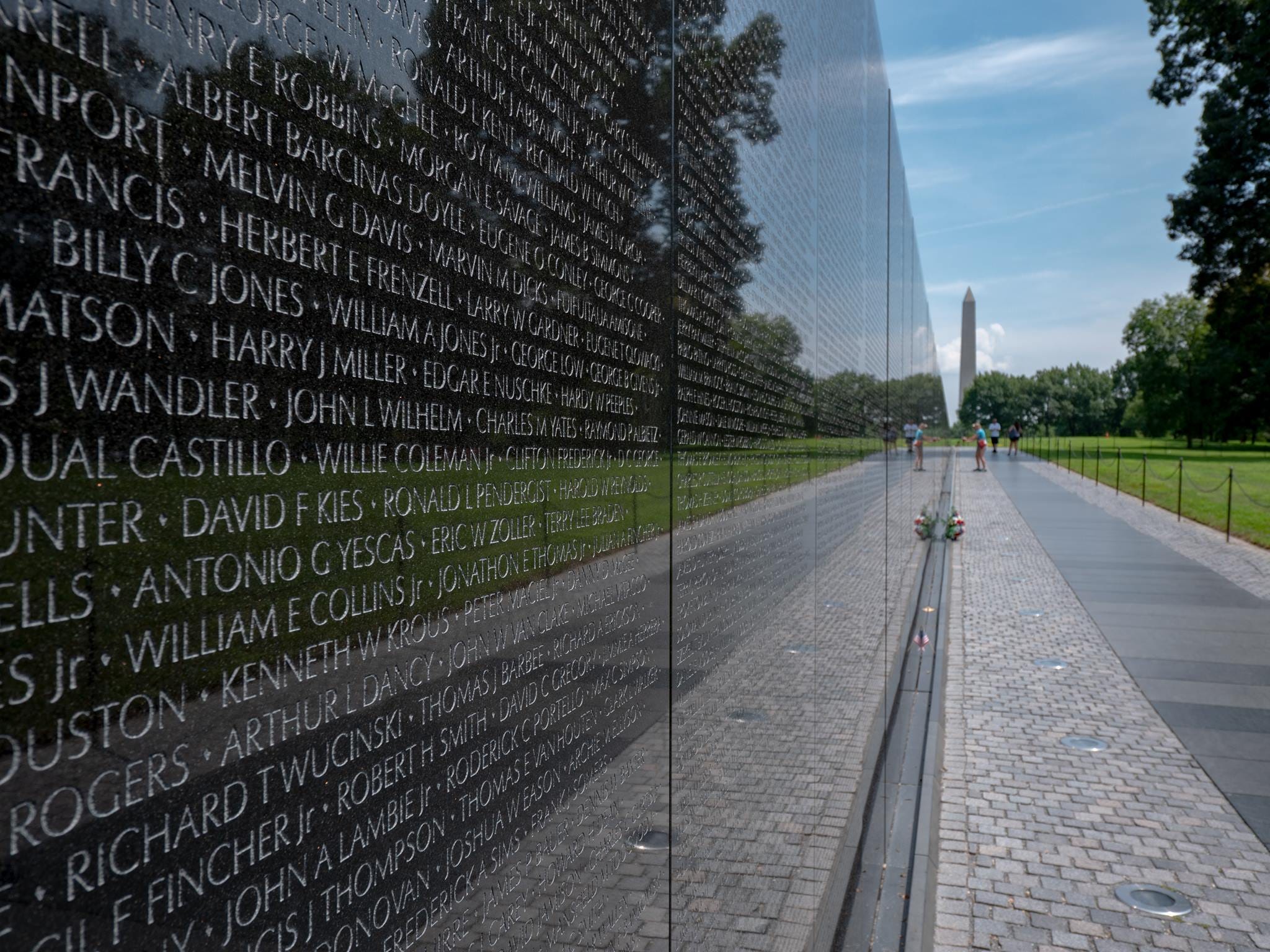
Her death made me think of Army Major Dale Buis, killed in Vietnam in 1959. His name is on the first line of the Vietnam Veterans Memorial. When Buis died, no one knew how many names would follow. When Nicole Amor died, no one knew how many would follow hers. We still don’t. But Congress can keep that list from growing.
Twenty-five-year-old First Lieutenant Tyler Feehan was an Army platoon leader who cared about his fellow soldiers’ futures. When combat operations interrupted their studies, he spent his off-duty hours helping secure academic waivers so they would not be penalized. He was preparing for a law school admission test last August. He never got the chance. Feehan was killed during an attack on an American base in Jordan in July. “We were told that our only child, our sweet son, was gone,” his mother, Shari Feehan, told ABC News.
I want readers to hold that young mother and young son in their minds when they remember Trump standing beside the Reflecting Pool on the eve of last week’s midterm elections, talking about his renovations. The pool. The grass. His handiwork. Mere months ago, two more young soldiers were killed. Yet in a speech that ran nearly an hour, he spent the first twenty minutes on the pool’s plumbing and algae, briefly mentioned the war (to claim it was won), and never explained what it was for or why our service members are still there. It made me furious.
By the Pentagon’s October 29 accounting, 23 American service members have died in operations connected to the war. 865 have been wounded. Some of the latter will spend years in surgery and rehabilitation. Others will require care for the rest of their lives. Their families will take on work they never expected, long after Washington has turned its attention elsewhere.
In Herman Wouk’s The Caine Mutiny, a Navy captain named Queeg becomes consumed with investigating who stole strawberries from the officers’ mess, then drags his crew into serving his obsession. When a typhoon hits, his judgment collapses, placing everyone aboard in danger. The strawberries were an absurd distraction. The consequences of failed command are not. They are measured in lives.
A commander’s obsession becomes everyone else’s burden. Those entrusted to his care must accommodate his grievances while carrying out responsibilities from which they cannot walk away. Trump can pivot from the war to his golden columns. The Americans he has ordered into danger cannot.
Captain Queeg had his strawberries. Donald Trump has his Ballroom and Reflecting Pool. But we are still at war. An election that changed the balance of power in Washington did not end the danger. Americans are still in harm’s way. And Iranian families remain living under bombing and destruction.
In Minab, Iran, Heydar Sadeghi told the Associated Press about taking his grandchildren to school with their mother, a teacher. On February 28, a strike on the school killed his eleven-year-old grandson, Hami, and Hami’s mother, Neda Salehizadeh. Hami’s body was so unrecognizable that he could be identified only by his clothes.
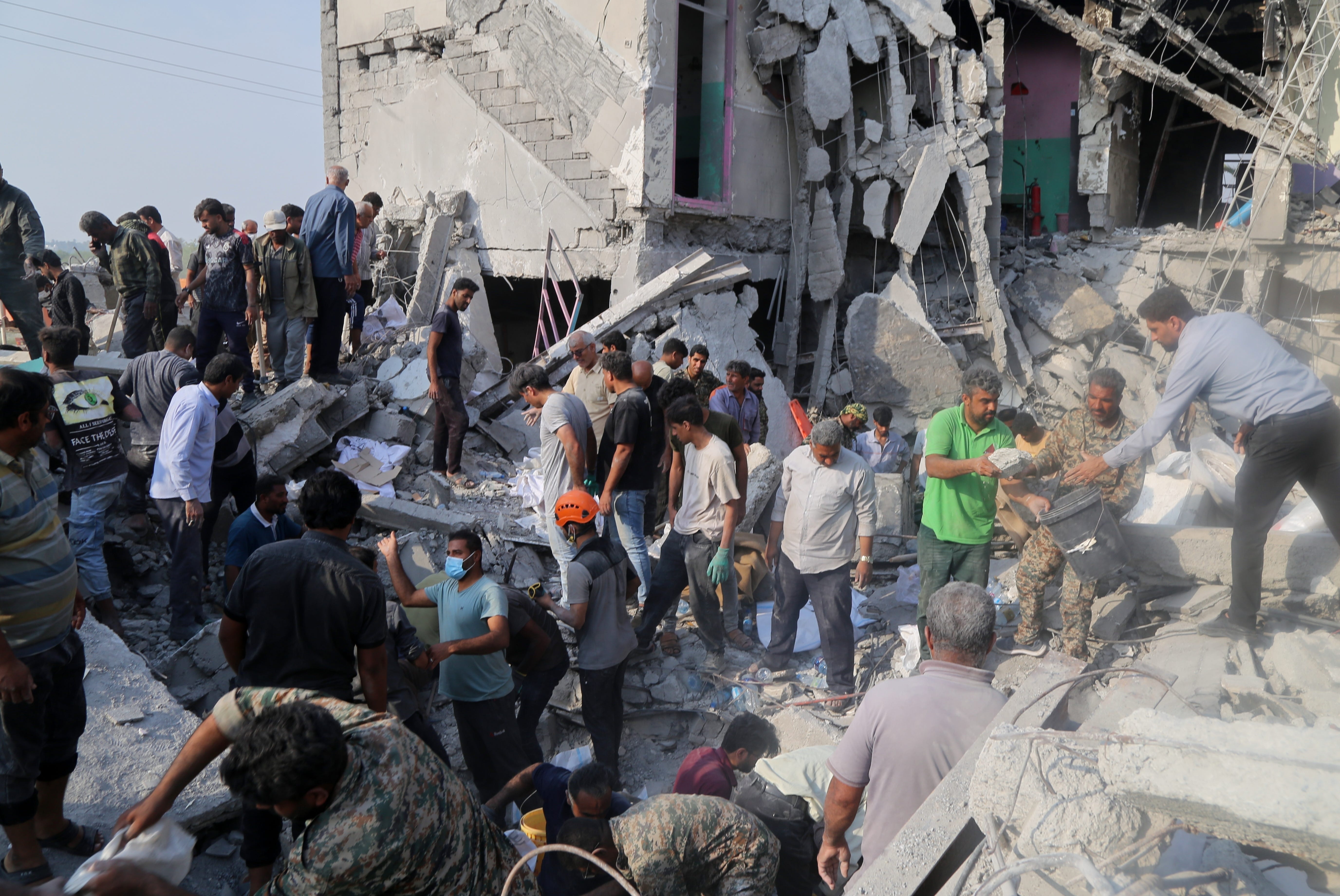
According to the AP’s reporting, his nine-year-old sister, Nila, was pulled alive from the rubble. Unexpected noises still frighten her, and she lies awake for much of the night. Her grandfather goes to the ruined school to grieve out of her sight, then returns home and tries to make her smile. “I come here and cry,” he said. “Then I go home and dance in front of the girl.”
What does a successful operation mean to a little girl who survived the blast, but lost her mother and brother?
This is a week when Democrats deserve to celebrate their victories. But the people who helped deliver them also deserve to hear what comes next for the Americans still deployed in Trump’s forever war. Bringing them home must be our top priority.
I listened to our likely next Speaker, Hakeem Jeffries, lay out the priorities of a Democratic House: relief from the cost of housing, health care, gas and groceries; a government that serves the public; a Congress ready to begin undoing the damage Trump and his Republican enablers have done. Much of it is encouraging. But I’ve waited to hear an explicit commitment to ending the war in Iran. I have yet to hear one.
Though Jeffries and many others have called the war reckless and costly, I want to know what he and the new majority will do to stop it, and when. Americans still serving cannot put their lives on hold while congressional leaders work through other priorities. They cannot tell potential incoming missiles to wait for the first hundred days. And the families of those already killed cannot be made whole by a better economic agenda.
I know what it means to live with decisions made far above you, by people whose explanations offer no protection when danger comes. Those questions have followed me through a lifetime of work on war’s causes, conduct, and consequences. They are questions that must be answered before asking another family to risk everything. What are we trying to accomplish? Why does that aim require this war? How does it end? What constitutes victory or defeat? A president owes the people carrying out his orders a coherent answer. And Congress owes them more than another appropriation.
After the midterms, the vice president gave us a measure of what he thought the war had cost, by counting Senate seats. “The reason we lost is the war,” Vance wrote on X. “If you’d like to argue it was worth it, that losing the Senate for the next 6 years was worth it, then do so.”
On Monday, Congressman Thomas Massie (R, KY) filed articles of impeachment against Defense Secretary Pete Hegseth, with three of the eight articles focusing on Hegseth’s prosecution of the war. But if Massie and those who support his efforts truly believe the administration’s war in Iran is unconstitutional, then why wasn’t a resolution to end the war the first piece of legislation introduced after the midterms?
I cannot accept an American political conversation in which those who have sacrificed are pushed to the side while debates ensue about whether Hegseth should have been impeached or how effectively our politicians are communicating about the price of fertilizer. Of course, those issues matter. But a war’s failure cannot be measured by what it has done to prices or to a political party’s chances. Hami’s life mattered before Americans went to the polls. Nicole Armor’s and Tyler Feehan’s lives mattered before Republicans lost their majority.
Republicans enabled this presidency and this war. They had the power to scrutinize its purpose and challenge its continuation. Electoral defeat does not settle the debt to families living with its consequences. Now, Democrats have a responsibility of their own. They sought power to change the country’s course. Central to how they use that power must be ending this senseless bloodshed — and asking the right questions.
What threat required us to go to war? What evidence did the president see? What diplomatic options were possible when he ordered the strikes? How did the administration expect Iran to respond? What did it do to protect Americans already stationed within reach of foreign missiles and drones?
Most importantly, what justifies continuing it? How many more Americans will be exposed to attacks while the administration pursues terms of resolution? What reparations will be offered to Heydar Sadeghi — and too many others — for an American missile hitting a school filled with children? It is Congress’s solemn responsibility to demand these investigations, and to insist the Pentagon respond to the American public.
The answers are long overdue. The administration should get no more money to keep fighting while lawmakers await explanations. This war is past its expiration date. Congress must vote to end it; it has precedent to do so.
In 1973, after I returned home, Congress set an August 15 deadline to cut off funding for U.S. combat operations in and around Vietnam, Laos and Cambodia. The suffering in Southeast Asia continued. But Congress put a stop to American combat operations.
Lawmakers today have that power, and it’s time to harness it. Democratic leaders should prepare legislation and make it their first fight in January. Cut off funding, provide the resources necessary to protect our forces, and withdraw safely. Establish the cutoff so President Trump cannot evade it by moving money or giving the operation another name.
Yes, Trump can veto a bill. And overriding it would require Republican votes. So ask Republicans now whether they would vote to keep financing the war. Ask Democrats now if they will prioritize ending it. Ask both to acknowledge their motivations to the public, and to explain what objective justifies risking another life. Any family with someone deployed deserves to hear its own representative answer these questions.
I returned to Vietnam in 1981 looking for answers about Agent Orange and people still missing. That work is ongoing. I know too well the anguish of a family waiting to find out how a loved one died. We owe such families answers. We owe the wounded care for as long as they need it. And we owe those still in harm’s way a Congress that is willing to decide, on the record, whether the fighting should continue.
In 1971, John Kerry asked a Senate committee, “How do you ask a man to be the last man to die for a mistake?” Four years later, Air Force Second Lieutenant Richard Vandegeer was killed in Cambodia. His is the last name on the Vietnam Veterans Memorial. Who will be the last American to die in the war with Iran? Are those doing nothing to prevent it prepared to look that last family in the eye and say, “Thank you for your service. We knew this war was a mistake. But we let it continue”?
This Veterans Day, the best way to thank those who served is to call your senators and representatives and insist that they vote to end Trump’s war of choice. If so inclined, ask if they’re willing to continue funding it. Every family who has already lost someone — let alone every American still in harm’s way — deserves to hear the response from those allowing the war to continue. Ask them now, when demanding answers might still have the power to save a life.
John F. Terzano is an attorney and social justice and human rights advocate who co-founded Vietnam Veterans of America Foundation (VVAF). Terzano currently lives in Ludington, Michigan, where he continues to work as a social justice and human rights advocate, both locally and globally.