

By Roberto Valadéz
President Donald Trump’s recent declaration to step up American involvement in ending the devastating civil war in Sudan is striking for an administration built on the “America First” platform—an ideology defined by reducing foreign entanglement and prioritizing domestic affairs. Trump’s aggressive new promise to assert American authority in the Sudanese conflict raises questions about what success looks like for both nations, as well as for neighboring Arab nations invested in the civil war’s outcome.
Since April 2023, the struggle in Sudan between the government-aligned Sudanese Armed Forces (SAF) and the paramilitary Rapid Support Forces (RSF) has perpetuated one of the worst humanitarian crises in history, resulting in more than 4.3 million Sudanese fleeing the country, 400,000 deaths, a multi-city famine, and 21.2 million (nearly half of the nation’s population) facing acute hunger.
U.S. efforts to date have been facilitated by the Senior Advisor for Africa, Massad Boulos, former business executive and father-in-law to President Trump’s daughter Tiffany. In September, the U.S. proposed a three-month humanitarian truce in collaboration with Saudi Arabia, Egypt, and UAE—a plan that the Sudanese army ultimately rejected on grounds of “foreign interference.” As recently as two weeks ago Trump spoke as though unaware of these diplomatic efforts, stating that it “was not on my charts to be involved with” the crisis.
The impetus for Trump’s dramatic shift in attention did not come from a strategic review by the State Department, but rather from a private meeting with the Crown Prince of Saudi Arabia Mohammed bin Salman. The New York Times reports that during a November 18th visit to Washington, D.C., hosted by the President, the Crown Prince detailed the grave situation in Sudan, successfully persuading Trump to “start working on it.”
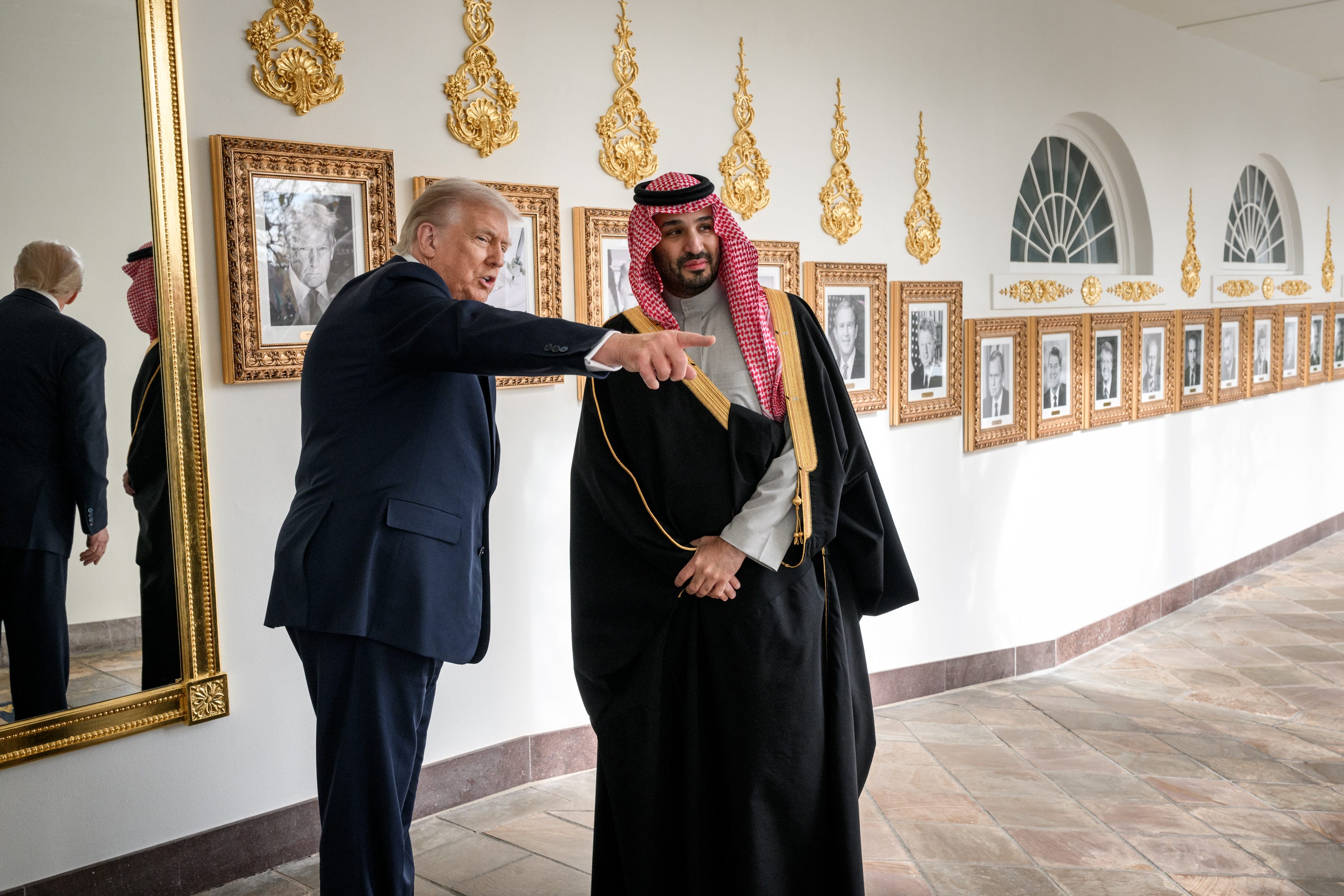
This is the latest in a pattern of the president acting on personal instinct and transactional relationships over institutional analysis. In the case of the Crown Prince, U.S. intelligence agencies determined in 2018 that he was responsible for the killing of journalist Jamal Khashoggi. However, at a press briefing following the meeting with the Crown Prince, Trump defended His Royal Highness stating he “knew nothing about” the killing and criticized reporters for their line of questioning.
Saudi Arabia’s interest in Sudan is a pragmatic national security concern: the looming threat of the vast refugee crisis spilling over into the Kingdom. Such an influx would jeopardize the Crown Prince’s ambitious plans to increase tourism and diversify Saudi Arabia’s export economy away from oil. The end of the Sudanese conflict is a top-tier priority to ensure stable regional conditions for Riyadh’s own domestic transformation.
However moved Trump was by bin Salman’s plea, increasing U.S. involvement is a precarious diplomatic proposition. The Sudanese conflict is not a clear, two-sided fight; it is deeply complicated by the murky involvement of key Arab players. While Egypt, Qatar and Saudi Arabia have openly supported the SAF, the Sudanese government has accused the United Arab Emirates (UAE) of supporting the RSF, though both groups deny it.
Adding to this complexity is the relationship between the Crown Prince of Saudi Arabia and the Emirati leader, Mohammed bin Zayed. Once friendly, the two are thought to be competing to assert their respective nation’s influence in the region, specifically across the Horn of Africa. Both Saudi Arabia and the UAE are American allies with commitments to invest in the U.S. They also both have business ties with the Trump family.
This entanglement creates a profoundly tricky diplomatic puzzle for the U.S. as it attempts to bring a peaceful resolution to the war while simultaneously attempting to keep its critical regional allies happy and aligned on other strategic goals. The opacity and opposition among these nations make any unified diplomatic push toward a ceasefire exceedingly challenging.
Details of how the U.S. will increase its engagement to bring peace to Sudan are still to be confirmed. However, if President Trump is committed to doing “something very powerful” in Sudan, he must seek to secure a resolution that benefits the Sudanese people—and resist the pull of a transactional calculus that prioritizes the self-interested agendas of external actors. Diplomatic efforts require navigating complex regional relationships, but those considerations must never detract from the moral obligations of brokering peace and the core mission of restoring Sudan’s stability. We must allow the Sudanese people to define their own future.
Roberto Valadéz is the former director of communications and special initiatives for the United Nations Ambassador for Global Health, where he led high-stakes global campaigns, including the office’s work on COVID-19. As the founder of True You, he now equips underestimated C-suite leaders with the tools to level up their leadership and amplify their impact by harnessing their authenticity.
Thank you for laying out the scale of Sudan’s crisis and the complicated regional politics surrounding it. I’m less sure, though, about the confidence with which you frame the president’s shift in attention. It’s wholly plausible, but we know that the motives behind foreign-policy decisions are often far more complex than they look from the outside. What stands out most to me is not the personalities involved, but the sheer difficulty any U.S. effort will face while the key regional players remain at odds.