


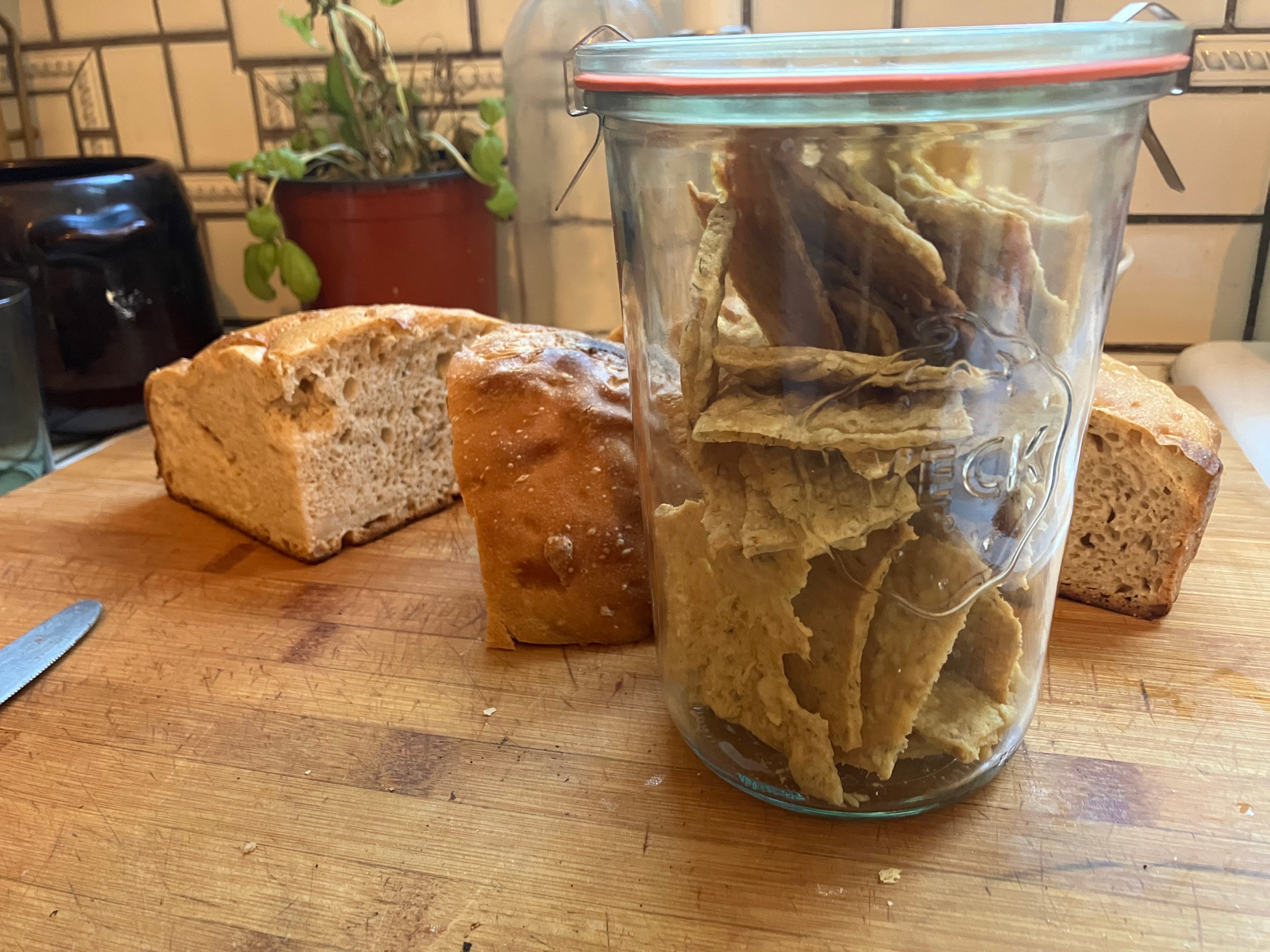
It all started back in the pandemic. My friend Winston texted me a photo of a jar full of suspicious goop: sourdough starter, he said. A famous chef had posted the instructions. I should try making one too.
This wasn’t my first sourdough rodeo. Back when I lived in Austin, where the air is notoriously dense with pollen and fungi of various kinds, my Czech neighbor gave me small jars of her starter multiple times. But their progeny failed to thrive, going grey and goopy within weeks of obsessive feeding.
Fortunately, I had more luck in Los Angeles. My newly established starter thrived in the dry climate, and I took it on my pandemic honeymoon RVing through national parks, where it got stronger and stronger with every batch of sourdough biscuits and pancakes whipped up on the tiny stove. Today, it’s a much-valued resident of our household, and my baby and I bake bread together at least once a week. But, as tasty as it is, my sourdough habit is a political signal—one with surprisingly radical roots.
Sourdough’s Hippie Roots
The sourdough trend faded after 2020, but over the past few years I’ve noticed that I’m not the only one keeping the tradition going. This classic bread has gotten a new lease on life after the post-pandemic lull, becoming an avatar of virtuous traditional womanhood and a symbol of the trad wife lifestyle.
This isn’t the first time sourdough bread has been linked to shifting cultural tides. Back in the 1960s and 1970s, sourdough was emblematic of an entirely different political ideology, when it was popularized by the liberal counterculture. Hippies and members of the back-to-the-land movement tried to reconnect with their rural roots by moving to the countryside, growing their own food, and generally embracing self sufficiency.
Baking bread, including sourdough, from scratch, was a symbol of ideological independence and a rejection of the processed, space-age convenience foods of the 1950s. In San Francisco, the Diggers organized free bakeries in Golden Gate Park, where they baked and gave away hundreds of whole-grain loves each week. An engineer named Walt Reynolds improvised cylindrical loaves baked in coffee cans, a delicious act of resistance against the industrialized world of Wonder Bread.
The 1970 publication of the The Tassajara Bread Book, which included multiple sourdough recipes, had inspired the creation of collectively run bakeries like Wildflour in Ann Arbor, Yeast West in Buffalo, People’s Bakery in San Francisco, and Uprisings in Berkeley, and enthusiasts rediscovered sourdough cultures at home. Ruth Allman’s handwritten tome “Alaska Sourdough” completed the revival, and spread the popularity of sourdough far and wide.
Starter Goes Neocon
In the ‘60s and ‘70s, sourdough was a symbol of community care. Cheap, minimally processed, and made from natural ingredients, it could be shared with friends and comrades alike, a collective and decidedly radical, food. These days? Not so much.
It’s unclear exactly when sourdough and conservatism became linked in the public imagination, but one thing’s certain: We can thank the trad wives (trad is short for traditional, and it usually means ultra conservative). As the trend gained traction on social media platforms such as TikTok, sourdough baking became a hallmark of “traditional femininity,” along with long floral dresses and suspiciously clean white marble countertops (where are these gals doing their kneading?).
Whereas the countercultural bakers of the past valued sourdough for its simplicity and ability to feed a group, trad wives are all about making it look hard. The process, while easier than it seems, is certainly time intensive and only possible to achieve, they suggest, if you’ve got a day of homemaking to fill.
Baking from scratch as a trad wife serves as a sign of authenticity. Like the hippies, they reject convenience culture, but only when it interacts with their own health and homes. Instead of objecting to the excesses of the American industrialized food system on a broad cultural scale, the focus is on the individual and family experience. If supermarket bread is packed with corn syrup, fillers, and preservatives, well—that sounds like a you problem.
But all is not lost. Sourdough was once the food of the people, and it can be again. So I hope you’ll join me in this rejection of sourdough’s neocon rebrand, reclaiming the bread of the people. Or, at the very least, make some delicious sourdough starter crackers which take minutes of hands-on labor, so you can girlboss your way right out of the kitchen.
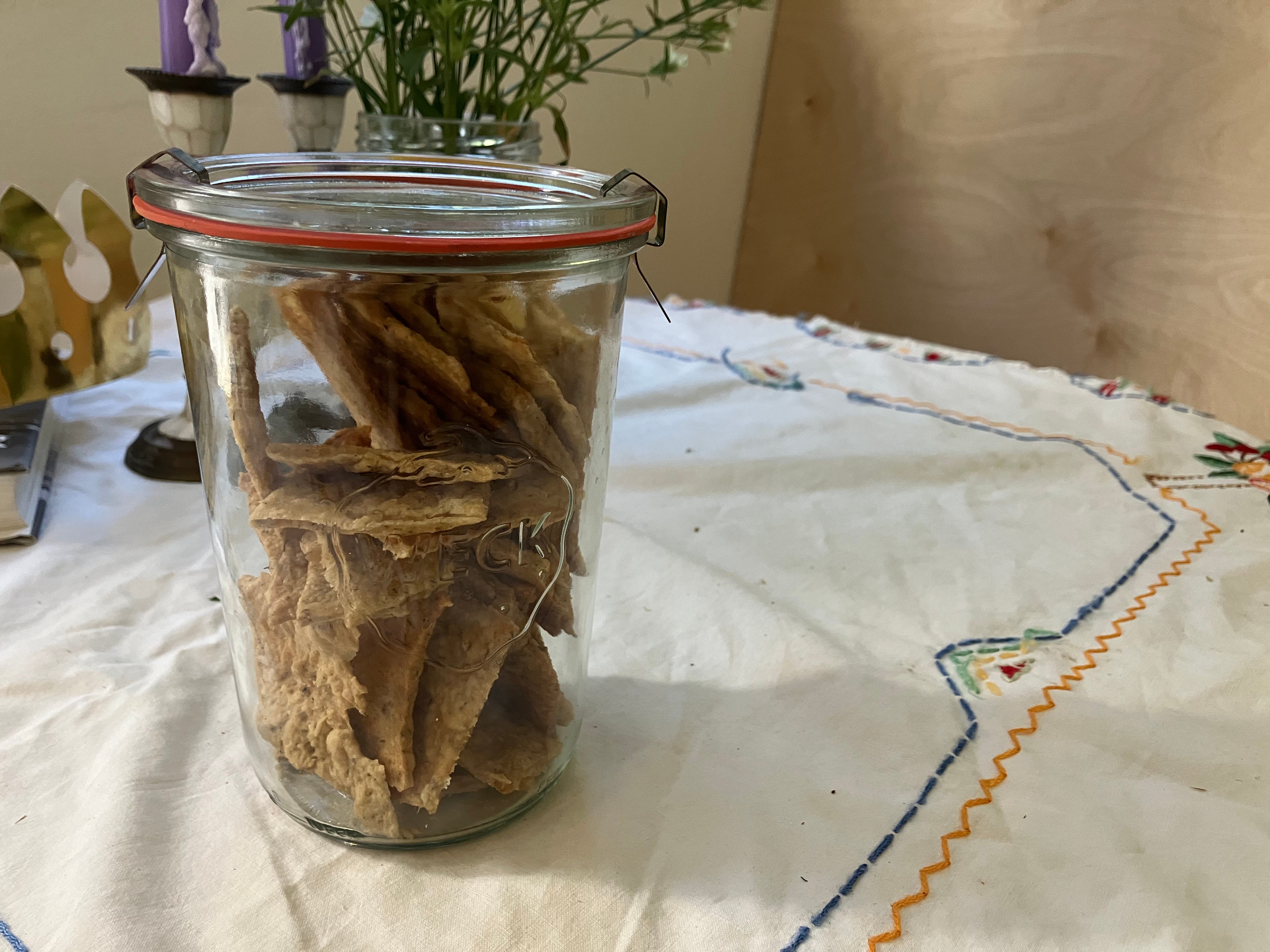
The Best Ever Sourdough Discard Crackers
If you, too, are ready to reclaim sourdough from the trad wives, this is the best thing to do with your discard—i.e. the extra sourdough material left over after a feeding. Cheesy, crunchy, and utterly delicious, we go through at least one batch of these crackers a week in our bread-loving household.
I generally measure this in grams because pouring starter into and out of a measuring cup is a pain, but either measurement method should work. Scale up or down as you like, just keep the volume of flour and starter roughly equal.
Ingredients
113 grams or half a cup of sourdough starter
57 grams or half a cup flour of choice
½ teaspoon coarse sea salt
29 grams softened butter or ghee (my preference!)
2 tablespoons nutritional yeast
1 tablespoon dried dill
Method:
Mix all your ingredients together in a bowl until a smooth, sticky dough forms. Refrigerate for a few hours (I find it needs at least two) until firm.
After the dough is done chilling, preheat your oven to 350.
Press the dough into a rectangle, then roll it on a piece of parchment paper or silpat mat until it’s approximately the dimensions of your baking tray.
Score the dough with a dough scraper or butter knife, and poke each square with a butter knife to prevent it from puffing up as it bakes.
Bake for twenty minutes, rotating halfway through so the crackers brown evenly. Remove from the oven and let cool if you can stand the wait (I generally can’t).
Emily Beyda’s writing has appeared in the Los Angeles Times, Built, Refinery29, Smartmouth, Fodors, the Thrillist, the Austin Chronicle, and more. Her novel, “The Body Double,” was published in 2021.

I have been baking my own bread since the 1980s when I was a graduate student. I created my sourdough starter in the 1990s, and it is still going strong. I was a university professor before I retired. When someone said to me, "I'm a feminist, I don't cook," I replied, "I'm a feminist and I bake and cook." There is no way I will let the "trad" wives claim the kitchen.
I, too, have a sourdough discard cracker recipe. I created an oil version to replace a butter version to reduce saturated fat. You can find the recipe at the Nebraska Kitchen website, where a variety of nonprofessional bakers and cooks have established a cooking and baking community.
I am a long time bread baker, except in the depth of summer in Phoenix, when the thought of turning on the oven makes me dizzy. I just took up sourdough again about 8 months ago and am really enjoying it. I am 71, definitely a feminist, I very rarely cook dinner (I am great at ordering Door Dash), but I love baking. Especially bread. And Crackers are my new love. So easy, and I too use discard for them and love cheese crackers made with finely grated Trader Joe's Unexpected Cheddar. I even bought a cookie cutter shaped like the gold fish crackers and make the most excellent gold fish crackers with my granddaughters.
If bread baking has to be political, then it has got to be woke. I am so woke.