

By Norman L. Eisen, Richard W. Painter, Virginia R. Canter, and Christopher Swartz
On the heels of the U.S.invasion of Venezuela, President Donald Trump has been saying the quiet part out loud. The assault on that nation and the abduction of its president, Nicolás Maduro, wasn’t about protecting Americans from the scourge of drugs, nor the protection of the democratic choices of the Venezuelan people. No, as Trump made clear: “We’re going to be taking out a tremendous amount of wealth out of the ground.” And in a shocking social media posting Tuesday, he made clear that the first wave of that wealth will be 30 million to 50 million barrels of oil—and that he will control the proceeds from their sale.
That’s all patently illegal, which is why the authors and Democracy Defenders Fund today are launching two parallel legal campaigns to fight back. In the first, we are filing an ethics complaint for investigation of the lawyers who are giving the legal advice that enables all this wrongdoing. Second, we are filing a Freedom of Information Act demand for their legal memo, and we are prepared to take all legal measures to get it if it is not turned over. All of that complements an anticipated congressional pushback coming this week as well, including a vote on a war powers resolution to stop further illegal action in Venezuela.
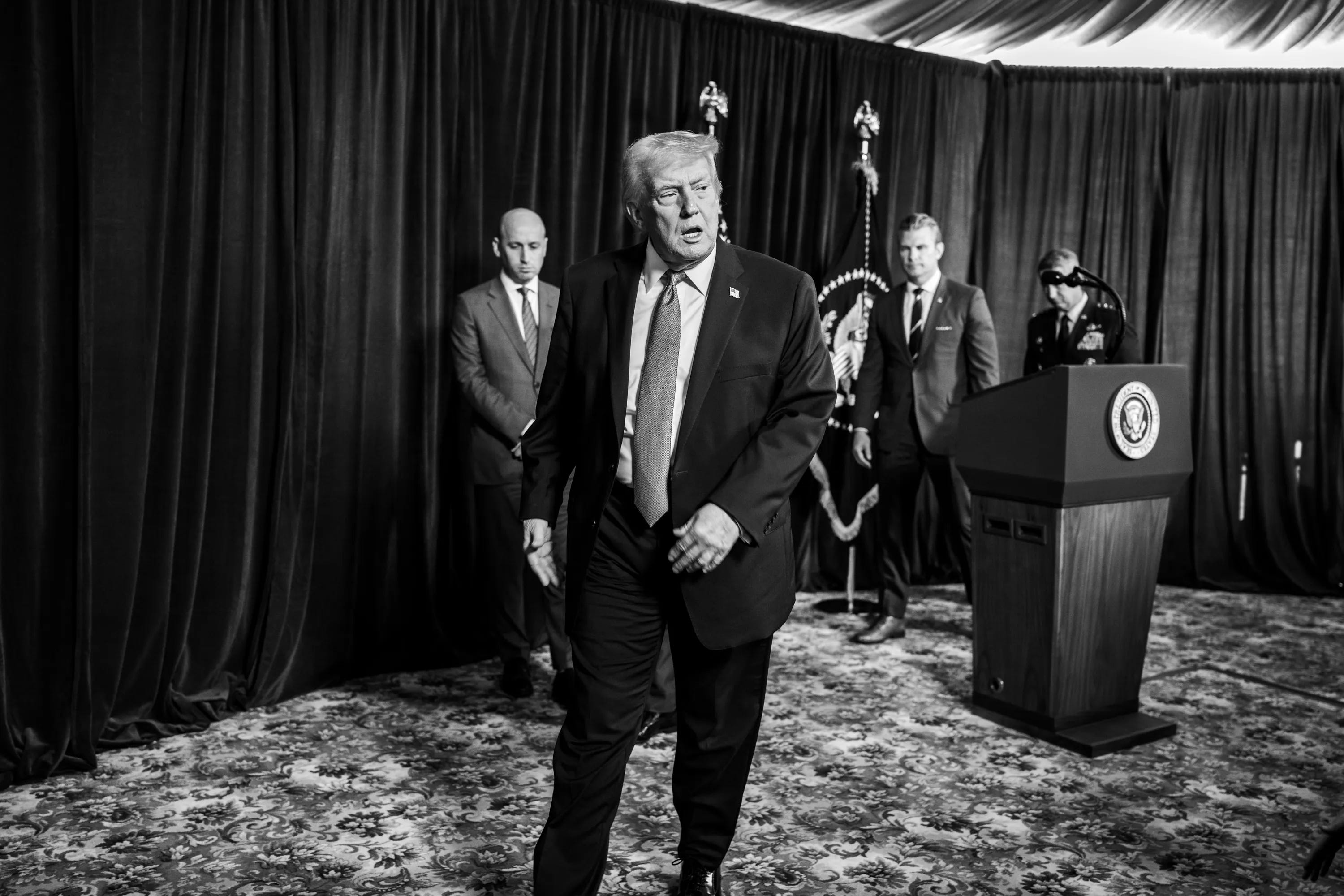
We are taking these steps because Trump’s “blood for treasure” adventurism in Venezuela is another example of his three primary governance principles: (1) utter disdain for rule of law, particularly international law; (2) corrupt abuse of office for his and his cronies’ private interests; and (3) an attempt to avoid accountability. Fortunately, the American people see right through this and will not tolerate it.
Legal experts agree that the president’s actions raise serious concerns under both domestic and international law. Even before the weekend’s outrageous events, that illegality was on sharp display through Trump’s attempted escalation into a conflict with Venezuela through dozens of illegal strikes on alleged drug smugglers in international waters. In fact, the legal basis for those strikes is so atrocious that we filed an ethics complaint against the lawyers who gave the advice.
But the invasion of Venezuela represents a new—and wholly illegal—escalation. Here, too, the Justice Department’s Office of Legal Counsel apparently provided a memo that gave legal justification for the military operation. Though we haven’t seen the memo, any justification flies in the face of the law.
The president’s military actions far exceed his constitutional role as commander in chief. Congress—and only Congress—has the authority to declare war. The president’s role as commander in chief is not to initiate wars (whatever they may be called); it is to conduct wars authorized by Congress. Although the Department of Justice has issued a long line of increasingly broad justifications for the president to use military force absent congressional approval, the Supreme Court has recognized an inherent right to engage in self-defense only for the purpose of “repelling attacks.”
Whatever may be said of the Justice Department’s opinions—which go far beyond what the framers anticipated—the argument that the president can simply attack a nation and then call it self-defense is foundationally flawed on a purely logical level. As we explained in our recent ethics complaint, the United States simply “cannot claim it is acting in self-defense of a purported imminent or actual armed attack.”
Furthermore, Maduro’s forcible abduction from Venezuela was a violation of international law. Basic principles of international law provide that one nation cannot simply infringe on the territorial integrity of another. Article 2(4) of the U.N. Charter—which Congress has bound presidents to follow—requires any signatory nation to “refrain in [its] international relations from the ... use of force against the territorial integrity or political independence of any [other] state.”
The only exception, absent authorization by the U.N. Security Council, is Article 51, which provides for the inherent right of self-defense if an armed attack occurs against a member. But, as many experts have explained, drug trafficking simply isn’t an armed attack that triggers the inherent right of self-defense under international law. Unfortunately, as was shown by Trump’s missile strikes on Iran last spring, this is not the first time the administration has provided contorted legal reasoning to avoid actual compliance with international law obligations.
Given the brazen illegality of the Venezuela strike, the president’s motivations bear further scrutiny.
Before the strike, the Trump administration adamantly argued that its open-ended campaign on drug boats operating out of (or near) Venezuela—resulting in 115 deaths—was focused on stopping drug trafficking. But this same administration has sought cuts to the budget of the Drug Enforcement Agency and carried out a significantly lower number of drug prosecutions, and the president pardoned former Honduras President Juan Orlando Hernandez, who was convicted for conspiring to distribute more than 400 tons of cocaine in the United States. The disparity between what the president says and what he does is telling.
Then, in the aftermath of the attack, the Trump administration’s focus changed to, as Vice President JD Vance called it, returning “the stolen oil” to the United States. Trump announced that the action—part of his self-coined “Donroe Doctrine”— was the first step in his goal of handing the country over to global oil companies. Trump wasted no time in doing so, sending a letter to oil companies saying essentially that Venezuela was theirs for the taking and even suggesting the government might reimburse them for rebuilding Venezuela’s oil production infrastructure.
Why would Trump abduct the head of a foreign nation, unilaterally declare that he would “run the country,” demand millions of barrels of oil, and “have our very large United States oil companies . . . go in” to Venezuela?
Simple: Venezuela has the biggest oil reserves in the world, and Trump is in the pocket of Big Oil. In the run-up to the presidential election, Trump asked the CEOs of several oil companies to steer $1 billion to his re-election campaign. He explained that doing so would be a “deal” given the money they would save once he rolled regulations back in their favor. Trump-affiliated PACs then took in more than $75 million from oil interests for his presidential run. During the election, Trump’s family members and running mate attended several fundraisers with oil industry members. And Trump took another $19 million from oil companies to pay for his inauguration.
Trump isn’t securing a safer world for Americans or Venezuelans. He is using his office in an apparent attempt to reward his Big Oil friends, including companies that doled out millions of dollars to support his campaign and inauguration. If the legal rationale weren’t already lacking, the open oil-grab purpose of this misadventure blows it to smithereens.
Meanwhile, everyday Americans are struggling. Corporate and individual bankruptcies are skyrocketing. Grocery prices are high. And Trump has been required to bail out American farmers to the tune of $12 billion because of his disastrous tariffs. Yet, with the takeover of Venezuela, Trump seems more interested in potentially spending billions of taxpayer dollars running another country than on running this one.
When the United States attempted to run Afghanistan and Iraq after 9/11, rather than pursue narrower military objectives in the war on terror, we spent more than $2 trillion over 20 years and 6,855 service members lost their lives. No wonder the large majority of Americans—63%—do not want a war with Venezuela. Without congressional debate and approval, America’s sad history of delving into forever wars and occupation is destined to repeat itself here.
The American people do not need to stand for Trump’s corruption and abuse of office. Congress must reclaim its constitutional authority over the war power from an increasingly unrestrained executive branch. Lawmakers from across the political spectrum have already introduced legislation that would prevent the president from unilaterally using the military against Venezuela. Sen. Tim Kaine’s war powers resolution will likely come up for a vote on Thursday, and it appears there may be enough Republican support for passage.
But, even if it moves through the House, the bill probably does not have sufficient votes to override a presidential veto. That is why Congress must look at other vehicles to limit the president’s unlawful aggression, perhaps with terms in spending bills that he could not so easily veto. The responsibility now lies with Congress to stop Trump.
But it does not end there. Others must step up as well, and that is why we are launching our dual legal actions of an ethics complaint and a FOIA demand. The cost of inaction against Trump’s forays into foreign wars is too high, and the window for safeguarding our nation from his illegal and corrupt blood for oil adventurism is narrowing.
Norman L. Eisen is executive chair and founder of Democracy Defenders Fund and former special counsel to President Barack Obama. He is the publisher of The Contrarian.
Richard W. Painter is a professor of law at the University of Minnesota Law School and former associate counsel to President George W. Bush. He is coauthor with E. Thomas Sullivan of “The U. S. Presidency : Power, Responsibility, and Accountability,” a recently published book on the use and abuse of presidential power.
Virginia R. Canter is chief counsel and director for ethics and anticorruption at Democracy Defenders Fund and former associate counsel to President Barack Obama and President Bill Clinton.
Christopher Swartz is senior ethics counsel at Democracy Defenders Fund and former senior associate counsel for the Office of Government Ethics.
Two things to note, from what I've read on the matter, even if this is an attempt to grab the oil:
1. There isn't enough infrastructure in place to get the oil. The oil companies are NOT champing at the bit to start plundering; instead they're wondering why they weren't consulted on it.
2. Crude oil comes in very different "quality" levels. Venezuela's crude is some of the WORST. It's thick, goopy, loaded with sulfur, and will take a LOT of refining to get anything useful out of it. The US's refining capacity just isn't there......
Excellent arguments! If the fascists in congress are not willing to do the jobs they are paid for by WE THE PEOPLE, hopefully more legal action with judges below the Roberts court will put sand into the convicted felon's machinery.