


“Killed by ICE.”
In the basement of a local church, a crowd of people are pressed shoulder to shoulder listening to Representative Emily Randall (D-WA) speak. “It is going to take all of us, arm in arm, to keep our communities safe,” she says into the microphone, her gentle tone contrasted by the sea of black “Killed By ICE!” posters framing her. The crowd surrounding her, dressed in “Remember and Resist” shirts, nods. They understand all too well.
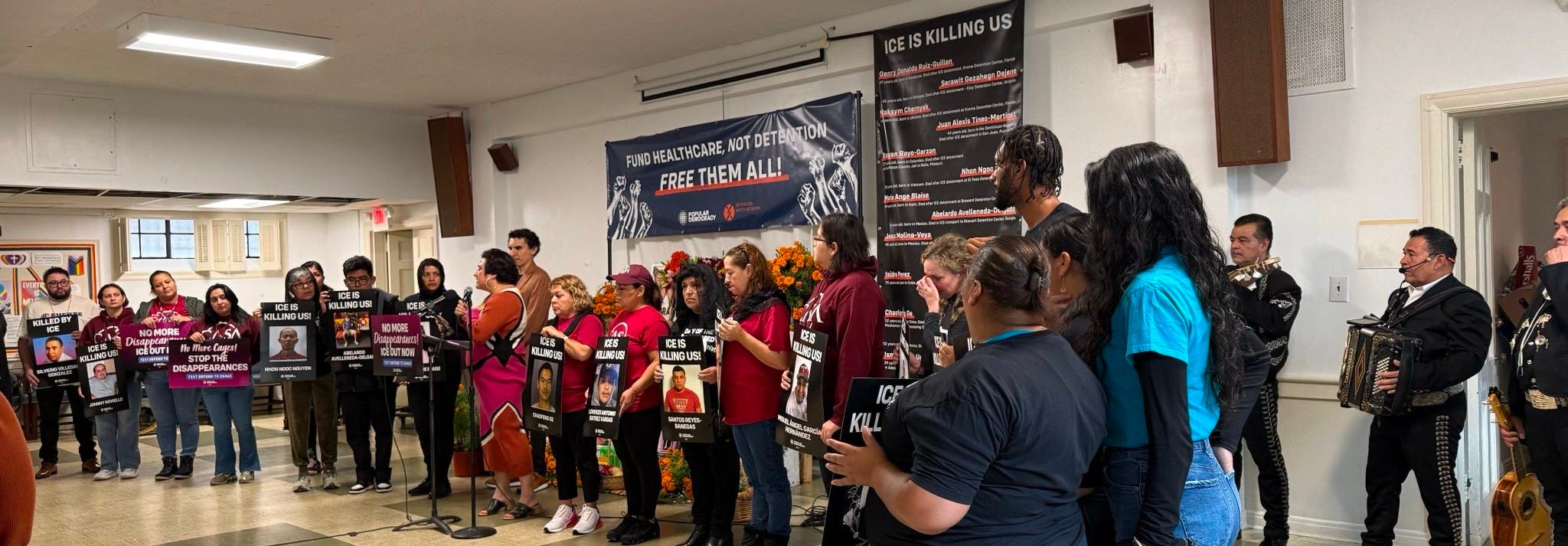
Approximately 50 people are gathered in this semi-hidden parish to mourn the lives taken and people disappeared this year by Immigration and Customs Enforcement (ICE). They are also here to reaffirm what these deportation operations are desperately trying to rip apart: communities, families, and hope. The event is called Day of the Disappeared and is a jumpstart to Disappeared In America: Weekend of Action, an organized, nationwide campaign to end “the detention, deportation, and disappearance of our neighbors and to defend the due process rights of all people.”
The speakers approach the podium to share their stories, in both English and Spanish, of the horrors inflicted by ICE upon “immigrant looking” families across the U.S. A Hispanic federal employee from the Federal Unionists Network reports that ICE is snatching asylum seekers outside their court dates, in spite of their legal status, with cruel and unnecessary violence. A representative from Undocublack recounts the experience of Rodney Taylor, one of many people with disabilities denied vital medical care and reasonable accommodation in ICE detention centers. Another speaker shares serious allegations against the Farmville Detention Center, which is accused of cramming their detainees into unsanitary and violently abusive conditions while also withholding meals and medical care.
Later, grief pulses through the room as Isaias Guerrero, Director of Popular Democracy, begins the Offering of the Mariachi, or Raise the Spirits ceremony, where he reads the names of those killed by ICE. Each name is accompanied by a unified cry of “Presente, Presente, Presente!” as a mariachi group plays “Amor Eterno” – a Mexican funeral song. The mourners stand before a beautiful ofrenda, a Día de los Muertos altar, splashed with orange, yellow, and red blossoms and filled with beloved artifacts and framed photos. Guerrero delivers a gut punch when he discloses that one of the departed was ninety years old.
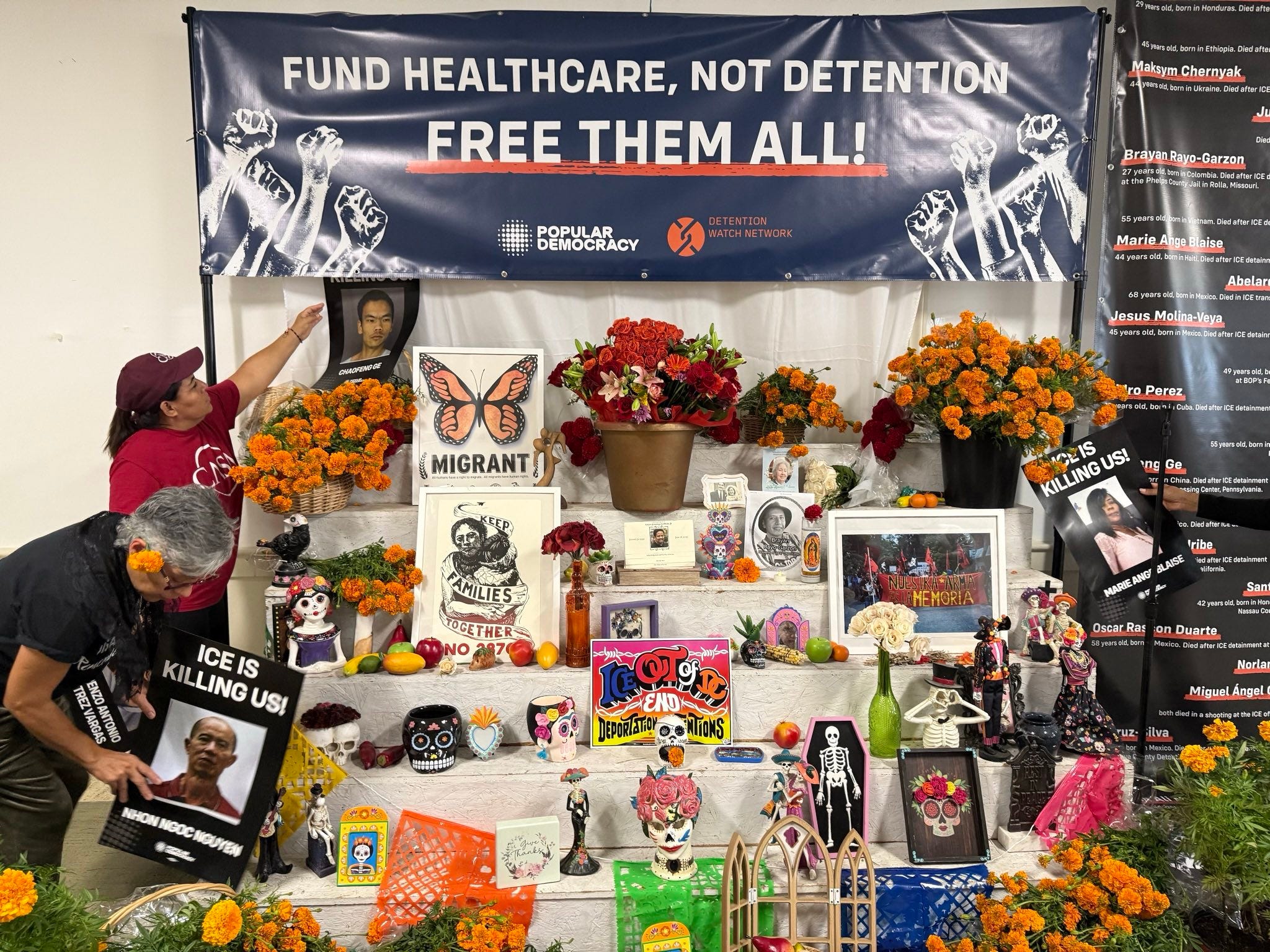
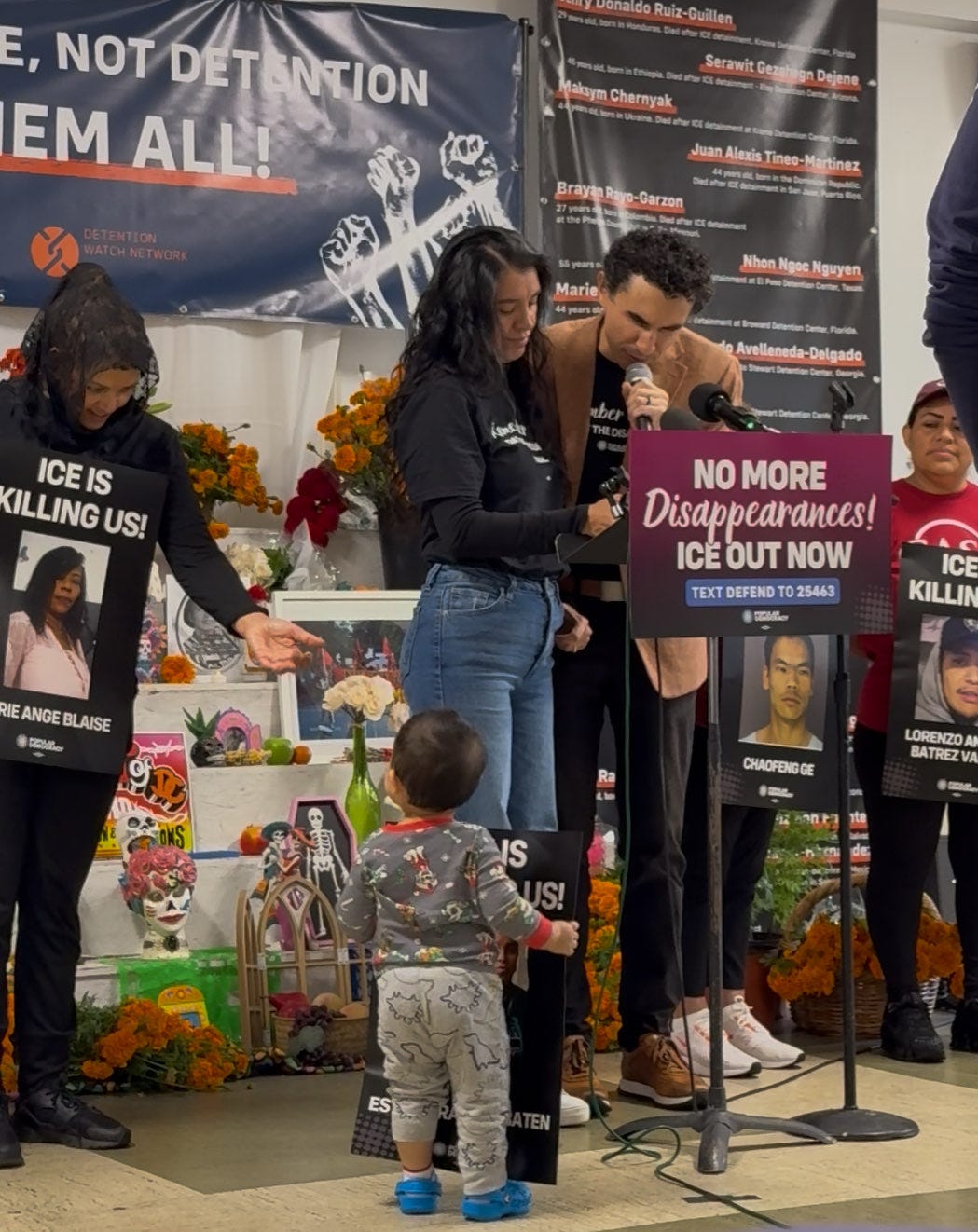
And yet, life continues to bloom. A toddler waddles around the bowed mourners holding a “ICE IS KILLING US” sign. He flashes a chubby-cheeked smile to almost everyone in the room, including strangers. He grabs hands, sits on the ground babbling, and is happily swept up by one of his many community members. It is a jarring contrast to the heaviness in the room, but one that represents hope in unsuspecting ways. Despite ICE’s coordinated and institutionalized violence, despite every obstacle the people in this room have endured, the regime cannot stifle life. They cannot suppress the vitality of community. This joyful, vibrant little boy is testament to their failure.
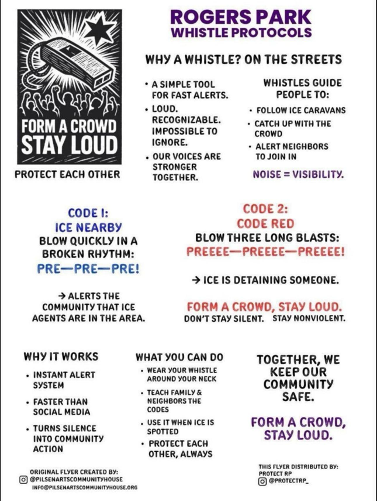
Hope can feel futile under a regime that ignores court rulings and Congressionally passed laws (even those from its own administration); yet hope is the way life continues. It is also a fruitful tool of resistance. Take Chicago, a city that refuses to concede in the face of invasion and autocratic overreach. Chicago communities have cultivated an effective and simple whistle warning system to alert one another of ICE’s presence and operations. Whistle warnings have spread across the country, with communities assembling and distributing mini booklets for whistle protocols in their own towns.
Know Your Rights campaigns are equipping families with the knowledge and tools they need to assert their rights against ICE. While it is not the common story, many families have successfully evicted ICE from their porch steps by denying entrance without a valid warrant and then remaining silent. Even border czar Tom Homan has complained that organizers are educating on “how to defy ICE, how to hide from ICE.” Sunflower Kansas, one of the many organizations championing the Know Your Rights (KYR) campaign, speaks about these wins at length and advocates for expanding these campaigns to communities across America.
People are standing up against ICE abductions in the streets as well, filming everything ICE does. Every photograph and video taken of ICE interactions can help those currently being targeted by the agency, or at the very least ensure that the history books capture this cruelty.
As American Philosopher Susan Neiman once wrote: hope is not an emotion, it’s a moral responsibility. We are sending a message that infuriates and disrupts the MAGA regime’s struggle to divide America against itself. Events like the Day of the Disappeared, as well as Know Your Rights campaigns and the creation of local warning systems, are a testament to how hope drives action and deepens community connection. The voices of community can overpower the drums of authoritarianism. And now, during a time so fraught with fear mongering, targeting, violence, and destruction, hope is more important than ever.
Here is how you can participate in protecting your neighbors:
Demand your representatives conduct oversight visits at ICE Detention Centers and publicize their findings.
Film ICE (in a safe, law-abiding way). Send your footage to your representatives and oversight organizations.
Create and/or distribute Know Your Rights booklets and neighborhood whistle protocols.
Join Detention Watch Network’s current campaigns: #CommunitiesNotCages & #DefundHate
Donate to verified immigrant legal funds.
MAKE NOISE. SPREAD AWARENESS. PROTECT OUR COMMUNITIES.
Ciera Stone is the editorial associate at The Contrarian. She received a master of arts at the University of Notre Dame with a specialization in international peace, global affairs, and justice.
My first published article with my awesome workplace. I’m so thankful to have had the privilege to cover this event. Thank you to @Popular Democracy & Detention Watch Network for creating this space and standing up for our communities.
Thanks for posting this valuable piece of information. I just saw a post on facebook earlier about a native American woman from Arizona who was about to be deported and she was from one of the Native American communities in Phoenix AZ. I just knew that was going to happen when Trump gave them pretty much free rein to do whatever they please no matter what the law says about it.