

By Brian O’Neill
Israel launched airstrikes against Iranian nuclear and missile infrastructure early Friday morning, the culmination of months of rising tensions and contingency planning. These past days, President Donald Trump was still insisting that a negotiated deal with Iran was within reach. He wasn’t sidelined by accident—he was sidelined by circumstances he failed to shape.
The attack underscores a pattern that has defined Trump’s approach to foreign policy: the substitution of rhetoric for results. While Trump promoted his leverage over both Israel and Iran, events unfolded largely beyond his control. His statements in recent days—alternately discouraging and ambiguously encouraging a strike—added confusion, not clarity.
This was not unexpected. U.S. and allied officials had long assessed that Israel was preparing for such a move. American defense planners took precautionary steps, including repositioning forces and authorizing embassy drawdowns in Iraq. Those were prudent measures—but reactive, not preventive. Trump took steps to protect American lives. But his ability or willingness to prevent the escalation he claimed to oppose remains unclear.
Nor was his diplomatic effort clearly defined. Negotiations with Tehran were ongoing in name only. Trump's Middle East envoy, Steve Witkoff, a real estate executive with no prior diplomatic experience, had been preparing for talks in Oman as Israeli jets were carrying out the strikes. While the administration claimed a deal was near, Iran remained defiant, the International Atomic Energy Agency issued fresh censure, and Israeli officials warned they could wait no longer. Whether diplomacy ever had real momentum is now an open question.
In the hours after the strike, Secretary of State Marco Rubio emphasized that the United States was not involved and warned Iran not to target “U.S. interests or personnel.” Gone was any suggestion of U.S. leadership or alliance coordination. The response projected risk management, not strategic direction.
The contrast with earlier administrations is telling. Whatever their flaws, Presidents Barack Obama and Joe Biden developed detailed frameworks or maintained coordination with allies. Trump in his first term withdrew from the Iran nuclear deal without offering an alternative, relied on personal rapport in place of institutional engagement, and undermined continuity by centralizing decisions around loyalty and optics. His Iran policy lacked coherence—oscillating between threats, offers, and disengagement.
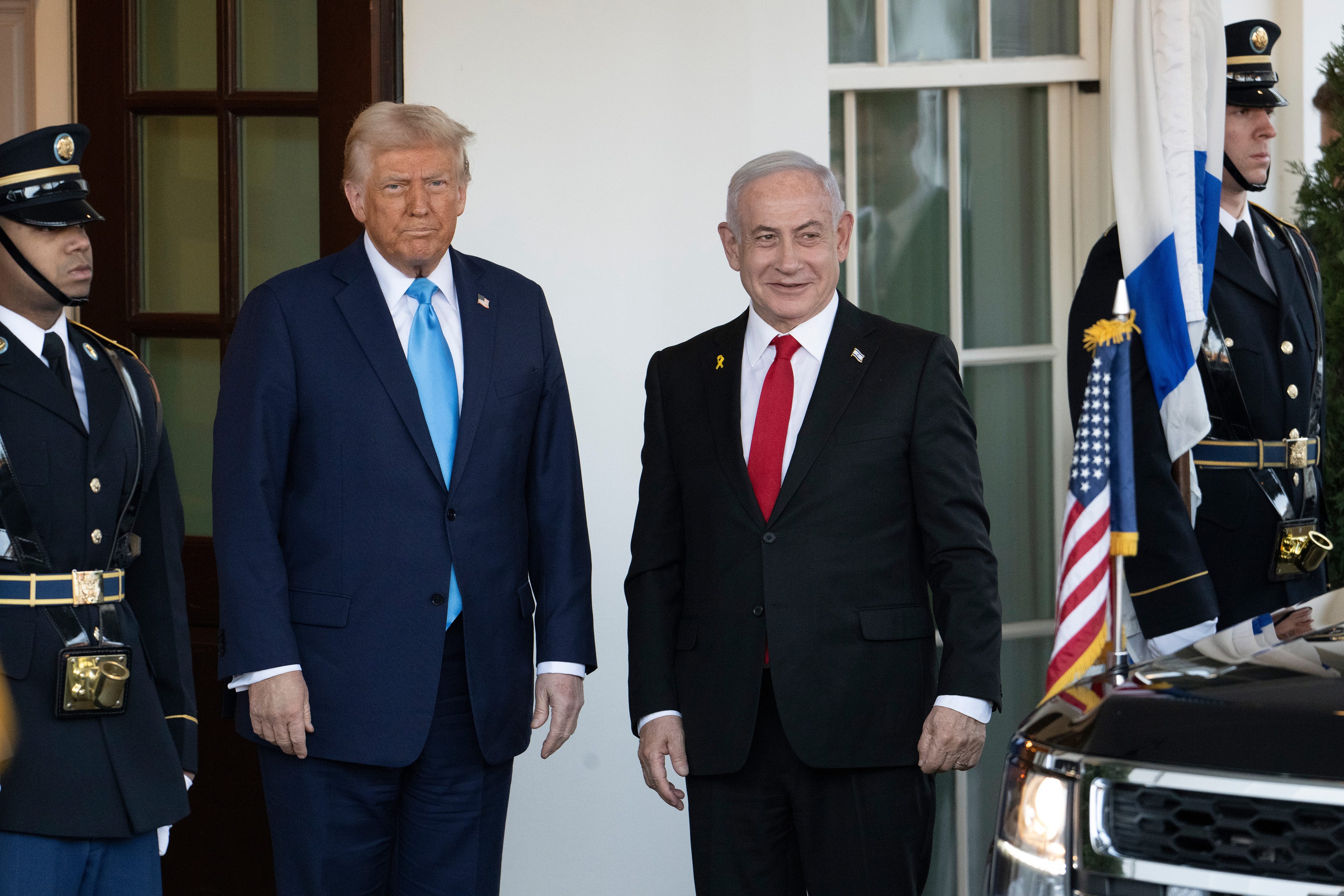
Israeli Prime Minister Benjamin Netanyahu acted despite Trump’s stated preference for delay. Though Israeli officials briefed U.S. counterparts in advance, this appeared to be notification, not consultation. Netanyahu likely concluded that further delay would pose greater risks, particularly as Israeli intelligence determined that Iran had amassed sufficient fissile material for rapid weaponization.
That moment presented Washington with two uncomfortable truths: either the United States was unable to stop an Israeli attack despite billions in annual military assistance, or it was left in the dark until it was too late to matter. Neither outcome reflects strategic influence.
Trump now faces consequences without command. Any Iranian retaliation—even if aimed at Israel—could threaten American forces across the region. Oil prices have already surged. Civilian aviation has begun rerouting. The prospect of a broader conflict, whether by design or chain reaction, has increased. The administration’s claim that it sought de-escalation is undermined by the absence of a credible off-ramp.
What we are witnessing is not just a crisis but a commentary on Trump’s broader foreign policy approach. His defenders argue that unpredictability is a form of deterrence. But for deterrence to function, it must be paired with credible threat and coherent intent. Neither allies nor adversaries—including Russian President Vladimir Putin, regardless of which camp you put him in, or Chinese President Xi Jinping—appear to view Trump’s signals as reliable. That undermines deterrence. It also erodes trust.
Even Netanyahu’s past references to Trump’s “leadership” felt more obligatory than genuine. The Israeli government pursued its longstanding objective with or without American endorsement. If anything, their careful distinction between notification and cooperation reinforces a view of the United States as a reactive actor—powerful, but not decisive.
It remains too soon to assess the full consequences of the strike. Initial reports suggest multiple sites in Tehran and other cities were targeted, including facilities linked to nuclear enrichment and missile development. Recent assessments indicate that even a successful strike might delay Iran’s nuclear progress by up to two years—though only temporarily, and with significant uncertainty about Iran’s ability to reconstitute quickly.
Iranian officials in recent days have vowed to respond in the event of such an attack, emphasizing that it would hold the United States responsible and would try to hit U.S. bases. What happens next could be shaped as much by miscalculation as by intent.
But one thing is already clear: Trump’s promises of a negotiated breakthrough, of controlling escalation through deal-making skill, did not materialize. He wasn’t able to stop Israel. He wasn’t able to secure a deal. And he probably won’t be able to prevent the situation from spiraling further.
He ran on a record of having avoided new wars. That claim, too, might be at risk—not because he sought conflict but because he failed to manage the conditions that led to one.
In the coming days, the administration might argue that it succeeded in protecting U.S. personnel and that it warned Israel against escalation. Those claims might be true, but they are not measures of strategic success. They are indicators of a government caught between its messaging and the momentum of events.
Foreign policy does not reward ambiguity. It punishes it. And what happened in Tehran might soon echo far beyond it.
Brian O’Neill, a retired senior executive from the CIA and National Counterterrorism Center, is an instructor on strategic intelligence at Georgia Tech.
"Trump's Middle East envoy, Steve Witkoff, a real estate executive with no prior diplomatic experience, had been preparing for talks in Oman as Israeli jets were carrying out the strikes."
Every poor appointment by this administration gambles on the power of some rich idiot's personality to prevail in any given situation--just as Trump believes his stable genius translates to success in any position, including president. Those of us living in reality know that his personality serves only to fracture the forces that make this country run well: dedicated Congressfolk, civil servants, military service personnel.
Voters! When you pick a guy based on his entertainment value to lead a country of 330 million in a volatile world, you get FAILURE. Get wise, or get used to it.
Putin repeatedly gives Trump the back of his hand on Ukraine, China rolled Trump into lowering tariffs on China while leaving consumer taxes on Americans at much higher levels, now even our alleged ally, Israel, blows off Trump's demand for diplomacy and attacks Iran. Trump is being treated by friends and foes alike as the unserious circus clown he is. And to make matters worse, after American officials swore the US played no part in the attack, Trump shoots his mouth off on his Dollar Store twitter and claims we did. No wonder America under Trump is a laughing stock. My worry is that Trump is being played by Netanyahu, and the result will be American participation in another endless war, this time between Israel and Iran.