

By Alphonso David
America’s 250th birthday year is shaping up to be deeply contradictory. In the same year that we honor the aspirational promise of our founding document — that all citizens are created equal and entitled to govern themselves — the highest court in the land has effectively gutted one the legislation that brought those values to life. As a civil rights lawyer who has spent my career ensuring America lives up to its values, I find this setback deeply troubling. And few people, especially corporate leaders, understand what they stand to lose.
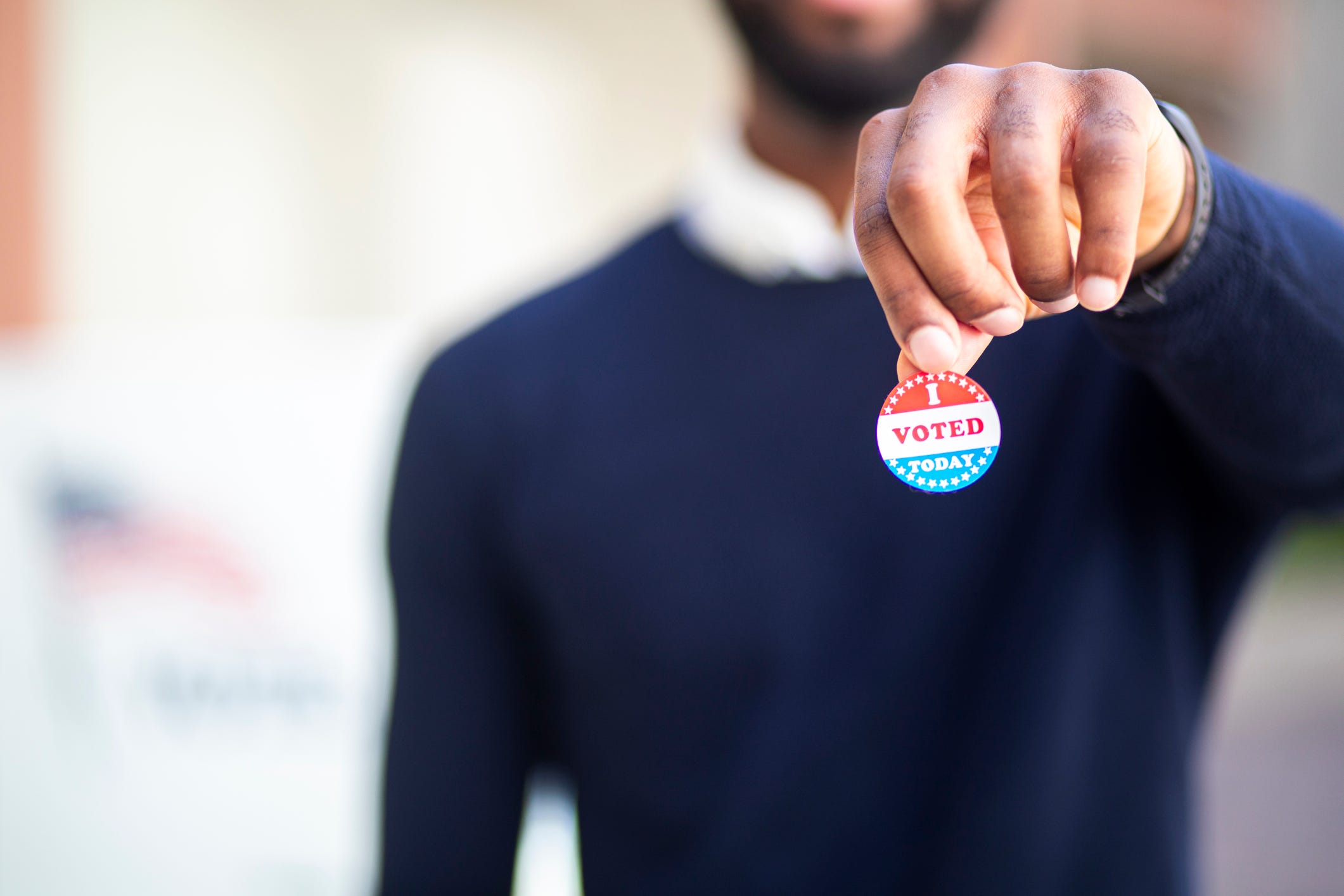
Last week, the Supreme Court ruled in Louisiana v. Callais, with Justice Samuel Alito writing for the majority, that Louisiana’s second Black-majority congressional district was an unconstitutional racial gerrymander. But the ruling’s consequences extend far beyond Louisiana’s map. In rewriting the 40-year-old evidentiary framework established in Thornburg v. Gingles, the court fundamentally changed what it takes to bring a successful Section 2 claim — requiring plaintiffs to now show a “strong inference that intentional discrimination occurred.” That is a direct inversion of what made Section 2 powerful in the first place. The genius of the law was that intent did not matter — only results did. Last week’s ruling reverses that logic and renders the provision nearly unenforceable in states where it matters most. Now that Section 2 is gutted, every American — if they were not already — needs to wake up.
The Callais ruling is not an isolated decision; it is the latest step in a documented pattern of courts removing remedies while leaving rights nominally intact. University of Chicago law professor Aziz Huq, in The Collapse of Constitutional Remedies, documents how the Supreme Court has spent four decades “erecting one legal barrier at a time” against civil rights enforcement. The result, in Huq’s framing, is that “we may have rights when challenging the state, but no remedies.” To be clear, the right to vote free from racial discrimination still exists on paper, but the court has essentially said to any activist, civil rights litigator, or concerned citizen: good luck enforcing it!
The Broad Economic Consequences of Voter Suppression
We can and should talk about the legal ramifications of this decision. We can and should talk about the impact on democracy. But there is also a simpler economic truth: voter suppression has a price. When districts are manipulated and voting becomes harder, people pay by driving farther and spending more on gas or transit to vote. For working people, especially hourly workers and parents without flexible schedules or support systems, voter suppression leads to increased childcare costs or missing a shift to vote. The cruelty of it all is that voters are being asked to absorb those costs when they’re already living paycheck to paycheck in a system attempting to further dilute their political power. That is the math of modern voter suppression: make voting more expensive while making each vote feel less powerful.
These costs were quantified in a study more than a decade ago on the impact of voter suppression in a federal election. In the 2012 election alone, long lines imposed an estimated $500 million in time and wage costs and may have deterred between 500,000 and 700,000 votes. When we make voting harder, we are not merely inconveniencing people.
The economic consequences of manipulated representation are also well-documented, and history shows us what happens when Black communities are stripped of political power. After Reconstruction, poll taxes and literacy tests kept Black people from voting across the South. One study found those laws reduced investment in Black schools and cost Black working people at least 15% of their annual income while landowners gained roughly 12%. To put that in today’s terms, the national median household income in 2024 was $83,730, and the median Black household income was $56,020. That is a gap of more than $27,000 a year. If the median Black household lost 15% of its income, that would mean losing more than $8,400 in a single year, dropping annual income to roughly $47,600.
Further, a 2019 study on Black disenfranchisement and taxation in the South found that after literacy-test requirements were introduced, counties with larger Black populations saw a nearly 5.4% decline in real per-person tax receipts. Put simply, when Black people were pushed out of the electorate, local governments collected and invested less money to serve Black communities. That meant fewer resources for schools, weaker public services, and less support for the very communities whose political power had been stripped away. The result is a double economic penalty: you make less money, and then your community gets less support from the government meant to serve you.
Undermining democracy undermines business
What is happening now is not a gradual erosion of Black and Brown voting power over the years. We are watching states suspend active elections, redraw maps in real time, and openly target the seats of sitting Black members of Congress — all within days of a single Supreme Court ruling. The Council on Foreign Relations has already warned that Callais may make perpetual mid-decade redistricting the new normal, with states redrawing lines every few years rather than every ten. For business, that means the political geography shaping your regulatory and policy environment is no longer stable. It is a moving target, and it is being moved deliberately. Within days of the decision, Louisiana Gov. Jeff Landry suspended the state’s May 16 primary to allow the legislature to redraw its maps. Mississippi’s Republican governor announced a redistricting session to start within 21 days of the ruling, with state officials openly calling to eliminate Rep. Bennie Thompson’s majority-Black district. Tennessee and Alabama have begun similar processes. And President Trump took to social media demanding all states redraw their maps immediately, saying, “if they have to vote twice, so be it.”
The judicial logic being normalized here does not stop at voting rights. This is yet another example of courts acknowledging a harm, invalidating the remedy, and leaving Congress with no viable path to replace it. That reasoning is available to any future court in any regulatory context, whether it is environmental regulation, consumer financial protections, labor standards, and much more.
Each rests on the same foundational premise that Congress can identify a documented problem and legislate a durable solution. A judiciary willing to sever remedy from right is a judiciary that has put every statutory protection on notice. The question business should be asking is not whether voting rights law affects them directly, it is whether they want to operate in a legal environment where this is how doctrine gets made. With the geopolitical landscape already uncertain, a court applying this logic adds to the complexity. The speed at which things are happening in Southern states makes that uncertainty concrete.
Business leaders should be concerned because this philosophy does not make for a stable or healthy market. An economy built by weakening political participation does not expand opportunity; it narrows it. It distorts labor markets, reduces public investment, weakens consumer power, and creates uncertainty for any company trying to operate in communities whose voices are being deliberately suppressed.
Democracy is good for business. It underpins the validity of every contract, property right, and regulatory framework that businesses depend on to make money. When the courts remove the tools Congress built to correct wrongs, that is bad for business and creates the one thing every leader needs less of today: uncertainty.
Leaders and citizens are struggling with how to move the needle. First, donate to organizations doing the immediate legal work, like state-based organizations fighting for the freedom to vote. Second, direct government affairs teams toward state legislatures, especially the 10 states that have already enacted their own voting rights acts. Those battles will spread to other states. And, finally, engage publicly on the John R. Lewis Voting Rights Advancement Act, the federal remedy that would restore what the courts have dismantled. It has stalled in Congress for years, and it’s unlikely it will get traction until a Democrat retakes the White House, but your voice can move it.
Two hundred and fifty years after the Founders declared that all men are created equal, and 61 years after Selma forced that promise into law, we are watching to see who really cares about making those values a reality. Businesses — or good ones, I should say — have always understood that the rule of law is worth defending.
This is the moment to prove it.
Alphonso David is a civil rights attorney, co-counsel to plaintiffs in “The HUB case”: Globe Express Trucking Inc. et al vs. Kelly Hancock et al.; co-counsel to the Fearless Fund and Fearless Foundation, and the president and CEO of the Global Black Economic Forum.
The Callais decision is essentially election/voter meddling, which is illegal. It also goes against the intent of the Constitution. The supreme court is effectively legislating from the bench. This is neither right nor ethical.
This makes me furious and heartbroken. To add insult to injury, taxpayers now have to pay a Billion Dollars for a ballroom for the wealthy oligarchs who now run the country. Shame on SCOTUS and the spineless Republicans in Congress!