


Minnesotans learned this month that the stranger taking notes at their church meeting may have been a federal agent. Court filings unsealed in the prosecution of 15 Twin Cities residents describe two Department of Homeland Security surveillance programs, Operation Puppet Master and Project Whipple Shield, that operated alongside the Trump administration’s mass immigration enforcement campaign, Operation Metro Surge.
According to the filings, undercover officers posed as protesters and monitored community meetings at churches, parks, libraries, and schools. They entered encrypted group chats, recorded conversations, collected license plates in parking lots, and assembled dossiers containing names, home addresses, employers, and family members. That should alarm anyone who cares about the First Amendment right to express opinions without fear of government retaliation.
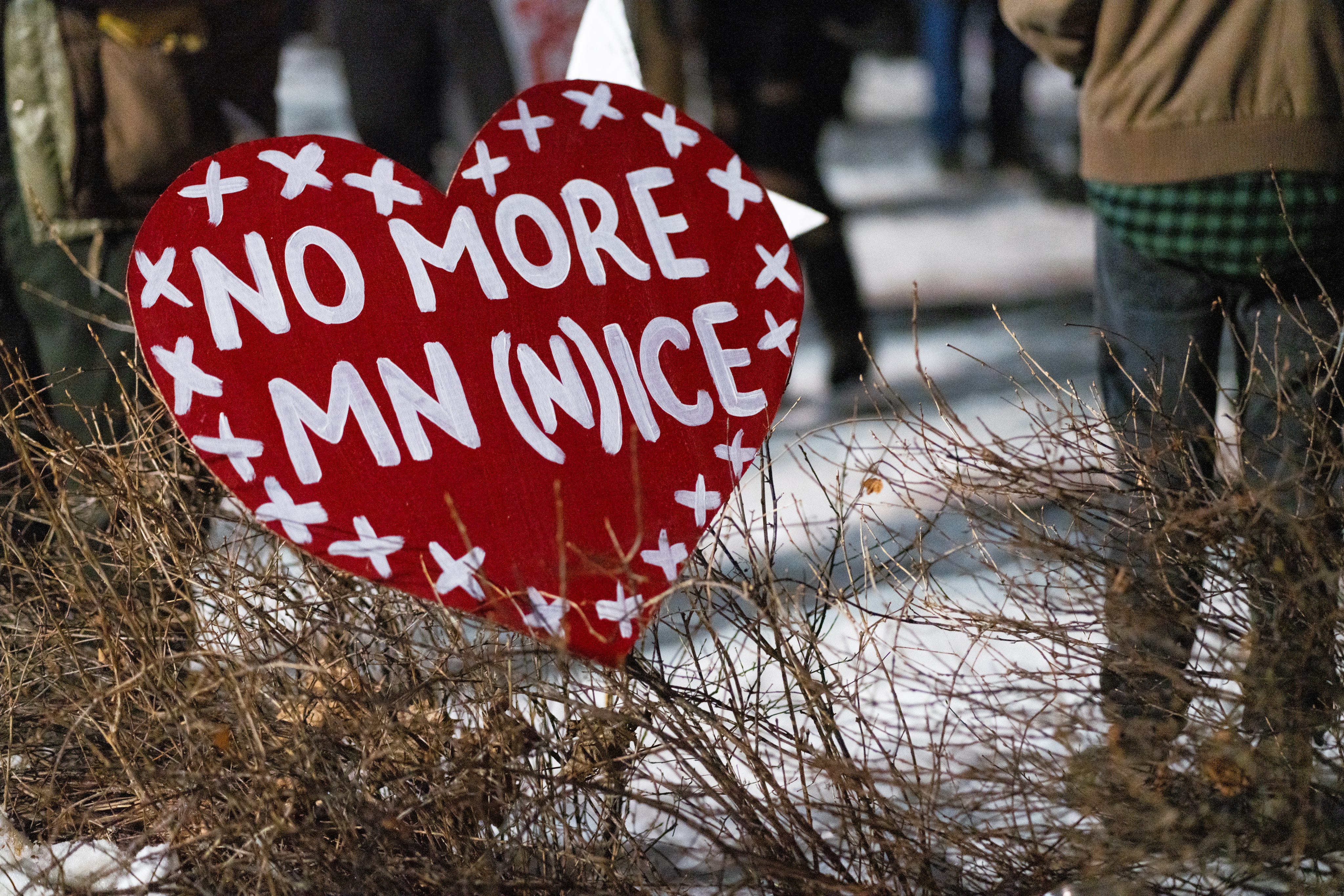
DHS launched Operation Metro Surge last December, describing it as the largest immigration enforcement operation in American history and deploying roughly 3,000 Immigration and Customs Enforcement and Customs and Border Protection agents across the Twin Cities. Most of the thousands arrested had no criminal record. During the operation, federal officers shot and killed two Americans: Renee Good, a mother of three, who was shot in her car after dropping her kid off at school, and Alex Pretti, an intensive-care nurse who worked with veterans, who was shot because he was holding a cellphone.
Their neighbors responded -- as citizens in a democracy have the right to respond. They organized know-your-rights trainings. They sent legal observers to immigration enforcement actions. They created rapid-response networks. They met in churches, schools, libraries, union halls, and parks. The government appears to have treated that organizing as something to penetrate and surveil.
According to the court filings, DHS issued administrative subpoenas, which do not require a judge’s approval, seeking financial records from unions and nonprofits including SEIU, AFL-CIO, the Minneapolis Federation of Educators, and the Sunrise Movement. Agents also used Clearview AI facial recognition technology to identify people at meetings and compile photo histories reaching back decades, including people never charged with crimes.
A pending defense motion asks the court to order the government to produce every Clearview report generated during the operation. The defendants argue that this secret collection, allegedly undertaken without a concrete reason to suspect criminal activity, violated First Amendment rights and privacy protections. That is the right constitutional danger. Political surveillance does not need to result in prosecution to suppress political activity. It works through fear.
If attending a church meeting can put your face into a federal database, some people will stop attending. If donating to a nonprofit can trigger government scrutiny, some people will stop donating. If being in a parking lot outside a protest meeting can connect your license plate to your employer and family, some people will decide that exercising their rights is not worth the risk. That is how a free society becomes quieter—one empty folding chair at a time.
We have seen this before. From the 1950s through the 1970s, J. Edgar Hoover’s FBI ran COINTELPRO to infiltrate, disrupt, and discredit civil rights leaders and antiwar activists, including the Rev. Dr. Martin Luther King Jr. The Rev. Jesse Jackson, himself a target of government surveillance, later described its impact plainly: “It has a chilling effect. It takes away your freedom.” The scandal produced congressional investigations and, eventually, reforms intended to constrain domestic surveillance. Congress passed laws to put judicial oversight between federal investigators and Americans’ private lives.
But the tools have changed faster than the guardrails. Hoover’s FBI needed informants, wiretaps, physical surveillance, photographs, and rooms filled with paper files. Today’s government has facial recognition, automated license plate readers, social media monitoring, commercial databases, and data brokers that can reconstruct enormous portions of a person’s life within hours. Yet, the underlying temptation to treat political dissent as an intelligence problem remains the same.
The Trump administration has given agencies an unusually broad framework for doing so. A presidential memorandum issued last September, NSPM-7, directs federal agencies to consider “anti-capitalism,” “anti-Christianity,” and “extremism on migration, race, and gender” among indicators associated with domestic terrorism and assigns Joint Terrorism Task Forces a role in examining organizations and funding networks.
Those categories deserve extraordinary scrutiny. Political beliefs, criticism of government policy, immigration advocacy, and views about race or gender occupy territory at the core of the First Amendment. Government cannot transform protected political activity into evidence of dangerousness simply by attaching the language of national security to it.
Minnesota is not the only place where these concerns have surfaced. In Maine, residents who say they lawfully observed and recorded immigration enforcement allege that federal authorities used facial recognition and license-plate readers to track them, placed information about them in government databases, and labeled them domestic terrorists. Their class action is pending in federal court.
None of this means law enforcement must ignore genuine threats or criminal conduct. The government has the authority and the responsibility to investigate actual crimes. Investigating a crime based on evidence is law enforcement. Building dossiers on people because they attend political meetings, observe government agents, donate to advocacy organizations, or associate with critics of federal policy is not. When the government blurs that distinction, it risks turning tools created to protect the public into tools for intimidating it.
Congress does not have to accept this. It can close the data broker loophole by passing the Fourth Amendment Is Not for Sale Act, which would prevent federal agencies from purchasing sensitive location and browsing information they would otherwise need legal process to obtain. Congress can require judicial approval before intelligence and law enforcement agencies acquire particularly sensitive records. It can impose transparency and accountability requirements on federal use of facial recognition and artificial intelligence, so Americans learn about surveillance programs before their names land in government dossiers, not years later when evidence surfaces in a criminal case.
States and cities have responsibilities, too. They can restrict when local police share information with federal immigration authorities and limit technologies such as automated license-plate readers to the purposes the public was told they would serve.
Minnesotans are already demanding something similar from non-government institutions. Last week, clergy, labor leaders, educators, and health care workers gathered outside Target’s headquarters and called on some of the state’s largest companies to publicly reject political surveillance.
Those demands should spread. Ask your member of Congress where they stand on the Fourth Amendment Is Not for Sale Act. Ask your mayor what information the local police department shares with federal immigration agencies. Ask who can search your city’s license plate database, under what circumstances, and for how long the records are kept.
And keep going to the meetings. Surveillance succeeds politically when citizens begin policing themselves. The agent in the pew does not have to arrest anyone if everyone becomes afraid to sit down. A pluralistic democracy depends on something more than elections. It depends on people believing they can organize, worship, protest, associate, criticize their government, and stand beside their neighbors without secretly becoming subjects of an intelligence file. The people who kept showing up in Minnesota understood that. The rest of us should too.
Omar H. Noureldin is the senior vice president of policy and litigation at Common Cause, a national nonpartisan grassroots democracy and government accountability organization. He previously served as a presidential appointee in the U.S. Justice Department’s Civil Rights Division.

Let’s see, pardon people convicted for Jan 6 ,and surveil and harass peaceful protesters. Despicable.
The fascist police state arrived on January 20, 2025. It is almost funny that government hired thugs get to spy and report on law abiding citizens and their rights.