


A highlight of being in Ireland (where I recently crossed the finish line of the Dublin Half Marathon, a great story for another day!) has been following the local news, especially the robust abortion beat.
Over the past week, Irish lawmakers have waged a loud fight to expand abortion rights — in particular, to ensure unnecessary waiting periods don’t impede access to care. Ireland has had a wave of public support for reproductive rights over the past two decades, culminating in the reversal of a deeply divisive 1983 ballot referendum that enshrined the “right to life of the unborn” as the eighth amendment of its constitution. In 2012, a pregnant woman died after being denied life-saving intervention. Citizens rose up and, in 2018, succeeded in repealing the amendment with a whopping two-thirds of the popular vote. (This article provides an Illuminating summary of the modern fight.)
Breaking headlines from the United States were a dark juxtaposition.
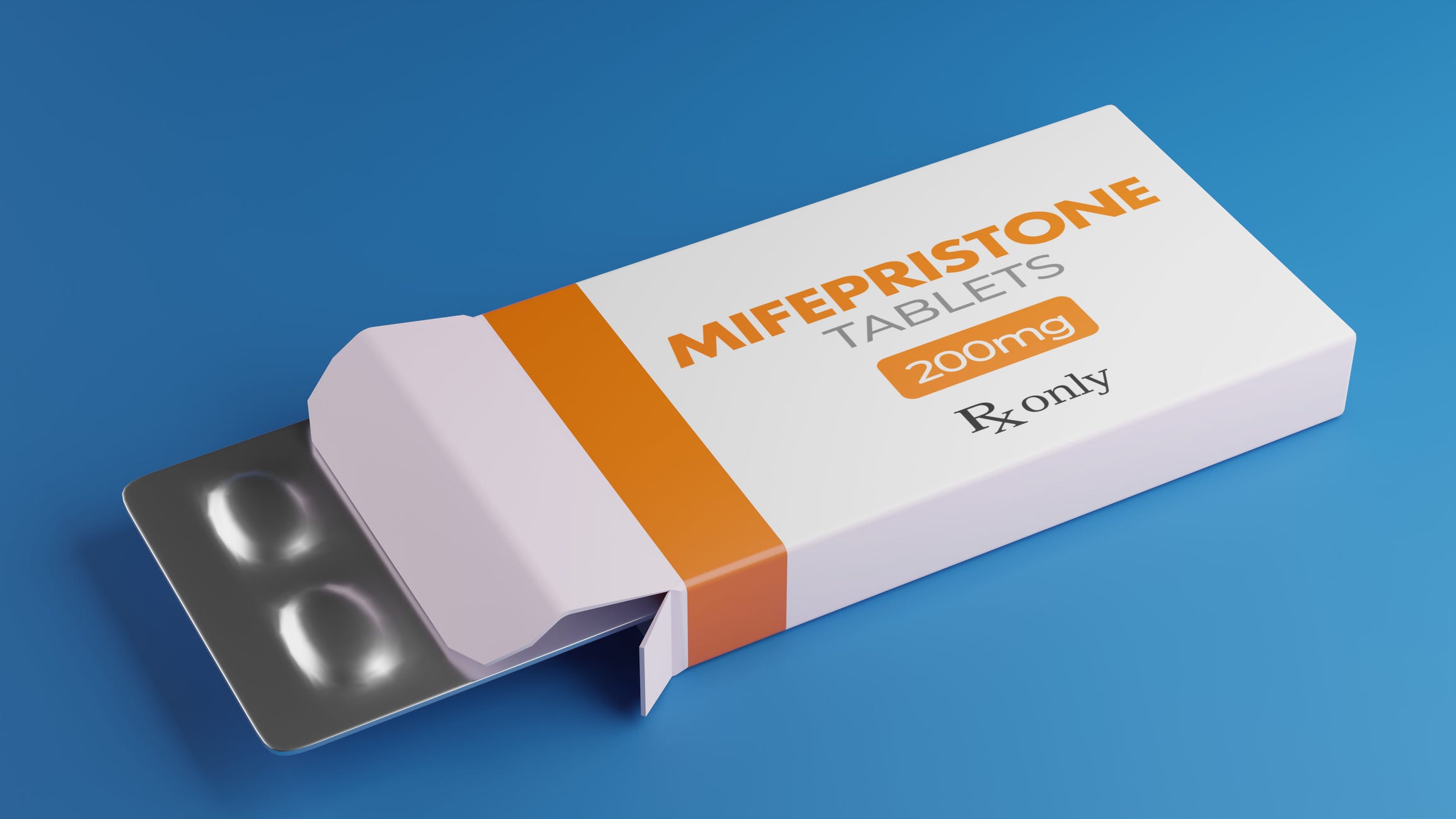
The United States is one of only four nations worldwide actively rolling back reproductive rights — we share that distinction with El Salvador, Nicaragua, and Poland. And now we’re threatened with yet another fight. The Fifth Circuit Court of Appeals issued a ruling over the weekend in State of Louisiana et al. v. Food and Drug Administration et al., aiming to create the most significant setback to abortion access since the Supreme Court’s Dobbs v. Jackson Women’s Health Organization decision nearly four years ago. The three-member panel, two of whom are Trump appointees, blocked a 2023 FDA policy allowing mifepristone to be prescribed by telehealth providers and delivered by mail — a decision that applies to all states, whether abortion is legal or not, and where voters have mobilized to pass ballot measures and enshrine reproductive rights in their state constitutions.
[What about Trump v. CASA — in which the Court ruled 6-3 that a single federal district court cannot issue a “universal” or nationwide injunction. What a difference a year makes? In the words of my NYU Law colleague, Professor Melissa Murray, apparently stare decisis is for suckers.]
A bit of background: During the pandemic, the FDA suspended its in-person and office-visit requirements to make it easier for patients to get and doctors to deliver medical care; by 2023, telemedicine changes were made permanent, including for the provision of mifepristone, an abortion medication that has been FDA-approved since 2000 and has a well-established safety record supported by decades of science.
Louisiana’s lawsuit to dismantle telehealth and mail delivery options for mifepristone is a naked attempt to make it harder for women everywhere in the country to access abortion, plain and simple.
Not surprisingly, abortion care via telehealth has increased dramatically since Dobbs. Data from the Guttmacher Institute shows that medication abortion accounts for more than 60% of abortions in the U.S. today. Further, blue states have passed “shield laws” to protect their abortion providers who serve patients living in places where abortion is banned (providing as many as 15,000 prescriptions per month, according to data from the #WeCount project), making the entire experience safer for all players. “For women in states that ban abortion, telehealth has been the last bridge to care, which is precisely why Louisiana officials want it banned. This isn’t about science—it’s about making abortion as difficult, expensive, and unreachable as possible,” said Nancy Northup, president of the Center for Reproductive Rights. “Telehealth has transformed healthcare. Selectively stripping that away from abortion patients is a political blockade.”
What does the ruling indicate about the state of American democracy? Whereas the Fifth Circuit claims the FDA regulation “undermin[es] laws protecting unborn human [that are] in defiance of Louisiana law,” Sen. Patty Murray’s response makes the stakes clear: “Three judges on the most extreme appeals court in the country sided with anti-abortion politicians over the FDA’s career scientists, over a quarter-century of safety data, over millions of American women who have safely used mifepristone, and over practically every major medical association in the United States.”
This Fifth Circuit ruling is not the final word on the case. The two pharmaceutical companies that make mifepristone, Danco and GenBioPro, immediately filed an emergency appeal to the Supreme Court. On Monday, Justice Samuel Alito announced an administrative stay through May 11, meaning the decision is on hold until at least then, while the justices review the appeal and decide whether the medically unnecessary in-person dispensing requirements can be reimposed for the duration of the litigation. [To be clear: for now, the temporary stay allows the telehealth, mailing, and pharmacy provision of mifepristone to continue.]
It is worth noting that three years ago, the same conservative Fifth Circuit also ruled against the FDA in a separate lawsuit about mifepristone. Then, the Supreme Court unanimously rejected the case over a technicality, saying the anti-abortion doctors who brought it didn’t have standing. The ruling did not address the substance (e.g., the legality of the FDA rule), but that moment is obviously drawing closer.
In addition to Louisiana, lawsuits in Idaho, Kansas, and Missouri similarly seek to impose a telehealth ban for mifepristone; cases in Florida and Texas are outright challenging the FDA approval of mifepristone to outlaw it altogether. Louisiana and Texas have tried to extradite telehealth abortion providers from New York and California to face criminal charges (with no success, thus far, thanks to shield laws). Though Louisiana has some of the most restrictive abortion laws in the country, Mother Jones reports telemedicine providers are mailing close to 1,000 packages of abortion pills to patients in the state every month.
In the Dobbs decision, the majority talked a big game about returning abortion rights to the states. The president himself crowed that “legal scholars, both sides, wanted, and in fact demanded, Roe be overturned” for that very reason. Please. That route has led us right back to the Supreme Court, with Louisiana now poised to dictate nationwide access.
Abortion rights are popular, and Republicans know they lose every time they’re under direct attack. Clearly, it serves the Trump administration to slow-walk the FDA litigation: remember the Department of Health and Human Services and the FDA initiated their own so-called review of mifepristone (despite its indisputable safety record); the review process has been a convenient excuse to decline to defend FDA rules on the merits and instead argue that states either lack standing or are jumping the gun until the “results” are announced.
So far, the lower courts have enabled all the stalling, but the Fifth Circuit’s inability to hide its true colors catapulted abortion front and center again. Either way, the reporting schedule requires the FDA to file its status update by early October. Republicans can run from the issue, but they can’t hide come November.
Voters may be focused on the economy and the disastrous war with Iran, but abortion looms large. As historian and law professor Mary Ziegler told the New York Times, “this ruling will put abortion back on the map as an election issue.”
In the spirit of the fighting Irish, readers should take heart that the community of U.S. abortion providers, advocates, and support networks “have shown amazing resilience and tenacity since the Dobbs decision,” according to Kelly Baden of Guttmacher. “They will continue to do what they can do to ensure that everyone, regardless of where they live, can access the abortion care they need.”
So, for now, our citizen mobilization strategy must be twofold: support those who directly deliver those services and get ready to get loud. The abortion fight shows that access to healthcare, the integrity of science, the rules of democracy, and the right to bodily autonomy are not only all interconnected, but they are all on the ballot this November.
Jennifer Weiss-Wolf is executive director of the Birnbaum Women’s Leadership Center at NYU School of Law. She also leads strategy and partnerships at Ms. Magazine.

It will never fail to astonish me that anyone feels they have the right to dictate what a woman can and cannot do with her own body. Whatever happened to a person's right to privacy? Hopefully at some point a woman's right to abortion will become enshrined into law nationally.
If the decision is allowed to stand it's going to be a bonanza for The Mob. Heck, we can't manage to stanch the flow of fentanyl, cocaine and methamphetamine into this country! So what is the chance that we'll be able to stop getting RU 486 into states where it's banned, especially given that there are many states where it's perfectly legal and there's vast public support for keeping it that way! I'd say that the chance of stopping (even illicit) mailing is close to zero.
This will be the biggest meal ticket for organized crime since Prohibition was instituted.