


What do our presidents actually teach us about how to lead a republic?
As the CEO of In Pursuit, I’ve spent the past year gathering essays by our nation’s leading public servants, historians, and journalists that seek to answer this question. What has emerged is not an unequivocal celebration of presidential power, but a recurring warning about it. Across historical eras and parties, the lesson is consistent. The American presidency serves the larger project of American democracy when it is properly constrained by Congress, the courts, and a public that understands why such limits on executive power must exist.
In Federalist 70, Alexander Hamilton makes the classic argument that “energy in the executive” is essential to good government. What does “energy” mean? Hamilton argues for the ability of the president to act clearly, quickly, decisively—and to be held responsible for it.
The tension between the need for executive energy and the fear of executive overreach is nothing new. It is a central problem the Founders attempted to solve when they rejected a monarch and designed a republican executive unlike the world had ever seen.
By the late eighteenth century, executive power, even in Britain, was already contested and evolving. King George III was neither an all-powerful tyrant nor a ceremonial figurehead. He asserted authority forcefully during moments of national crisis, but over time he retreated from political engagement to reshape the British monarchy as less of a governing force than a unifying national symbol. As Machiavelli teaches us, executive power is inherently ambiguous: strong and weak, subordinate and insubordinate, stabilizing and dangerous at the same time.
The Founders read Machiavelli and understood this ambiguity, yet they confronted a conundrum. They did not believe liberty would survive without a single executive capable of decisive action. According to Hamilton, “energy” is not the enemy of liberty because it ensures order, and a unitary executive enables accountability. On the other hand, concentrating power in one person posed the greatest risk to republican government. Carried too far, a strong, independent executive invited abuse and a potential slide into tyranny.
Attempting to find a solution to this key problem led to the some of the most contentious debates during the Constitutional Convention. Enter James Madison, who famously argued that liberty requires ambition to counteract ambition. Even though the Convention delegates knew George Washington would serve as the first president, they did not rely upon personal virtue as the only bulwark against tyranny. After all, they had no idea who would follow Washington.
Instead, the Founders utilized Montesquieu’s concept of separation of powers, thus ensuring a competition amongst the independent branches of government. The presidency would have energy to act “with dispatch” when needed, yet Congress would guard its considerable legislative authority with a jealousy that would frustrate executive overreach. The courts would serve as independent referees without executive deference; lifetime appointments encouraged such behavior. Together these incentives would, the Founders hoped, mitigate against executive consolidation.
Still, the Constitution alone could not guarantee such outcomes. Written rules (“parchment barriers” in Federalist 48) leave gaps, silences, and ambiguities. Embedded institutional rivalry was the best hedge against tyranny the Founders could come up with, but precedent, reputation, and public trust would also determine how the presidency would evolve.
As President George W. Bush argues in his essay for In Pursuit, George Washington’s most important actions as the first president were not demonstrations of command, but calculated displays of restraint. Washington established a radical precedent: power could be surrendered without destabilizing or weakening the state. It is hard to imagine, but before Washington, there was no example of such executive self-discipline in a large, democratic republic. He established the precedents, and his careful restraint helped secure the future of the American experiment. By subordinating executive power to the broader national interest, Washington made its continued exercise legitimate.
Over time, the delicate balance required of a strong, independent executive has become harder to maintain. Senator Rand Paul has recently asked ‘where’s the ambition’ in Congress. He is right to ask such a Madisonian question. The entire constitutional system is premised upon each branch’s incentives to defend its proper authority.
Executive overreach is not a partisan issue, and it didn’t begin under the current administration. For decades, presidents have responded as we might expect, filling vacuums of power and thus normalizing executive dominance through accretion rather than legitimate consent. When co-equal branches become optional, the presidency inevitably expands beyond its intended bounds.
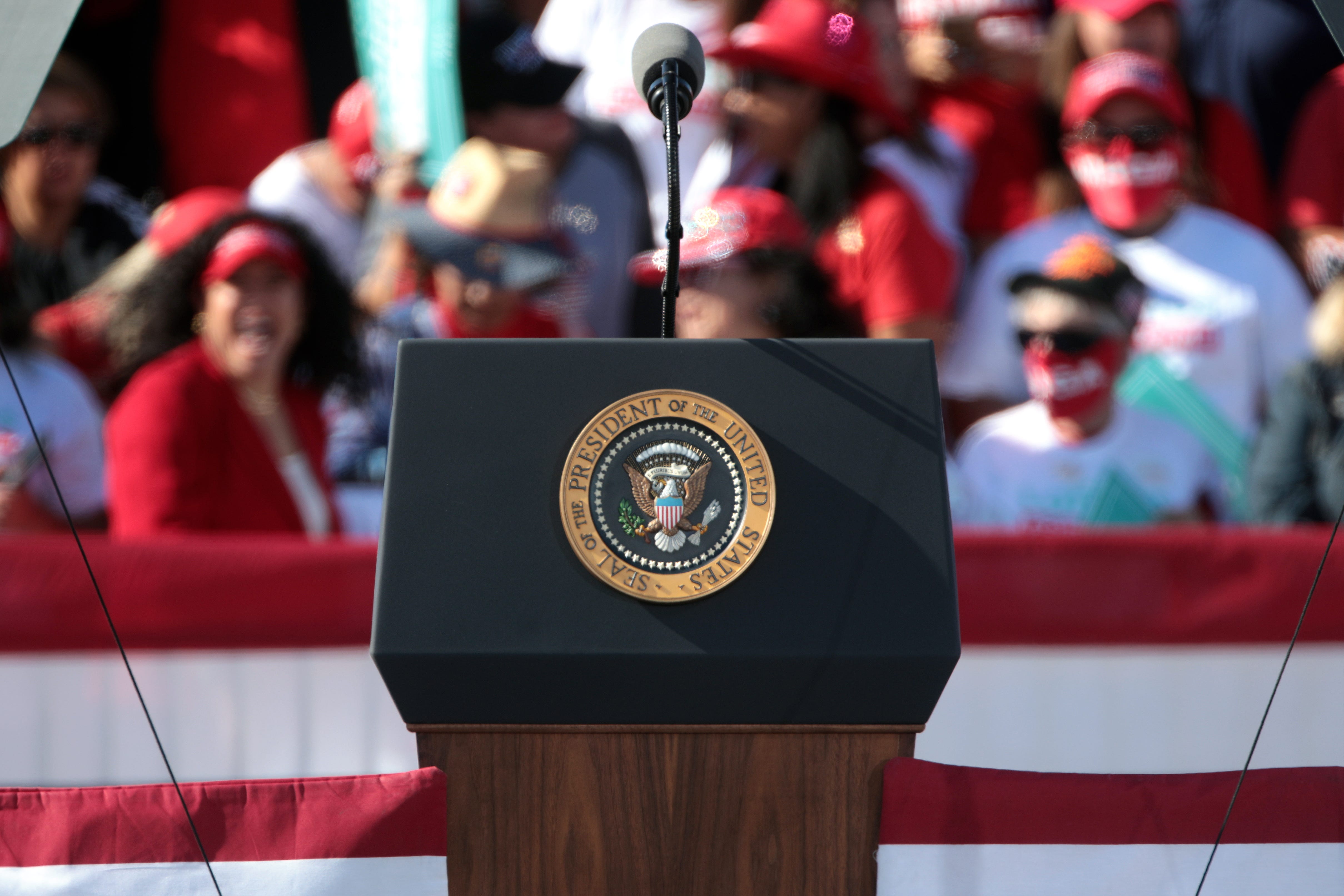
Presidents Day should remind us that the presidency was never meant to stand alone. Executive energy, as Hamilton understood it, was designed to operate within a system of rivalry and restraint, where Congress guards its authority, courts maintain independence, and ambition checks ambition.
The lesson is not that the republic needs stronger presidents or weaker ones. It requires a constitutional balance that citizens understand and are willing to defend. Energy without constraint corrodes legitimacy, and restraint without civic belief cannot endure.
Dr. Colleen Shogan is the CEO of In Pursuit, a history-based civics project of More Perfect. She teaches American politics at Georgetown and served as the 11th Archivist of the United States.

What is not discussed in your beautiful piece is the corrupting influence of money, and greed. When the Citizens United decision was made, it opened the floodgates to massive amounts of money into our system, corrupting it. So much money anonymously is invested in campaigns, obscene amounts, to "buy" power and favor, to determine national policies -- above and beyond lobbying -- that we no longer seem to have a government of, by, and for the people. One glimpse of this current administration will tell you it is a government bought and paid for by oligarchs, oligarchs who have been willing to sacrifice democracy and democratic principles (like a free press) in order to receive hefty multi-million, and in some cases, multi-billion dollar contracts. Chief among the corrupting influences is the executive of this "family business." Congress has no role, because they have discovered that it is less the people they are representing than big-money interests if they want to be reelected, and the current president. The game has changed, over the course of years, to favor the wealthy, so the disparity between haves and have nots has never been so great. The overreach of the executive has been matched by the Supreme Court, which has been corrupted, or at least manipulated by Mitch McConnell refusing to do his job, in a major power grab. Two judicial seats were virtually stolen from the Democratic Party by his manipulations. Until corruption and self-interest are better regulated, and a level playing field achieved, the interests of the people, and ALL branches of government will not be well-served, in my view.
Rand Paul is correct to say where’s the ambition of congress. Have they forgotten their role?