

By Rachel Foster
For decades, the survivors of Jeffrey Epstein, Ghislaine Maxwell, and their predatory network have carried their stories of their sexual abuse and exploitation alone while those who perpetrated crimes against them have enjoyed impunity. Institutions looked away, gatekeepers in politics, finance, and culture stayed silent, and powerful people counted on secrecy to protect them. And it worked to shield them from any accountability—until now.
This week, Congress faces a clear test. Lawmakers can vote to release the Epstein files through the Epstein Files Transparency Act or they can maintain a system that hides the truth and shields the perpetrators of sex crimes against at least 1,000 victims.
Already, some in Washington are treating this vote as a political calculation rather than a test of moral clarity. Analysts speculate about which party stands to lose more, while operatives whisper about managing the fallout.
This cynicism misreads the moment entirely and ignores the survivors whose courage and solidarity made this vote possible.
Political pundits claim this effort faces an uphill battle, and a few have dismissed it outright as a waste of time. That framing ignores how we arrived at this moment in the first place. We would not be here without sustained pressure from victims over decades, advocates working closely alongside them, and the public that will not look away. Every breakthrough in the Epstein-Maxwell cases came because survivors insisted on being heard, despite fear and personal attacks. It was pressure that forced prosecutors to revisit the sweetheart plea deal that shielded Epstein in 2007. It was pressure that led to renewed scrutiny from journalists. It was pressure that brought Maxwell, once protected by a multitude of privileges, into a courtroom to face federal charges.
None of this happened because institutions suddenly found a conscience. It happened because survivors refused to accept silence. It happened because they refused to be sidelined or siloed.
The Department of Justice has held these files for years. The only reason tens of thousands of pages are public today is survivor pressure, legal pressure, journalistic pressure—and public pressure. That same pressure is what will determine whether the remaining files see the light of day.
The number of files that have been released may sound large to a layperson, but it barely scratches the surface of what exists. What remains sealed are the documents that show how Epstein built and maintained his network. These records could contain names, communications, financial transactions, travel logs, and internal correspondence that offer a fuller picture of the adults and institutions that supported—and participated in—his crimes. Without them, the public sees only fragments of the truth and a limited scope of these crimes, including how many victims there are in the vast sex trafficking enterprise. Each day, more “Jane Does” disclose their abuse at the hands of Epstein and Maxwell and their collaborators. They are watching our government closely to know whether it is safe for them to come forward.
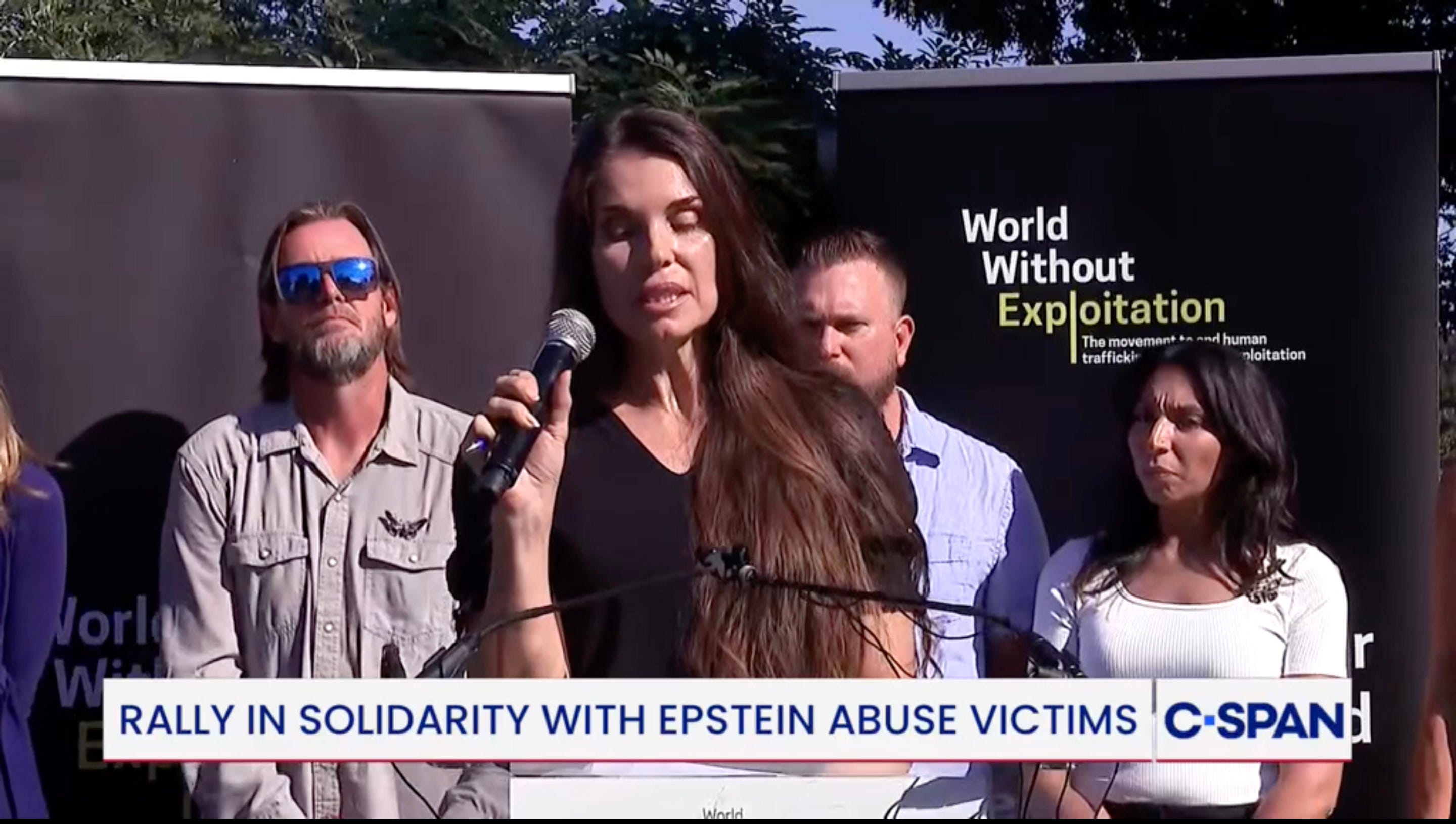
Survivors who have already spoken out understand this better than anyone, which is why they are stepping forward again to demand that Congress finish the job. This week, World Without Exploitation released a new public service announcement featuring survivors of Epstein and Maxwell. In the video, each woman holds a photograph of herself as a teenager or young adult around the age when she was abused. These images serve as a reminder that what Congress is debating is not an abstract political issue but children and very young women who should have been protected by a system that failed them.
One of the women in the PSA, Danielle “Dani” Bensky, met Epstein when she was 17. She was an aspiring ballerina who relied on odd jobs to support her training. One day, a woman approached her with news of a wealthy philanthropist who hired young performers like her. Believing she had been offered an opportunity, Danielle agreed to meet the philanthropist. It turned out to be Epstein. Around that same time, her mother was diagnosed with a brain tumor. Grateful for the guidance he offered, she brought Epstein her mother’s medical scans. He used them to gain leverage over her. He told her he could help her mother or ensure she never received the care she needed. That threat gave him control, and he used her mother’s illness to scare and manipulate her. It was the beginning of his abuse.
Both sides see opportunities to score political points. It is easier for politicians to treat the Epstein files as a gotcha moment or political liability than as evidence of institutional failure. Having met with dozens of lawmakers on both sides of the aisle ready to support survivors, we know that this is truly not a partisan issue. This is a critical moment for both political parties to act in unity.
What survivors like Dani want Congress to understand is that this vote is not a debate over which political party stands to lose more if the full record becomes public. Survivors are not worried about which party takes a hit. For them, it’s about the fact that crimes were committed over decades and there has been a concerted effort by powerful people to keep the details of those crimes a secret. What survivors and the public have to gain in the release of all the files is critical transparency and the hope that perpetrators who cause immense harm will not be shielded by our government.
In my own decades of work with survivors of sexual violence and exploitation as an attorney and advocate, I have learned that a failure to act protects perpetrators and, without question, leads to further harm. I have listened to these formidable women—standing together in an effort to get long-sought justice—detail how their Herculean efforts to bring light to crimes happening in real time lead to inaction. Had there been actual criminal consequences for Epstein and Maxwell when their earliest survivors and their families bravely came forward to law enforcement in the 1990s, countless lives would not have been shattered by the predation and violence that was permitted to continue unabated.
People will remember how both Republicans and Democrats voted on the Epstein Files Transparency Act for a long time. A vote for secrecy will follow them for the rest of their careers. It will sit on their conscience and cast a shadow over their political futures. A vote for transparency tells survivors that their government values truth over cowardice and accountability over power.
The choice could not be clearer. The country is watching, and so are the not just the survivors of Epstein and Maxwell’s sex trafficking enterprise but all survivors of sexual violence. Victims today are asking themselves—will there be accountability and justice if I risk everything to come forward? The answer must be yes!
Rachel Foster is an attorney and co-founder and board chair of World Without Exploitation, the largest anti-trafficking coalition in the United States.
Regardless of how the vote for this bill goes, I truly hope MTG follows through on how she said she would read the list of accused men out loud on the House floor. If nothing else comes of this, every victim deserves to know that their abusers name is public information. They DESERVE to see their abusers indicted, tried and if convicted, punished... but at the very least, we need to know the names of those who perpetrated this long term conspiracy of pedophilia.
We must not fail these brave survivors of sexual crimes. At some point these women must not feel as though they are still victims. Being released from that frame of mind is essential to their healing. The files must be released publicly while not giving away their identity. Many victims of sexual crimes will often not reveal what happened to them as this is due to fear, threats from their perpetrators, shame and fear that no one will believe them. We must believe them and do whatever is necessary to obtain justice as long as there are other perpetrators out there who haven’t been prosecuted we will continue prolonging victimhood on these survivors and possibly others who may not have come forward. I have testified in court on a sexual abuse case and what I learned from the prosecutor is that recidivism is high and rehabilitation is extremely difficult. That’s why Maxwell must not ever see the light of day again. If she’s ever paroled she must register as a sex offender and be watched like a hawk.