


Fourteen years ago this week, CIA Director David Petraeus resigned after an FBI investigation uncovered an extramarital affair with his biographer, Paula Broadwell. The investigation would eventually reveal that Petraeus had shared classified information with Broadwell and lied to FBI investigators about doing so.
He pleaded guilty in 2015 to mishandling classified material, receiving two years of probation and a $100,000 fine. His extraordinary military career and standing in Washington had not prevented the investigation from ending his tenure as CIA director.
At the time, I was serving as the executive editor of the President’s Daily Brief — the U.S. intelligence community’s classified daily assessment of national security developments. I remember my indignation at the conduct of a man entrusted with some of the nation’s most sensitive secrets.
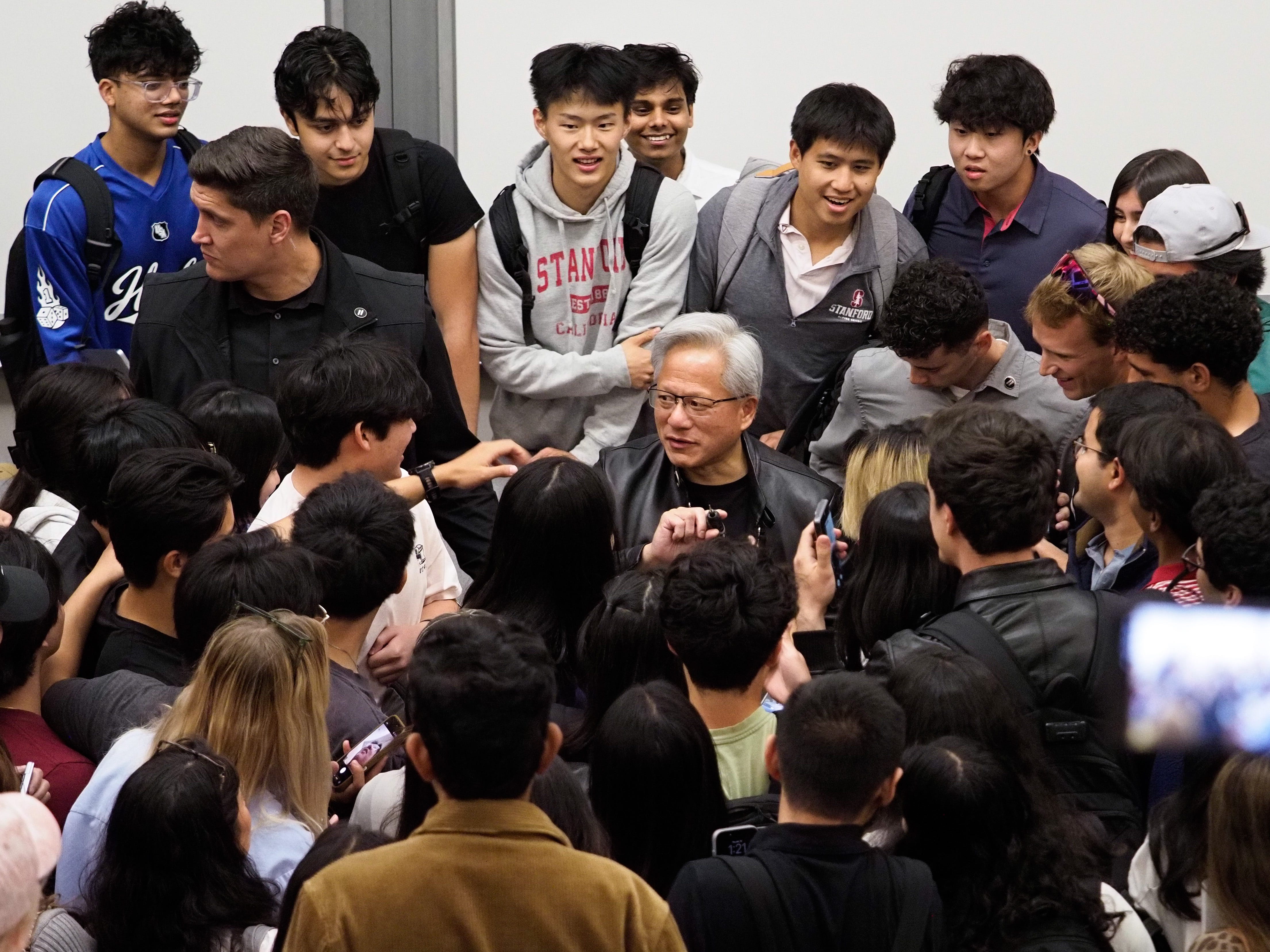
But the case of now-former Nvidia chief executive Jensen Huang is considerably more troubling. He has admitted to an extramarital affair with an executive at Megaspeed — a Singapore-based company under investigation for diverting advanced American chips to China — who U.S. intelligence agencies believe was working for China’s intelligence service.
Nvidia’s chips are central to the global AI industry and America’s technological competition with China. There is no public evidence that Huang knowingly assisted Chinese intelligence, but the government’s response raises far more troubling questions.
President Donald Trump reportedly received intelligence about the suspected Chinese operation months before it became public, but Huang received no defensive warning. Secretary of State and National Security Adviser Marco Rubio personally reminded Trump of the warning aboard Air Force One in May, shortly before Huang joined the president’s delegation to China.
When questioned about his decision not to alert Huang, Trump defended Huang as “an honorable guy” and said he believed the executive’s assurance that he had no idea the woman was a spy. The president later claimed not to remember receiving the warning.
There are legitimate reasons intelligence professionals might recommend delaying a warning to protect an ongoing operation. But personal confidence in the individual being targeted is not one of them.
This would be less troubling if it were an isolated example of Trump favoring personal assurances over professional intelligence judgments. It is not. In Helsinki in 2018, he gave credence to Russian President Vladimir Putin’s denial of Russian election interference despite the findings of American intelligence agencies. He repeatedly has celebrated his personal relationship with North Korean leader Kim Jong Un even as the country has continued to expand its nuclear arsenal — from an estimated 10 to 20 weapons in 2017 to roughly 60 today. His relationship with Chinese President Xi Jinping similarly combines personal diplomacy with a willingness to accommodate Chinese commercial interests, even as American intelligence agencies warn of Beijing’s efforts to acquire sensitive technology.
The issue is not that presidents must accept every intelligence judgment or allow intelligence officers to dictate foreign policy. Intelligence assessments are not policy prescriptions, and presidents are entitled to weigh economic, diplomatic, and security considerations differently.
There is a consequential difference, however, between making an informed decision that weighs intelligence against other national interests and dismissing an intelligence warning because the president trusts the individual involved.
Huang’s departure, following reports of a second affair involving a senior Nvidia employee, resolves the immediate question of his future at the company. It does nothing to resolve a more damaging problem: how the United States handles foreign intelligence threats when they intersect with powerful commercial and political interests.
While Chinese intelligence services are expanding their efforts to penetrate American companies and acquire advanced technology, the administration since its return to Washington has weakened the institutions responsible for detecting and disrupting those operations. FBI counterintelligence squads in many field offices are operating at just 50 to 60 percent of authorized staffing, with experienced investigators having been redirected toward immigration enforcement and violent crime. At the CIA, experienced analysts and operations officers have been fired, pushed out, or joined an unprecedented wave of retirements and resignations, further depleting institutional expertise that takes years to develop. The Huang case raises a separate concern about what happens when investigators pursue those threats.
Commerce Department investigators examining possible illegal transfers of Nvidia chips to China suspended their work after questions arose about Nvidia’s contacts with investigators and the involvement of senior political leadership. The case was transferred to the Justice Department, reportedly to protect its integrity, but the disruption raises questions about whether commercial influence was complicating national security enforcement.
It is reassuring that U.S. intelligence identified the suspected Chinese operation. Far less reassuring is Trump’s unapologetic willingness to disregard the judgments of his intelligence professionals — or his willingness to act contrary to them. There is little reason to expect that pattern to change during the remainder of his presidency.
Intelligence officers are unlikely to stop collecting information simply because the president dislikes what they report. But when warnings go unheeded, resources are redirected, and politically sensitive investigations encounter resistance, the government’s ability to translate intelligence into effective action can deteriorate. The damage accumulates across cases the public may never learn about.
Republican chairmen of the House Intelligence, Foreign Affairs, and China committees are demanding answers from Huang but have shown little interest in scrutinizing the Trump administration’s handling of the intelligence. Democrats should make that broader investigation an immediate priority when they take control of Congress in January.
The oversight committees should examine the President’s Daily Brief and supporting intelligence, including who received the warnings. What did Commerce Secretary Howard Lutnick know about the suspected operation, and how did that intelligence influence decisions affecting Megaspeed? Did intelligence officials recommend warning Huang or disrupting the operation?
Executive privilege may shield presidential conversations, but it should not prevent scrutiny of the intelligence and the government’s response.
The inquiry must also address counterintelligence readiness. How has the diversion of experienced FBI counterintelligence investigators to other priorities affected investigations into similar threats? How are intelligence agencies compensating for the loss of experienced personnel and institutional expertise as Chinese intelligence operations expand?
Secretary of State Rubio, CIA Director John Ratcliffe, FBI Director Kash Patel, and Director of National Intelligence Jay Clayton must answer for these decisions and the readiness of their agencies to address threats to our national security. Their records should also face scrutiny if they are nominated for other national security positions, particularly amid speculation about Defense Secretary Pete Hegseth’s future. Political loyalty cannot substitute for responsible stewardship of an intelligence organization.
Congress cannot compel Trump to heed intelligence assessments, but it can establish whether professional judgments reached him, whether his advisers acted on them, and whether political considerations compromised the response.
Brian O’Neill, a retired senior executive from the CIA and National Counterterrorism Center, is an instructor on strategic intelligence at Georgia Tech. His Safehouse Briefing Substack looks at what’s ahead in global security, geopolitics, and national strategy.
