

By Frederic J. Frommer
Like many Knicks fans, my wait for an NBA championship has been a long one, and this week’s NBA Finals against the San Antonio Spurs can’t start soon enough. In my case, it’s been nearly 50 years, dating back to the 1977-78 season, my first year as a fan, when the Knicks mounted a quick playoff run that ended with a humiliating sweep at the hands of the Philadelphia 76ers — a mirror-image of this year’s matchup between the teams.
Back then, the playoffs began with a best-of-three series, and the Knicks beat the Cleveland Cavaliers, two games to none, to advance to the NBA Eastern Conference Semifinals to take on the Sixers — the same franchise New York faced in this year’s conference semis. Led by their acrobatic superstar Julius Erving, the 76ers won the opener of that ’78 matchup by 40 points, nearly identical to the Knicks’s 39-point rout in Game 1 of this year’s series.
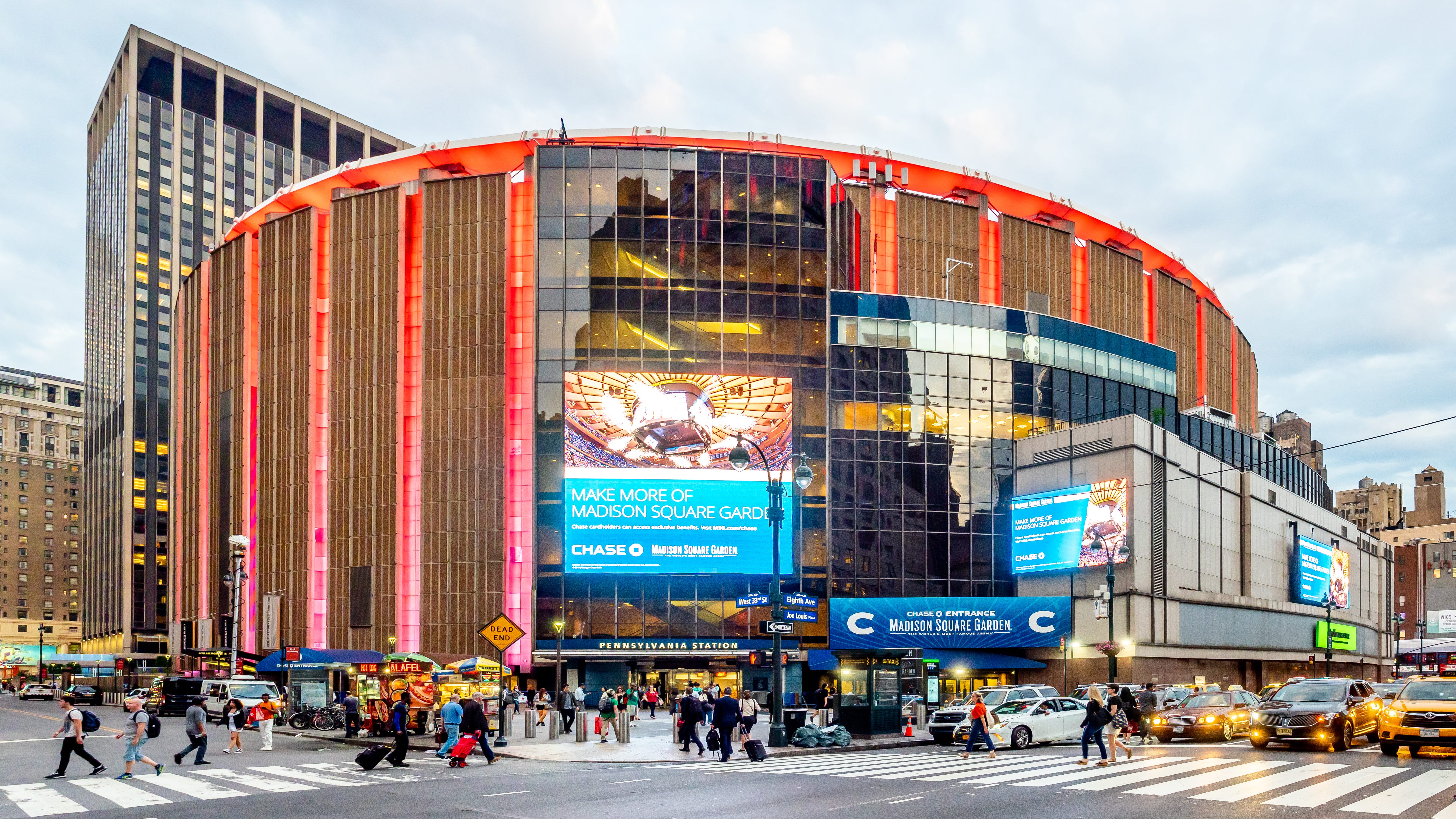
But what really stands out is that after watching the first two road games on TV, I couldn’t watch either of the final two games, both played at Madison Square Garden. Game 3 was relegated to cable — and nobody I knew in our neighborhood in Queens had cable back then. Game 4 was nationally telecast on CBS, but it would air in New York only if the game sold out. And, amazingly, it didn’t. The crowd that afternoon was 16,307, more than 2,000 short of a sellout.
That would be hard to imagine in today’s NBA, when the Knicks routinely sell out regular-season games, to say nothing of playoff matchups. It will cost you more than $4,000 to get into Madison Square Garden for Game 3, the Knicks’ first home game of the NBA Finals.
But the NBA of the late ‘70s was far less popular than today. In fact, I can’t remember any home games televised over the air that season. Instead, I listened to Marv Albert narrate the action, imagining what the inside of Madison Square Garden looked like. Back then, before the three-point shot, the only three-point play was when a player was fouled while making a bucket; Albert’s memorable call was “Yes! And it Counts!”
Another difference: teams would always wear white uniforms at home, and dark ones on the road — unlike today, when anything goes. So, I’d picture the Knicks in their classic white jerseys as I listened on the radio, and I’d see them in their blue ones as I watched every road game on local station WOR (Channel 9).
I’m not the only fan who misses the old jersey delineation.
As fictional ex-NBA player Nick Brandes (Mark Tallman) said in a recent episode of Apple TV’s Your Friends & Neighbors during an appearance on a Sportscenter-type TV discussion, as an annoyed Andrew “Coop” Cooper (Jon Hamm) watches from his couch, “Look, I’m not a crackpot. I just think it should be a finable offense for the away team to wear white uniforms. What are we even doing here? If I turn on the Knicks game and they’re playing the most famous arena, I want to see the core white. Is that too much to ask?”
Anyway, back to Game 4 of that 77-78 Eastern Conference Semifinals. With the Knicks broadcast blacked out in New York, CBS carried the other Eastern Conference series, pitting the Washington Bullets against the Spurs. (Yes, the Spurs were in the East back then. So were the Houston Rockets. And there were some teams you might not have heard of. Does anyone remember the Buffalo Braves?)
My memory of that Sunday afternoon was the Bullets-Spurs game ending before the Knicks matchup, allowing CBS to switch to the last few minutes at the Garden. And this was the first time I saw the Knicks play in their iconic white home jerseys.
That season marked the end of the Red Holzman era, the coach who led the franchise to its only NBA titles, in 1970 and 1973. He was fired after the 1976-77 season, and the team named him a consultant. Except, as Holzman wrote in his autobiography with my father, Harvey Frommer, Red on Red, “I was never consulted. They sort of pushed me downstairs to a little office in an unused portion of Madison Square Garden.” (He would return for a second stint as coach from 1978-82.)
Holzman’s replacement, Willis Reed, who famously gave the Knicks a lift by limping on the court for Game 7 of the ’70 Finals, did a decent job in his first year as coach, leading the team to a (distant) second-place finish in the Atlantic Division behind the Sixers. And when CBS picked up the telecast of Game 4 in the second half, the Knicks were actually in it, despite losing each of the first three games by double-digits. But over the final minutes, they devolved into what Reed called their “their individualistic ways,” and lost by five. Bob McAdoo, one of the best scorers of his era, led New York with 24 points but shot just 41 percent from the floor. A more damning stat for the Knicks: nobody had more than four assists.
Erving, known as Dr. J., had noted this tendency after leading the Sixers to a Game 3 victory with 28 points, 10 rebounds and seven assists. “The Knicks started a shootout,” he said. “They were playing a freelance game.”
That one-on-one style, so prevalent in the NBA at the time, offers another sharp contrast to this year’s Knicks, whose unselfish approach is epitomized by their star center, Karl-Anthony Towns. During their historic playoff run, which includes 11 straight wins after sweeping the Cavs in the conference finals, Towns is essentially playing the point and dishing out assists; while point guard Jalen Brunson is happily giving up that role to help the team win. As Brunson replied to a question about his willingness to do so, when many stars would want the ball in their hands: “One, I’m not a star. Two, I want to win.”
The current Knicks are channeling the championship teams of the early ‘70s, who made sharing the ball a key tenant of their philosophy.
None other than Walt “Clyde” Frazier, the star point guard of those teams, sees similarities.
“I’m mesmerized by the way the team is playing,” he told Jimmy Fallon on an episode of The Tonight Show last month. “Actually, I’m living vicariously through them. They remind me of my team.”
Frederic J. Frommer, a sports and politics historian who has written for the Washington Post, the New York Times, the Atlantic and other national publications, is working on a book on ‘70s baseball.
Oh, you missed the true glory days , probably weren't born then. We spent a lot of evenings in the Garden in the late 60s, even brought our first born to shake WillisReed's hand after one thrilling game. Then, we'd wait in the bar at the Garden for the late train back to Princeton, sharing the room with Bill Bradley and several other stars. The Knicks could be down 14 points with a minute to go and still win!
A Buffalo Braves reference! Bob McAdoo and Ernie DiGregorio! I lived in Western NY when the team was there.