

By Beth Oppenheim
In 1939, more than 900 Jewish refugees aboard the M.S. St. Louis sailed to the shores of Cuba and then the United States, seeking safety from Nazi persecution. Both nations refused to allow the boat to dock, and the refugees were forced back to Europe. Labeled the “Voyage of the Damned,” the M.S. St. Louis has since become one of the clearest and most painful symbols of what happens when a country closes its doors to those in desperate need of refuge.
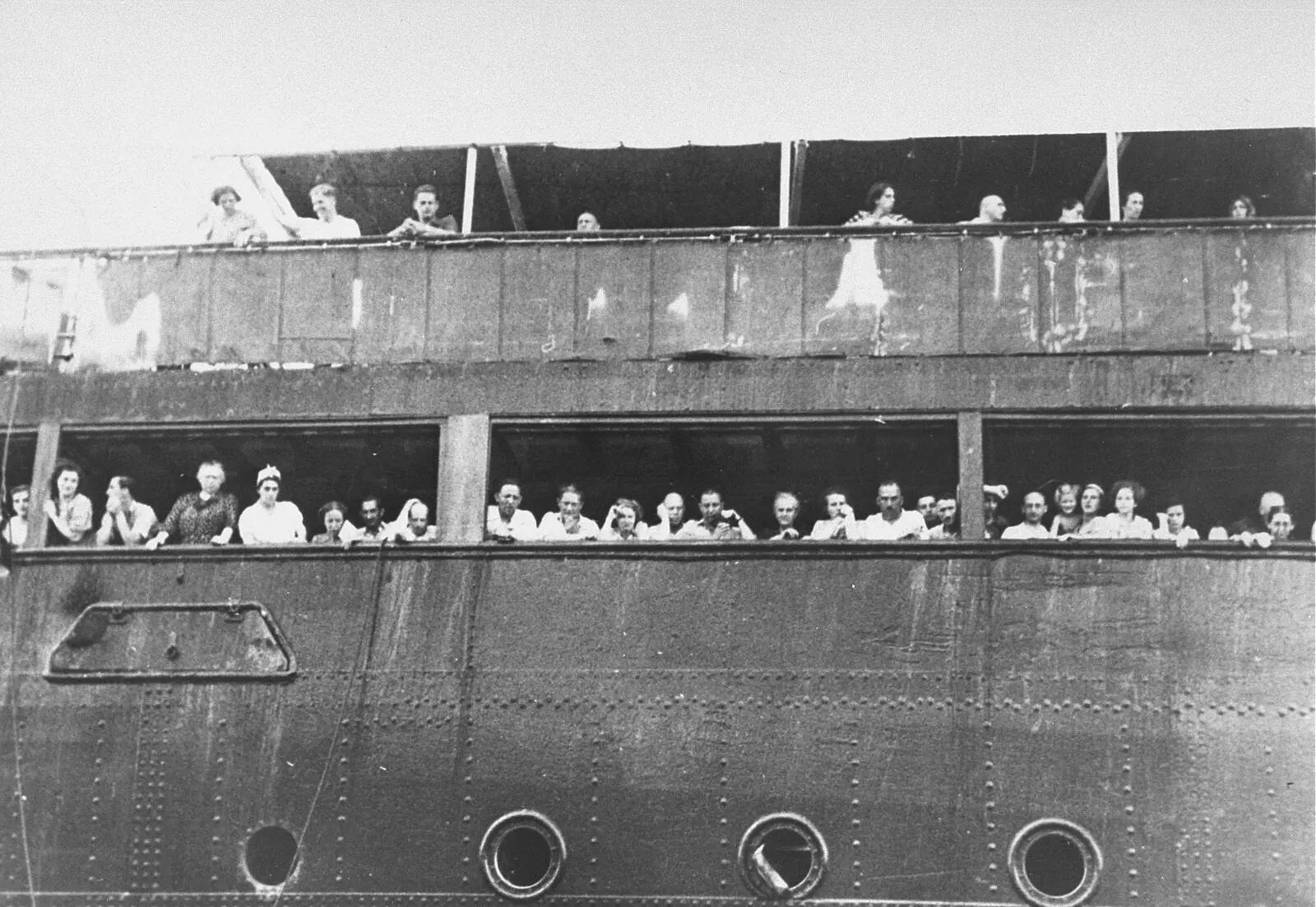
HIAS, the organization that I lead, was there at that moment, advocating to the U.S. and Cuban governments on behalf of the passengers. And, as the ship steamed back to Europe with the passengers still aboard, HIAS mobilized quickly to ensure safe haven for as many as possible. But, unfortunately almost a third of the passengers were killed, after being just miles off the coast of Miami.
That history is not as distant as we might like to believe. As the Supreme Court prepares to hear arguments in Noem v. Al Otro Lado this week, the central question before the justices echoes the same potential for moral failure: Can the United States prevent people fleeing danger from even having the chance to step foot in the country and ask for safety?
In the first Trump administration, the U.S. government implemented policies at the U.S./Mexico border designed to turn people away before they even had an opportunity to ask for asylum. These policies, notably “metering,” and the so-called “Remain in Mexico” program forced tens of thousands of asylum seekers to wait in dangerous Mexican border towns for months or years. They were blocked from presenting themselves at ports of entry and shut out of a system designed to protect them.
The consequences were devastating. Stranded in limbo, people became targets for kidnapping, extortion, sexual violence, and other forms of exploitation. Families who had already fled persecution found themselves exposed to new and often immediate threats, simply because they were denied access to U.S. soil.
Just as in 1939, HIAS and other humanitarian organizations were there to try to mitigate the worst effects of these policies, providing assistance to those affected, many of whom had already survived profound trauma, only to be placed at risk again.
Newer and stronger policies are now blocking all asylum seekers at the U.S.-Mexico border, denying vulnerable people access to the right to seek asylum, which was enshrined in international law in the Universal Declaration of Human Rights and as part of the Refugee Convention of 1951 — a direct outcome of the Holocaust. The parallels to the M.S. St. Louis are not exact, but they are unmistakable.
The Noem v. Al Otro Lado case challenges whether the government can systematically block access to asylum by preventing people from even beginning the process. A ruling that narrows access to asylum would not simply revisit past practices, but it could also pave the way for their return with the backing of the Supreme Court.
History has already shown us the cost of turning people away. The question in front of the Supreme Court is whether we as a nation have learned anything from the failure to protect the refugees aboard the M.S. St. Louis. Who are we as a nation if we close our doors to all? What meaning does the Statue of Liberty hold for our nation if the doors to welcome shut for those who need them most? We hope to never find out.
Beth Oppenheim is CEO of HIAS, an international humanitarian nonprofit that provides services to refugees, asylum seekers, and displaced people.
Shame, shame, shame on the current "administration" and all those who voted for it.
You’re absolutely correct. Preventing refugees from stepping onto US soil and presenting their pleas for refugee status is horrible. It lacks empathy. It lacks compassion.
In addition. It is a “racist” policy because not everyone is being prevented. Trump is allowing White South Africans to apply as refugees from alleged racial discrimination and threats. At the same time, Trump is terminating TPS - temporary protection status — for Somalis. Haitians, and other non-white refugees.
I believe that the Jewish refugees on the M.S.St.Louis were not considered “white people” AT THAT TIME — such was the claim of the KKK and other US white supremacist groups at that time. Even today, there are groups that consider Jewish people to be “mud people.”
So whether the policy is based on racism or a simple lack of compassion — or BOTH — the Trump policy in the Al Otro Lado case should be rejected.