

By Shalise Manza Young
In Georgia, Gov.-elect Keisha Lance Bottoms is only four generations removed from family members who had been enslaved on a plantation just 100 miles from where she will live in the governor’s mansion.
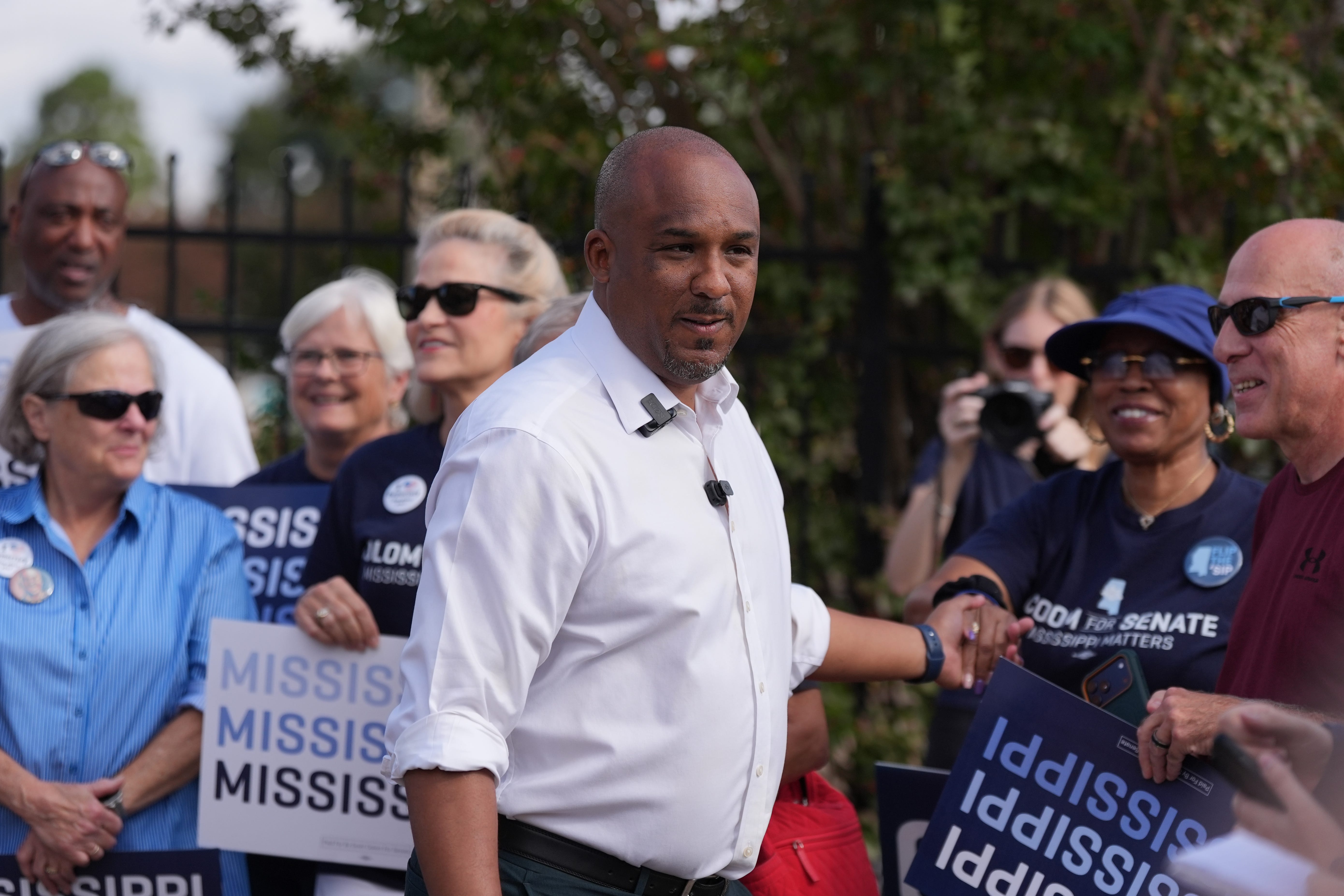
In Mississippi, Scott Colom is projected to pull off a narrow win in the Senate race, which would make him the first Black person to win a statewide race in 145 years. The last Black man the state sent to the Senate was born into slavery.
These stories are fresh reminders of the incredible perseverance of Black Americans and stand as an undeniable rebuke to Chief Justice John G. Roberts Jr., who has spent his adult life working to destroy the 1965 Voting Rights Act, culminating in April’s Supreme Court decision in Louisiana v. Callais.
Opponents of the Voting Rights Act might have thought they’d, at long last, rid the country of the scourge — the scandal! — of Black Americans exercising their most basic right as citizens and, worse, having people in Congress who represented their interests and, increasingly, actually looked like them.
But disdain for Black voters blinds people to the miracle of Black Americans: They have made a way out of no way for centuries. This election cycle would be no different.
When the enslaved were given scraps and offal for food, they turned them into soul food, the only true American cuisine. When they were systematically denied the ability to read, they turned their stories into an oral tradition that is the basis of gospel and soul music. When Black riders had enough of sitting only in the back of buses in Montgomery, Alabama, they boycotted for 381 days, leading to huge financial losses for the city-owned bus line.
Our grandmothers, mothers, and sisters are at the vanguard of everything from fashion to nail art to dance to nation-changing movements.
Every societal and political gain Black Americans have made came only after a fight. Our blood, our sweat, our tears, but never just our gain. Look no further than contemptible loser Vivek Ramaswamy, who once called affirmative action “a cancer on our national soul.” Ramamswamy was able to be born in the United States only because of the civil rights movement and the loosening of immigration laws that allowed his Indian parents to make a life in Ohio.
In Callais, the majority of the court agreed with the “non-African-American” voters who brought the case that Louisiana, the population of which is roughly one-third Black, having two majority-Black districts out of its six – literally one-third of the seats – was racist against them, and essentially ended Section 2 of the VRA. Section 2 ensured that the votes of minority citizens weren’t diluted, and that they are able to have fair representation in legislative bodies.
But Black folk did not take kindly to seeing the VRA, passed just 61 years earlier, in tatters. And they made a way.
The early numbers show that they voted in massive numbers. The results followed, and not just in Colom’s stunning upset and Lance Bottoms’s history-making win: Annie Andrews defeated the comically unprepared Darline Graham for a Senate seat in South Carolina; in Texas, the governor, lieutenant governor, and one senator will be Democrats; and in Michigan, fears that Abdul El-Sayed would not capture enough of the Black vote seem to have been unfounded.
Even in Louisiana, which Donald Trump won by 22 points in 2024, Democrat Jamie Davis lost his race for Senate by less than 2 points (another race, like Angie Nixon’s in Florida, that was given little to no financial support from Senate Minority Leader Chuck Schumer and the Democratic Senatorial Campaign Committee).
This election cycle revealed the Democrats’ own problems with racism. Sure, the Dems aren’t trying to actively harm Black people like the MAGA set, but the lack of investment this year and previous years in the South, where over 40 percent of Black Americans still live, is a glaring issue.
Take it from a track coach: You cannot win any race that you do not enter. The treatment — or mistreatment — of Nixon, Davis, and even Colom, who only got attention in the final weeks before Election Day, is preposterous.
This isn’t new to Black voters. Very few candidates can win without us, so they come to our churches and community centers for photo opportunities and to shake a few hands, and maybe talk about income inequality, environmental racism, or making college more financially accessible. Then when they win there’s little, if any, follow through on promised policies that would help those same people — and again, help everyone else as well.
So we’re clear: Yes, it is amazing what Black voters did. In the opening essay for her seminal “1619 Project,” Nikole Hannah-Jones wrote that America wasn’t a democracy until Black people made it one.
And they did it with all manner of obstacles in the way.
In Ohio, early voting is limited to just one site per county. That doesn’t look like intentional suppression in Vinton County, which has fewer than 13,000 residents and only 1 percent identify as Black; but in Franklin county where roughly a quarter of the 1.37 million residents are Black, it most certainly does.
Mississippi’s Republican secretary of state paid the credit bureau Experian $50,000 to access unverified (and frequently incorrect) personal data, leading to 230,000 voters – about one out of every nine in the state — being booted from the rolls before this year’s primaries, in a state where 37 percent of residents are Black. That meant thousands of provisional ballots, called affidavits, were cast, which is slowing the final counting.
Eliminating barriers like those via passage of the John Lewis Voting Rights Act should be near the top of the Dems’ to-do list once they are sworn in come January.
But before then, a message for John Roberts on behalf of Black Americans, particularly the 90-plus percent of Black women who consistently turn out for Democrats: may your milk always be curdled, your steaks burnt, your bed lumpy, and your sleeps disturbed by the spirits of Medgar Evers, Fannie Lou Hamer, and John Lewis.
You didn’t win, not this time.
Shalise Manza Young is an award-winning writer focused on the intersections of race, gender, politics, and sports. She is the director of track and field at Phillips Andover Academy. She and her family, including Contrarian Pet of the Week Coco, live in Boston. You can find her on Bluesky @shalisemyoung.
Every few elections, our message to black voters is "Oh, please save us from ourselves."
Wouldn't it be nice if we,could give them something in return?
Great article, Shalise. Yes, Roberts has spent his entire career trying to decimate liberal minded people's choices and bolstering fascists.
There are many of Roberts' decisions I hope he chokes on beside the Callais decision. There are the Citizen United, the Dobbs and the orange convicted felon decisions, among many others.
He will go down in history as the most corrupt chief "justice," along with his two main cohorts, Thomas and Alito. And rightly so.