

By John F. Terzano
As America marks its 250th anniversary, we will celebrate the courage of those who have defended our nation. We will hear speeches about liberty, patriotism, and service. Flags will fly. Bands will play. Politicians will praise their courage and sacrifice. Yet few, if any, will quote Abraham Lincoln’s pledge: “To care for him who shall have borne the battle, and for his widow, and his orphan.”
Those words represent the highest ideal of a grateful nation. They express a simple moral truth: that a Republic owes an enduring debt to those who risk everything in its defense. That is not our reality. Too often, America has failed to keep Lincoln’s promise. From the Revolutionary War to Iraq and Afghanistan, veterans have repeatedly discovered that, while the nation relies on them in wartime, it too often forgets their service in peacetime.
The role of veterans in a Republic is unlike that of soldiers in an empire. In a Republic, soldiers are not instruments of a king. They are citizens. They leave farms, factories, classrooms, offices, and families to defend a nation built on the idea that a government derives its power from the people. Citizen soldiers do not serve a monarch or a party, but the Constitution.
That makes the treatment of veterans a moral test of the Republic itself. When a nation asks its men and women to risk their lives, endure trauma, suffer wounds, and sacrifice their future, it assumes a debt that cannot be paid by parades and platitudes.
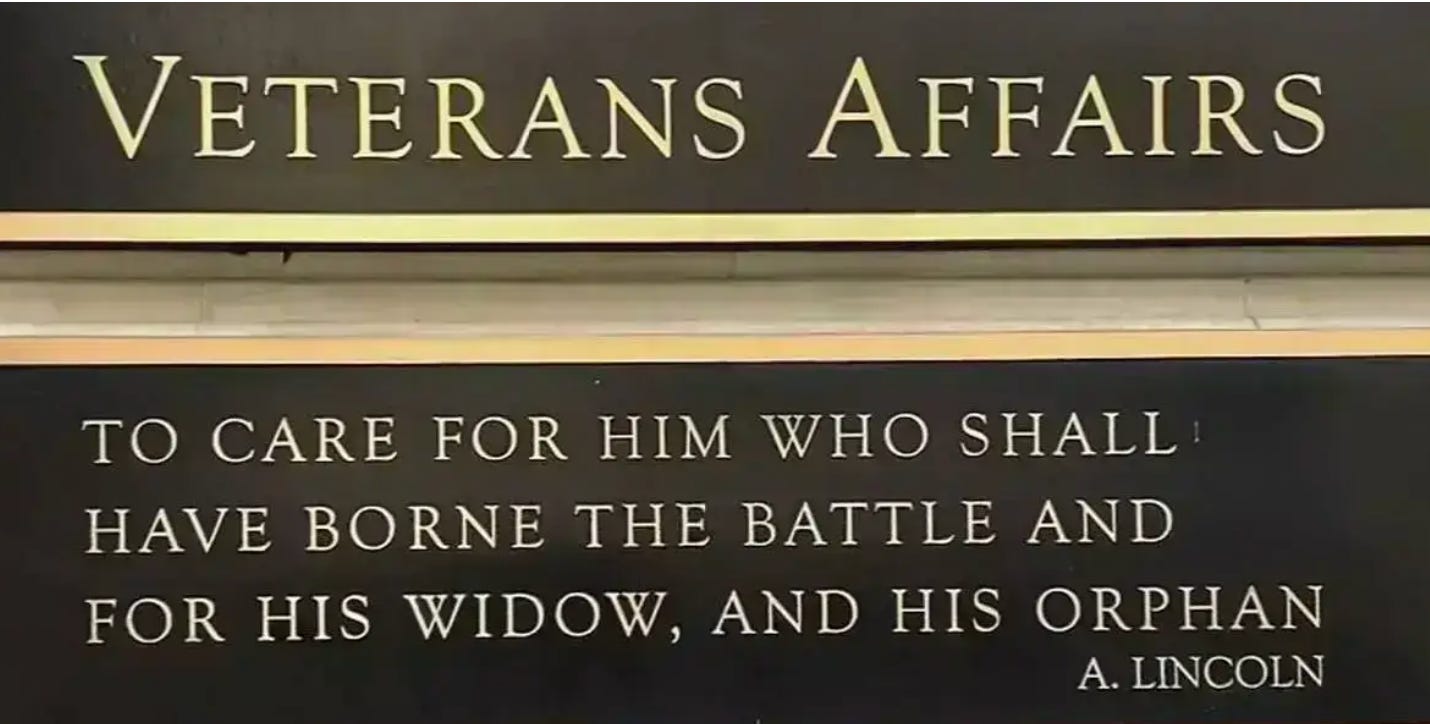
Yet throughout our nation’s history, a familiar pattern has emerged. Citizens serve, fight, and sacrifice. After the war ends, they must fight again — for medical care, disability benefits, education, housing, pensions, recognition, and (more often than not) simple dignity.
Civilians become soldiers through months of training, discipline, and sacrifice. They learn to place duty before self, and the mission before personal interest. They accept the possibility that they may never return home. But when the fighting ends, another difficult transition begins — one far less understood. Soldiers must again become citizens. They return to families and communities, often carrying wounds that are visible, invisible, or both. For many, that journey becomes the hardest mission they will ever face.
In some ways, America has become remarkably skilled at honoring military service. Across the country, we dedicate memorials, erect statues, engrave names in granite and marble, and gather beneath waving flags to remember those who served. These tributes matter. They preserve memories and express gratitude. But it is not enough. Too often, we have shown a greater willingness to build monuments to those we lost than to fulfill promises to the living. The true memorial to those who bore battle is not carved in stone. It is found in whether the nation keeps faith with them after the ceremonies are over.
The truth is, our nation is far better at sending citizens to war than caring for them when they return.
This pattern of neglect and indifference began with our founding. The Republic’s first citizen soldiers, who won American independence, served without adequate food, clothing, pay, or supplies. They endured freezing winters, disease, and desperate conditions. When they returned, some were burdened by debt and taxes imposed by the government to pay for the war they had just fought.
Shays’ Rebellion, led by Revolutionary War veterans, sounded an early warning. Men who had fought against British tyranny found themselves facing economic ruin in the country they had helped create.
During the Civil War, another generation sacrificed on a scale the nation had never seen. Hundreds of thousands were killed. Many more were wounded, disabled, or psychologically scarred. Union veterans eventually received pensions, but the system was unjust. Black veterans, who fought to preserve the Union and destroy slavery, returned to a nation that denied them the very citizenship, equal protection, and voting rights they had helped secure through the 13th, 14th, and 15th Amendments. Their service did not shield them from discrimination, violence, or exclusion.
After World War I, citizen-soldiers returned from war expecting their service would be honored. Instead, many faced unemployment and hardship. In 1924, Congress voted to give those who had served compensation for wages lost, which remained unpaid. In 1932, in the midst of the Great Depression, thousands of veterans came to Washington to seek their promised payment.
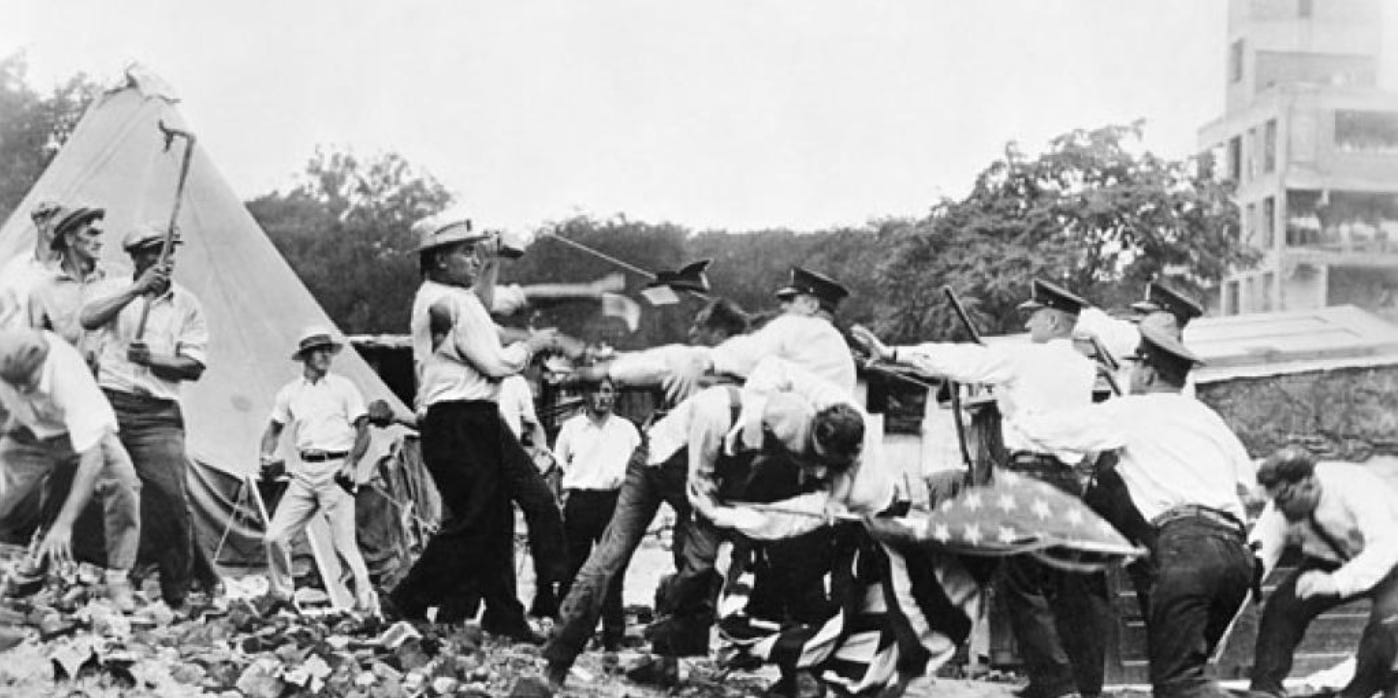
The government’s response stands as one of the most shameful episodes in American history. Then Army Chief of Staff General Douglas MacArthur, his aide Major Dwight Eisenhower, and Major George Patton — men who would later gain fame and honor — sent infantry and cavalry troops alongside tanks to disperse the veterans and destroy their camps. Men who had fought for democracy overseas were treated as the enemy at home, simply for demanding justice.
World War II was the great exception. For one brief period, the nation fulfilled its moral covenant. Through the GI Bill, it invested in those who had served, paid the tuition of veterans attending college and gave them a monthly living expense, which enabled millions of soldiers to attend virtually any university. They were granted access to vocational training, home loans, and other forms of support that helped transform individual lives and the country itself.
Through access to higher education, low-interest home loans, job training, and other benefits, veterans were given the opportunity to build lives of purpose and prosperity. This investment did more than revive veterans and their families — it created the largest, strongest middle class in American history. It reinforced democratic stability and positioned the United States as the world’s dominant economic, political, and military power. America’s postwar leadership was built not only on military success but on its willingness to invest in the men and women who had secured that victory.
Yet even the greatest veterans’ program in American history carried a profound injustice. For many Black veterans, the promise of the GI Bill ended where Jim Crow began. After risking their lives to defeat fascism overseas, they returned to racial violence, discriminatory lending, segregated colleges, and officials who routinely denied them the benefits they had earned. Black veterans had worn the same uniform, faced the same enemy, and sacrificed their lives alongside their white comrades. Coming home to a country that disregarded their service and treated them as second-class citizens became a catalyst for the modern Civil Rights Movement. Indeed, President Truman’s 1948 order desegregating the armed forces signaled that the nation could no longer reconcile military service with institutional racism. Progress came, but only because veterans and civil rights leaders demanded that America live up to its ideals. For a brief period, the nation understood that caring for veterans was neither charity nor political largesse. It was a solemn moral obligation, and one of the wisest investments America ever made in its own future.
This post-World War II response remains the exception rather than the rule.
Within a matter of years, Korean War citizen soldiers did not receive the same national embrace afforded the “Greatest Generation.” They returned to an apathetic public that largely viewed Korea as a limited “police action” rather than a war worthy of national remembrance. Overshadowed by the triumph of World War II and followed closely by the turmoil of Vietnam, they became known as veterans of the “Forgotten War.”
Their sacrifices were no less profound. They fought in some of the harshest conditions American troops have ever endured, including the brutal winter campaign at the Chosin Reservoir, where subzero temperatures caused frostbite, hypothermia, and trench foot, leaving many with lifelong disabilities. Thousands were killed or wounded, while those captured suffered years of torture, starvation, and forced indoctrination that produced lasting physical, neurological, and psychological injuries.
Like those before and after, many Korean veterans returned carrying invisible wounds that the nation neither understood nor acknowledged. The Veterans Administration offered scant (if any) psychiatric care for those suffering combat trauma — then labeled “battle fatigue” or “operational exhaustion.” Former prisoners of war faced ignorance and indifference, waiting decades before Congress recognized the medical and psychological consequences of their captivity. Not until the Former Prisoners of War Benefits Act of 1981, nearly three decades later, did many receive acknowledgement of service-connected illnesses.
During Vietnam, this troubling pattern continued, as my generation made the same transition — from citizen to soldier and back again. Though the Vietnam era is remembered as the age of the draft, nearly two-thirds of the more than nine million Americans who served enlisted voluntarily (as opposed to World War II, when roughly two-thirds of the soldiers were drafted). The nation mobilized extraordinary resources to wage war, yet once again failed to recognize or tend to the inevitable wounds of those who had waged it. We served in a war shaped by lies and failed leadership. Despite answering the nation’s call of “ask not what your country can do for you—ask what you can do for your country,” we came home to indifference, silence, or outright hostility. The country struggled to separate the war from the warrior.
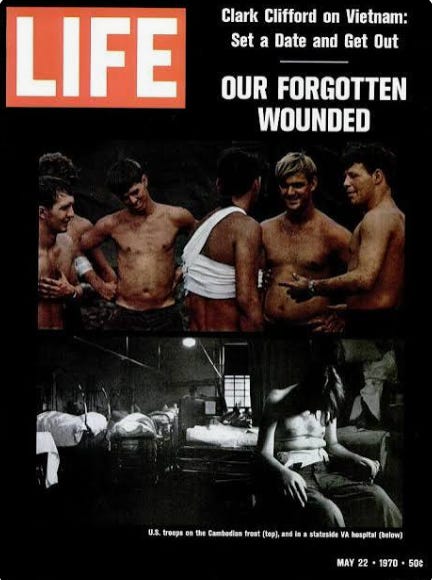
We also returned to a veterans’ healthcare system in crisis. In May 1970, Life magazine shocked the nation with its exposé, “Our Forgotten Wounded,” documenting the appalling conditions inside the Bronx VA Hospital. The photographs and stories revealed paralyzed veterans confined to filthy wards, surrounded by leaking ceilings, overflowing waste, and rats scurrying across hospital floors. The images shattered the myth that America cared for those it ships off to war and exposed our government’s shocking negligence.
Those revelations galvanized Vietnam veterans who refused to accept abandonment as the price of service. We organized — not only to protest the war, but to demand that our country fulfill its obligation. I was privileged to help found Vietnam Veterans of America; the nation’s only congressionally chartered organization created by and for Vietnam vets. We fought again; this time to transform the government’s and public’s apathy into public policy. We advocated for better healthcare, disability compensation, readjustment counseling, and employment opportunities.
Our advocacy extended beyond visible wounds and tangible benefits. Vietnam veterans had to fight for recognition of post-traumatic stress disorder (PTSD) long before it became an accepted diagnosis. We demanded accountability for the devastating effects of Agent Orange and other toxic exposures. Too many officials dismissed our illnesses as unrelated to military service. The struggle for treatment, compensation, and acknowledgment became another campaign in a battle that has never truly ended.
A new generation of American citizen-soldiers answered the call after September 11, leaving their livelihoods to fight in Iraq and Afghanistan. Many served multiple combat deployments over two decades, carrying the burdens of repeated separations, physical danger, and prolonged war. The pattern continued: their service ended, but they faced the same difficult transition back to citizens that generations of veterans before them had endured.
This time, however, public language had changed. Americans became quick to say, “Thank you for your service.” Troops were applauded in airports, honored at sporting events, and routinely praised by politicians. Yet while the words had changed, the underlying obligation had not.
Behind the public rituals of gratitude, veterans still had to fight for the care they had earned. They returned home with traumatic brain injuries, catastrophic physical wounds, PTSD, depression, anxiety, and the burdens of multiple combat deployments. Their families inherited those invisible wounds as well. Too many veterans experienced homelessness, addiction, unemployment, and suicide, while others found themselves trapped in a healthcare system unable to meet their needs.
The gap between rhetoric and reality became painfully clear in 2014, when CNN exposed a scandal at the Phoenix VA Medical Center. Whistleblowers revealed that veterans had been placed on waiting lists designed to conceal months-long delays in care, and at least forty veterans had died while awaiting appointments.
Then came burn pits — another toxic exposure battle that echoed Agent Orange. Once again, veterans had to prove that what they had breathed, lived near, and endured in war zones had accompanied them home. Once again, recognition only arrived after years of hard-fought advocacy.
This recurring American pattern reveals something important about the Republic, which we must not deny. Supporting veterans cannot mean praising them when it is politically convenient or using them as symbols while ignoring their needs. It cannot mean wrapping speeches in patriotism while forcing the wounded to navigate our government’s endemic disregard, denial, and bureaucracy.
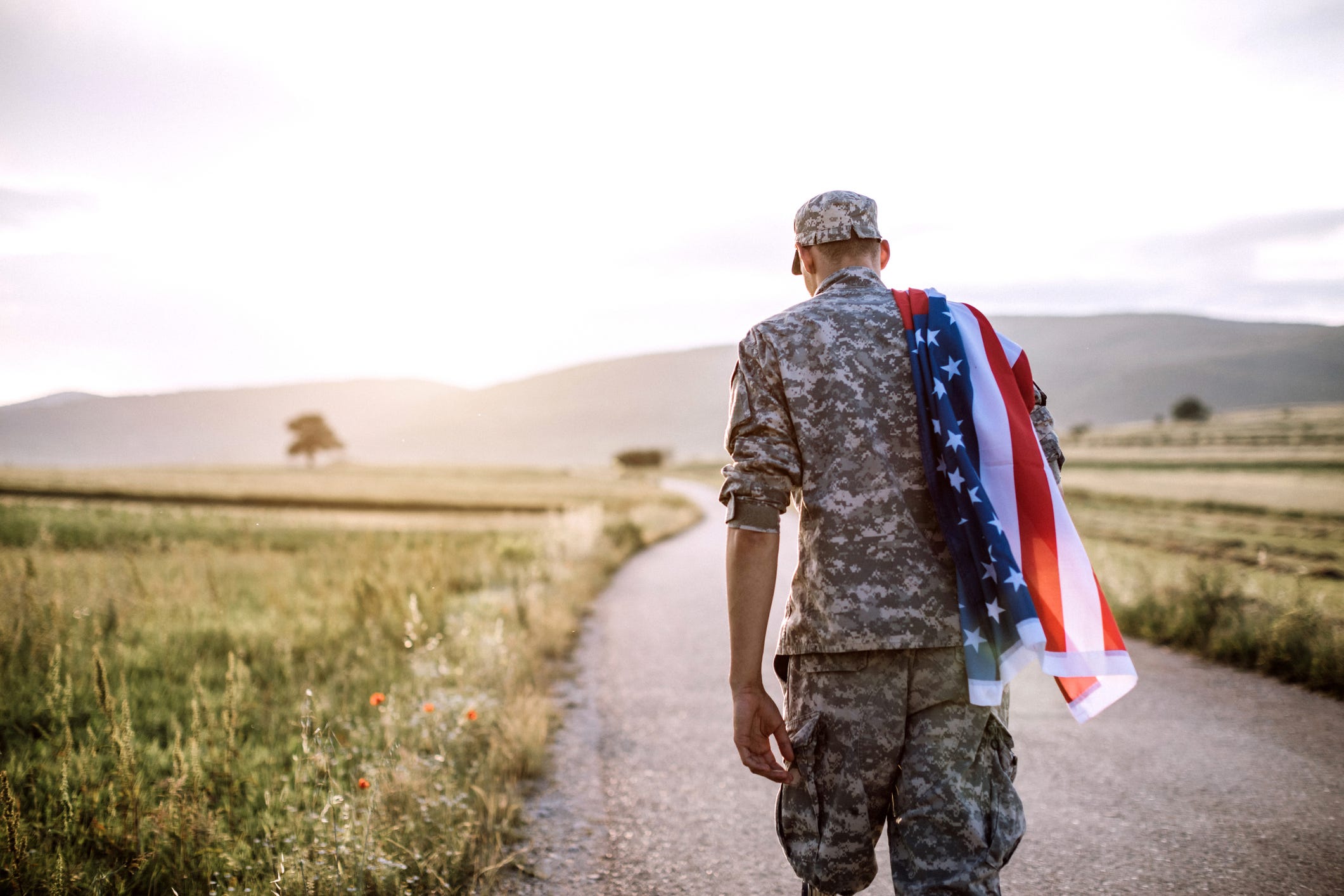
If America is to honestly celebrate 250 years of independence in earnest, it must honor the people who have borne the cost of battle long after the guns fell silent. That means timely medical care, mental health treatment without stigma, and recognition of toxic exposures. It means housing, education, employment support, and disability benefits.
It also means asking hard questions before wars begin. One of the best ways to honor veterans is to stop creating new generations of them through reckless, unnecessary, or dishonest wars. A nation that sends citizens into combat has a duty to explain why in full candor, and to understand the human consequences before the first shot is fired.
The millions covered above fulfilled their civic duty — not to a sovereign, but by swearing allegiance to our flag and Constitution. That oath deserves more than applause. It deserves a reciprocal commitment from the Republic. Veterans have upheld their end of the bargain for 250 years. From Valley Forge to Gettysburg, from the trenches of Europe to the beaches of Normandy, from Pearl Harbor to the sands of Iwo Jima, from the Chosin Reservoir to Khe Sanh, from Fallujah to Kabul, they have answered the call. The question now is whether the Republic they defended will finally uphold its end — its moral obligation — of that commitment.
As America turns 250, may we remember that patriotism is not measured by how loudly we cheer on Memorial Day, Veterans Day, or Independence Day. It is measured by how faithfully we care for our citizen soldiers when the ceremonies are over, when the speeches end, when the flags are folded.
Wars do not end when supposed peace treaties are signed. Wars live on in the lives of those affected. For many veterans, that struggle continues for a lifetime.
A grateful Republic should not make them fight that battle alone.
John F. Terzano lives in Ludington, Mich., where he works as a social justice and human rights advocate, locally and around the world.
This is by far the very best article I have ever read on America's wars and especially the surviving veterans. Thank you, Mr. Terzano.
I am in total agreement here. Our veterans deserve much more. Better healthcare that truly lives up to its purpose and promises. Educational opportunities for those who have served.