


Federal Judge Charles R. Breyer’s Sept. 2 ruling that the Trump administration’s deployment of federalized troops to Los Angeles was unlawful will not end there; the case will be appealed, and the U.S. Supreme Court will almost certainly have the final word.
In the coming weeks, pundits on news shows and social media will debate the ruling and its prospects on appeal. A few former military leaders might join the discussion, but their number will be limited, underscoring the larger reality: Most retired senior commanders remain silent about Donald Trump’s politicization of the military.
That silence, more than the televised arguments or political commentary, is the defining measure of this moment. In today’s political climate, any retired officer who objects risks being branded partisan. Some, such as Gen. Martin Dempsey, former chairman of the Joint Chiefs of Staff, have warned that public criticism of a president could harm the institution’s credibility. Yet the result is the same: a silence that leaves the politicization of the military unchallenged, with grave implications for national security.
The consequences are already clear. What began in February with the dismissal of Gen. Charles Q. Brown Jr., chairman of the Joint Chiefs of Staff, and the firings of Adm. Lisa Franchetti, chief of Naval Operations, and Gen. James Slife, vice chief of staff of the Air Force, was not a set of isolated moves but the opening phase of a sustained campaign. The unexplained April removal of Gen. Timothy D. Haugh, head of both the National Security Agency and U.S. Cyber Command, showed the pattern hardening.
Each month since has confirmed that silence has bought nothing—not temperance, not reconsideration, not even pause. The White House has grown more emboldened, reading the absence of collective objection as license to act without restraint.
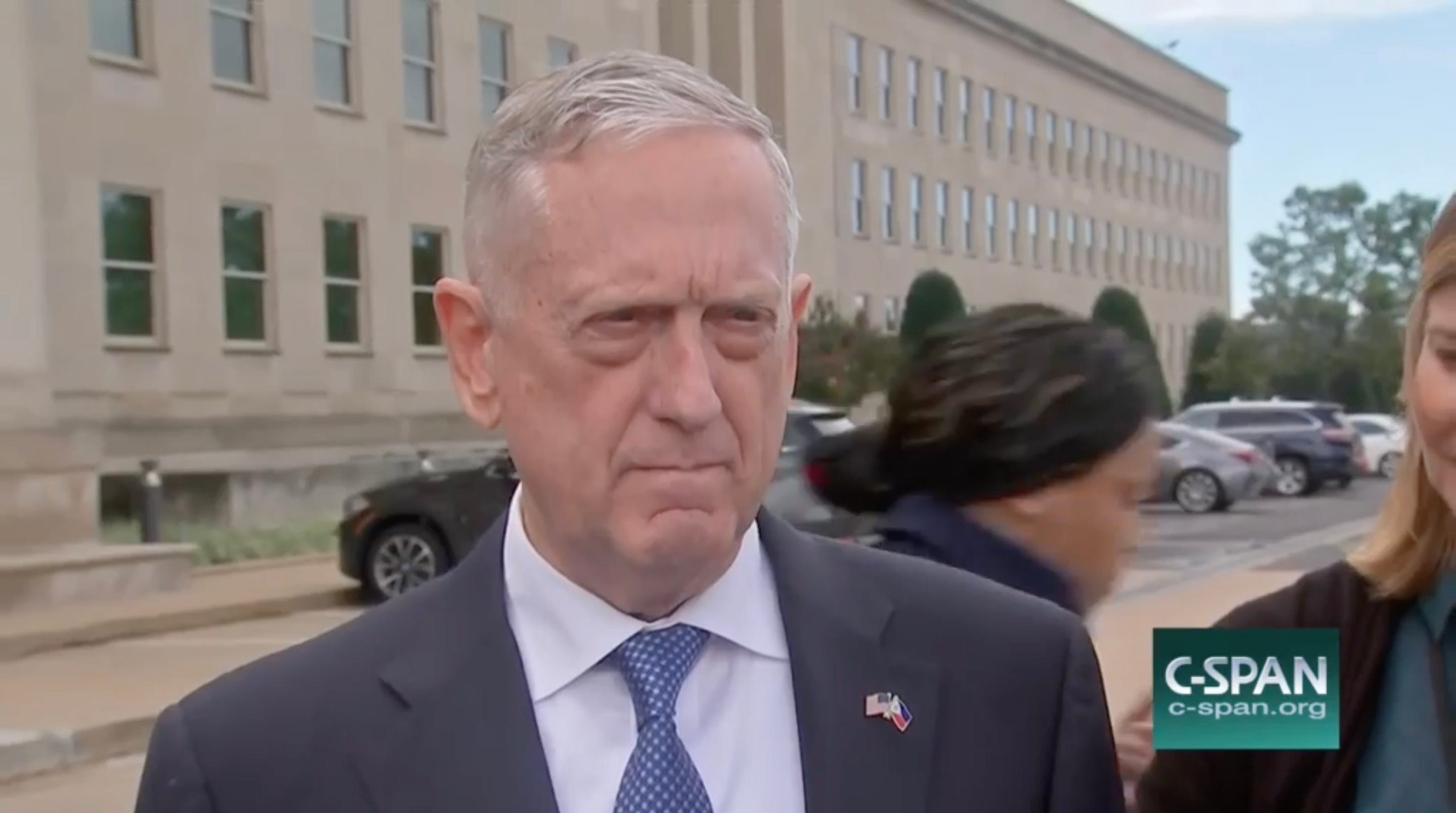
To be sure, there have been exceptions: Maj. Gen. Randy Manner, former acting vice chief of the National Guard Bureau, described Trump’s order to establish a National Guard “quick reaction force” as unneeded and dangerous; Maj. Gen. Paul Eaton, who commanded the Coalition Military Assistance Training Team, and Lt. Gen. Jeffrey Buchanan, former commander of U.S. Army North, described the Los Angeles deployments and officer purges as politicization; Adm. William McRaven, former commander of U.S. Special Operations Command, argued that hollowing out diplomacy and development would put Americans at risk; and former Defense secretary Gen. James Mattis urged congressional hearings into the “reckless” firing of senior officers.
These voices matter, but they remain individual interventions tied to specific episodes. What has been absent is a broad, sustained effort—retired general officers speaking collectively, in measured but regular fashion, to make clear that politicizing the military is wrong.
The concern among some, such as Dempsey, that public criticism risks drawing the military into politics reflects a valid principle but not the current reality. Trump has already drawn the military into politics—through purges, loyalty tests, and deployments for domestic theater. In such circumstances, silence does not safeguard neutrality; it allows politicization to deepen.
Tradition is sometimes offered as another reason for staying quiet. The military has long taught its leaders to avoid even the appearance of partisanship, and restraint in public life after retirement has become habit. But traditions are not absolutes; they exist to protect constitutional order, not to excuse silence when that order is under attack. Clinging to custom in the face of open politicization turns a professional ethic into a shield for inaction.
The profession’s “apolitical” ethic is often cited as justification. It forbids endorsements, rallies (while in uniform), fundraising, or the use of uniform for electoral effect. But it does not forbid a collective statement that names boundaries. If constitutional order is under stress, which obligation is senior: preserving neutrality or protecting the force’s nonpartisan character?
Scope is sometimes invoked as a rationale: retired general officers, it is argued, should not weigh in on policy debates over tariffs, immigration, or foreign affairs. But politicization of the armed forces is not policy—it is a professional boundary. Removing officers for loyalty tests or deploying troops for partisan display corrupts the chain of command. On that line, silence is abdication.
If restraint, tradition, apolitical norms, and scope do not justify silence, then what remains is responsibility. Retired leaders cannot prevent a president from exercising lawful authority, but they can insist on how it is used. They can define the boundaries between civilian control and partisan abuse without endorsing parties or candidates. The issue is not justification but structure—a way to make their collective duty visible.
In an earlier era, a single op-ed or interview from a respected general might have been enough to command attention. But today, one-off statements, however principled, are quickly drowned out in the din of politics and social media.
Just as no hill is taken by a lone soldier, the defense of professional boundaries requires unified action. Former secretaries of defense, retired chairmen of the Joint Chiefs, and senior combatant commanders have shown in past crises that they can speak together when the stakes demand it. The model need not be elaborate: a concise set of principles, reaffirmed in steady fashion. The power lies less in the message’s length than in the breadth of signatories and the discipline of consistency.
History shows the value of clarity at moments when law is insufficient. During the 1954 Army–McCarthy hearings, Joseph Welch, the Army’s chief counsel, confronted Sen. Joseph McCarthy with a question that carried no legal force but that drew a boundary the public could understand: “Have you no sense of decency?”
The military today needs respected voices to state, without equivocation, that politicizing the armed forces is wrong. What is required is not partisanship but an organized, collective effort to affirm that the military belongs to the nation, not to any one man. Silence, by contrast, defends avoidance, not apolitical service.
Brian O’Neill, a retired senior executive from the CIA and National Counterterrorism Center, is an instructor on strategic intelligence at Georgia Tech. His Safehouse Briefing Substack looks at what’s ahead in global security, geopolitics, and national strategy.

Excellent. As a vet, the silence from (retired or discharged) service members is appalling, Adam Kinzinger (for one) excepted.
Yes. Military must be apolitical, until we remember our oaths to protect and defend the Constitution of the United States of America against ALL enemies. It is time to remember and resist.
Special disgust for military and veteran trump supporters. You are liars and traitors.
"politicization of the armed forces is not policy—it is a professional boundary. Removing officers for loyalty tests or deploying troops for partisan display corrupts the chain of command. On that line, silence is abdication." Couldn't have said it better.
With the full support of the six Christian Nationalists on the Supreme Court and GOP Congressional members the Felon is making the United States an authoritarian theocracy, with the Felon as leader and the American oligarchs running the Country.