


This political moment makes sharing my weekly recipe with you feel, frankly, a little silly. There’s so much going on right now that expecting people to focus on what’s for dinner seems weirdly ambitious.
But here’s the thing: We all have to eat. On good days and bad, in joy and in grief, the body has its needs. And these days, I’ve found that helping the people around me figure out how to meet those needs can feel like a surprisingly radical act.
So let’s talk a little bit about hosting. Usually, it’s framed as something soft, domestic, and strictly apolitical, but the truth is that there’s a great deal of power in deciding to have people over. When our public spaces are surveilled, restricted, or dangerous, the act of gathering becomes a radical one. Hosting, in these moments, is more than a frivolous distraction. It creates the critical infrastructure of resistance.
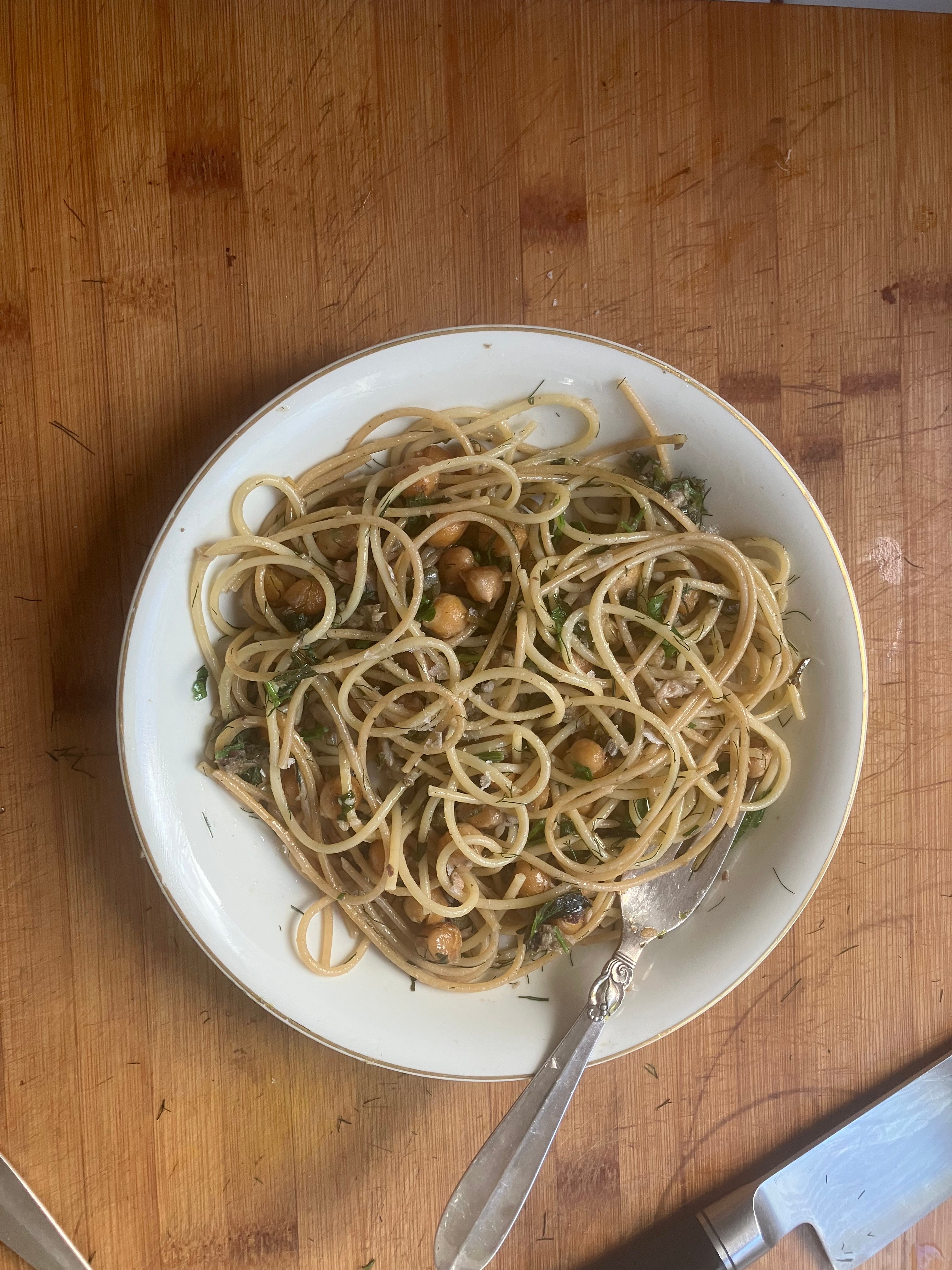
The New Year’s Resolution That Changed My View of Having People Over
Every year, I try to pick out a fun challenge for myself as a New Year’s resolution. One year, it was to eat every unfamiliar fruit I came across (delightful!), another to read a book from every country (still working on it). And last year, I challenged myself to host an event every month.
It didn’t have to be anything crazy. But, at least once a month, and sometimes, as it turned out, more often, I needed to open my home — to strangers, acquaintances, or people I loved. One month, I hosted a bad movie night, another, a dinner party attended by women who wrote books I enjoyed. But the kind of hosting I did most often wasn’t anything formal; it was sloppy, last-minute, unplanned.
In the spirit of my resolution, I would have friends stop by for a coffee if I ran into them in the neighborhood, invited other moms of toddlers to come co-work while our children ran screaming loops around our laptops. These kinds of gatherings, informal and casual and overflowing with messy joy, did so much to sustain my community over the chaos of the past few months. And they got me thinking about the history of gathering in tumultuous times.
The Quietly Political History of Hosting
Americans have been coming together over food and snacks to talk politics since it all began. In the 19th century, abolitionism spread through parlor gatherings in private homes, often organized and hosted by women. Attendees listened to traveling speakers, read anti-slavery pamphlets, and formed networks that would later grow into formal abolitionist societies. The domestic sphere became a place where people could gain a political education on the question of slavery in a time when public organizing was often met with violence.
More contemporary American political history has been characterized by gatherings as well. During the civil rights movement, the organizational work for actions like the Montgomery Bus Boycott happened in churches and homes where people could speak freely. ACT UP planned direct action against AIDS in domestic spaces, meeting in people’s homes to share medical information, political strategies, and care for the sick. When disaster strikes, mutual aid often comes in the form of food — care that is vital for physical wellness and that nourishes the spirit.
The food at these gatherings was, by necessity, comfort food — anything that could feed a lot of people cheaply, sit out for a long time, and felt safe and familiar, like home. For the abolitionists, that might have been brown bread and bean stew; for the civil rights activists, black-eyed peas and cornbread; and for ACT UP activists a loaf of bread and a pot of lentil soup. Mostly for me, these days, it’s a big batch of simple pantry pasta.
Pantry Pasta: The Ultimate Meal for Disorganized Organizers
I love a good pantry pasta because it’s infinitely flexible. Feeding vegetarians? Double the chickpeas, leave out the tinned fish. Grocery bills too high? Scavenge some dandelion greens instead of buying herbs. Got gluten-free folks around the table? Well, that one’s a little trickier, but these days they’re doing impressive things with rice and lentil pastas.
The medium is definitionally loose, a recipe for success that I reach for again and again when gathering friends and future friends around the table, and it easily checks all the boxes for perfect political organizing food. Cheap, fast, and forgiving, it’s a great way to get dinner on the table and bellies full so your mind can focus on more important things.
It is, in my humble opinion, the perfect recipe for our trying times. I hope you agree — and that, this month, at least, it inspires you to have a few folks over.
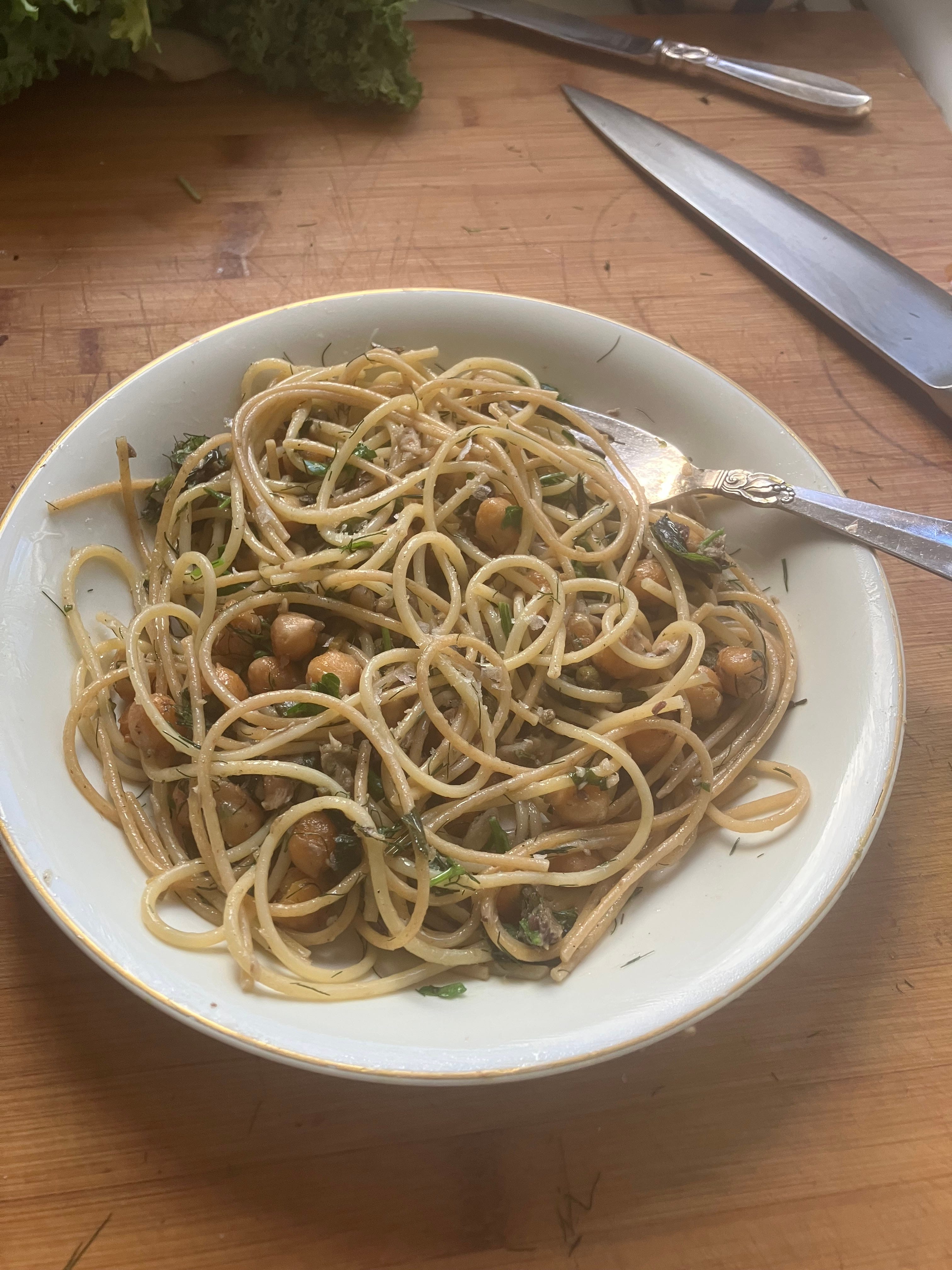
Make-it-Anytime Ten-Minute Pantry Pasta
Perfect for a protest planning meeting, solidarity lunch, or anytime you need something quick, tasty, and nourishing, this pantry pasta is here to support all your sloppy hosting needs.
Ingredients:
1 can of chickpeas or white beans
Pasta of choice, about 2-3 ounces per person
1 tin tinned fish of choice, leave out if you’re hosting vegetarians
1 tbsp per guest of something pickled and salty, capers, olives, preserved lemons, or even chopped up cornichon pickles will work here
1 clove of minced garlic per guest
Half a lemon or a teaspoon of your favorite vinegar
A handful of whatever fresh greens you have on hand — arugula, parsley, dill, or mint
Method:
Drain your beans and try to get rid of as much of the liquid as you can. Leave the beans in a colander or on a paper towel to drain while you bring a pot of water to a boil.
Heat up a few glugs of oil in a heavy-bottomed pan and add your drained beans. Leave to cook on medium high heat for about five minutes, stirring as minimally as possible.
Once your water is boiling, salt it well and add your pasta.
Take your chickpeas out of the pan, lower the heat, and add your garlic. Once the garlic smells aromatic and delicious, stir in the capers and your tin of fish, and take the pan off the heat.
Put the cooked pasta into the pan with a glug of vinegar and a handful of herbs. Put into bowls and top with your crispy beans. Share, soothe, and enjoy.
Emily Beyda’s writing has appeared in the Los Angeles Times, Built, Refinery29, Smartmouth, Fodors, the Thrillist, the Austin Chronicle, and more. Her novel, “The Body Double,” was published in 2021.

I would just add, if you're hosting diabetics, leave out the chickpeas and double the canned fish. (Before my diabetes diagnosis, I used to make a pasta with chickpeas and green peas that my husband and I both loved, but that's way too much carbohydrate in one sitting now.)
I love this idea! As it turns out, I didn’t have anyone over yesterday, but I did take some comfort food (ham, cheesy potatoes and green beans with almonds) over to a friend’s house. He was on his own as his wife is in the hospital and not expected home for another week. He told me he HATES cooking, so I got lots of thanks for doing this simple act. It truly made my day, and reminded me of the importance of community, especially now. Can’t wait to try the pasta!