

By Clayton Weimers
Last month, The Intercept reported that the Pentagon confirmed it maintains a blacklist of reporters who ask questions its leaders don’t like. It’s the latest attack on press freedom by a Pentagon that is retreating deeper into secrecy, even as it plunges the country deeper into foreign conflict, and not for the first time in history.
As early as 1966, Defense Secretary Robert McNamara had concluded the Vietnam War was unwinnable. He concealed those doubts and the war’s mounting costs and failures while continuing to sink the United States deeper into a quagmire. Not all military failures occur on the battlefield. They can also start when leaders convince themselves the public doesn’t deserve the truth. One man appears determined to relearn that lesson the hard way, and he’s sitting in McNamara’s chair today.
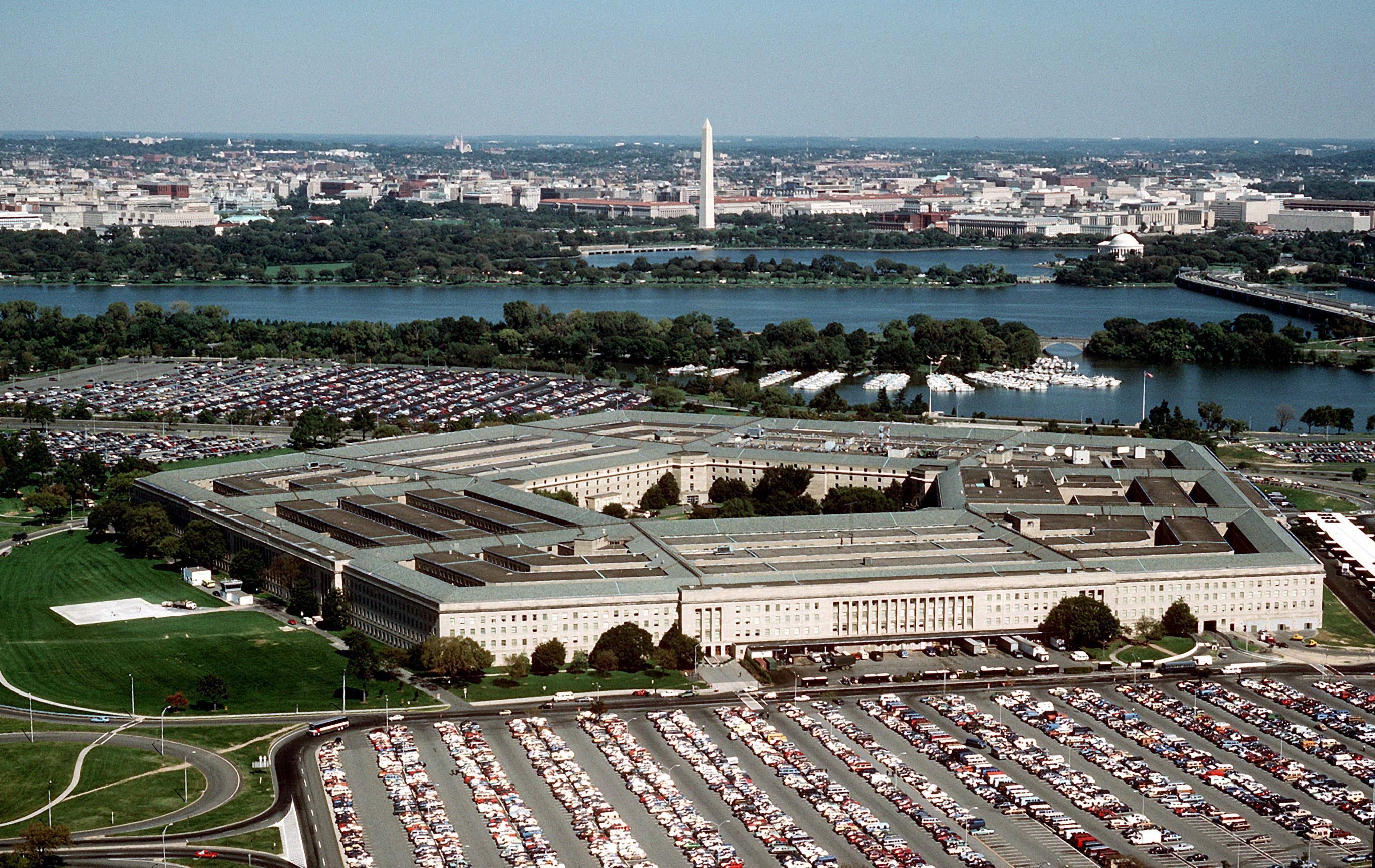
In between hurling insults at individual reporters, Defense Secretary Pete Hegseth’s communications team likes to brag that it is “the most transparent” the Pentagon has ever been. Hardly. Since arriving at the Pentagon, Hegseth has systematically obstructed nearly every avenue through which the press — and, by extension, the American public — can understand what its military is doing. Let’s consider the record.
After being promoted from cable TV host to leading the largest and most powerful military in history, Hegseth kicked off his anti-press crusade in earnest last May by instituting new restrictions on press access, including to his own office. Parts of the Pentagon are now off-limits to professional reporters who have cleared background checks but are still open to tourists with visitor passes. Hegseth also evicted several legacy media workspaces in the “correspondents’ corridor” and replaced them with sycophants, partisans, and the My Pillow guy’s cable channel.
In September, Hegseth demanded members of the press sign a downright authoritarian loyalty oath, pledging not to publish anything without prior department approval. Rather than surrender their independence to save their press badges, the press corps, including Hegseth’s ex-colleagues at Fox News, walked out.
The secretary’s next move might have been funny if it were not real life. In Stanley Kubrick’s classic 1964 satire “Dr. Strangelove,” Peter Sellers, playing the president, delivers the line, “Gentlemen, you can’t fight in here. This is the war room!” In his own moment of Kubrickian inspiration, Hegseth redesignated the press office a classified area. That’s right: Journalists have been kicked out of the press office. In the Hegseth remake, the line has become, “You can’t report here, this is the press room!”
Hegseth can make reporting on him more difficult, but he can’t stop it. The Atlantic didn’t need to eavesdrop in a hallway to learn about imminent airstrikes against Houthi militants in Yemen; someone added its editor-in-chief to a Signal group chat. The Washington Post didn’t need to lurk around the secretary’s office to scoop Hegseth ordering what experts have deemed a war crime in the Caribbean. Good reporting doesn’t depend on privileged access. National security reporters have and will continue to do their jobs with or without the Pentagon’s cooperation.
So why is he doing it? Hegseth insists these restrictions are necessary to protect national security. The evidence points elsewhere. His public justifications are but a fig leaf to conceal his deep-seated desire to control public perception. This is a man who has spent an inordinate amount of time investigating leaks and is so sensitive to his public appearance that his staff banned press photographers over an unflattering photo.
National security can’t be invoked as a pretense for the ongoing assault against Stars and Stripes, though. The only media outlet serving America’s armed forces is independent by law and tradition. That didn’t stop Hegseth and his spokesperson, Sean Parnell, from moving to neuter the venerable newspaper by turning it into an instrument of Pentagon propaganda and illegally firing its ombudsman, whose job is to uphold editorial integrity. And in the past few weeks, Parnell has pushed out the paper’s publisher and fired its editor-in-chief and a reporter for “insubordination.” The reporter in question, Lara Korte, correctly told CBS News that she worked for Stars and Stripes and not “for the Pentagon, nor for any administration, not for any policymaker.”
Nor can the Pentagon cry “national security” to justify its leader’s refusal to hold regular press conferences or share accurate information about American casualties during the Iran War. Multiple officials recently told The Washington Post that more American service members have died amid the war than the Pentagon has shared publicly. Ditto, the latest proposal to restrict Freedom of Information Act requests for “unclassified” information.
The hostility isn’t limited to journalists. This Pentagon has gone after sources directly and indirectly. The decision to revoke former Air Force Secretary Frank Kendall’s security clearance in retaliation for speaking to the media sends a clear chilling message, even to experts who don’t work for the government. Meanwhile, the illegal FBI raid of Washington Post reporter Hannah Natanson’s home–at the Pentagon’s request, reportedly–will make other sources think twice before contacting a reporter to blow the whistle.
Among Robert McNamara’s greatest deceptions was hiding the sheer cost of the Vietnam War from Congress and the public. Likewise, Hegseth’s refusal to face public accountability is galling, considering his demand that Congress approve an unprecedented $1.5 trillion budget.
The Pentagon’s insinuation that the press can’t be trusted to work responsibly in the vicinity of sensitive military information is false. To illustrate this, both the Washington Post and the New York Times voluntarily held off on breaking news of the military’s abduction of Venezuelan President Nicolas Maduro while the operation was underway out of an abundance of caution to avoid endangering American service members. This sort of deference is commonplace, though sometimes controversial. It demonstrates the great care taken by news editors faced with tough decisions–greater care, evidently, than our public officials exhibit in their text messages.
Public opinion wouldn’t catch up with McNamara’s private doubts until years later, and the public wouldn’t know the true extent of the deceit until the infamous Pentagon Papers were leaked. The Department of Defense went to the Supreme Court to block publication but lost what became the most consequential press freedom case in American history, proving that the Pentagon, both legally and morally, cannot be allowed to hold a monopoly on information.
Publishing the Pentagon Papers didn’t weaken America. The hubris they exposed did. A free press is not a threat to national security; it is a part of civic infrastructure that permits our democracy to function. The news media’s commitment to keeping us informed by reporting on issues of great importance, and in the case of the Pentagon beat, on literal matters of life and death, does more to advance American national interests than spiteful, vindictive restrictions. History does not reflect well on McNamara’s tenure at the Pentagon, and it won’t reflect well on Hegseth’s either.
Clayton Weimers is the executive director of RSF North America, the U.S.-based affiliate of Reporters Without Borders (RSF). His writing on press freedom has appeared in publications such as the Guardian, Newsweek, The Hill, and the Independent. He holds an AM in International Relations from the University of Chicago and a BA from Pitzer College.
Outstanding opinion piece, well-supported by drawing a strong parallel with McNamara concealing information from the public. There is just the right amount of indignation in posing what the greater risk to national security would be -- Hegseth, or the press.