


The title of The Secret Agent is a bit of a misnomer: the Oscar-nominated Brazilian film doesn’t follow a spy or a covert operative of any kind.
Set in 1977 during Brazil’s military dictatorship, the slow-burning thriller centers on a mysterious but ultimately quite ordinary man known as Marcelo (Wagner Moura), who arrives in the northeastern city of Recife during Carnival. But he’s not there to celebrate — at least not primarily; he’s there to seek refuge at a safe house with other people on the run.
We gradually learn that Marcelo is actually a widower named Armando, a university scientist who unwittingly crosses the wrong people, putting a target on his back. He is in Recife to reunite with his young son and hopes to flee the country with the assistance of an underground resistance network.
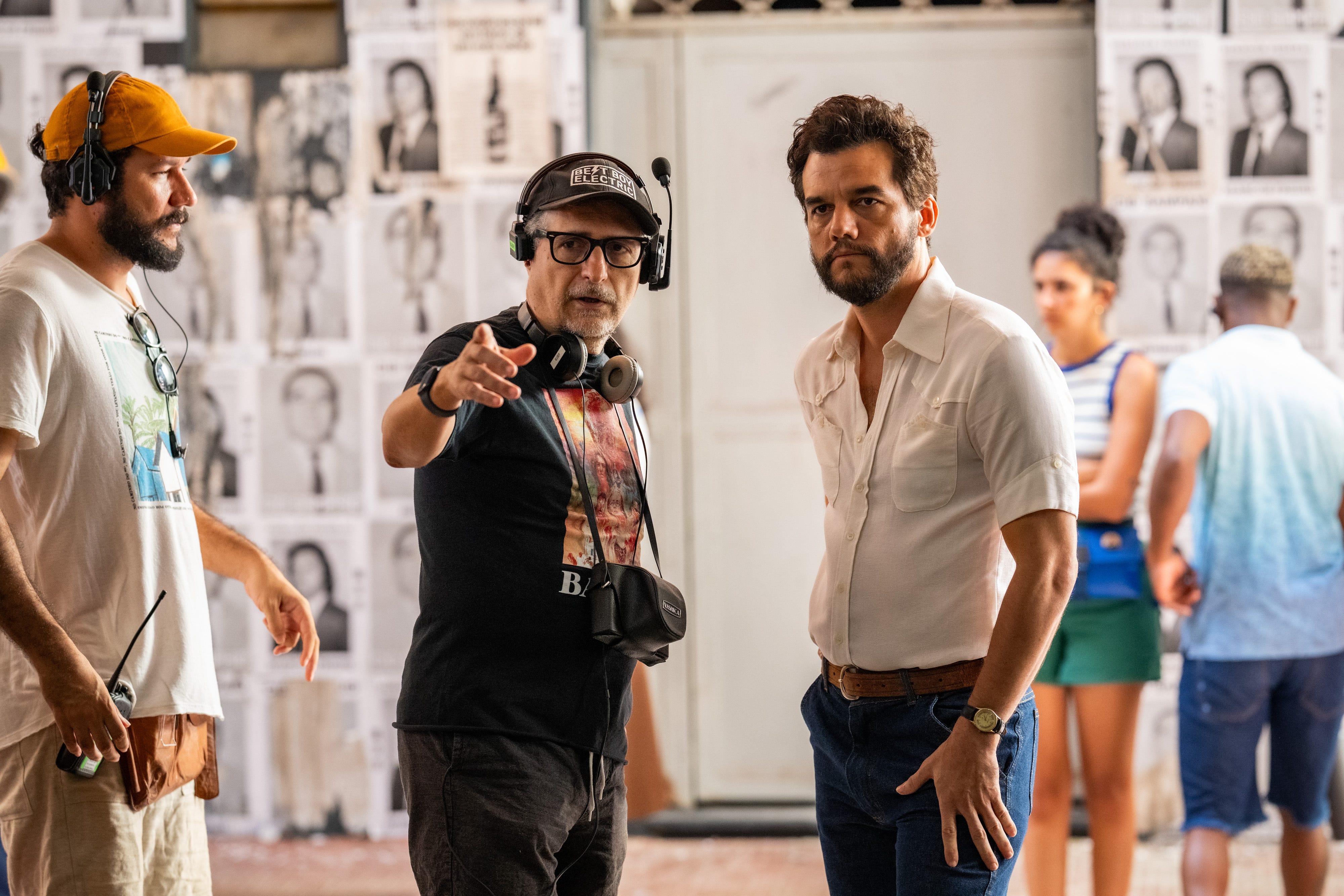
“He’s a regular guy, and he’s going to be persecuted for that,” said writer-director Kleber Mendonça Filho in a recent video chat from New York City, where he is promoting the movie on the awards circuit.
Though set nearly 50 years ago in Brazil, the film has resonated with audiences internationally: it won two Golden Globes last month and is nominated for four Academy Awards, including best picture. Moura also earned a nomination for his quietly moving performance, making him the first Brazilian to be nominated for best lead actor.
The Secret Agent shares some obvious narrative similarities with I’m Still Here, which follows a woman coping with the forced disappearance of her husband in 1970s Rio de Janeiro. It won the Oscar for best international feature last year.
Stylistically, The Secret Agent is an entirely different creature, full of surreal, grindhouse touches, like a two-faced cat and a reanimated severed leg that terrorizes the people of Recife. Mendonça Filho avoids spelling out the film’s political and historical context. Instead, it opens with text that simply explains: “Our story is set in the Brazil of 1977, a period of great mischief.”
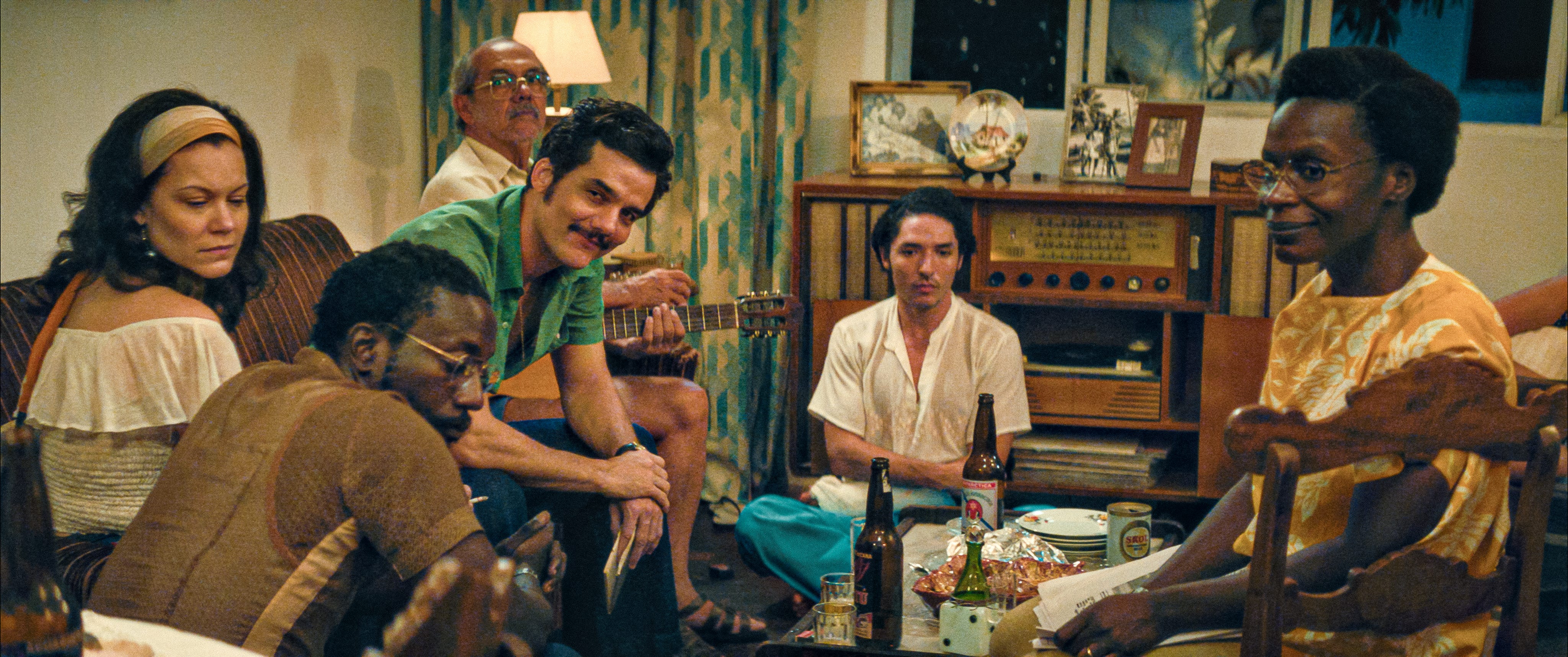
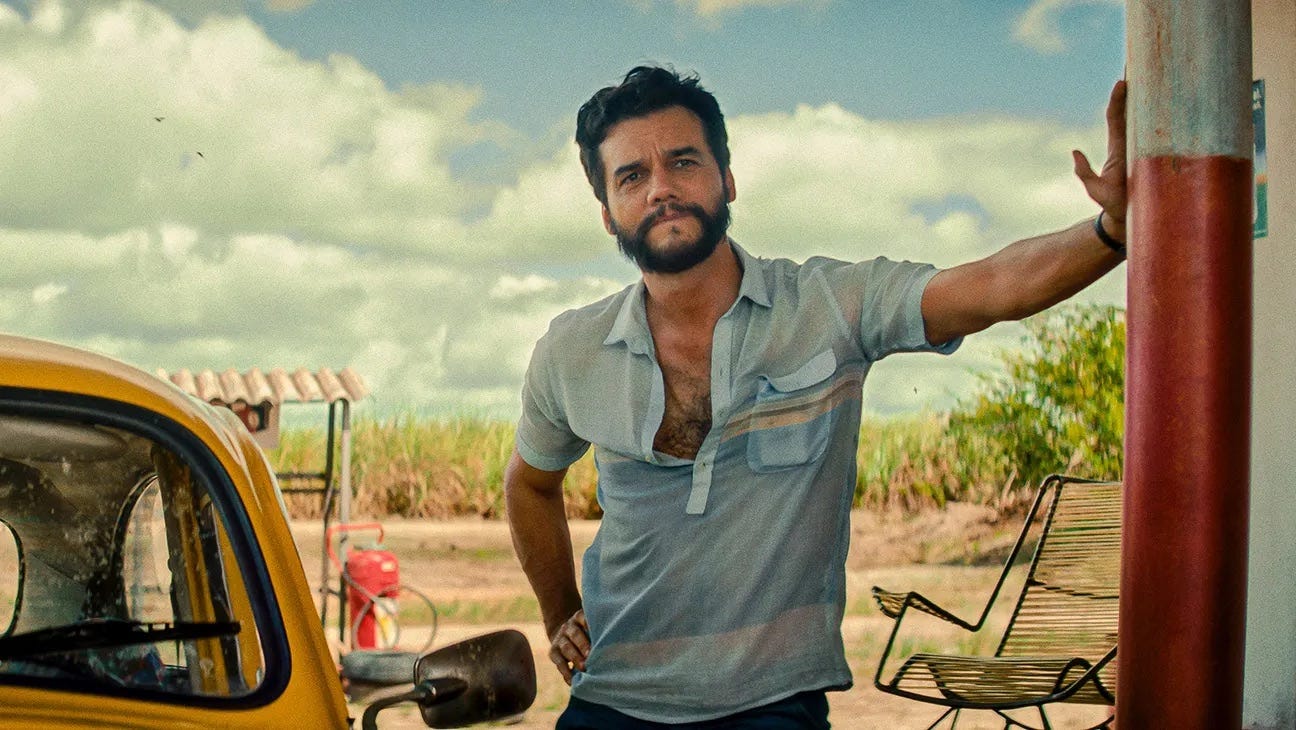
It’s an intentional understatement, but it’s also accurate: His version of authoritarian Brazil is vibrant, chaotic, a little feral. There’s a pervasive sense of menace in the air, regular outbursts of violence, and a callous disregard for human life (in the opening scene, Marcelo pulls up to a gas station where a body has been lying for days, barely covered by a sheet of cardboard). But there’s also fun to be had: in the smoke-filled cinemas where people are watching Jaws and The Omen (and sometimes engaging in more illicit pursuits), in the discotheques, in the streets overrun with carnival revelers. The film is also a vivid joy to look at, shot in an epic widescreen format and featuring a palette of saturated yellows and blues.
The Secret Agent is a highly personal project for Mendonça Filho, a former film critic who grew up in Recife. He has set virtually all his films in his hometown, including Aquarius, an acclaimed 2016 drama that was seemingly sabotaged by the interim Brazilian government in an act of retribution against Mendonça Filho, whose work is steeped in politics.
The filmmaker spoke to The Contrarian about the inspiration for The Secret Agent, its eerie relevance to the present day, and Brazil’s politically turbulent history. (The film is now playing in select theaters and is available for digital rental via Fandango at Home and other platforms.)
This conversation has been edited and condensed for clarity.
What made you want to revisit this chapter in Brazilian history?
The original desire was to work with Wagner. I was also very much into the idea of going back in time. My previous film, Pictures of Ghosts, and the seven years I spent making it, gave me a lot of really fascinating insights into the past of my city, Recife. A lot of the information I found connected to my own memories as a child in the ‘70s. So I thought I had the key to write something set 50 years ago, that would be personal and feel peculiar without just using generic pieces of information about the past.
I slowly came to realize that the other reason I was writing the script was a reaction to what was taking place in Brazil at the time. I started to write in 2020, during the pandemic. I was writing about the 1970s when there was a military dictatorship. We began to realize that the former president Jair Bolsonaro was trying to bring the logic of the past to contemporary Brazil. The men surrounding him were all these men in their 60s and 70s. It’s almost like they wanted to bring back the good old days of the military regime.
So I was writing this film set in ‘77, but some of the logic of that time was coming back. It’s really interesting to understand how the creative process works, because I never set out to make a film about the Bolsonaro years, which I don’t think the film is, in fact, but [the film shares] a lot of the atmosphere that we had to deal with in [those] very dark four years. It’s one of the most bizarre political developments that my country has gone through: to have that president do the things he did to Brazil.
To regress like that?
To regress on so many levels — misogynistic discourse, racist discourse, words that had been retired coming back. The whole idea of “violence first and questions later.” Academics, artists being persecuted, not with violence, but with bureaucracy and, of course, violent discourse; shutting down the Ministry of Culture, things that I never thought would be possible if somebody told me 15 years ago about Brazil. That’s never going to happen. We’ve moved on.
Then, of course, he lost the re-election. He was involved in a coup that plotted to kill [President Luiz Inácio] Lula [da Silva], the vice president [Geraldo Alckmin], and [Alexandre de Moraes], the head of the Supreme Court. There was a trial, and he is in jail now. For the first time in Brazilian history, four-star generals are in jail as well. So right now we’re in a much better place. The sense of democracy is back, but we’re still dealing with a divided country, a polarized country, which is very bad, but such is the state of the world. The film has hit quite a nerve in many different countries, including the US.
You would have been about the same age as Marcelo/Armando’s son in 1977. What were your own memories of this time period? Was it scary to you?
I was lucky, because I had a happy childhood in Recife in the ‘70s. I say this to you in hindsight, of course, but I remember life going on as usual, except for things that my mother [historian Joselice Jucá] used to tell me. She would tell me [how] there would always be one guy, nobody knew who he was, sitting at the back of the room in university, taking notes and not saying anything. Everybody knew that he was the ears of the regime, because [they were looking for] anybody with communist ideas — and that could even mean a man with facial hair, that would be a flag for “possible communist.”
I remember going to school, and every Friday having to march. They made the little kids march in the football field. My mother had a friend who was kidnapped. But my family was not affected by the dictatorship, like so many families were. Today, I have very good friends who lost an uncle, a father. They had somebody tortured. It was a very tough moment in Brazilian life.
I also liked the idea that you can suffer persecution, not because you are a guerrilla fighter, not because you carry guns and shoot uniformed army officers, like so many people did. You can just put your hand up and say something, and you become a target. Wagner’s character is just a good man doing a good job, and that’s enough to fall into a trap [set] by a predator who simply doesn’t like the way he looks, doesn’t like the job that he’s doing at the university, doesn’t like his wife.
The opening text describes 1977 as “a period of great mischief.” Why did you describe it that way?
I think the atmosphere of an authoritarian state should be felt throughout the film, with this dense atmosphere of intrigue and suspense, where the known rules don’t really apply. Nobody mentions the word corruption. Nobody mentions the word dictatorship. “A time of mischief” is an ironic understatement of what was actually taking place in that time. Of course, I could have begun the film with a very straight historical Wikipedia-like “We’re in 1977, and the military is running the country,” but I really wanted to avoid that.
I think that when you have five men in a police truck at night, and they begin to discuss what’s going to happen to the people in the back but in coded ways [as happens in The Secret Agent], it says a lot more about the atmosphere. Some very good films in Brazil, Argentina, and Chile have told strong stories with the usual icons for the dictatorship — torture, men in uniform, tanks, jeeps, machine guns. But I wanted to avoid that.
Instead, there are a lot of surreal, almost supernatural elements in the film — most obviously, the severed leg that attacks people on the streets. It turns out that is based on an urban legend in Recife. Can you tell me about the origin of that?
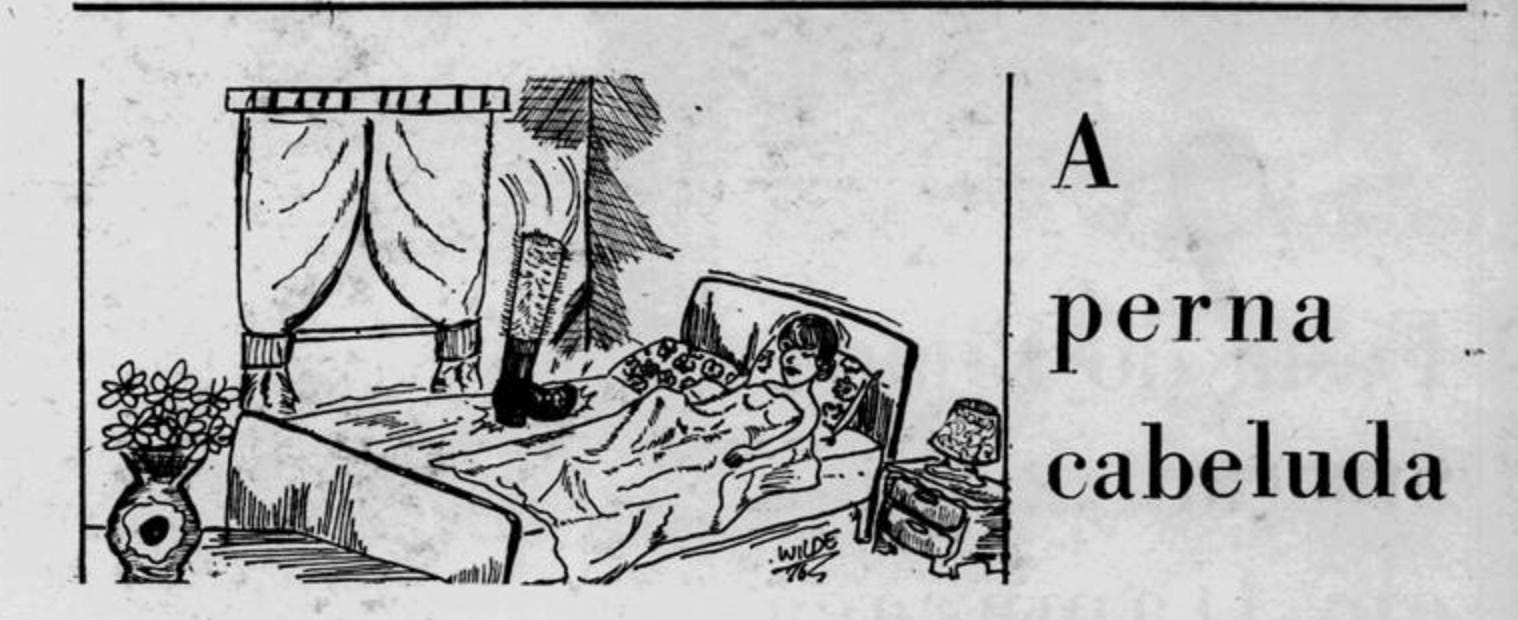
The urban legend of the leg came from two journalists. They had to deal with censorship in the newspaper [Diario de Pernambuco]. They were not allowed to run stories about the police doing what the police were doing, so they came up with the code of “The Hairy Leg.” So “the hairy leg attacked again last night,” meaning the police beat the shit out of people last night for no reason, just because they can. And that, of course, became a phenomenon. It’s such a crazy idea!
They actually ran stories in the newspapers, not in the literary section, but in the police / metro section of the newspapers. One of the journalists, Jota Ferreira, actually worked on the radio, and his stories were very, very popular. Unfortunately, none of the tapes survived.
I remember my mom reading one of the stories with the hairy leg to me over breakfast, just like Thereza Vitória [an Angolan refugee played by Isabél Zuaa] does in the film. Imagine opening a normal newspaper, like The New York Times, and there is a bylined piece telling the story of how people were attacked by a zombie kicking leg last night at the park, and it is done in a straight way. This is one way of dealing with censorship. I also come from a city which is very left-leaning and transgressive in literature, in cinema, in Carnival, in music. I think it’s a really interesting byproduct of the mindset in this city.
Without giving away too much, at the end of the film there is tension between two characters who look at the past differently — one who wants to document history and another who has tried to ignore it. Which approach is right? How does a country move on from this kind of trauma?
Well, the idea of moving on is complex, and also questionable. In 1979 Brazil, the military regime, which was beginning to crumble, approved an amnesty law, which basically forgave everything that they did against the population. Their excuse was that the other side would also be forgiven. They proposed that we should get on with our lives. At the time, it was seen as the beginning of the end of the military dictatorship, which made many people happy, but at the same time, it normalized all the atrocities — the torture, the assassinations, the kidnappings, dismemberments, and no one really was held accountable. Many of these psychopaths, they grew old, and they died at 90 with all their pensions intact. I think that really put Brazil in a traumatic kind of mood. Many families would rather not talk about the things that happened in the military dictatorship.
This is also common in Spain, where I screened the film, and I got a lot of reactions about Franco. There are many families in Spain that are still divided, and they would rather not talk about what their grandfather did, what their uncle did during the regime. Same thing in Chile. So when Dilma Rousseff became president [in 2011], she herself had been tortured at 21 in 1971 by this degenerate called [Carlos Alberto Brilhante] Ustra, who is Bolsonaro’s greatest hero. When she came to power, she put together the Truth and Reconciliation Committee, which began to look into many of the crimes that had been committed. She was then ousted in a cynical impeachment process, and the far right came to power. Bolsonaro was elected, and one of the things he did was to shut down the Truth and Reconciliation committee, famously saying, “Only dogs look for bones.” The end of the film is consistent with the way many people would rather not remember what happened.
It’s probably a very strange time to be promoting this movie in the United States. A lot of people in the creative community are unsure about how and when to speak up. How does it feel to be here at this very turbulent time in American history?
I have many American friends. I have many American collaborators. It’s a very interesting time for filmmakers, for writers to express opinions, because this is a very specific time in the history of the United States. Make a film set on your own street. It will be very, very hard for you to ignore the general climate that is taking place in the United States. Some people believe that films should not involve politics. I really find it almost impossible to make a film that doesn’t.
Meredith Blake is the culture columnist for The Contrarian
Absolutely great movie. Wagner Moura is so good, and it's such a timely story