


When I arrived on Capitol Hill in 1969, I had never heard of the GAO, then called the General Accounting Office. But that ignorance did not last long. As soon as I started to work on legislation, I learned about the vital organs of Congress that drove the deliberation, provided the history, and were vital to oversight, honesty, and competence in government — the Office of Technology Assessment, OTA; the Congressional Research Service (revamped and renamed in 1970), CRS; and the GAO. OTA housed substantive experts on a range of areas from defense to energy to communications; CRS housed experts across all areas of legislative history and more. GAO, founded as a core part of the Budget and Accounting Act of 1921, was the largest, responsible for auditing agencies, programs, and departments and for protecting Congress’s interests if there were abuse by the executive.
OTA was abolished by Newt Gingrich as soon as he became speaker of the House in January 1995; the facts and data provided conflicted with the Republicans’ radical right-wing ideology. It was the first shot in the war on expertise that continues to this day in the Trump era. CRS continues to provide invaluable reports to members of Congress and committees, but with a staff about half the size it was in 1980. And GAO, now known as the Government Accountability Office, has about 2,500 analysts out of a total staff of 3,200 — in 1980, there were about 5,500 overall, including 3,600 to 4,000 professional auditors, evaluators, management analysts, and technical specialists.
The cutbacks reflect a broader deterioration of Congress’s infrastructure, despite the fact that government policy, the changes in technology and the global economy, the breadth and depth of problems, and the sheer size and scope of government have expanded dramatically. Nonetheless, the quality of the people at GAO and their adept use of modern technology have enabled the agency to keep pace and do its vital work — for its boss, Congress, and, most important, for the American people. One task of the new Congress coming in is to bolster its staff resources across the board.
Congress has long valued this agency and has worked to make sure it has both quality and independence from partisan or political pressures. The head of GAO is the comptroller general of the United States. To reinforce that independence, the comptroller general has a single, fifteen-year term. Though nominated by the president and confirmed by the Senate, the process of choosing a nominee is designed to ensure bipartisan support and high quality (more about that below).
Throughout my long career immersed in Congress and governance, I had regular and fruitful interactions with GAO. I met frequently with dedicated career staff, and spoke often at GAO functions. I worked with Elmer Staats, comptroller general from 1966 to 1981. He was a model public servant, including after his time at GAO on a small group that created the National Commission on Public Service. I also worked with his successor, Chuck Bowsher, on a range of government reforms and with Bowsher’s successor, David Walker. All three were fiercely non-partisan, dedicated to making sure government worked as intended, foes of waste and corruption, and protectors of the constitutional role of Congress. Walker’s successor, Gene Dodaro, was a GAO lifer, who moved up the ranks to eventually lead the organization. Since his term ended in late December 2025, we have had an acting CG, Orice Williams Brown, a 35-year GAO veteran.
All that brings us to the latest outrage and assault on decency and fundamental norms in government that are a part of the Trump administration (and, by extension, of too many Republicans in the Senate.) To ensure that the vital position of leader of the GAO, the comptroller general of the United States, would emulate the qualities of Staats, Bowsher, Walker, and Dodaro, the law on selection of the CG says that a bipartisan committee of lawmakers, evenly divided between chairs and ranking members of key House and Senate committees, would do extensive vetting of candidates and recommend a slate of three to the president, from which he would nominate one. If he rejected all three, the committee would recommend more until he agreed on a nominee.
Brown has been in place as acting for almost a full year, and, of course, we will have a new Senate majority starting on January 3. In league with Sen. Rand Paul, chair of the Homeland Security and Governmental Affairs committee, Donald Trump hijacked the process, flouting the law, and nominated Eric Ueland to be the next CG for a fifteen-year term.
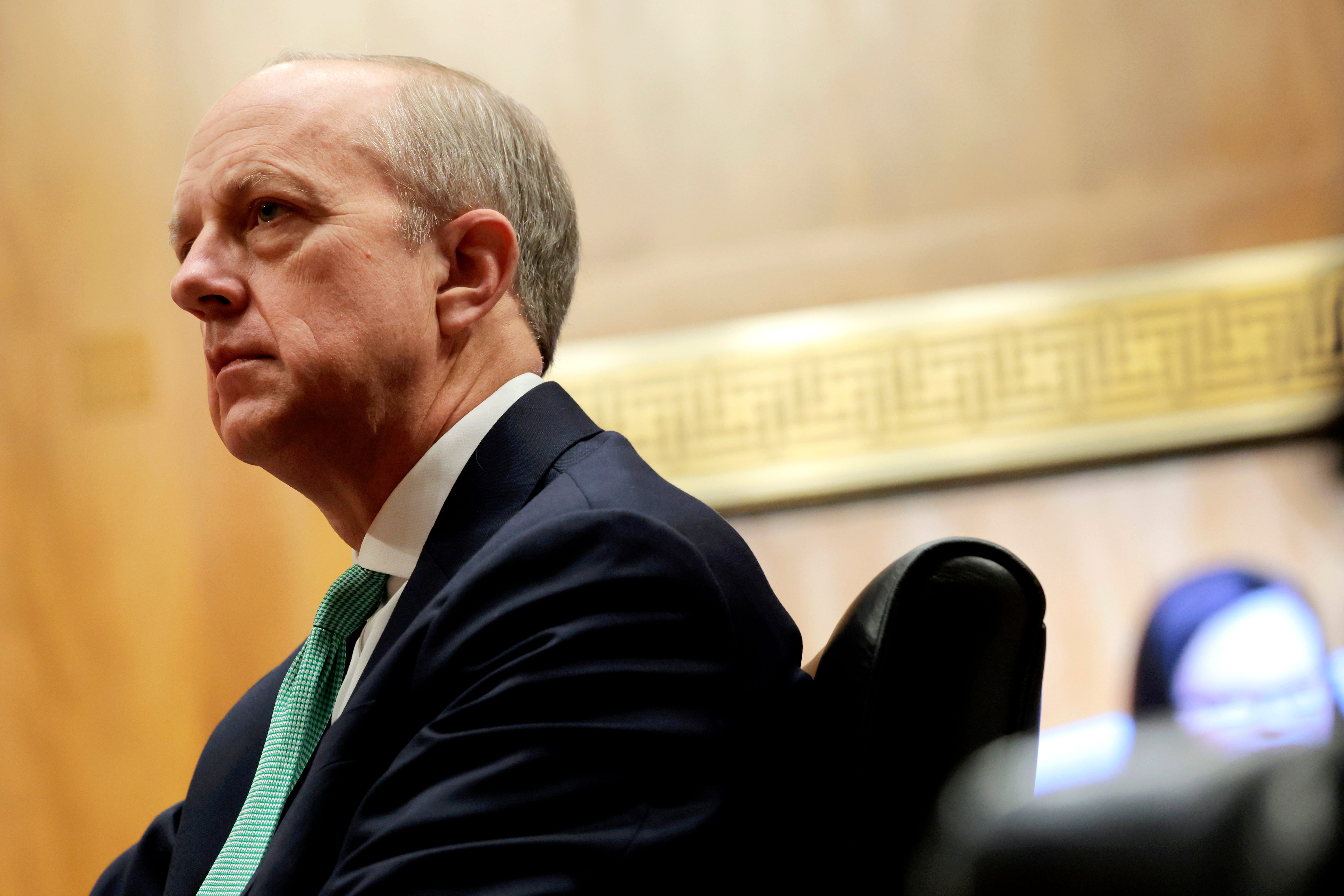
Ueland’s nomination is a middle finger to the law and to Congress. He is deputy director of the Office of Management and Budget, the right arm of the radical nihilist Russell Vought, who has openly disdained the rule of law and the constitutional prerogatives of Congress in furtherance of his goal of blowing up government. That includes illegally withholding funds appropriated by Congress — actions that GAO is preparing to contest in the courts. And actions, one can be sure, Ueland would block if he somehow ascended to the position.
Ueland was a longtime aide to Sen. Bill Frist, and he was traditional in that role. But he has become a loyal cultist, a lackey to Trump, and a willing lieutenant to Vought. It is not just offensive that Trump has ignored the law and sneered at the idea that the process and the nominee should reflect the finest tradition of bipartisanship and non-partisanship. That alone is worthy of rejecting the nominee. But most important is that the role of GAO over the next two years, with the damage caused by the range of actions taken by Trump and his Cabinet and the rank incompetence of the widest range of agencies (see, as the latest example, the cringeworthy performance of reality TV joke Sean Duffy, our Transportation secretary, after the air disruption last week) to audit agencies, examine performance, and suss out corruption will be crucial to public safety and governmental performance and integrity. Ueland would be an executive mole in a congressional agency, putting protecting Trump and his minions first.
The GAO is a jewel in our federal government firmament. We cannot afford to have it tarnished.
Norman Ornstein is a political scientist, co-host of the podcast “Words Matter,” and author of books, including “It’s Even Worse Than It Looks: How the American Constitutional System Collided With the New Politics of Extremism.”

Carry on, as described, . Like it never happened .