


The Trump administration’s reported push to build a master list of foreign intelligence threats arrives dressed in the old language of Washington reform: better data, better sharing, better coordination, and fewer gaps between the FBI, CIA, and the rest of the government. In another era, that framing might have sounded merely bureaucratic. In this one, it sounds more ominous.
The issue is not whether agencies should share information. They must. The issue is whether a legitimate need for coordination is being converted into a demand for control.

According to The New York Times, the Office of the Director of National Intelligence (ODNI) has been pressing the FBI and CIA to provide identifying information about foreign espionage targets, suspected spies, and potential recruits. ODNI has pointed to National Security Presidential Memorandum 7 — a first-term Trump directive for agencies to identify, integrate, and share information about national security threat actors. That may sound sensible; the FBI and CIA should not be tripping over each other. But there is a big difference between helping agencies compare notes and building a central list of the most sensitive names in American intelligence.
The same person can mean different things to different agencies. To the FBI, a person may be someone to investigate or arrest. To the CIA, that person may be someone to approach quietly as a possible source. To another agency, the name may be linked to sensitive technical collection. The information may also come from a court-approved surveillance order or from a foreign partner who expected it to stay tightly held.
Put all of that into one master list, and the government has not just improved coordination; it may have built a roadmap of its most sensitive spy work.
The pop-culture analogy is almost too neat. The first Mission: Impossible film turns on the theft of the NOC list — a compiled roster of undercover agents. Movie hero Ethan Hunt breaks into CIA headquarters to steal the list, which is valuable precisely because it should not be in the wrong hands.
The movie is fiction. The vulnerability is not. Intelligence services do not avoid perfect directories of their most sensitive people and operations because they dislike efficiency. They avoid them because the directory becomes the target.
The better real-world analogue is Aldrich Ames. Beginning in 1985 and continuing until his arrest in 1994, Ames used his CIA access to pass to Moscow classified information on U.S. human sources, technical operations, and sensitive cases. The damage was catastrophic: sources were exposed, operations were compromised, and people died. The lesson the CIA drew after Ames was not that every sensitive identity should be pooled in a cleaner central database. It was the opposite. The agency tightened compartmentation, strengthened counterintelligence and security reviews, improved CIA-FBI cooperation, and imposed stricter controls on classified material.
ODNI was created after the terrorist attacks on September 11, 2001, because the government failed to connect critical information across agencies. That failure was just as catastrophic as Ames’s treason, but, again, the answer was not to put every secret in one place. It was disciplined sharing: the right information, to the right people, for the right mission, under the right safeguards.
That is what makes the current moment so dangerous. Trump has left ODNI in the hands of Bill Pulte, an acting director with no intelligence background, after halting the Senate’s effort to fast-track Jay Clayton’s confirmation. He has not treated that arrangement as a mere stopgap. When he put Pulte in the acting role, Trump reportedly viewed him as “less shackled” and better able to make radical changes; on July 1, he said Pulte may remain for “a month or two” and can “declassify whatever” he wants.
In that setting, a demand for a master list does not look like reform. It looks like part of the same project: pulling sensitive intelligence identities closer to political control.
Pulte and his defenders may say they are simply enforcing a presidential directive. That argument cannot be waved away. The DNI does have a coordination role. Agencies do not get to decide that sharing is optional whenever it becomes uncomfortable. But Congress should ask hard questions of ODNI: What exactly is being requested? Does the list include potential CIA recruits, court-restricted surveillance information, or reporting from foreign partners? Who can search it? Can political leaders access it? Can it be used for declassification reviews, election-related inquiries, or public messaging?
Those are not paranoid questions. They are the minimum questions when an intelligence office asks for access to the identities of suspected spies, targets, and potential sources.
Resistance may also come from inside Trump’s own intelligence leadership. Former DNI John Ratcliffe, now CIA director, is arguably the administration’s senior intelligence figure in practice, even if the DNI remains the president’s principal intelligence adviser on paper. Pulte holds the acting DNI job, but Ratcliffe may have more sway with Trump on the intelligence work that depends most on secrecy: espionage, recruitment pipelines, liaison relationships, and human sources.
A serious intelligence reformer would begin with a real problem: Where have agencies conflicted, what information was missing and what minimum sharing would have prevented the failure? A control project begins somewhere else. It begins with a demand: give me the names.
The United States learned after 9/11 that agencies can fail when they do not share enough. Aldrich Ames taught another lesson: The government can also fail when one person can see too much. Both lessons matter. One does not cancel the other.
A master list may promise order. In counterintelligence, it may instead create the thing adversaries would most want to steal. The list would not merely describe the target set. The list would become the target.
Limited Edition Screen Prints!
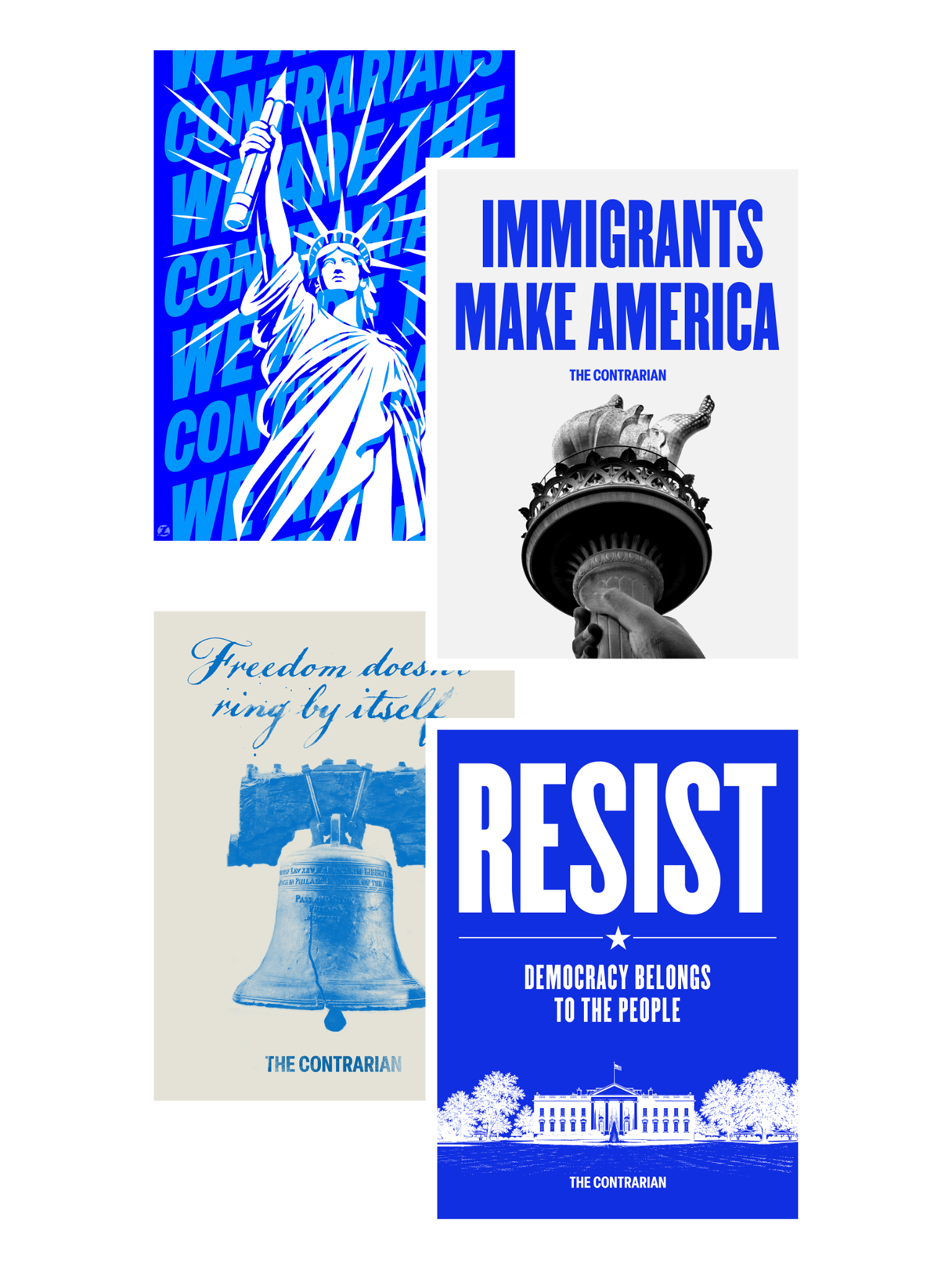
Celebrate America 250 with The Art of Resistance
This limited-edition collection of screen prints is created to honor the American tradition of leveraging creative expression to inspire change.

These days, a master list of anything is a security target. There are better ways to improve coordination without increasing the risk.
It should start with banning the use of unsecured electronic communications such as Signal with the DoD.