

By Gina McCarthy, Janet McCabe, and Joseph Goffman
The public saw something rare this month: Thanks to the stunning reporting of the New York Times’ Jodi Kantor and Adam Liptak, everyone can read the internal memos six Supreme Court justices exchanged with each other 10 years ago before halting — shockingly and without a word of explanation — the Environmental Protection Agency’s rule known as the Clean Power Plan (CPP). By requiring meaningful reductions in carbon dioxide emissions from the electric power sector, the CPP was, at the time, our nation’s most significant opportunity to address climate change.
There is plenty in the memos to take people aback — the hasty and incomplete deliberation with which the court acted, Chief Justice John G. Roberts’ determination to drive his colleagues to radically short-circuit the judicial review process itself, and the lack of discussion of the harm a stay would inflict on the public by delaying urgently needed carbon dioxide reductions from power plants.
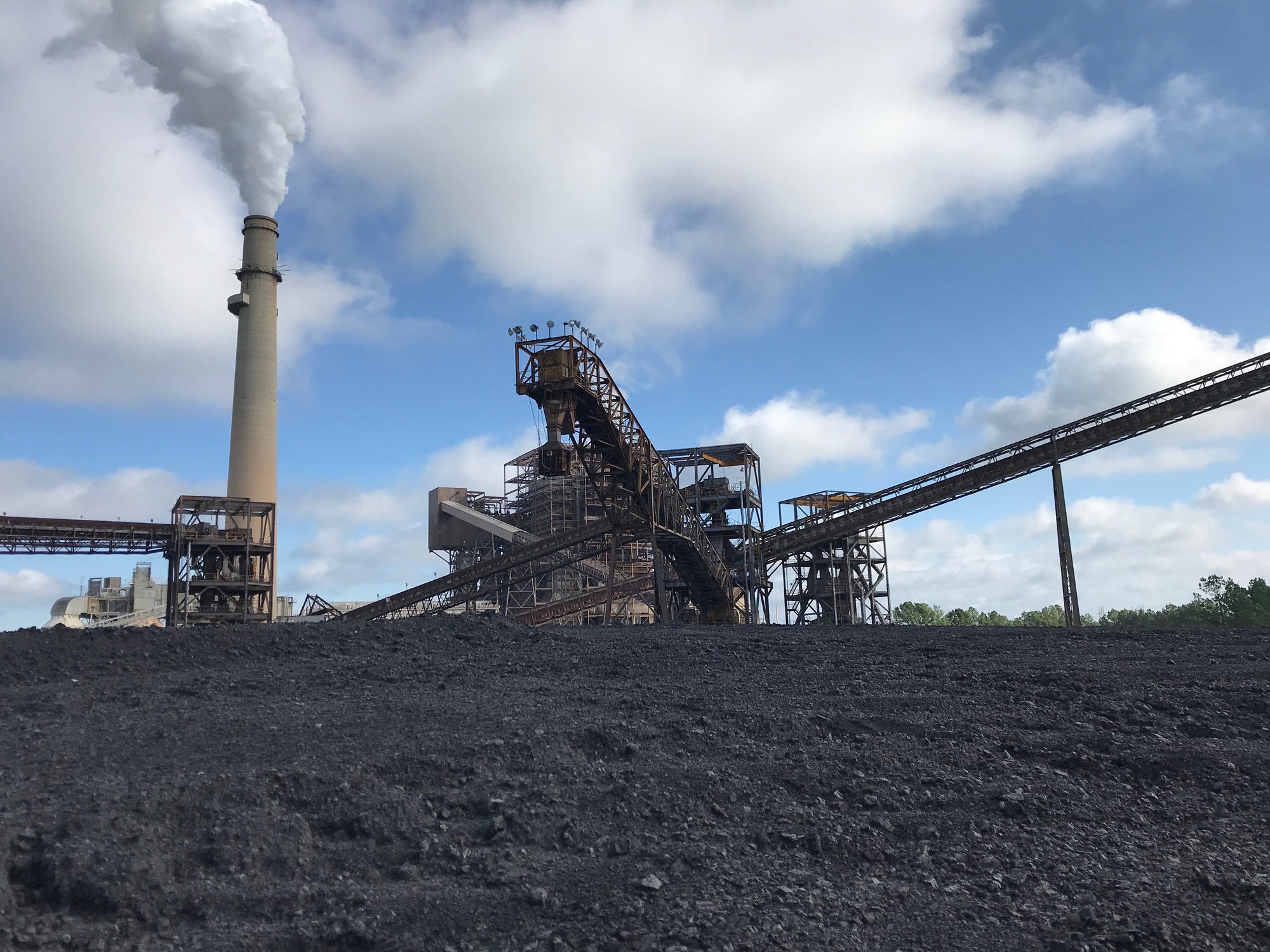
More disturbing: Stopping a major rule like the CPP before the lower courts had fully considered challenges to the rule and issued their own opinions was a drastic and unprecedented step, yet the court gave little acknowledgement of that beyond lip service. The memos hit especially hard now because no one ever imagined that the CPP stay would inaugurate a decade of the court’s regular and increasing use of the “shadow docket” where the court intervenes in ongoing, often not-yet-ripe litigation to overrule lower courts, most often with little or no explanation, and where the intervention as a practical matter ends the case.
It is ironic that the CPP, developed with public and other stakeholder input, actually launched a practice that denies the public’s insights into the court’s reasoning and, by frequently skipping the steps of normal process, compromises the court’s own capacity to consider the full range of issues and information that ought to be before it — leaving public confidence behind.
In sharp contrast, when the EPA decided in 2013 to use its legal authority under the Clean Air Act to achieve CO2 reductions from the power sector, it did so with a commitment to proactively engage the public to ensure that people had the opportunity to see and understand what the agency was doing every step of the way in its extensive work constructing the CPP. Today, the court leaves the public in the dark every time it issues shadow docket orders with little or no explanation, often after abbreviated deliberations.
The EPA knew that success depended on partnering with the public, the power sector, and the states that would be charged with implementing the regulations. In hundreds of meetings and town halls across the country, EPA staff absorbed ideas and listened carefully to concerns and objections, searching for ways to address them.
The CPP was the fruit of that effort. It featured what utilities, states, and stakeholders had proposed or requested and was notable for the wide menu of options available and the lengthy timeline for states for achieving the required emissions reductions. The CPP was published in 2015 with more than a thousand pages providing detailed analysis and explanations of the EPA’s reasoning and full responses to every comment that stakeholders submitted in response to the draft CPP issued more than a year earlier. Even opponents of the CPP expressed appreciation for the publicly transparent and responsive engagement process.
The CPP engagement process was critical not just to the substance of the CPP, but it was also key to ensuring that the public could understand and appreciate the EPA’s use of its legal authority to write the rule and work with states to implement it.
Earning trust and buy-in is no less critical to the Supreme Court than it was to the EPA and the CPP. If anything, the process that produced the CPP should have raised the bar for the court by ensuring that the public would understand the court’s thinking. Instead, by shrouding its reasoning in silence when it stayed the CPP, the court rejected the remit EPA embraced.
Nevertheless, the EPA’s massive, continual engagement paid dividends. In the years following, power plants took steps that resulted in significant carbon dioxide emissions reductions. In fact, emissions fell to levels that the CPP would have achieved if its requirements had remained in effect. Why? Because EPA’s sustained engagement throughout the rulemaking process prompted the utility industry to pay attention to opportunities it had to reduce CO2. It was that focus, reinforced by federal tax incentives supporting renewable energy and by changes in energy markets, that produced the reductions the CPP was designed to achieve. As it turned out, the court’s certainty that the CPP would do irreparable harm to the electricity sector was incorrect. In contrast, without the CPP, power sector carbon dioxide emissions have increased in the past two years and threaten to increase further with the expected rising demand for electricity.
It’s time for the court to close the “shadow docket” and return to its historic reliance on step-by-step judicial processes that ensure full deliberation and the kind of principled, transparent reasoning the public needs to see if it is going to trust the court going forward.
The authors served as the political leadership team that oversaw the development of the Clean Power Plan. The authors’ views are their own, and not any organization with which they are affiliated. Gina McCarthy served as the 13th administrator of the U.S. Environmental Protection Agency. Janet McCabe served as the 16th deputy administrator of the U.S. Environmental Protection Agency. Joseph Goffman served as senior counsel in the U.S. Environmental Protection Agency Air Office during the Obama administration and assistant administrator in the Air Office under Biden.
One more nail in the coffin of the McConnell/Roberts court's story in the history books. I wonder how much Roberts is collecting in off-shore bank accounts. I also wonder when the "supreme" court's public DISAPPROVAL rating will go to 99%.
Federal law requires "public participation" while writing new Federal regulations. In the case of large issues with real impacts, such as this one, public participation can be (and was) lengthy and extensive. This is the role of the executive branch, and is mandated by laws passed by the congressional branch.
For the judicial branch to step in and undo/negate the functions of the other two branches using the shadow docket is way, way outside their purview. Their purview would be to see, in this case, if the public participation process was adequate and if the resulting rules and regulations are compliant with the intent of the law.
The use of the "shadow docket" to negate the law, rather than review compliance with it, in this case was a mockery of justice and the Constitution. That the Supreme Court has continued to use the shadow docket routinely during this administration represents a real failure of American democracy.
Bruce Bender
Retired, Environmental Policy Team Lead, Federal Highway Administration