

By Richard Cordray
In his latest Cabinet meeting, President Donald Trump said affordability “doesn’t mean anything to anybody” and called it a “fake narrative” trumped up by his political opponents. For those whose net worth starts with a “B,” that might be how the world looks, but for everyone else it matters whether it is easier or harder to cover the costs of everyday life. And from the outset, this administration’s anti-consumer agenda has undermined affordability at every turn.
Even before new officials took office in January, the war on consumers was underway. Some leading warriors never even truly took office: Elon Musk whelped an irregular DOGE team that obsessively pursued efforts to “delete” the Consumer Financial Protection Bureau (CFPB), which Congress created after the 2008 financial collapse to safeguard consumers and our financial system. Among other things, CFPB provides oversight of banks and “nonbank” financial companies (such as payday lenders) to ensure they follow the law, brings enforcement actions to stop them from cheating people, and helps consumers address and resolve individual complaints.
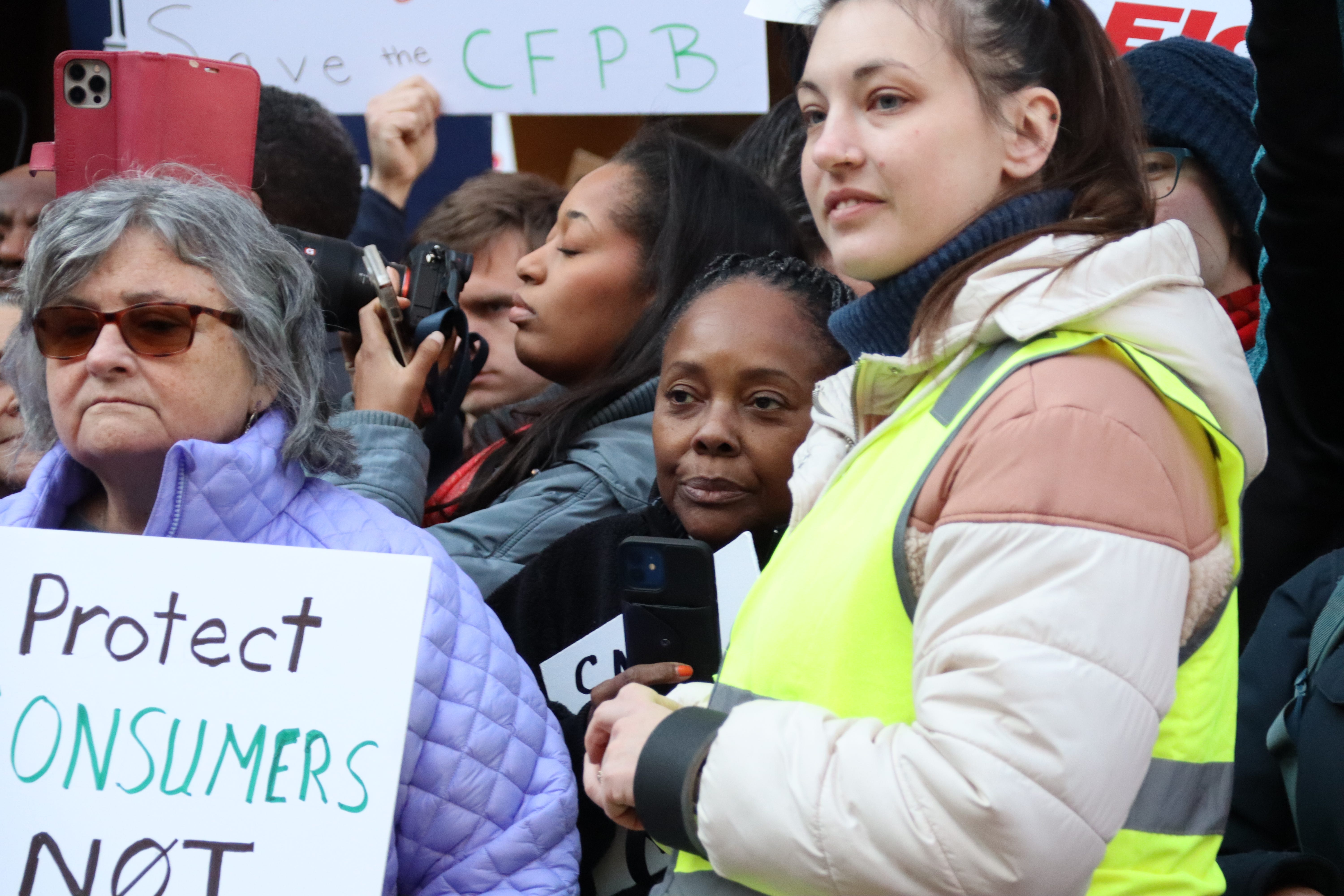
DOGE’s efforts to dismantle the CFPB were challenged in court and held to violate the law. But even as DOGE’s most brazen efforts were being challenged, it found other ways to undermine the CFPB by halting major enforcement actions against financial companies that were harming consumers. The smash-and-grab tactics have left consumers defenseless against financial predators and opportunists of the worst kinds.
Trump’s budget director, Russell Vought, later was inserted as the acting director of the CFPB and events seemed to be following a more regular course, with Jonathan McKernon put forward as a nominee to lead the agency. Things went awry, however, when new anti-CFPB measures were being announced of which he was entirely unaware. Soon, his nomination was withdrawn, and Vought remains in control.
Rather than directing the agency, Vought seems intent on shuttering it. From the beginning, he imposed a stop-work order with few exceptions. For ten months now, he has been pressing to fire the vast majority of CFPB employees—more than 1,000 officials expertly trained to uphold the laws protecting consumers—though the courts have blocked him from doing so. This is a grotesque waste of taxpayer money, as Vought continues to idle the agency’s workforce regardless of the laws that Congress has enacted.
It is hard to understand how the administration can claim to care about affordability if it is not willing to do even the most basic things to protect consumers from financial harm. Along with dropping most enforcement actions, Vought has curtailed the CFPB’s supervisory oversight, which ensures that both banks and nonbanks follow the law and uphold the rights of consumers. Notably, this move has been criticized by the banks themselves, who remain subject to regulation by other federal agencies while their nonbank competitors are not being supervised at all.
Vought also initially shut down the CFPB’s consumer response system, which is mandated by law and has helped tens of millions of Americans get redress when they were cheated or mistreated by financial companies. Under pressure from the courts, agency officials have now allowed the consumer response team to come back to work, though it has been shorn of the muscle from the enforcement and supervision arms that strengthened their pro-consumer efforts.
So, one might ask, how can blocking consumer complaints, which keep people from being constantly nickeled and dimed by improper fees and other charges, be squared with claims that the Trump administration is pursuing an affordability agenda? And how can shutting down enforcement and supervisory work that protects consumers from being ripped off by fraud or financial abuse be squared with an affordability agenda? Quite simply, they cannot be: Either you’re with us or you’re against us.
There are many other ways the new administration is pushing up costs for consumers. Its tariff policies are driving up prices for imported parts and materials used to produce the goods we buy. The lack of an immigration policy based on sensible controls raises the cost and reduces the supply of labor we need for our farms and other domestic employers. Pulling the plug on renewable sources like wind and solar power undermines our strategy for keeping energy costs low over the long haul.
Each of those policies is at least open to debate. But in no world is killing off consumer protection a sensible strategy for helping people afford the costs they face. Those at risk are our families, our friends, ourselves—everyone who uses basic consumer financial products to finance the ways and means of their lives. If we truly want to “Stop the Steal,” we can do so, first and foremost, by protecting consumers.
Richard Cordray served as the first director of the U.S. Consumer Financial Protection Bureau, from 2012 to 2017. His book, “Watchdog,” tells the story of the CFPB and its work to protect consumers.
"For ten months now, he has been pressing to fire the vast majority of CFPB employees—more than 1,000 officials expertly trained to uphold the laws protecting consumers—though the courts have blocked him from doing so. This is a grotesque waste of taxpayer money, as Vought continues to idle the agency’s workforce regardless of the laws that Congress has enacted."
This corrupt regime set out to grotesquely waste taxpayer money. Musk had the brilliant idea of paying federal employees not to work and forcing us to pay their severance as well. Republicans forced an incredibly costly shutdown by refusing to uphold the ACA subsidies that we the people instructed them to put in place with our votes. We pay for all the frivolous and illegal lawsuits. We pay the salaries for illegally installed lawyers. We pay via our states to sue ourselves when the feds break the laws that affect states' rights. And on and on. And, of course, we pay for the tariffs and now, the farmer bailout of said tariffs.
People like me can only make so much money. And money runs out. The deficit is huge and our credit as a nation is maxed out. Good luck getting blood from these stones--and guess what? You can't spend our blood, Trump.
The headline of the article is a no-brainer. Of course this administration doesn't care. As long as they enrich themselves (at our expense) they remain tone-deaf to the people. We were promised lower prices, and nothing that Trump or this administration has done has reduced them one bit. We are still paying more on the average for everything.