


In recent months, President Donald Trump has attached his name to foreign leaders and candidates not on the margins of politics but at the center of national campaigns — Japan, Hungary, Argentina, and Honduras among them — often in the closing stretch when attention is highest and reactions most immediate.
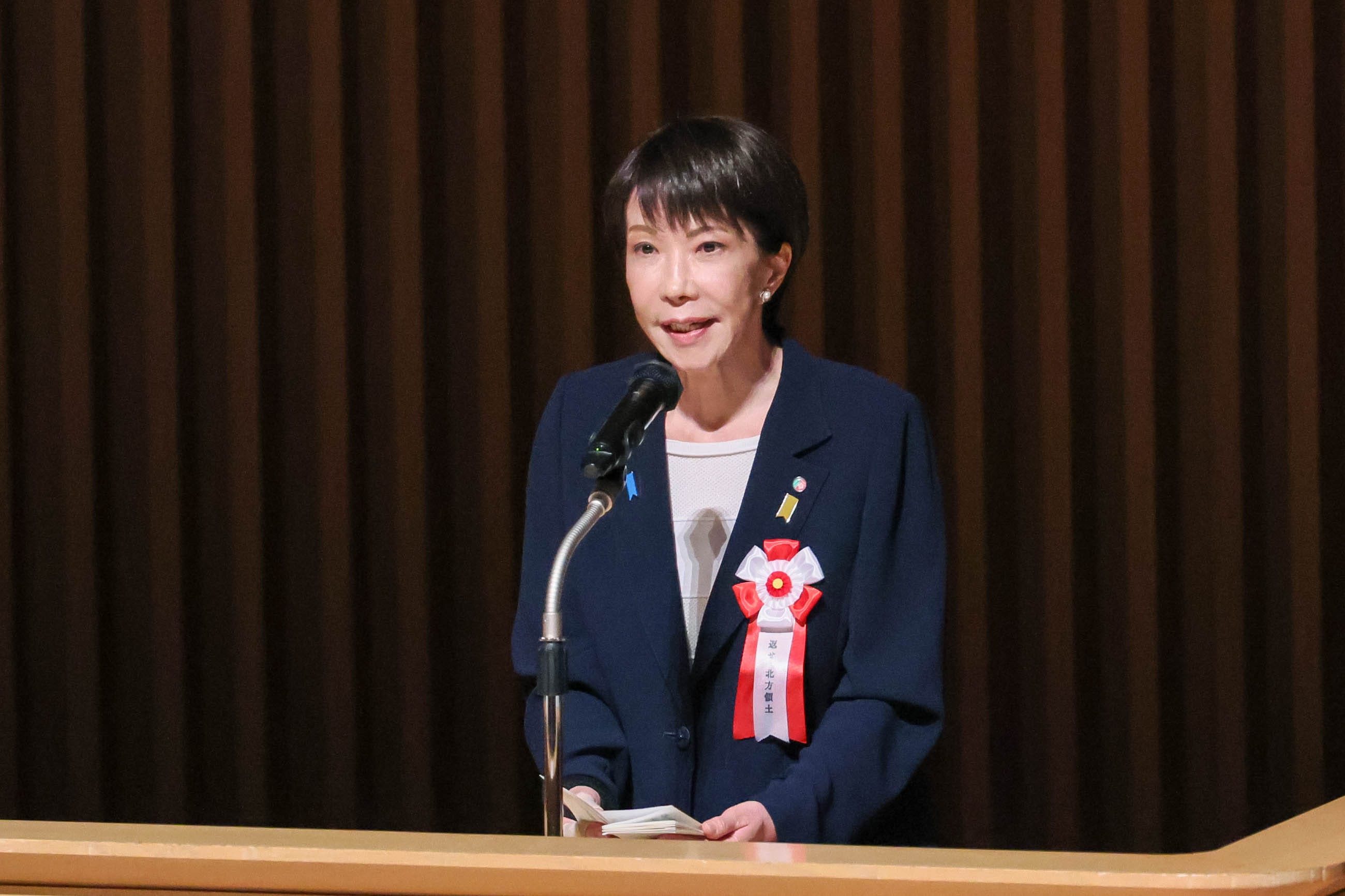
In Japan, Trump issued what he described as a “total endorsement” of Prime Minister Sanae Takaichi just days before the Feb. 8 election; her Liberal Democratic Party delivered a crushing victory on Sunday that leaves Takaichi with a single-party majority and a strengthened hand at home. Trump later said she would visit the White House on March 19. On the same day, he endorsed Hungarian Prime Minister Viktor Orbán ahead of Hungary’s April 12 election, praising him as a “truly strong and powerful leader.”
The Honduras case is especially telling. Trump endorsed Nasry Asfura, the conservative National Party candidate who went on to defeat his opposition rival. Trump threatened U.S. aid to Honduras if Asfura lost, saying “the United States will not be throwing good money after bad.” Trump put the presidency on one side of that contest at the moment voters were deciding who would govern.
It is easy to wave this off as “Trump did a Trump thing.” But this is not just a style choice or a stray comment. It is a recognizable intervention by a U.S. president who is repeatedly, intentionally, and visibly treating foreign elections as venues for direct political preference.
That posture breaks with a restraint that developed over decades rather than from any formal rule. Washington has intervened in foreign political outcomes before — sometimes overtly, often covertly, and occasionally with force. Iran in 1953 and South Vietnam in the 1960s showed how even successful political intervention could leave the United States tied to the consequences that followed. Iraq after 2003 showed a later form, but the lesson rhymed: Once Washington is seen as shaping the outcome, it can end up owning part or all of what comes next.
Even a country with a history of meddling learned — by experience — that openly picking winners inside allied nations is a self-inflicted wound. That restraint wasn’t a claim of purity. It was a practical recognition that alliances function better when Washington backs the relationship, not the candidate—and that the United States pays a price when its power looks personal, conditional, and transactional at the ballot box.
What filled that space was an informal code of distance. Presidents might praise a counterpart’s leadership in general terms, signal comfort with the existing partnership, or speak broadly about shared values. What they avoided were explicit endorsements, last-minute comments that could be read as electoral nudges, or statements tying access to Washington to a particular outcome at the ballot box. That restraint helped preserve a basic separation between diplomacy and domestic politics abroad, even when American preferences were evident.
Trump is violating this code in plain sight—naming names, timing it for maximum attention, and dangling access to the White House as proof of closeness.
That is the danger. It drags alliances into domestic political fights abroad, and it turns U.S. power from a steady national interest into something that looks personal, conditional, and for sale to the candidate with the best relationship with Trump.
I’m not going to litigate here why Trump is doing this. Motive analysis — narcissism, control, the pleasure of claiming he “made the difference” — is a reader’s prerogative, and comment sections are best for that debate. The more useful question is impact: What does this pattern do to alliances, democratic norms, and America’s ability to argue — credibly — against foreign influence in elections?
Such interference fractures America’s message abroad because it forces foreign governments to choose which “United States” to treat as real. The State Department can tell diplomats to keep election commentary to a minimum — Secretary of State Marco Rubio did so in July 2025 — and ambassadors can work to keep security cooperation insulated from partisan noise. But when the president is publicly boosting a candidate in the final week and packaging access as a political prize, those guardrails stop mattering. Foreign ministries and campaigns respond to the loudest signal, not the most carefully drafted diplomatic cable — and U.S. policy becomes harder to interpret, harder to rely on, and easier to manipulate by anyone abroad who knows how to flatter the right person.
It also hands rivals an easy propaganda win that doesn’t require them to invent anything. When Washington warns about election interference, Moscow and Beijing usually have to argue in the abstract — deny, deflect, muddy the water. Here, they can point to Trump’s own words and say: This is what interference looks like.
That doesn’t make Russian hacks or covert funding campaigns equivalent to a public endorsement. But it does complicate the sales pitch to partners who are tired of being lectured while watching the lecture-giver step onto the stage and join the cast.
There is an added irony at home. As Trump inserts the presidency into foreign elections, he is also floating the idea of federalizing control over U.S. elections — centralizing authority in Washington even as he dismisses concerns about outside influence.
Trump’s overseas endorsements follow the same rhythm as the ones at home — personal, instinctive, and often detached from any visible policy framework. They read less like the product of a structured foreign policy process and more like an extension of Trump’s domestic political style: reward loyalty, amplify those who show public deference, and attach the presidency to individuals rather than to institutions.
That approach may make sense in a U.S. primary. Transplanted abroad, it carries very different stakes, because the consequences are not confined to a party or a news cycle but play out across alliances, regions, and long-term U.S. interests.
When outcomes are seen as externally shaped, the politics that follow tend to harden rather than settle. The record is uneven at best. From Iran to Iraq to attempts to steer political outcomes in weaker states, short-term tactical gains often carry long shadows--breeding resentment, dependency, or fragility that outlive the moment of success.
Letting a country own its choices does not ensure a better result. But when Washington becomes visibly associated with the choice itself, it risks inheriting part of the outcome — and the backlash when things go wrong.
Brian O’Neill, a retired senior executive from the CIA and National Counterterrorism Center, is an instructor on strategic intelligence at Georgia Tech. His Safehouse Briefing Substack looks at what’s ahead in global security, geopolitics, and national strategy.

"America," that is to say the United States has pretty well destroyed its reputation around the world, but especially in Europe. How does he think he's going to get the immigrants he supposedly wants?
Oh, perhaps he's going to get all the white South Africans to come to the US. If that happens, we "ain't seen nothin' yet" with racism imported from there. We already have Thiel and Musk, isn't that enough?
I blame the legalization of sports betting. That's all this is to Mister, with a little extortion thrown in.