


Picture this: It’s the day before a 10-hour flight home with your toddler and squirmy seven-month-old. The flight leaves at 3 p.m., which means the kids will be awake for large chunks of it, which means they’ll need to be distracted, which means you’ll be relying on the regular rhythms of airline mealtime to establish some kind of structure for those chaotic hours. You share a picnic with a local friend and mention the name of the budget airline you’ve booked. “Oh yeah,” says the friend, “I’ve flown with them many times, not bad, honestly. The only annoying thing is that they don’t offer meals.”
You look online. Add-on meals cost around $50 to $60 each and look dismal even in the carefully managed social media the airline shares. Clearly not a viable option. It’s time to start meal planning — and mourn the enshittification that has struck again.
The Golden Age of Travel?
First popularized by writer Cory Doctorow, the term enshittification was initially used to describe the decline in quality for online goods and services. Nowadays, though, it seems like almost every part of modern life is suffering from this gradual erosion of quality and care. Back home, the collapse of the Food and Drug Administration has led to an outbreak of noxious parasites that makes eating even vegetables risky — so much for making America healthy again. Shrinkflation is making serving sizes smaller and quality worse. Skimpflation is making products less palatable with lower-quality ingredients. Enshittification feels ubiquitous, and nowhere is this process more visible than in the declining quality of airline travel.
My parents liked to travel, and my father often worked in random places around the world, so I’ve seen the decline of airlines from the 1990s until now happening in real time. Granted, I was much smaller then, but I remember when traveling on an airplane meant decent meals, late-night snacks, and seats that were big enough that I could sprawl out in them comfortably. Now? Not so much.
Meal issues aside, airplane seats seem to miraculously shrink by a few all-important inches between each flight. My sweet, over-6-foot-tall husband almost had a panic attack on our last flight, crammed into a middle seat so my toddler, baby, and I could share the seats with the functional arm rest between them. Even the toddler barely fits! There’s not a lot I can do about the size issue, but I figured with a little ingenuity I could at least make sure we would be eating well while packed in like sardines.
First, though, it was time to take a poll and find out how other people were pulling it off.
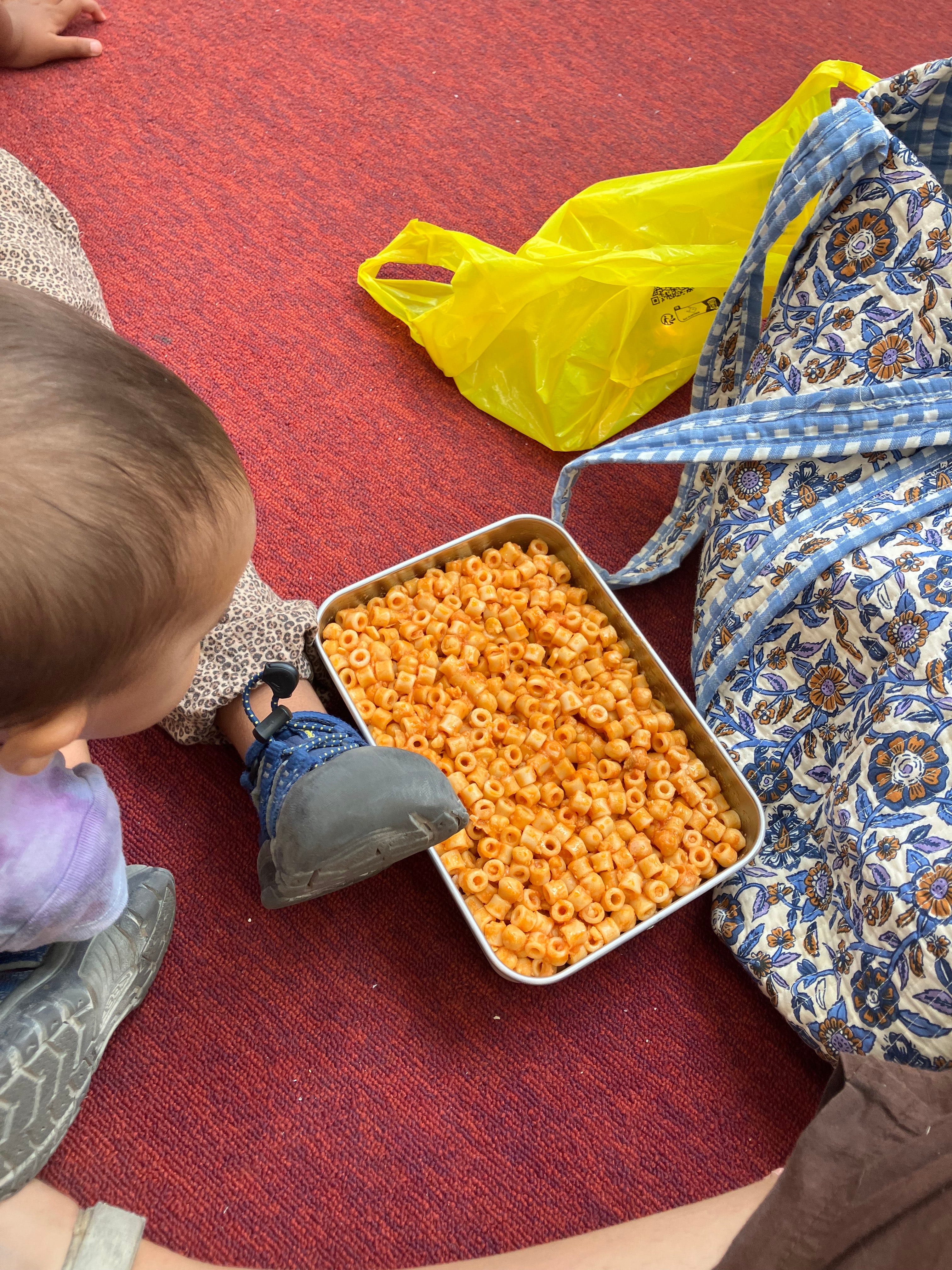
The Fine Art of Airplane Snacks
Listen, I’ve never been one to turn my nose up at airplane food, even the most dismal of overcooked pastas, stuff I’d never dream of eating back on terra firma. There’s something kind of charming about those little square dishes, so efficient, like a sky-high bento box. But perhaps facing the challenge of airline self-catering head on could be an opportunity to upgrade into a higher class of consumption. A chance to take a setback as a potential gain and dramatically reduce my family’s in-flight sodium consumption while I was at it.
I strapped on a smile and tried to maintain a positive attitude as I set about polling friends and family about their go-to in-flight meal options. The friend who tipped me off to the budget airline, a man in his mid-30s with a husband and thriving career, said he isn’t organized enough to pack food on planes — he lets his mother do it. What does she pack? Mostly nuts and fruit. “Squirrel dinner,” he quipped.
Another friend told me she gets a couple of gigantic Los Angeles burritos to pack on her flights; a third brings banh mi. A good idea in theory, but we’re in a sleepy neighborhood where the restaurants won’t open in time to provision our afternoon flight. We’ll have to fend for ourselves. Inspired by this savory focus and armed with the knowledge that my plastic-avoidant husband has provisioned us with a set of sturdy metal containers, I came up with the perfect plan for airplane self catering: a quick pasta e cici.
Pasta e Cici: An Elegant (Hopefully) Solution
Pasta e cici is one of my go-to meals when we’re on the road. I hate buying herbs, spices, and sauces I’ll just have to leave behind, so I’ve become a scholar of the three-ingredient recipe. Pasta e cici fits the bill. Cheap and cheerful, as our British friends say, it’s something my entire family loves eating, including my 3-year-old and the baby, who gobbles it up by the handful — something we’ll hopefully be avoiding by eating while she sleeps on the plane. The girl is hitting the solid food with an enthusiasm our fellow travelers might not fully appreciate.
I’ll make a pot while we rush around packing before the flight. We’ll transport it in our backpacks, under the magnetic puzzles and library books, baby toys, and tiny cars. We’ll break it out a few hours into the flight, when everyone is grumpy and hungry and ready to be home. We can’t do anything about those shrinking seats and declining service levels, but hey, at least we won’t be hungry.
Emily Beyda’s writing has appeared in the Los Angeles Times, Built, Refinery29, Smartmouth, Fodors, the Thrillist, the Austin Chronicle, and more. Her novel, “The Body Double,” was published in 2021.

You're lucky! At least you're able to bring food to feed the family. In a couple of months, I'm flying a budget airline (Scoot, an offshoot of Singapore Airlines) that specifically forbids passengers from bringing any food or beverages on board. That leaves the passengers on our 12-hour flight the options of either buying the airline's offerings -- whatever their quality, selection and price -- or going without food and drink for the 12 hours.
OMG. I remember when flying was a once in a lifetime treat. My parents stashed me on a plane at 8yo to visit my grandparents for the summer. We had to drive from South GA to the metropolis of Atlanta. A nice lady took charge of me. My parents could actually walk to the gate with me, in fact they boarded the plane to help seat me. I didn’t appreciate it at the time but I’m pretty sure I was in first class - far away from the cigarette smoke. My grandparents drove from northern Indiana to meet me in Chicago, waiting, smiling at the gate. The nice airplane lady in a uniform “handed” me off with a smile and a hug. I’ve made close to a hundred journeys since then, mostly memorable (even with adult beverages). There’s nothing that beats being confined in a silver cylinder with your mother. You are so lucky. I hope you can afford better flights soon. You know you are fortunate if your children are comfortable and don’t cry the entire flight. Love the 3 ingredient recipe. Give us more. Chick peas are a meal in themselves.