

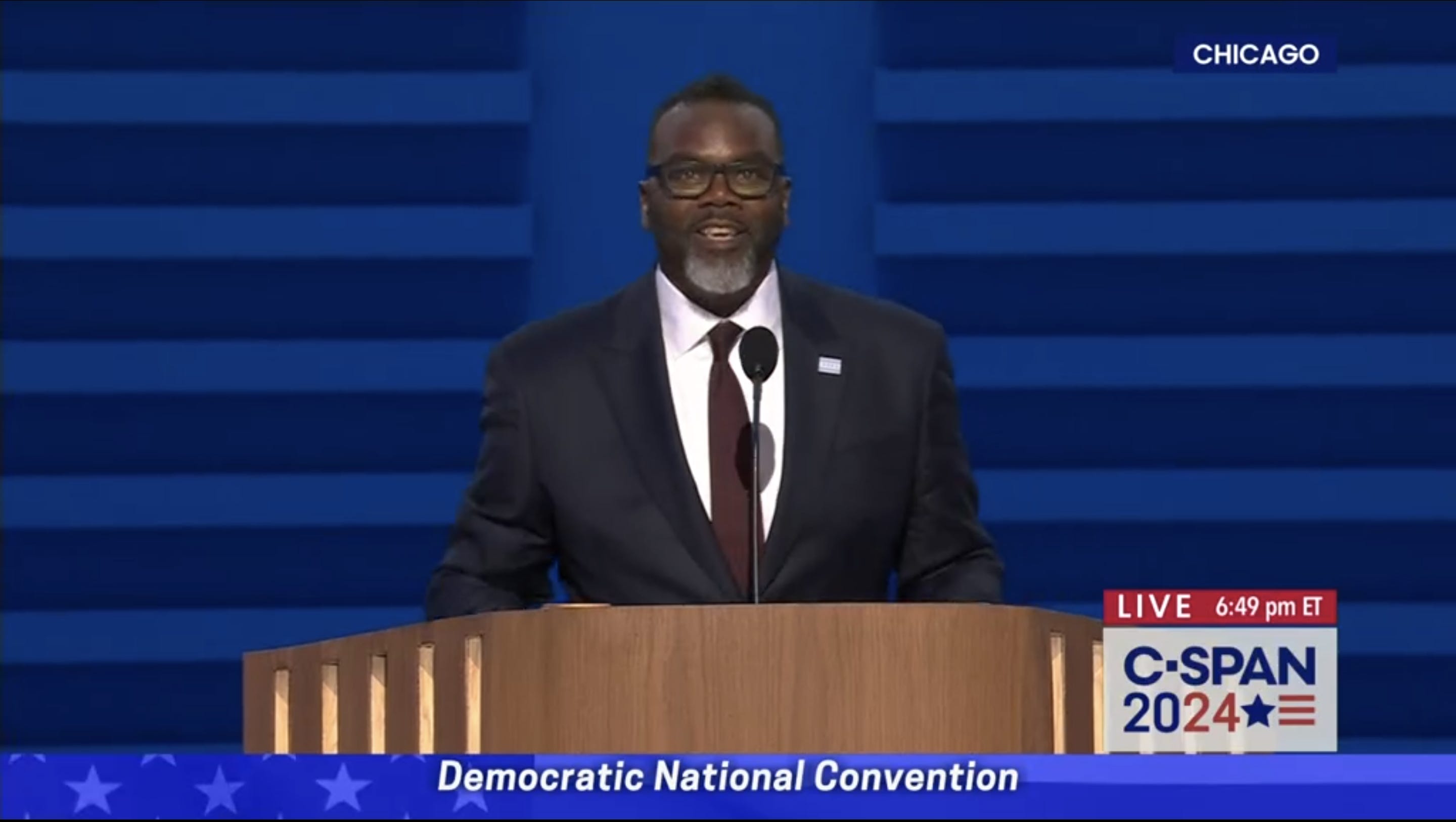
By Shalise Manza Young
Proponents of police reform have long argued that more police does not equal less violence and crime. Mayors of three cities are showing how true that is with a simple idea: investing in their neighborhoods and residents.
It’s working in Chicago, the country’s third-largest city, as well as in Baltimore and Birmingham, Ala., which have smaller populations.
Brandon Scott, who was born and raised in Baltimore, was elected mayor in November 2020, just a few months after Politico magazine ran a piece about Baltimore titled, “Who wants to run the deadliest big city in America?”
The writer had attended an off-the-record event with “two to three dozen of the most influential people in the city.” When the guest speaker, a longtime Baltimore-based reporter, asked attendees why they keep backing and electing bad leaders (two had resigned because of scandal in 10 years), one man was defeatist: “It’s unfixable…. It’s just hopeless,” he said.
Enter Scott. Just 36 when he was inaugurated, he pledged to address the city’s two public health emergencies: Covid and gun violence. That same month, December 2020, he announced the creation of the Mayor’s Office of Neighborhood Safety and Engagement, which was tasked with “coordinating city agencies and community partners in the fight against violence.”
They’re words many of us have heard before. But, in Baltimore, those words don’t just live on a website; they’ve been put into practice. Scott put a particular focus on proactive youth programs, in effect getting to young people before they fall victim to the behaviors that can lead to their arrest or worse.
The Summer Youth Engagement Strategy, which kicked off in 2023, offers social events like pool parties and family block parties. This year it also includes 42 summer camps, nine community centers open until 11 p.m., job opportunities for over 8,500 kids, and partnerships that teach about violence prevention and conflict de-escalation.
The results are impressive. While noting that the work is far from over, Scott’s office announced this month that there had been 68 homicides and 164 non-fatal shootings in the city over the first six months of the year, a 22% and 19% decline, respectively, over the first six months of 2024, and a 62% drop compared with the first six months of 2022. There were five killings in April, the fewest in a month in Baltimore’s recorded history.
Last month, Chicago Mayor Brandon Johnson grew frustrated in front of the media when he was questioned about a city council proposal for a “snap curfew” that would have allowed police to declare temporary curfews with only 30 minutes’ warning as a means of curbing violence that can occur during large teen gatherings.
“You all know good and well that if the [violent crime] numbers were going in a different direction y’all would be asking me all kinds of questions about what is it that I’m doing that is not working,” a fiery Johnson said. “We’re doing the things that work. We have suffered for decades in this city around violence. And now, here it is, two years into my administration, every single major violent category where violent crime is recorded, it’s going down.”
He called the snap curfew proposal “lazy governance” from people who didn’t want to “roll up their sleeves” to figure out how to support residents and invest in families. The ordinance was passed by the council, but Johnson vetoed it.
Scaling Community Violence Intervention for a Safer Chicago, or SC2, a public-private partnership, takes an on-the-streets approach to community violence intervention. The city is also addressing root causes, with a significant increase in public school spending, an increase in the number of affordable housing units, and more youth summer job opportunities; this year 29,000 young people are employed through the city’s program.
Gun violence in the city has declined every year since 2021, before Johnson took office, but compared with 2024, shootings this year are down 40% and homicides are down 30%.
In Birmingham, Mayor Randall Woodfin is working hard to reduce major crimes. In 2024, the city recorded 152 homicides, its most in many decades, including a mass shooting at the Hush Lounge that killed four people and injured at least 17 others.
Woodfin has so far leaned heavily on policing to get that number down, quickly asking for and receiving almost $16 million from the city council for recruitment and retention in the aftermath of the lounge shooting; the city has also added dozens more cameras on light poles around the city, which it says is helping with crime prevention and solving crimes.
There was also an allocation of $6 million for youth mental health, conflict resolution and financial literacy programs.
It’s early, but killings in Birmingham were down 52% over the first six months of this year vs. last year, and the police clearance rate for homicides is 79%, very high compared with other large cities.
There is concern that massive cuts in federal funding pushed through by MAGA congressional members and Cabinet members, such as the Justice Department slashing money meant for crime prevention programs, the Education Department ending a $1 billion grant programs meant for school mental health services, and huge cuts to SNAP benefits, will lead to crime rates going up across the country.
One thing to note: All three of those mayors are Black men. While the Trump regime reminds us daily that it has no regard for the lives and contributions of Black people and has made painting Chicago and Baltimore in particular as savage hellscapes a cottage industry, these men are leading major turnarounds in their respective cities.
As they garner praise for the work they’ve done to improve their cities, they're showing that, as Scott has said, DEI means “definitely earned it.”
Shalise Manza Young was most recently a columnist at Yahoo Sports, focusing on the intersection of race, gender and culture in sports. The Associated Press Sports Editors named her one of the 10 best columnists in the country in 2020. She has also written for the Boston Globe and Providence Journal. Find her on Bluesky @shalisemyoung.
My daughter and her family recently bought a home in Baltimore.
I was terrified. At first.
I’ve been studying the mayor’s programs and the benefits they’re having in the city, and I couldn’t be more pleased. The kids are very happy there and I’m happy that THEY are happy, and that they live in a progressive city with positive, successful governance in place.
Good article!
So important to look at facts and the courageous smart people working for positive communities. Thank you for this!